

 登录
登录
二、阅读理解
What will the schools be like in the future? Smart schools will be the schools of our century. These future schools are different from those in the past. They use high technology to help students learn more quickly and safely, as well as bring convenience to teachers.
The University of British Columbia has built Canada's first 5G smart school. The school worked with a high-tech company to build a 5G network across the school.
At Staffordshire University in the UK, many students enjoy talking to an AI robot and asking it questions. The AI robot was made by the university. It is like a personal helper for students. They can ask it questions, and it can answer as a real teacher.
Another smart school thing is an internet company's voice-activated smart robot. It can be used to help teachers with their classes. For example, it can remember what the teacher's classroom is like, such as how bright the lights should be, and change them right away.
"Cities are so big, and there are so many stakeholders, so it can be difficult to change. But universities have their own buildings... so they can become a living lab," said Gemmy Ginty, a teacher who is working on smart schools for the University of Glasgow.
(
① It brings convenience to teachers.
② It helps students learn more safely.
③ It helps students learn more quickly.
④ It helps teachers get away from planning lessons.
A. ①②④ B. ②③④ C. ①③④ D. ①②③
(
A. Teach lessons. B. Answer questions.
C. Do housework. D. Look after the old.
(
A. Teachers. B. Classes. C. Lights. D. Students.
(
A. The 5G network. B. Robots in the future.
C. Smart schools. D. Future teachers.
(
What will the schools be like in the future? Smart schools will be the schools of our century. These future schools are different from those in the past. They use high technology to help students learn more quickly and safely, as well as bring convenience to teachers.
The University of British Columbia has built Canada's first 5G smart school. The school worked with a high-tech company to build a 5G network across the school.
At Staffordshire University in the UK, many students enjoy talking to an AI robot and asking it questions. The AI robot was made by the university. It is like a personal helper for students. They can ask it questions, and it can answer as a real teacher.
Another smart school thing is an internet company's voice-activated smart robot. It can be used to help teachers with their classes. For example, it can remember what the teacher's classroom is like, such as how bright the lights should be, and change them right away.
"Cities are so big, and there are so many stakeholders, so it can be difficult to change. But universities have their own buildings... so they can become a living lab," said Gemmy Ginty, a teacher who is working on smart schools for the University of Glasgow.
(
D
) 1. Which of the following are the advantages of a smart school in the future?① It brings convenience to teachers.
② It helps students learn more safely.
③ It helps students learn more quickly.
④ It helps teachers get away from planning lessons.
A. ①②④ B. ②③④ C. ①③④ D. ①②③
(
B
) 2. What can the AI robot in the UK do?A. Teach lessons. B. Answer questions.
C. Do housework. D. Look after the old.
(
C
) 3. What does the underlined word "them" in paragraph 4 refer to?A. Teachers. B. Classes. C. Lights. D. Students.
(
C
) 4. What does the passage mainly talk about?A. The 5G network. B. Robots in the future.
C. Smart schools. D. Future teachers.
(
A
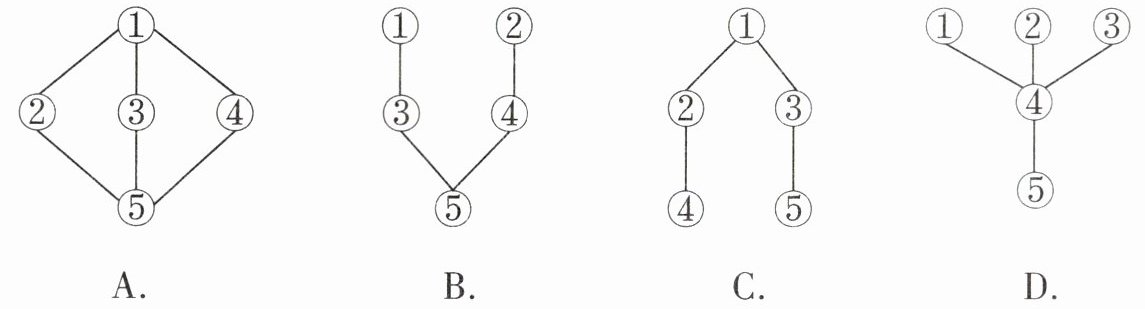
) 5. Which of the following best shows the structure of the passage?答案
1. D 2. B 3. C 4. C 5. A
解析
【分析】
本题为英语阅读理解题,需结合原文内容逐一分析各题目:
1. 第1题:定位原文第一段提取智能学校的优势,排除未提及的内容得出答案;
2. 第2题:定位英国AI机器人的相关段落,找到机器人功能描述匹配选项;
3. 第3题:根据代词指代就近原则,定位划线词所在句确定其指代内容;
4. 第4题:通读全文梳理核心话题,确定文章主旨;
5. 第5题:分析文章结构,匹配对应结构选项。
【解析】
1. 第1题:原文第一段明确提到智能学校的优势是“帮助学生更快、更安全地学习,给教师带来便利”,对应①②③,④“帮助教师不用备课”未提及,故选D。
2. 第2题:原文第三段指出英国的AI机器人“可以回答学生的问题”,对应选项B,A(教课)、C(做家务)、D(照顾老人)均未提及,故选B。
3. 第3题:划线词所在句提到“how bright the lights should be”,可知“them”指代前文的“lights”,故选C。
4. 第4题:全文围绕“智能学校”展开,介绍其应用及案例,核心话题是智能学校,故选C。
5. 第5题:文章结构为总起(第一段介绍智能学校)+分述(举5G智能学校、AI机器人、语音机器人的例子)+总结(引用教师观点),对应选项A的结构,故选A。
【答案】
1. D 2. B 3. C 4. C 5. A
【知识点】
英语阅读理解、细节理解、主旨大意
【点评】
本题考查学生对英语文章的细节定位、词义猜测及主旨归纳能力,题目难度适中,需仔细阅读原文,准确匹配信息。
【难度系数】
0.6
本题为英语阅读理解题,需结合原文内容逐一分析各题目:
1. 第1题:定位原文第一段提取智能学校的优势,排除未提及的内容得出答案;
2. 第2题:定位英国AI机器人的相关段落,找到机器人功能描述匹配选项;
3. 第3题:根据代词指代就近原则,定位划线词所在句确定其指代内容;
4. 第4题:通读全文梳理核心话题,确定文章主旨;
5. 第5题:分析文章结构,匹配对应结构选项。
【解析】
1. 第1题:原文第一段明确提到智能学校的优势是“帮助学生更快、更安全地学习,给教师带来便利”,对应①②③,④“帮助教师不用备课”未提及,故选D。
2. 第2题:原文第三段指出英国的AI机器人“可以回答学生的问题”,对应选项B,A(教课)、C(做家务)、D(照顾老人)均未提及,故选B。
3. 第3题:划线词所在句提到“how bright the lights should be”,可知“them”指代前文的“lights”,故选C。
4. 第4题:全文围绕“智能学校”展开,介绍其应用及案例,核心话题是智能学校,故选C。
5. 第5题:文章结构为总起(第一段介绍智能学校)+分述(举5G智能学校、AI机器人、语音机器人的例子)+总结(引用教师观点),对应选项A的结构,故选A。
【答案】
1. D 2. B 3. C 4. C 5. A
【知识点】
英语阅读理解、细节理解、主旨大意
【点评】
本题考查学生对英语文章的细节定位、词义猜测及主旨归纳能力,题目难度适中,需仔细阅读原文,准确匹配信息。
【难度系数】
0.6
