

 登录
登录
任务型阅读。(注意每小题的词数要求)
Social media is a great place to share articles, pictures or videos. But sometimes you might share too much information without even realizing it. That’s called oversharing.
There are several reasons why people overshare. They might want to be friendly or break the ice. But in most situations, people who overshare just try to reach out to others, looking for a listening ear or a few words of advice.
So how can you know if you are oversharing? Why not ask your friends in real life? They would be happy to tell you if you’re posting too much. There’s nothing wrong with sharing a picture, a video, thoughts, or opinions every few hours. However, it may cause trouble(麻烦) for you in the long run(终究). Everything you share online stays there forever(永远). Even if you delete(删除) it, someone did see it or simply talked about it to others. They may make use of the information one day.
For your own safety, you’d better stop oversharing. How? One of the best ways is to think twice before you share anything online. After all, it’s better to be safe than sorry.
1. When you share too much
2—4. Fill in the blanks according to the passage.
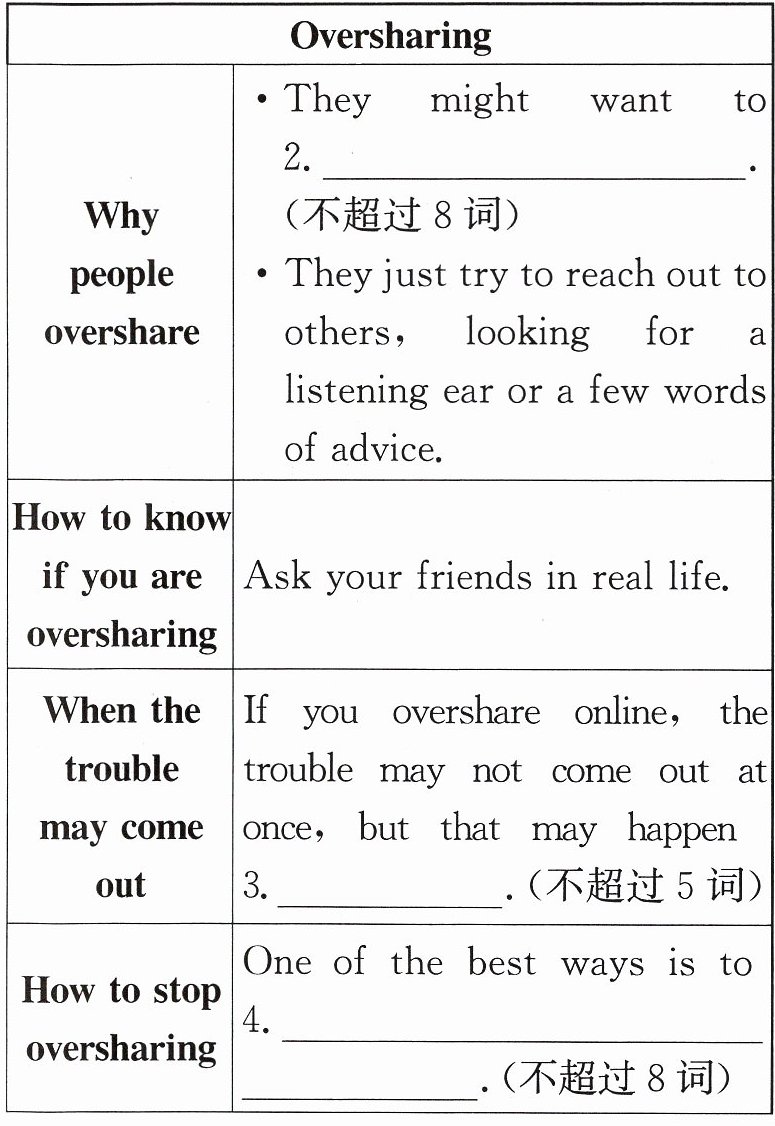
5. What can you learn from the last sentence of the passage?
(结合自身实际,不超过20词)
Social media is a great place to share articles, pictures or videos. But sometimes you might share too much information without even realizing it. That’s called oversharing.
There are several reasons why people overshare. They might want to be friendly or break the ice. But in most situations, people who overshare just try to reach out to others, looking for a listening ear or a few words of advice.
So how can you know if you are oversharing? Why not ask your friends in real life? They would be happy to tell you if you’re posting too much. There’s nothing wrong with sharing a picture, a video, thoughts, or opinions every few hours. However, it may cause trouble(麻烦) for you in the long run(终究). Everything you share online stays there forever(永远). Even if you delete(删除) it, someone did see it or simply talked about it to others. They may make use of the information one day.
For your own safety, you’d better stop oversharing. How? One of the best ways is to think twice before you share anything online. After all, it’s better to be safe than sorry.
1. When you share too much
information
without even realizing it, you are oversharing.(仅填1词)2—4. Fill in the blanks according to the passage.
5. What can you learn from the last sentence of the passage?
We can’t be too careful with our personal information online.
(结合自身实际,不超过20词)
答案
1. information
2. be friendly or break the ice
3. in the long run
4. think twice before you share anything online
5. We can’t be too careful with our personal information online. /...(答案不唯一,言之有理即可)
2. be friendly or break the ice
3. in the long run
4. think twice before you share anything online
5. We can’t be too careful with our personal information online. /...(答案不唯一,言之有理即可)
解析
【分析】
本题为任务型阅读,需根据原文信息完成填空及开放表达。解题思路:1. 第1题定位oversharing的定义,提取对应关键词;2. 第2-4题分别定位对应段落的细节信息,确保符合词数要求;3. 第5题理解最后一句含义,结合实际给出合理表达,注意词数限制。
【解析】
1. 细节理解:定位原文第一段第二句,明确oversharing是“分享太多信息”,故填information。
2. 细节理解:定位“Why people overshare”段落,找到对应原因的表述“They might want to be friendly or break the ice”,符合不超8词要求,直接提取。
3. 细节理解:定位“When the trouble may come out”部分,原文指出麻烦“in the long run”出现,符合不超5词要求,故填该短语。
4. 细节理解:定位“How to stop oversharing”部分,原文给出方法“think twice before you share anything online”,符合不超8词要求,直接提取。
5. 开放表达:最后一句意为“安全比后悔好”,结合实际,可表达为We should be careful when sharing things online.(不超20词,合理即可)
【答案】
1. information
2. be friendly or break the ice
3. in the long run
4. think twice before you share anything online
5. We should be careful when sharing things online.
【知识点】
任务型阅读、细节查找、开放表达
【点评】
本题考查任务型阅读的核心能力,包括细节定位和开放表达,整体难度适中,学生通过快速读文可完成大部分题目,开放题需结合自身实际作答。
【难度系数】
0.6
本题为任务型阅读,需根据原文信息完成填空及开放表达。解题思路:1. 第1题定位oversharing的定义,提取对应关键词;2. 第2-4题分别定位对应段落的细节信息,确保符合词数要求;3. 第5题理解最后一句含义,结合实际给出合理表达,注意词数限制。
【解析】
1. 细节理解:定位原文第一段第二句,明确oversharing是“分享太多信息”,故填information。
2. 细节理解:定位“Why people overshare”段落,找到对应原因的表述“They might want to be friendly or break the ice”,符合不超8词要求,直接提取。
3. 细节理解:定位“When the trouble may come out”部分,原文指出麻烦“in the long run”出现,符合不超5词要求,故填该短语。
4. 细节理解:定位“How to stop oversharing”部分,原文给出方法“think twice before you share anything online”,符合不超8词要求,直接提取。
5. 开放表达:最后一句意为“安全比后悔好”,结合实际,可表达为We should be careful when sharing things online.(不超20词,合理即可)
【答案】
1. information
2. be friendly or break the ice
3. in the long run
4. think twice before you share anything online
5. We should be careful when sharing things online.
【知识点】
任务型阅读、细节查找、开放表达
【点评】
本题考查任务型阅读的核心能力,包括细节定位和开放表达,整体难度适中,学生通过快速读文可完成大部分题目,开放题需结合自身实际作答。
【难度系数】
0.6
一、查词典或根据语境写出下列词汇的汉语意思。
1. whether /ˈweðə(r)/ conj.
2. survey /ˈsɜːveɪ/ n.
3. youth /juːθ/ n.
4. minor /ˈmaɪnə(r)/ n.
5. allow /əˈlaʊ/ v.
6. trend /trend/ n.
7. risk /rɪsk/ n.
8. account /əˈkaʊnt/ n.
9. password /ˈpɑːswɜːd/ n.
10. avoid /əˈvɔɪd/ v.
11. personal /ˈpɜːsənl/ adj.
12. address /əˈdres/ n.
13. regret /rɪˈɡret/ v.
14. profile /ˈprəʊfaɪl/ n.
15. private /ˈpraɪvət/ adj.
16. aware /əˈweə(r)/ adj.
1. whether /ˈweðə(r)/ conj.
是否
2. survey /ˈsɜːveɪ/ n.
民意调查
3. youth /juːθ/ n.
青年时期
4. minor /ˈmaɪnə(r)/ n.
未成年人
5. allow /əˈlaʊ/ v.
允许
6. trend /trend/ n.
趋势
7. risk /rɪsk/ n.
风险
8. account /əˈkaʊnt/ n.
账号
9. password /ˈpɑːswɜːd/ n.
密码
10. avoid /əˈvɔɪd/ v.
避免
11. personal /ˈpɜːsənl/ adj.
个人的;私人的
12. address /əˈdres/ n.
住址;地址
13. regret /rɪˈɡret/ v.
懊悔
14. profile /ˈprəʊfaɪl/ n.
概述;简介
15. private /ˈpraɪvət/ adj.
一部分人的;私人的;私密的
16. aware /əˈweə(r)/ adj.
意识到
答案
1.是否 2.民意调查 3.青年时期 4.未成年人 5.允许
6.趋势 7.风险 8.账号 9.密码 10.避免
11.个人的;私人的 12.住址;地址 13.懊悔 14.概述;简介
15.一部分人的;私人的;私密的 16.意识到
6.趋势 7.风险 8.账号 9.密码 10.避免
11.个人的;私人的 12.住址;地址 13.懊悔 14.概述;简介
15.一部分人的;私人的;私密的 16.意识到
解析
【分析】本题为英语常用词汇汉译题,解题时需结合单词标注的词性(如conj.连词、n.名词、v.动词、adj.形容词),依据标准词典释义,准确匹配每个单词对应的汉语意思,确保释义符合词性要求,避免混淆相近词义。
【解析】1. whether(conj.):是否;2. survey(n.):民意调查;3. youth(n.):青年时期;4. minor(n.):未成年人;5. allow(v.):允许;6. trend(n.):趋势;7. risk(n.):风险;8. account(n.):账号;9. password(n.):密码;10. avoid(v.):避免;11. personal(adj.):个人的;私人的;12. address(n.):住址;地址;13. regret(v.):懊悔;14. profile(n.):概述;简介;15. private(adj.):一部分人的;私人的;私密的;16. aware(adj.):意识到
【答案】1.是否 2.民意调查 3.青年时期 4.未成年人 5.允许 6.趋势 7.风险 8.账号 9.密码 10.避免 11.个人的;私人的 12.住址;地址 13.懊悔 14.概述;简介 15.一部分人的;私人的;私密的 16.意识到
【知识点】英语词汇汉译、词性对应词义
【点评】本题考察常用英语单词的基础释义,属于英语学习的基础识记内容,难度较低,主要用于巩固学生的词汇基础。
【难度系数】0.8
【解析】1. whether(conj.):是否;2. survey(n.):民意调查;3. youth(n.):青年时期;4. minor(n.):未成年人;5. allow(v.):允许;6. trend(n.):趋势;7. risk(n.):风险;8. account(n.):账号;9. password(n.):密码;10. avoid(v.):避免;11. personal(adj.):个人的;私人的;12. address(n.):住址;地址;13. regret(v.):懊悔;14. profile(n.):概述;简介;15. private(adj.):一部分人的;私人的;私密的;16. aware(adj.):意识到
【答案】1.是否 2.民意调查 3.青年时期 4.未成年人 5.允许 6.趋势 7.风险 8.账号 9.密码 10.避免 11.个人的;私人的 12.住址;地址 13.懊悔 14.概述;简介 15.一部分人的;私人的;私密的 16.意识到
【知识点】英语词汇汉译、词性对应词义
【点评】本题考察常用英语单词的基础释义,属于英语学习的基础识记内容,难度较低,主要用于巩固学生的词汇基础。
【难度系数】0.8
