

 登录
登录
一、根据中文提示完成单词。
1. — I'm afraid I didn't hear what you said clearly, Sir.
— I'm sorry. I will speak
2. It is
3. Write down these
4. You are not careful enough to make such a
5. Speakers are good at making
1. — I'm afraid I didn't hear what you said clearly, Sir.
— I'm sorry. I will speak
aloud
(出声地)and slowly.2. It is
possible
(可能的)that people could have lessons at the space station.3. Write down these
sentences
(句子)on the blackboard and read them.4. You are not careful enough to make such a
pronunciation
(发音)mistake.5. Speakers are good at making
speeches
(演讲)in public.答案
1. aloud 2. possible 3. sentences 4. pronunciation 5. speeches
解析
【分析】
本题需根据中文提示,结合句子的语法结构、固定搭配及词性要求填写正确单词。首先判断每个空所需的词性:修饰动词用副词,句型中用形容词,these后接可数名词复数,作定语用名词,固定搭配中用对应名词形式,再匹配中文提示的英文单词即可。
【解析】
1. 修饰动词speak需用副词,“出声地”对应副词aloud;
2. 固定句型It is + adj. + that从句,“可能的”对应形容词possible;
3. these后接可数名词复数,“句子”对应sentences;
4. 此处需名词作定语修饰mistake,“发音”对应pronunciation;
5. 固定搭配make speeches表示“做演讲”,“演讲”用复数形式speeches。
【答案】
1. aloud 2. possible 3. sentences 4. pronunciation 5. speeches
【知识点】
根据中文提示填单词、副词用法、名词复数
【点评】
本题考查基础词汇的运用,结合语境和语法规则即可完成,属于基础题型。
【难度系数】
0.8
本题需根据中文提示,结合句子的语法结构、固定搭配及词性要求填写正确单词。首先判断每个空所需的词性:修饰动词用副词,句型中用形容词,these后接可数名词复数,作定语用名词,固定搭配中用对应名词形式,再匹配中文提示的英文单词即可。
【解析】
1. 修饰动词speak需用副词,“出声地”对应副词aloud;
2. 固定句型It is + adj. + that从句,“可能的”对应形容词possible;
3. these后接可数名词复数,“句子”对应sentences;
4. 此处需名词作定语修饰mistake,“发音”对应pronunciation;
5. 固定搭配make speeches表示“做演讲”,“演讲”用复数形式speeches。
【答案】
1. aloud 2. possible 3. sentences 4. pronunciation 5. speeches
【知识点】
根据中文提示填单词、副词用法、名词复数
【点评】
本题考查基础词汇的运用,结合语境和语法规则即可完成,属于基础题型。
【难度系数】
0.8
二、用所给单词的适当形式填空。
1. — I don't know what to do. Can you help me?
— I think you should calm down and read
2. Mr Wang
3. Lots of
4. Speaking
5. There are some
1. — I don't know what to do. Can you help me?
— I think you should calm down and read
texts
(text).2. Mr Wang
repeated
(repeat) the word again to make me understand.3. Lots of
tourists
(tour) come to Beijing to visit the Great Wall every year.4. Speaking
slowly
(slow) gives you more time to think about what to say.5. There are some
spelling
(spell) mistakes in your article. You'd better correct them before tomorrow.答案
1. texts 2. repeated 3. tourists 4. slowly 5. spelling
解析
【分析】
1. 空格处需填名词,text为可数名词,此处表泛指“课文”,需用复数形式;
2. 句子描述过去的动作,谓语动词用一般过去时,repeat的过去式为规则变化;
3. lots of后接可数名词复数,需将tour转换为表示“游客”的名词复数;
4. 空格处修饰动词speaking,需用副词,转换slow为副词形式;
5. 空格处修饰名词mistakes,需用动名词作定语,转换spell为动名词形式。
【解析】
1. 句意为“我认为你应该冷静下来读课文”,text是可数名词,表泛指时用复数,故填texts;
2. 句意为“王先生又重复了那个单词来让我理解”,动作发生在过去,用一般过去时,repeat的过去式是repeated,故填repeated;
3. lots of后接可数名词复数,tour对应的表示“游客”的名词是tourist,复数为tourists,故填tourists;
4. 修饰动词speaking需用副词,slow的副词形式是slowly,故填slowly;
5. 修饰名词mistakes需用动名词作定语,spell的动名词是spelling,故填spelling。
【答案】
1. texts 2. repeated 3. tourists 4. slowly 5. spelling
【知识点】
名词复数变化、一般过去时、词性转换
【点评】
本题为基础的单词适当形式填空题,考查名词、动词、副词的词形变化及用法,需掌握词性判断和常见词形转换规则,难度适中。
【难度系数】
0.5
1. 空格处需填名词,text为可数名词,此处表泛指“课文”,需用复数形式;
2. 句子描述过去的动作,谓语动词用一般过去时,repeat的过去式为规则变化;
3. lots of后接可数名词复数,需将tour转换为表示“游客”的名词复数;
4. 空格处修饰动词speaking,需用副词,转换slow为副词形式;
5. 空格处修饰名词mistakes,需用动名词作定语,转换spell为动名词形式。
【解析】
1. 句意为“我认为你应该冷静下来读课文”,text是可数名词,表泛指时用复数,故填texts;
2. 句意为“王先生又重复了那个单词来让我理解”,动作发生在过去,用一般过去时,repeat的过去式是repeated,故填repeated;
3. lots of后接可数名词复数,tour对应的表示“游客”的名词是tourist,复数为tourists,故填tourists;
4. 修饰动词speaking需用副词,slow的副词形式是slowly,故填slowly;
5. 修饰名词mistakes需用动名词作定语,spell的动名词是spelling,故填spelling。
【答案】
1. texts 2. repeated 3. tourists 4. slowly 5. spelling
【知识点】
名词复数变化、一般过去时、词性转换
【点评】
本题为基础的单词适当形式填空题,考查名词、动词、副词的词形变化及用法,需掌握词性判断和常见词形转换规则,难度适中。
【难度系数】
0.5
(
— I have no interest in it. , I have lots of work to do.
A.However
B.Besides
C.Later
D.Except
B
)1. — Would you like to see a film with me, Carla?— I have no interest in it. , I have lots of work to do.
A.However
B.Besides
C.Later
D.Except
答案
1. B
解析
【分析】首先通读对话理解语境:Carla拒绝看电影的邀请,给出两个理由——对电影没兴趣、有很多工作要做,需选择表递进补充理由的词。接着辨析各选项的词性和含义,结合语境逻辑排除不符合的选项,确定正确答案。
【解析】翻译对话:——卡拉,你想和我去看电影吗?——我对它没兴趣,________,我有很多工作要做。分析选项:A. however表转折,不符合递进补充理由的语境;B. besides表“此外、而且”,用于补充另一个理由,符合语境;C. later表时间,语义不通;D. except是介词,不能单独作状语,排除。因此选B。
【答案】B
【知识点】副词词义辨析;语境理解
【点评】本题考查日常交际中副词的用法,需结合上下文逻辑关系辨析选项,属于基础题型,难度适中。
【难度系数】0.6
【解析】翻译对话:——卡拉,你想和我去看电影吗?——我对它没兴趣,________,我有很多工作要做。分析选项:A. however表转折,不符合递进补充理由的语境;B. besides表“此外、而且”,用于补充另一个理由,符合语境;C. later表时间,语义不通;D. except是介词,不能单独作状语,排除。因此选B。
【答案】B
【知识点】副词词义辨析;语境理解
【点评】本题考查日常交际中副词的用法,需结合上下文逻辑关系辨析选项,属于基础题型,难度适中。
【难度系数】0.6
(
— Because my teacher says it can help us remember them well.
A.ever
B.later
C.fast
D.aloud
D
)2. — Why do you often read words in the morning?— Because my teacher says it can help us remember them well.
A.ever
B.later
C.fast
D.aloud
答案
2. D
解析
【分析】首先理解对话语境,问句询问早上读单词的方式,需选择合适的副词修饰动词read。先辨析各选项词义:A.ever意为“曾经”,不符合语境;B.later意为“后来”,表时间,不合适;C.fast意为“快地”,表速度,不符合帮助记忆的语境;D.aloud意为“大声地”,固定搭配read aloud表示“大声读”,符合语境。
【解析】根据对话,问句询问早上读单词的方式,需选修饰read的副词。逐一分析选项:A.ever(曾经)与语境无关;B.later(后来)表时间,不修饰读的方式;C.fast(快地)侧重速度,不符合“帮助记忆”的需求;D.aloud(大声地),read aloud是固定搭配,意为“大声读”,符合语境,故选D。
【答案】D
【知识点】副词词义辨析,固定搭配
【点评】本题考查副词词义辨析及常用固定搭配,属于基础英语题,需掌握常见副词含义和固定短语用法。
【难度系数】0.4
【解析】根据对话,问句询问早上读单词的方式,需选修饰read的副词。逐一分析选项:A.ever(曾经)与语境无关;B.later(后来)表时间,不修饰读的方式;C.fast(快地)侧重速度,不符合“帮助记忆”的需求;D.aloud(大声地),read aloud是固定搭配,意为“大声读”,符合语境,故选D。
【答案】D
【知识点】副词词义辨析,固定搭配
【点评】本题考查副词词义辨析及常用固定搭配,属于基础英语题,需掌握常见副词含义和固定短语用法。
【难度系数】0.4
(
— Yeah, but I don't think everyone can work it out .
A.quietly
B.suddenly
C.politely
D.correctly
D
)3. — Wow! This Maths problem is so easy.— Yeah, but I don't think everyone can work it out .
A.quietly
B.suddenly
C.politely
D.correctly
答案
3. D
解析
【分析】首先通读对话理解句意:第一句感叹数学题简单,第二句转折表示并非所有人都能做对。接着分析四个选项的副词含义,结合语境判断需要表达的语义,从而选出合适的副词。
【解析】对话翻译:——哇!这道数学题这么简单。——是的,但我认为不是每个人都能正确地解出它。选项辨析:A. quietly意为“安静地”,不符合语境;B. suddenly意为“突然”,与句意无关;C. politely意为“礼貌地”,不符合逻辑;D. correctly意为“正确地”,代入后符合“解出题目”的语境,故答案为D。
【答案】D
【知识点】副词辨析;情景交际
【点评】本题为基础词义辨析题,结合对话语境即可快速选出正确选项,难度较低。
【难度系数】0.8
【解析】对话翻译:——哇!这道数学题这么简单。——是的,但我认为不是每个人都能正确地解出它。选项辨析:A. quietly意为“安静地”,不符合语境;B. suddenly意为“突然”,与句意无关;C. politely意为“礼貌地”,不符合逻辑;D. correctly意为“正确地”,代入后符合“解出题目”的语境,故答案为D。
【答案】D
【知识点】副词辨析;情景交际
【点评】本题为基础词义辨析题,结合对话语境即可快速选出正确选项,难度较低。
【难度系数】0.8
(
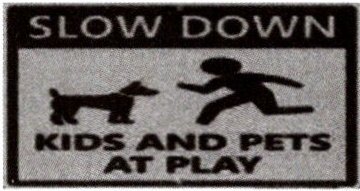
A.kids can play with pets here
B.kids should play with pets slowly here
C.people can play with kids and pets here
D.people should drive slowly because kids may play here
D
)4. The picture shows that .A.kids can play with pets here
B.kids should play with pets slowly here
C.people can play with kids and pets here
D.people should drive slowly because kids may play here
答案
4. D
解析
【分析】首先观察图片中的标识,上方文字是“SLOW DOWN”(减速),下方文字是“KIDS AND PETS AT PLAY”(孩子和宠物在玩耍),该标识是给驾驶者的提醒,需结合文字含义分析各选项。
【解析】逐一分析选项:A选项,标识并非说明孩子可以在此和宠物玩耍,而是提醒他人注意,错误;B选项,“SLOW DOWN”是提醒他人减速,不是让孩子慢慢玩,错误;C选项,标识不是说人们可以在此玩耍,错误;D选项,标识提醒人们减速,因为有孩子和宠物可能在此活动,符合标识含义,正确。
【答案】D
【知识点】英文标识理解、阅读理解
【点评】本题考查对英文标识含义的理解,需结合图片文字信息判断,属于基础题型,难度较低。
【难度系数】0.3
【解析】逐一分析选项:A选项,标识并非说明孩子可以在此和宠物玩耍,而是提醒他人注意,错误;B选项,“SLOW DOWN”是提醒他人减速,不是让孩子慢慢玩,错误;C选项,标识不是说人们可以在此玩耍,错误;D选项,标识提醒人们减速,因为有孩子和宠物可能在此活动,符合标识含义,正确。
【答案】D
【知识点】英文标识理解、阅读理解
【点评】本题考查对英文标识含义的理解,需结合图片文字信息判断,属于基础题型,难度较低。
【难度系数】0.3
(
— OK, thank you.
A.write down
B.cut down
C.fall down
D.turn down
课后作业 KEHOUZUOYE ★★★★★
A
)5. — You can the key points in your notebook if you can't remember well.— OK, thank you.
A.write down
B.cut down
C.fall down
D.turn down
课后作业 KEHOUZUOYE ★★★★★
答案
5. A
解析
【分析】首先明确句子语境:对方建议如果记不住内容,要把关键点做什么在笔记本上。接着逐一分析四个选项的动词短语含义,结合语境匹配正确选项。
【解析】逐一分析选项:A. write down意为“写下,记下”;B. cut down意为“砍倒;削减”;C. fall down意为“跌倒;倒塌”;D. turn down意为“调小(音量);拒绝”。根据语境“把关键点在笔记本上”,可知需表达“写下”的含义,因此选A。
【答案】A
【知识点】动词短语辨析
【点评】本题考查常用动词短语的词义辨析,需结合句子语境选择合适短语,属于基础题型。
【难度系数】0.8
【解析】逐一分析选项:A. write down意为“写下,记下”;B. cut down意为“砍倒;削减”;C. fall down意为“跌倒;倒塌”;D. turn down意为“调小(音量);拒绝”。根据语境“把关键点在笔记本上”,可知需表达“写下”的含义,因此选A。
【答案】A
【知识点】动词短语辨析
【点评】本题考查常用动词短语的词义辨析,需结合句子语境选择合适短语,属于基础题型。
【难度系数】0.8
四、完形填空。
It was the day of the big running match. Students from seven different primary schools were warming up.
When I got to the starting line, there were a lot of people. I 1 and finally found David. He was alone next to a tree. He was small for ten years old. He seemed to be happy every day, but his usual big 2 couldn't be seen today. I walked over and asked him 3 he wasn't with the other children. He said sadly that he had decided not to run.
What was wrong? He had worked so hard for this running!
The match would start soon and he shouldn't miss it, so I 4 searched among a lot of people for the school's coach(教练) and asked him what happened. “I am 5 other kids will laugh at him,” he said uncomfortably. “I asked him to 6 to run or not, and let him decide on his own.”
I held back my anger(愤怒). I understood what the coach meant well. 7 making sure David could still run if he wanted, I found he was slowly coming towards me, while his small body was 8 from side to side.
David had a brain illness, so he 9 to walk or run like other children. However, at school his classmates thought of him as a 10 kid. He always took part in every activity they were doing. That was why all the children thought it 11 for David to join the running. It just took him longer. David worked hard and didn't miss any 12 before. He was always slower than others, but he never gave up.
I gently said, “David, if others want to 13 , just let them do that. You have always been good to face 14 , but why not this time? You just do as usual.”
As the gun fired, David set off at his usual pace. People watched him with 15 . Many voices rose, “David, you're so great!” Through my wet eyes, I knew David's strong will would beat everything. Finally, David crossed the finishing line to wild cheers.
That day, David got a special award(奖) for his acts and courage(勇气). To him, that was a lot more than an award.
(
(
(
(
(
(
(
(
(
(
(
(
(
(
(
It was the day of the big running match. Students from seven different primary schools were warming up.
When I got to the starting line, there were a lot of people. I 1 and finally found David. He was alone next to a tree. He was small for ten years old. He seemed to be happy every day, but his usual big 2 couldn't be seen today. I walked over and asked him 3 he wasn't with the other children. He said sadly that he had decided not to run.
What was wrong? He had worked so hard for this running!
The match would start soon and he shouldn't miss it, so I 4 searched among a lot of people for the school's coach(教练) and asked him what happened. “I am 5 other kids will laugh at him,” he said uncomfortably. “I asked him to 6 to run or not, and let him decide on his own.”
I held back my anger(愤怒). I understood what the coach meant well. 7 making sure David could still run if he wanted, I found he was slowly coming towards me, while his small body was 8 from side to side.
David had a brain illness, so he 9 to walk or run like other children. However, at school his classmates thought of him as a 10 kid. He always took part in every activity they were doing. That was why all the children thought it 11 for David to join the running. It just took him longer. David worked hard and didn't miss any 12 before. He was always slower than others, but he never gave up.
I gently said, “David, if others want to 13 , just let them do that. You have always been good to face 14 , but why not this time? You just do as usual.”
As the gun fired, David set off at his usual pace. People watched him with 15 . Many voices rose, “David, you're so great!” Through my wet eyes, I knew David's strong will would beat everything. Finally, David crossed the finishing line to wild cheers.
That day, David got a special award(奖) for his acts and courage(勇气). To him, that was a lot more than an award.
(
C
)1. A. showed around B. turned around C. looked around D. sat around(
A
)2. A. smile B. humour C. worry D. cry(
B
)3. A. where B. why C. how D. when(
C
)4. A. carefully B. easily C. quickly D. patiently(
D
)5. A. sad B. sure C. sorry D. afraid(
B
)6. A. agree B. choose C. learn D. try(
A
)7. A. After B. Before C. While D. Since(
D
)8. A. pulling B. jumping C. throwing D. shaking(
B
)9. A. stopped B. failed C. got D. began(
C
)10. A. strange B. shy C. usual D. smart(
D
)11. A. easy B. important C. meaningful D. possible(
C
)12. A. decision B. plan C. practice D. final(
B
)13. A. change B. laugh C. help D. cheer(
D
)14. A. results B. dangers C. accidents D. difficulties(
C
)15. A. laughter B. anger C. surprise D. calm答案
1. C 2. A 3. B 4. C 5. D 6. B 7. A 8. D 9. B 10. C 11. D 12. C 13. B 14. D 15. C
解析
【分析】
做完形填空需先通读全文把握主旨(本文讲述患脑疾病的小男孩David因担心被嘲笑想放弃跑步比赛,在“我”的鼓励下坚持参赛并获认可的故事);再逐空结合上下文语境、词汇词义辨析、固定搭配逐一排除错误选项,最后验证答案逻辑通顺性。
【解析】
1. 选C:前文提到起跑线人多,“我”需环顾四周(look around)找David,A(带某人参观)、B(转身)、D(围坐)不符合语境。
2. 选A:David平时开心,故他标志性的笑容(smile)未出现,B(幽默)、C(担忧)、D(哭)不符合。
3. 选B:“我”见David与其他孩子分开,询问他为何(why)不跟大家一起,A(哪里)、C(如何)、D(何时)逻辑不符。
4. 选C:比赛即将开始,“我”需快速(quickly)找教练,A(仔细)、B(容易)、D(耐心)不符合紧急语境。
5. 选D:教练担心(afraid)其他孩子嘲笑David,A(难过)、B(确定)、C(抱歉)符合语境。
6. 选B:教练让David自己选择(choose)是否参赛,对应后文“let him decide on his own”,A(同意)、C(学习)、D(尝试)不符。
7. 选A:在确认David仍能参赛后(After),发现他朝“我”走来,B(在…前)、C(当…时)、D(因为)逻辑错误。
8. 选D:David有脑疾病,身体左右摇晃(shaking),A(拉)、B(跳)、C(扔)不符合身体状态。
9. 选B:David因脑疾病未能(fail to)像其他孩子一样走路/跑步,A(停止)、C(得到)、D(开始)不符。
10. 选C:David总参与活动,同学视他为普通(usual)孩子,A(奇怪)、B(害羞)、D(聪明)不符。
11. 选D:David虽慢但不放弃,同学认为他能(possible)参加跑步,A(容易)、B(重要)、C(有意义)不符。
12. 选C:David努力,从不缺席练习(practice),A(决定)、B(计划)、D(决赛)符合赛前准备语境。
13. 选B:前文提到担心被嘲笑,故“我”说若他人想嘲笑(laugh)就让他们,A(改变)、C(帮助)、D(欢呼)不符。
14. 选D:David总面对困难(difficulties),A(结果)、B(危险)、C(事故)不符。
15. 选C:众人见David坚持参赛,带着惊讶(surprise),A(笑声)、B(愤怒)、D(平静)不符。
【答案】
1.C 2.A 3.B 4.C 5.D 6.B 7.A 8.D 9.B 10.C 11.D 12.C 13.B 14.D 15.C
【知识点】
完形填空解题技巧、词义辨析、上下文语境理解
【点评】
本文通过David克服自身困难参赛的故事传递积极价值观,解题需结合语境与词汇辨析,难度适中,适合学生巩固完形填空解题方法。
【难度系数】
0.6
做完形填空需先通读全文把握主旨(本文讲述患脑疾病的小男孩David因担心被嘲笑想放弃跑步比赛,在“我”的鼓励下坚持参赛并获认可的故事);再逐空结合上下文语境、词汇词义辨析、固定搭配逐一排除错误选项,最后验证答案逻辑通顺性。
【解析】
1. 选C:前文提到起跑线人多,“我”需环顾四周(look around)找David,A(带某人参观)、B(转身)、D(围坐)不符合语境。
2. 选A:David平时开心,故他标志性的笑容(smile)未出现,B(幽默)、C(担忧)、D(哭)不符合。
3. 选B:“我”见David与其他孩子分开,询问他为何(why)不跟大家一起,A(哪里)、C(如何)、D(何时)逻辑不符。
4. 选C:比赛即将开始,“我”需快速(quickly)找教练,A(仔细)、B(容易)、D(耐心)不符合紧急语境。
5. 选D:教练担心(afraid)其他孩子嘲笑David,A(难过)、B(确定)、C(抱歉)符合语境。
6. 选B:教练让David自己选择(choose)是否参赛,对应后文“let him decide on his own”,A(同意)、C(学习)、D(尝试)不符。
7. 选A:在确认David仍能参赛后(After),发现他朝“我”走来,B(在…前)、C(当…时)、D(因为)逻辑错误。
8. 选D:David有脑疾病,身体左右摇晃(shaking),A(拉)、B(跳)、C(扔)不符合身体状态。
9. 选B:David因脑疾病未能(fail to)像其他孩子一样走路/跑步,A(停止)、C(得到)、D(开始)不符。
10. 选C:David总参与活动,同学视他为普通(usual)孩子,A(奇怪)、B(害羞)、D(聪明)不符。
11. 选D:David虽慢但不放弃,同学认为他能(possible)参加跑步,A(容易)、B(重要)、C(有意义)不符。
12. 选C:David努力,从不缺席练习(practice),A(决定)、B(计划)、D(决赛)符合赛前准备语境。
13. 选B:前文提到担心被嘲笑,故“我”说若他人想嘲笑(laugh)就让他们,A(改变)、C(帮助)、D(欢呼)不符。
14. 选D:David总面对困难(difficulties),A(结果)、B(危险)、C(事故)不符。
15. 选C:众人见David坚持参赛,带着惊讶(surprise),A(笑声)、B(愤怒)、D(平静)不符。
【答案】
1.C 2.A 3.B 4.C 5.D 6.B 7.A 8.D 9.B 10.C 11.D 12.C 13.B 14.D 15.C
【知识点】
完形填空解题技巧、词义辨析、上下文语境理解
【点评】
本文通过David克服自身困难参赛的故事传递积极价值观,解题需结合语境与词汇辨析,难度适中,适合学生巩固完形填空解题方法。
【难度系数】
0.6
