

 登录
登录
五、根据下面的对话情景,在每个空白处填上一个适当的句子,使对话的意思连贯、完整。
A: Hi, Jeff. You look unhappy. 1.
B: Oh, Gina. Tom is angry with me, and he doesn't speak to me now.
A: 2.
B: Because we planned to see a film last night, but I forgot. I even lied to him this morning when he asked me why I didn't show up.
A: That's too bad. 3.
B: I know I did something wrong. I want to make peace with him, but I don't know what to do. 4.
A: Sure. I think you could say sorry to him directly and have a talk with him.
B: But I am afraid he is so angry that he doesn't want to see me now. Is there any other advice?
A: Well, you could write a letter to say sorry.
B: 5.
A: You are welcome.
A: Hi, Jeff. You look unhappy. 1.
What's wrong / What's the matter / What's up / ...
?B: Oh, Gina. Tom is angry with me, and he doesn't speak to me now.
A: 2.
Why / Why is he angry / ...
?B: Because we planned to see a film last night, but I forgot. I even lied to him this morning when he asked me why I didn't show up.
A: That's too bad. 3.
You shouldn't lie to your friend / It's not right for you to do that / ...
.B: I know I did something wrong. I want to make peace with him, but I don't know what to do. 4.
Can you give me some advice / Can you help me / ...
?A: Sure. I think you could say sorry to him directly and have a talk with him.
B: But I am afraid he is so angry that he doesn't want to see me now. Is there any other advice?
A: Well, you could write a letter to say sorry.
B: 5.
Sounds great / That's a good idea / ...
. I am good at writing things. I will do it right now. Thank you so much.A: You are welcome.
答案
1. What's wrong / What's the matter / What's up / ... 2. Why / Why is he angry / ... 3. You shouldn't lie to your friend / It's not right for you to do that / ... 4. Can you give me some advice / Can you help me / ... 5. Sounds great / That's a good idea / ...
解析
【解析】
1. 根据上文“You look unhappy.”及下文B的回应,此处需询问对方遇到了什么事,可用What's wrong / What's the matter / What's up等表达。
2. 根据下文B的回答以“Because...”开头,此处应询问Tom生气的原因,可用Why / Why is he angry等表达。
3. 根据上文B提及自己撒谎的行为以及A的评价“That's too bad.”,此处应指出B的错误做法,可用You shouldn't lie to your friend / It's not right for you to do that等表达。
4. 根据下文A给出具体建议,此处B应是向A请求帮助或建议,可用Can you give me some advice / Can you help me等表达。
5. 根据下文B表示自己擅长写作并打算立刻去做,此处应是赞同A的建议,可用Sounds great / That's a good idea等表达。
【答案】
1. What's wrong / What's the matter / What's up / ...
2. Why / Why is he angry / ...
3. You shouldn't lie to your friend / It's not right for you to do that / ...
4. Can you give me some advice / Can you help me / ...
5. Sounds great / That's a good idea / ...
【知识点】
情景交际、口语应答、道歉类表达
【点评】
本题考查日常情景交际中对话补全的能力,需结合上下文语境,运用恰当的口语交际用语使对话连贯完整,注重语言的得体性与逻辑性。
【难度系数】
0.8
1. 根据上文“You look unhappy.”及下文B的回应,此处需询问对方遇到了什么事,可用What's wrong / What's the matter / What's up等表达。
2. 根据下文B的回答以“Because...”开头,此处应询问Tom生气的原因,可用Why / Why is he angry等表达。
3. 根据上文B提及自己撒谎的行为以及A的评价“That's too bad.”,此处应指出B的错误做法,可用You shouldn't lie to your friend / It's not right for you to do that等表达。
4. 根据下文A给出具体建议,此处B应是向A请求帮助或建议,可用Can you give me some advice / Can you help me等表达。
5. 根据下文B表示自己擅长写作并打算立刻去做,此处应是赞同A的建议,可用Sounds great / That's a good idea等表达。
【答案】
1. What's wrong / What's the matter / What's up / ...
2. Why / Why is he angry / ...
3. You shouldn't lie to your friend / It's not right for you to do that / ...
4. Can you give me some advice / Can you help me / ...
5. Sounds great / That's a good idea / ...
【知识点】
情景交际、口语应答、道歉类表达
【点评】
本题考查日常情景交际中对话补全的能力,需结合上下文语境,运用恰当的口语交际用语使对话连贯完整,注重语言的得体性与逻辑性。
【难度系数】
0.8
六、同学们,了解自己的情绪变化是保持心理健康的第一步。请大家结合自己的实际情况,参考表格中第一行给出的例子,针对下面几行中的情绪各写一个例子,描述一下自己通常在什么样的情况下会产生这种情绪。
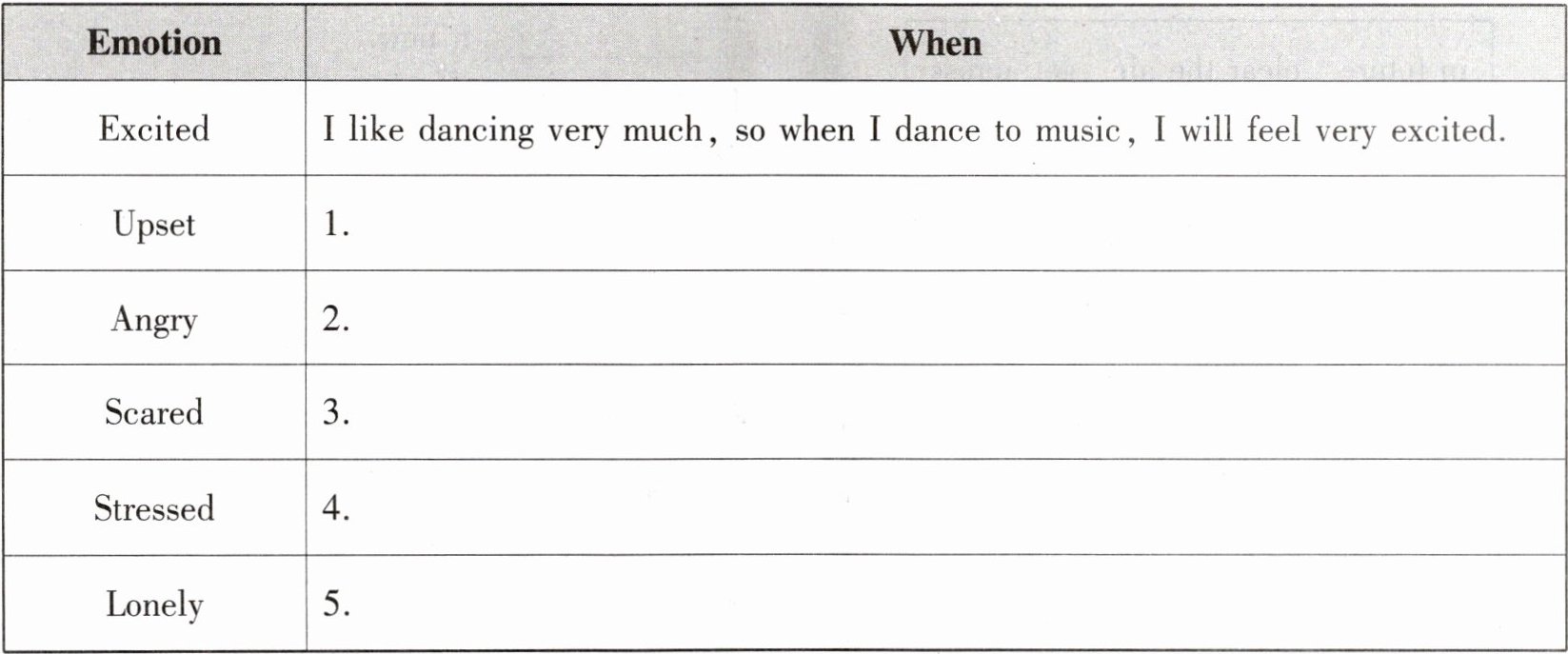
答案
六、1. 示例:I value my friends very much, so when I have an argument with my friends, I will feel very upset. 2. I don't expect people to lie to me, so when someone lies to me, I will feel angry. 3. I am afraid of spiders, so every time I see a spider, I will feel scared. 4. I am not good at maths, so before the maths tests, I often feel stressed. 5. I'm outgoing and enjoy being with my friends, so when my friends aren't around me, I will feel lonely.
解析
【解析】
本题要求结合自身实际,参照所给示例,用英语描述不同情绪产生的场景,需先表明自身相关的喜好、在意的事或特点,再说明触发对应情绪的具体情境,句式可参考示例的逻辑结构进行创作。
【答案】
1. 示例:I value my friends very much, so when I have an argument with my friends, I will feel very upset.
2. I don't expect people to lie to me, so when someone lies to me, I will feel angry.
3. I am afraid of spiders, so every time I see a spider, I will feel scared.
4. I am not good at maths, so before the maths tests, I often feel stressed.
5. I'm outgoing and enjoy being with my friends, so when my friends aren't around me, I will feel lonely.
【知识点】
英语情景表达、情绪类词汇运用、状语从句运用
【点评】
本题结合心理健康主题,既考查学生的英语语言表达能力,又引导学生关注自身情绪变化,贴合生活实际,能有效锻炼学生的语言输出与情绪感知能力。
【难度系数】
0.7
本题要求结合自身实际,参照所给示例,用英语描述不同情绪产生的场景,需先表明自身相关的喜好、在意的事或特点,再说明触发对应情绪的具体情境,句式可参考示例的逻辑结构进行创作。
【答案】
1. 示例:I value my friends very much, so when I have an argument with my friends, I will feel very upset.
2. I don't expect people to lie to me, so when someone lies to me, I will feel angry.
3. I am afraid of spiders, so every time I see a spider, I will feel scared.
4. I am not good at maths, so before the maths tests, I often feel stressed.
5. I'm outgoing and enjoy being with my friends, so when my friends aren't around me, I will feel lonely.
【知识点】
英语情景表达、情绪类词汇运用、状语从句运用
【点评】
本题结合心理健康主题,既考查学生的英语语言表达能力,又引导学生关注自身情绪变化,贴合生活实际,能有效锻炼学生的语言输出与情绪感知能力。
【难度系数】
0.7
