

 登录
二、听对话和短文答题(每小题1分,共10分)
你将听到一段对话和两篇短文,各听两遍。听完后,选出你认为最合适的备选答案。
听一段对话,回答第11、12小题。
(
A. Maria.
B. Tony.
C. Mary.
(
A. Boring.
B. Easy.
C. Interesting.
你将听到一段对话和两篇短文,各听两遍。听完后,选出你认为最合适的备选答案。
听一段对话,回答第11、12小题。
(
A
) 11. Who is going to learn Chinese?A. Maria.
B. Tony.
C. Mary.
(
C
) 12. How does Tony like history?A. Boring.
B. Easy.
C. Interesting.
答案
11.A 12.C
听第一篇短文,完成第13~15小题。
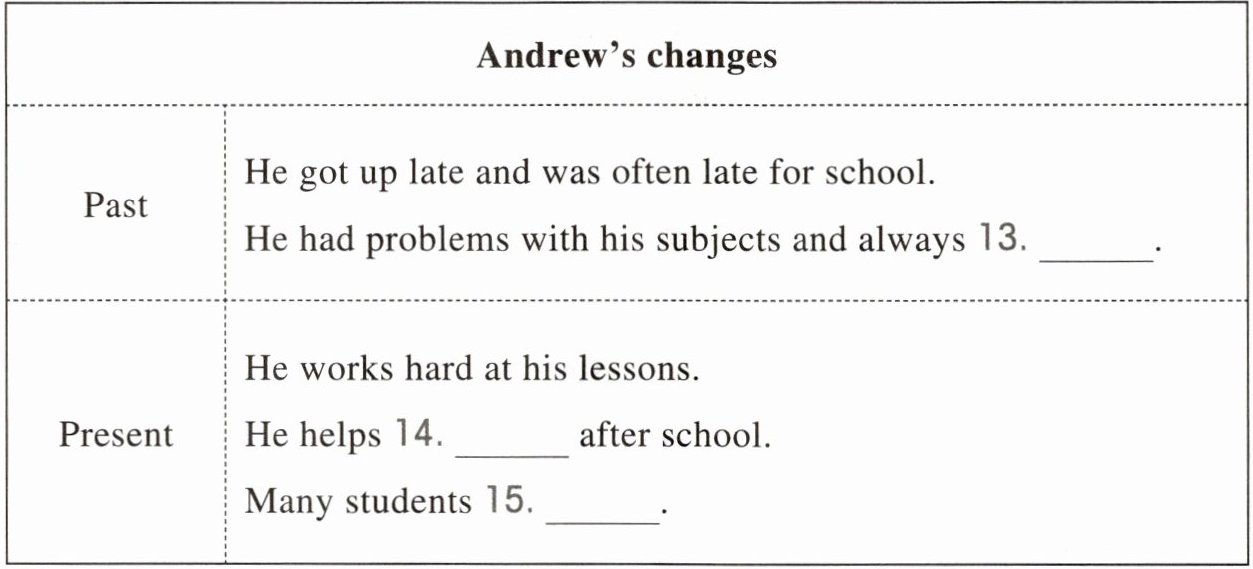
(
C. played jokes on others
(
C. clean the room
(
C. play with him
(
A
) 13. A. threw rubbish everywhere B. laughed at othersC. played jokes on others
(
C
) 14. A. cook meals B. look after his sisterC. clean the room
(
A
) 15. A. make friends with him B. talk with himC. play with him
答案
13.A 14.C 15.A
听第二篇短文,回答第16~20小题。
(
A. Before the Chinese class. B. Before the English class.
C. Before the PE class.
(
A. Paris. B. London. C. New York.
(
A. Clearly. B. Fast. C. Loudly.
(
A. “Nice to meet you!” B. “Goodbye!” C. “How are you?”
(
A. Very bad. B. Not bad. C. Very good.
(
B
) 16. When did the students get the news?A. Before the Chinese class. B. Before the English class.
C. Before the PE class.
(
C
) 17. Where did the foreign teachers come from?A. Paris. B. London. C. New York.
(
A
) 18. How did the foreign teachers speak English?A. Clearly. B. Fast. C. Loudly.
(
A
) 19. What did the woman teacher say to the speaker?A. “Nice to meet you!” B. “Goodbye!” C. “How are you?”
(
C
) 20. What did the woman teacher think of the speaker’s English?A. Very bad. B. Not bad. C. Very good.
答案
16.B 17.C 18.A 19.A 20.C
