

 登录
登录
E Read and write(根据上下文和首字母提示补全对话,每空一词)
A: Hi, Amy. I have a problem. Can you (1)h
B: Sure, Tom. (2)W
A: I want to play ping-pong, but I can't (3)f
B: Why don't you (4)u
A: Thank you. You're so kind.
Tom breaks (损坏) the bat.
A: I'm sorry, Amy.
B: (5)D
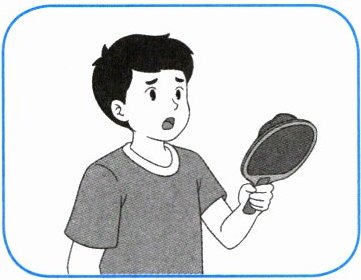
A: Hi, Amy. I have a problem. Can you (1)h
elp
me?B: Sure, Tom. (2)W
hat's
the matter?A: I want to play ping-pong, but I can't (3)f
ind
my bat.B: Why don't you (4)u
se
my bat? Here you are.A: Thank you. You're so kind.
Tom breaks (损坏) the bat.
A: I'm sorry, Amy.
B: (5)D
on't
worry. It's OK. I can fix (修理) it.答案
1. help 2. What's 3. find
4. use 5. Don't
4. use 5. Don't
解析
【分析】
本题是根据对话上下文和首字母提示补全单词,需结合日常交际用语、固定搭配及动词词义解题。先通读对话理解语境:1. Tom有问题请求帮助,对应首字母h;2. 询问状况用固定句型;3. Tom找不到球拍,对应首字母f;4. 建议用某物,对应首字母u;5. 安慰对方用祈使句否定形式,对应首字母D。
【解析】
1. 句意:你能帮助我吗?结合语境和首字母h,填help;
2. 句意:怎么了?固定句型What's the matter,首字母W,填What's;
3. 句意:我找不到我的球拍,首字母f,填find;
4. 句意:你为什么不用我的球拍?Why don't you后接动词原形,首字母u,填use;
5. 句意:别担心。祈使句否定形式为Don't + 动词原形,首字母D,填Don't。
【答案】
1. help 2. What's 3. find 4. use 5. Don't
【知识点】
日常交际用语、固定句型、祈使句
【点评】
本题考查日常对话的基础表达,结合语境和首字母提示即可完成,侧重基础交际能力的运用。
【难度系数】
0.8
本题是根据对话上下文和首字母提示补全单词,需结合日常交际用语、固定搭配及动词词义解题。先通读对话理解语境:1. Tom有问题请求帮助,对应首字母h;2. 询问状况用固定句型;3. Tom找不到球拍,对应首字母f;4. 建议用某物,对应首字母u;5. 安慰对方用祈使句否定形式,对应首字母D。
【解析】
1. 句意:你能帮助我吗?结合语境和首字母h,填help;
2. 句意:怎么了?固定句型What's the matter,首字母W,填What's;
3. 句意:我找不到我的球拍,首字母f,填find;
4. 句意:你为什么不用我的球拍?Why don't you后接动词原形,首字母u,填use;
5. 句意:别担心。祈使句否定形式为Don't + 动词原形,首字母D,填Don't。
【答案】
1. help 2. What's 3. find 4. use 5. Don't
【知识点】
日常交际用语、固定句型、祈使句
【点评】
本题考查日常对话的基础表达,结合语境和首字母提示即可完成,侧重基础交际能力的运用。
【难度系数】
0.8
F Read and complete(读短文,完成任务)选做题
Tom, Lily and Emma are good friends. They love spending time together, and they also understand each other's likes.
Tom likes reading at home. When his friends ask him to play, Tom often says, "Thanks, but I'm reading now. I can join you later." Then they don't bother (打扰) him.
Lily's favourite sport is skipping. She understands that sometimes her friends may not want to skip. She always asks first, "Would you like to skip with me?" Her friends feel all right when they say no.
Emma likes sharing food with her friends, but she knows they may not always want to try it. She usually asks first and never pushes others.
1. 根据短文内容选出正确答案。
(
A. Reading. B. Skipping. C. Sharing food.
(
A. 推挤 B. 推动 C. 强迫
(
A. Please try it. B. That's OK. C. Why don't you like it?
(
A. Friends should always stay together.
B. We should always say yes to friends.
C. Friends should understand each other.
2. 根据实际情况回答问题。
Your friend shares some mangoes with you. But you don't like mangoes. What can you say?
Tom, Lily and Emma are good friends. They love spending time together, and they also understand each other's likes.
Tom likes reading at home. When his friends ask him to play, Tom often says, "Thanks, but I'm reading now. I can join you later." Then they don't bother (打扰) him.
Lily's favourite sport is skipping. She understands that sometimes her friends may not want to skip. She always asks first, "Would you like to skip with me?" Her friends feel all right when they say no.
Emma likes sharing food with her friends, but she knows they may not always want to try it. She usually asks first and never pushes others.
1. 根据短文内容选出正确答案。
(
A
) ① What does Tom like doing?A. Reading. B. Skipping. C. Sharing food.
(
C
) ② What does "push" mean in Chinese?A. 推挤 B. 推动 C. 强迫
(
B
) ③ What may Emma say when a friend doesn't want her food?A. Please try it. B. That's OK. C. Why don't you like it?
(
C
) ④ What can we learn from the passage?A. Friends should always stay together.
B. We should always say yes to friends.
C. Friends should understand each other.
2. 根据实际情况回答问题。
Your friend shares some mangoes with you. But you don't like mangoes. What can you say?
答案
1. ① A
② C
③ B
④ C
2. 示例:Thank you so much for sharing! But I'm sorry, I don't like mangoes. It's really sweet of you to offer them to me.
② C
③ B
④ C
2. 示例:Thank you so much for sharing! But I'm sorry, I don't like mangoes. It's really sweet of you to offer them to me.
解析
【分析】
本题为英语阅读理解题,分为选择题和情景问答两部分。解题思路如下:1. 选择题需带着问题定位短文对应内容:细节题直接找原文信息;词义猜测题结合上下文语境推断;主旨题抓短文中心句。2. 情景问答题需遵循日常交际的礼貌原则,结合题目要求组织语言。
【解析】
1. 选择题解析:
① 定位短文第二段第一句“Tom likes reading at home.”,可知Tom的爱好是阅读,选A。
② 结合第四段“she knows they may not always want to try it. She usually asks first and never pushes others.”,可知push意为“强迫”,选C。
③ Emma从不强迫他人,因此朋友拒绝时她会接受,对应选项B。
④ 短文开头点明“they also understand each other's likes”,主旨为朋友应互相理解,选C。
2. 情景问答解析:需礼貌感谢分享,再委婉说明不喜欢芒果,符合日常交际表达即可,示例答案符合要求。
【答案】
1. ①A ②C ③B ④C
2. Thank you so much for sharing! But I'm sorry, I don't like mangoes. It's really sweet of you to offer them to me.
【知识点】
英语阅读理解、词义猜测、情景交际
【点评】
本题为英语阅读理解综合题,涵盖细节理解、词义猜测、主旨大意及情景交际类题目,考查学生提取信息、推断词义和运用日常用语的能力,贴近学生生活,难度适中。
【难度系数】
0.8
本题为英语阅读理解题,分为选择题和情景问答两部分。解题思路如下:1. 选择题需带着问题定位短文对应内容:细节题直接找原文信息;词义猜测题结合上下文语境推断;主旨题抓短文中心句。2. 情景问答题需遵循日常交际的礼貌原则,结合题目要求组织语言。
【解析】
1. 选择题解析:
① 定位短文第二段第一句“Tom likes reading at home.”,可知Tom的爱好是阅读,选A。
② 结合第四段“she knows they may not always want to try it. She usually asks first and never pushes others.”,可知push意为“强迫”,选C。
③ Emma从不强迫他人,因此朋友拒绝时她会接受,对应选项B。
④ 短文开头点明“they also understand each other's likes”,主旨为朋友应互相理解,选C。
2. 情景问答解析:需礼貌感谢分享,再委婉说明不喜欢芒果,符合日常交际表达即可,示例答案符合要求。
【答案】
1. ①A ②C ③B ④C
2. Thank you so much for sharing! But I'm sorry, I don't like mangoes. It's really sweet of you to offer them to me.
【知识点】
英语阅读理解、词义猜测、情景交际
【点评】
本题为英语阅读理解综合题,涵盖细节理解、词义猜测、主旨大意及情景交际类题目,考查学生提取信息、推断词义和运用日常用语的能力,贴近学生生活,难度适中。
【难度系数】
0.8
