

 登录
登录
Ⅰ.根据句意及汉语提示写单词
1.上星期,我和父母去三亚旅行了。
Last week, my parents and I
2.尝试了几次之后,狮子最终逃脱了。
After it tried a few times, the lion
3.一只小狗正在追赶一个小男孩。
A little dog is
4.你如何做出健康的饮食选择?
How do you make
5.凯特的弟弟是野餐时唯一的小孩,所以这个玩具卡车一定是属于他的。
Kate's little brother was the only kid at the picnic, so the toy truck must
1.上星期,我和父母去三亚旅行了。
Last week, my parents and I
went
on
a trip
to Sanya.2.尝试了几次之后,狮子最终逃脱了。
After it tried a few times, the lion
got
out
at last.3.一只小狗正在追赶一个小男孩。
A little dog is
running
after
a little boy.4.你如何做出健康的饮食选择?
How do you make
healthy
eating
choices
?5.凯特的弟弟是野餐时唯一的小孩,所以这个玩具卡车一定是属于他的。
Kate's little brother was the only kid at the picnic, so the toy truck must
belong
to
him.答案
1. went on a trip 2. got out 3. running after 4. healthy eating choices 5. belong to
解析
【分析】
本题要求根据汉语提示完成英语句子,需先结合句子中的时间状语或语境确定时态,再匹配对应汉语意思的英语固定短语,最后调整短语的正确形式(如动词过去式、现在分词、原形等),确保句子语法正确、语义通顺。
【解析】
1. 句中时间状语为Last week,需用一般过去时;“去旅行”的固定短语为go on a trip,其过去式为went on a trip,故填went on a trip。
2. 结合句意“逃脱”,固定短语为get out;句子描述过去发生的动作,用一般过去式,故填got out。
3. 句子为现在进行时(结构:be+现在分词);“追赶”的固定短语为run after,其现在分词为running after,故填running after。
4. “健康的饮食选择”的英语固定表达为healthy eating choices,符合句意,故填healthy eating choices。
5. “属于”的固定短语为belong to;情态动词must后接动词原形,故填belong to。
【答案】
1. went on a trip 2. got out 3. running after 4. healthy eating choices 5. belong to
【知识点】
固定搭配、动词短语、时态
【点评】
本题考查常用英语短语及基础时态的运用,属于基础题型,侧重考查学生对核心短语的积累和正确形式的掌握,难度适中。
【难度系数】
0.3
本题要求根据汉语提示完成英语句子,需先结合句子中的时间状语或语境确定时态,再匹配对应汉语意思的英语固定短语,最后调整短语的正确形式(如动词过去式、现在分词、原形等),确保句子语法正确、语义通顺。
【解析】
1. 句中时间状语为Last week,需用一般过去时;“去旅行”的固定短语为go on a trip,其过去式为went on a trip,故填went on a trip。
2. 结合句意“逃脱”,固定短语为get out;句子描述过去发生的动作,用一般过去式,故填got out。
3. 句子为现在进行时(结构:be+现在分词);“追赶”的固定短语为run after,其现在分词为running after,故填running after。
4. “健康的饮食选择”的英语固定表达为healthy eating choices,符合句意,故填healthy eating choices。
5. “属于”的固定短语为belong to;情态动词must后接动词原形,故填belong to。
【答案】
1. went on a trip 2. got out 3. running after 4. healthy eating choices 5. belong to
【知识点】
固定搭配、动词短语、时态
【点评】
本题考查常用英语短语及基础时态的运用,属于基础题型,侧重考查学生对核心短语的积累和正确形式的掌握,难度适中。
【难度系数】
0.3
Ⅱ.完形填空
Penguins look funny with their big bodies, short necks and short legs. They are birds but they cannot
Giraffes have big eyes and they can
(
C. run D. walk
(
C. don't D. may
(
C. eggs D. tails
(
C. eat D. find
(
C. fat D. thin
(
C. necks D. ears
(
C. but D. or
(
C. sleep D. play
(
C. jump D. stand
(
C. friends D. juice
Penguins look funny with their big bodies, short necks and short legs. They are birds but they cannot
A
1. They are not fish but they A
2 swim very well. A lot of penguins lay eggs togeth- er. They stand still(不动) for a long time, so they can keep their C
3 warm on their feet.Giraffes have big eyes and they can
A
4 very well. They are very B
5, so they can eat leaves from tall trees. However, with their long C
6, it is difficult to drink water. They have to use their front legs and bend(弯曲) their necks, A
7 their heads can get the ground. When they C
8, they sit on the ground and rest their heads on their backs. Giraffes can B
9 fast with their thin legs but they cannot run for a long time. When they are hungry, they often walk for a long time to find A
10 in far- away places.(
A
)1. A. fly B. swimC. run D. walk
(
A
)2. A. can B. can'tC. don't D. may
(
C
)3. A. bodies B. headsC. eggs D. tails
(
A
)4. A. see B. hearC. eat D. find
(
B
)5. A. short B. tallC. fat D. thin
(
C
)6. A. noses B. legsC. necks D. ears
(
A
)7. A. so B. becauseC. but D. or
(
C
)8. A. drink B. eatC. sleep D. play
(
B
)9. A. walk B. runC. jump D. stand
(
A
)10. A. food B. waterC. friends D. juice
答案
1. A 【解析】fly飞;swim游泳;run跑;walk走。结合常识可知,企鹅虽然是鸟,但不会飞。故选A。
2. A 【解析】can能;can't不能;don't不;may可以。结合常识可知,企鹅不是鱼,但能游得很好。故选A。
3. C 【解析】bodies身体;heads头;eggs蛋;tails尾巴。根据“A lot of penguins lay eggs together.”可知,企鹅产蛋,所以它们是把蛋放在脚上保暖。故选C。
4. A 【解析】see看见;hear听见;eat吃;find发现。根据“Giraffes have big eyes”可知,此处应说明“长颈鹿视力好”。故选A。
5. B 【解析】short矮的;tall高的;fat胖的;thin瘦的。根据“so they can eat leaves from tall trees.”可知,它们很高。故选B。
6. C 【解析】noses鼻子;legs腿;necks脖子;ears耳朵。根据“it is difficult to drink water.”可知,由于它们的脖子很长,所以很难喝水。故选C。
7. A 【解析】so所以;because因为;but但是;or或。根据“their heads can get the ground.”可知,此处空前“它们不得不使用它们的前腿并弯曲它们的脖子”的目的是空后的“它们的头能到地面”,故选so(以便)。故选A。
8. C 【解析】drink喝;eat吃;sleep睡觉;play玩。根据“they sit on the ground and rest their heads on their backs.”可知,当它们睡觉时,它们坐在地上,头靠在背上休息。故选C。
9. B 【解析】walk走;run跑;jump跳;stand站。根据“but they cannot run for a long time.”可知,此处表示长颈鹿可以用它们的细腿跑得很快。故选B。
10. A 【解析】food食物;water水;friends朋友;juice果汁。根据“When they are hungry,”可知,此处表示它们经常走很长时间去很远的地方寻找食物。故选A。
2. A 【解析】can能;can't不能;don't不;may可以。结合常识可知,企鹅不是鱼,但能游得很好。故选A。
3. C 【解析】bodies身体;heads头;eggs蛋;tails尾巴。根据“A lot of penguins lay eggs together.”可知,企鹅产蛋,所以它们是把蛋放在脚上保暖。故选C。
4. A 【解析】see看见;hear听见;eat吃;find发现。根据“Giraffes have big eyes”可知,此处应说明“长颈鹿视力好”。故选A。
5. B 【解析】short矮的;tall高的;fat胖的;thin瘦的。根据“so they can eat leaves from tall trees.”可知,它们很高。故选B。
6. C 【解析】noses鼻子;legs腿;necks脖子;ears耳朵。根据“it is difficult to drink water.”可知,由于它们的脖子很长,所以很难喝水。故选C。
7. A 【解析】so所以;because因为;but但是;or或。根据“their heads can get the ground.”可知,此处空前“它们不得不使用它们的前腿并弯曲它们的脖子”的目的是空后的“它们的头能到地面”,故选so(以便)。故选A。
8. C 【解析】drink喝;eat吃;sleep睡觉;play玩。根据“they sit on the ground and rest their heads on their backs.”可知,当它们睡觉时,它们坐在地上,头靠在背上休息。故选C。
9. B 【解析】walk走;run跑;jump跳;stand站。根据“but they cannot run for a long time.”可知,此处表示长颈鹿可以用它们的细腿跑得很快。故选B。
10. A 【解析】food食物;water水;friends朋友;juice果汁。根据“When they are hungry,”可知,此处表示它们经常走很长时间去很远的地方寻找食物。故选A。
解析
【分析】
这是一篇介绍企鹅和长颈鹿特征的完形填空,解题时需先通读全文把握主旨,再结合上下文语境、常识及词汇辨析逐一分析每个空的选项,确保所选答案符合逻辑和文意。
【解析】
1. 结合常识,企鹅属于鸟类但不会飞,swim(游泳)、run(跑)、walk(走)均不符合,故选A。
2. 企鹅不是鱼,但具备游泳能力,can表示“能够”,符合语境,can't(不能)、don't(不)、may(可以)均不合适,故选A。
3. 前文提到企鹅产蛋,因此它们站着不动是为了给脚上的蛋保暖,bodies(身体)、heads(头)、tails(尾巴)均不符合,故选C。
4. 长颈鹿有大眼睛,对应视力好,see(看见)符合;hear(听见)、eat(吃)、find(发现)与大眼睛的功能不符,故选A。
5. 能吃到高树上的叶子,说明长颈鹿很高,short(矮的)、fat(胖的)、thin(瘦的)均不符合,故选B。
6. 喝水困难是因为长颈鹿的脖子很长,noses(鼻子)、legs(腿)、ears(耳朵)均不符合,故选C。
7. 弯曲脖子和前腿的目的是让头碰到地面,so表示“以便”,表目的;because(因为)表原因,but(但是)表转折,or(或者)表选择,均不合适,故选A。
8. 坐在地上、头靠在背上是睡觉的状态,drink(喝)、eat(吃)、play(玩)均不符合,故选C。
9. 后文提到不能长时间跑,说明长颈鹿能跑得很快,walk(走)、jump(跳)、stand(站)均不符合,故选B。
10. 饥饿时会去远处找食物,water(水)、friends(朋友)、juice(果汁)均不符合语境,故选A。
【答案】
1.A 2.A 3.C 4.A 5.B 6.C 7.A 8.C 9.B 10.A
【知识点】
完形填空解题技巧、动物常识运用、语境词汇辨析
【点评】
本题围绕企鹅和长颈鹿的特征展开,既考察词汇辨析能力,也结合常见动物常识,是贴近生活的基础型完形填空,难度适中,适合巩固相关知识。
【难度系数】
0.6
这是一篇介绍企鹅和长颈鹿特征的完形填空,解题时需先通读全文把握主旨,再结合上下文语境、常识及词汇辨析逐一分析每个空的选项,确保所选答案符合逻辑和文意。
【解析】
1. 结合常识,企鹅属于鸟类但不会飞,swim(游泳)、run(跑)、walk(走)均不符合,故选A。
2. 企鹅不是鱼,但具备游泳能力,can表示“能够”,符合语境,can't(不能)、don't(不)、may(可以)均不合适,故选A。
3. 前文提到企鹅产蛋,因此它们站着不动是为了给脚上的蛋保暖,bodies(身体)、heads(头)、tails(尾巴)均不符合,故选C。
4. 长颈鹿有大眼睛,对应视力好,see(看见)符合;hear(听见)、eat(吃)、find(发现)与大眼睛的功能不符,故选A。
5. 能吃到高树上的叶子,说明长颈鹿很高,short(矮的)、fat(胖的)、thin(瘦的)均不符合,故选B。
6. 喝水困难是因为长颈鹿的脖子很长,noses(鼻子)、legs(腿)、ears(耳朵)均不符合,故选C。
7. 弯曲脖子和前腿的目的是让头碰到地面,so表示“以便”,表目的;because(因为)表原因,but(但是)表转折,or(或者)表选择,均不合适,故选A。
8. 坐在地上、头靠在背上是睡觉的状态,drink(喝)、eat(吃)、play(玩)均不符合,故选C。
9. 后文提到不能长时间跑,说明长颈鹿能跑得很快,walk(走)、jump(跳)、stand(站)均不符合,故选B。
10. 饥饿时会去远处找食物,water(水)、friends(朋友)、juice(果汁)均不符合语境,故选A。
【答案】
1.A 2.A 3.C 4.A 5.B 6.C 7.A 8.C 9.B 10.A
【知识点】
完形填空解题技巧、动物常识运用、语境词汇辨析
【点评】
本题围绕企鹅和长颈鹿的特征展开,既考察词汇辨析能力,也结合常见动物常识,是贴近生活的基础型完形填空,难度适中,适合巩固相关知识。
【难度系数】
0.6
Ⅲ. 阅读理解
A small lion lives with his mother.
One day, his mother is sleeping in the middle of the day and he goes into the forest to play. But after about two hours, he gets lost in the forest.
The lion is afraid. He runs every-where and shouts for his mother. But he still can't find his way home. When he is tired and doesn't know what to do, a sheep sees him and brings him to her home.
The sheep likes this small lion and feeds him very well. And the lion likes living with the sheep too. After some weeks, the lion is big and tall. But he is afraid of other small animals like dogs!
Some days later, a big lion comes. He looks terrible. When he shouts, lots of animals are afraid and run away. But the small lion isn't afraid. He is happy to meet the big lion and runs to play with him. Then he knows what he is really like. And other animals in the forest start to be afraid of him.
Sometimes we are like this small li-on. But if we learn more about our-selves, we will know we are strong!
(
A. In the morning.
B. Before noon.
C. In the afternoon.
D. After 3 o'clock.
(
A. He runs away quickly.
B. He is afraid of him.
C. He brings him to his home.
D. He runs to play with him.
(
A. He is strong.
B. He is terrible.
C. He is smart.
D. He is patient.
(
A. The big lion is actually this small lion's father.
B. This small lion finds his way home by himself.
C. Sometimes we need to know what we are really like.
D. We must be friendly to the animals like small lions.
(
A small lion lives with his mother.
One day, his mother is sleeping in the middle of the day and he goes into the forest to play. But after about two hours, he gets lost in the forest.
The lion is afraid. He runs every-where and shouts for his mother. But he still can't find his way home. When he is tired and doesn't know what to do, a sheep sees him and brings him to her home.
The sheep likes this small lion and feeds him very well. And the lion likes living with the sheep too. After some weeks, the lion is big and tall. But he is afraid of other small animals like dogs!
Some days later, a big lion comes. He looks terrible. When he shouts, lots of animals are afraid and run away. But the small lion isn't afraid. He is happy to meet the big lion and runs to play with him. Then he knows what he is really like. And other animals in the forest start to be afraid of him.
Sometimes we are like this small li-on. But if we learn more about our-selves, we will know we are strong!
(
C
)1. When is this small lion lost in the forest?A. In the morning.
B. Before noon.
C. In the afternoon.
D. After 3 o'clock.
(
D
)2. What happens to this small lion when a big lion comes?A. He runs away quickly.
B. He is afraid of him.
C. He brings him to his home.
D. He runs to play with him.
(
A
)3. What does this small lion realize about himself at last?A. He is strong.
B. He is terrible.
C. He is smart.
D. He is patient.
(
C
)4. What can we infer(推断) from the story?A. The big lion is actually this small lion's father.
B. This small lion finds his way home by himself.
C. Sometimes we need to know what we are really like.
D. We must be friendly to the animals like small lions.
(
D
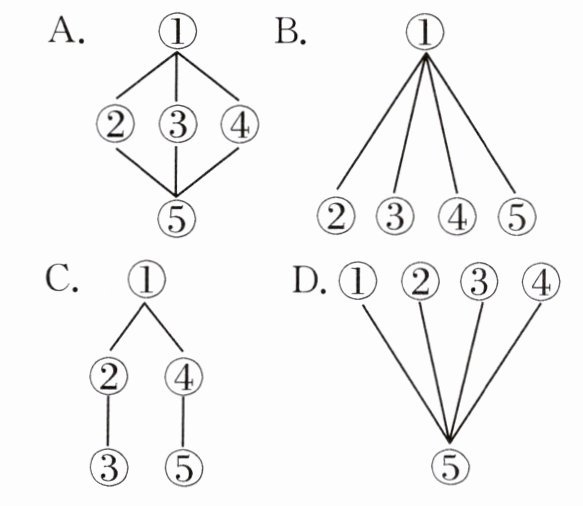
)5. Which of the following best shows the structure of the passage?答案
1. C 【解析】根据“One day, his mother is sleeping in the middle of the day and he goes into the forest to play. But after about two hours, he gets lost in the forest.”可知,小狮子是在下午两点左右迷路。故选C。
2. D 【解析】根据“He is happy to meet the big lion and runs to play with him.”可知,小狮子跑去和大狮子玩。故选D。
3. A 【解析】根据“Then he knows what he is really like. And other animals in the forest start to be afraid of him.”可知,森林里其他动物都开始害怕他,A选项“他很强大”符合。故选A。
4. C 【解析】根据“Sometimes we are like this small lion. But if we learn more about ourselves, we will know we are strong!”可知,这个故事告诉我们,如果真正了解自己,会知道自己很强大,C选项“有时我们需要知道我们到底是什么样子”符合。故选C。
5. D 【解析】根据短文内容可知,第一至四段讲述小狮子的故事,最后一段以类比的方式点明主题,指出我们也需要更多地了解自己,才能认识到自己的强大。篇章结构为分—总。故选D。
2. D 【解析】根据“He is happy to meet the big lion and runs to play with him.”可知,小狮子跑去和大狮子玩。故选D。
3. A 【解析】根据“Then he knows what he is really like. And other animals in the forest start to be afraid of him.”可知,森林里其他动物都开始害怕他,A选项“他很强大”符合。故选A。
4. C 【解析】根据“Sometimes we are like this small lion. But if we learn more about ourselves, we will know we are strong!”可知,这个故事告诉我们,如果真正了解自己,会知道自己很强大,C选项“有时我们需要知道我们到底是什么样子”符合。故选C。
5. D 【解析】根据短文内容可知,第一至四段讲述小狮子的故事,最后一段以类比的方式点明主题,指出我们也需要更多地了解自己,才能认识到自己的强大。篇章结构为分—总。故选D。
解析
【分析】
本题为英语阅读理解题,需结合短文内容逐一分析各小题,通过定位原文关键信息、理解主旨及篇章结构来选出正确答案。第1题考查细节理解,需找到小狮子迷路的时间;第2题考查细节理解,需明确大狮子出现时小狮子的反应;第3题考查细节理解,需确定小狮子最终的自我认知;第4题考查推理判断,需从故事中推断寓意;第5题考查篇章结构,需分析短文的结构类型。
【解析】
1. 第1题:根据短文第一段“his mother is sleeping in the middle of the day and he goes into the forest to play. But after about two hours, he gets lost in the forest.”可知,“middle of the day”即中午,两小时后为下午,因此小狮子是在下午迷路的,故选C。
2. 第2题:根据短文第四段“He is happy to meet the big lion and runs to play with him.”可知,小狮子见到大狮子后跑去和他玩,故选D。
3. 第3题:根据短文第四段“Then he knows what he is really like. And other animals in the forest start to be afraid of him.”可知,森林里其他动物都开始害怕小狮子,说明他意识到自己很强大,故选A。
4. 第4题:根据短文最后一段“Sometimes we are like this small lion. But if we learn more about ourselves, we will know we are strong!”可知,故事告诉我们有时需要更多地了解自己,才能认识到自身的强大,C选项符合,故选C。
5. 第5题:短文前四段分述小狮子的经历,最后一段总结点明主题,篇章结构为分—总,对应选项D,故选D。
【答案】
1.C 2.D 3.A 4.C 5.D
【知识点】
英语阅读理解、细节理解题、推理判断题、篇章结构题
【点评】
本题是一篇寓言类英语阅读理解,考查学生对短文细节的定位、主旨的理解、推理判断及篇章结构分析能力,整体难度适中,需学生仔细阅读原文,准确提取关键信息。
【难度系数】
0.5
本题为英语阅读理解题,需结合短文内容逐一分析各小题,通过定位原文关键信息、理解主旨及篇章结构来选出正确答案。第1题考查细节理解,需找到小狮子迷路的时间;第2题考查细节理解,需明确大狮子出现时小狮子的反应;第3题考查细节理解,需确定小狮子最终的自我认知;第4题考查推理判断,需从故事中推断寓意;第5题考查篇章结构,需分析短文的结构类型。
【解析】
1. 第1题:根据短文第一段“his mother is sleeping in the middle of the day and he goes into the forest to play. But after about two hours, he gets lost in the forest.”可知,“middle of the day”即中午,两小时后为下午,因此小狮子是在下午迷路的,故选C。
2. 第2题:根据短文第四段“He is happy to meet the big lion and runs to play with him.”可知,小狮子见到大狮子后跑去和他玩,故选D。
3. 第3题:根据短文第四段“Then he knows what he is really like. And other animals in the forest start to be afraid of him.”可知,森林里其他动物都开始害怕小狮子,说明他意识到自己很强大,故选A。
4. 第4题:根据短文最后一段“Sometimes we are like this small lion. But if we learn more about ourselves, we will know we are strong!”可知,故事告诉我们有时需要更多地了解自己,才能认识到自身的强大,C选项符合,故选C。
5. 第5题:短文前四段分述小狮子的经历,最后一段总结点明主题,篇章结构为分—总,对应选项D,故选D。
【答案】
1.C 2.D 3.A 4.C 5.D
【知识点】
英语阅读理解、细节理解题、推理判断题、篇章结构题
【点评】
本题是一篇寓言类英语阅读理解,考查学生对短文细节的定位、主旨的理解、推理判断及篇章结构分析能力,整体难度适中,需学生仔细阅读原文,准确提取关键信息。
【难度系数】
0.5
