

 登录
登录
任务型阅读。
▶ "答案与解析"见 P25
It is the fourth day of living without a cell phone. As soon as I wake up, I reach for the bedside table. Clearly, I still have a long way to go. What is it that drives us to check our email box?
I go to check my mailbox—my real one—then go on a trip to the store. I am shocked when I find that I've forgotten my shopping card.
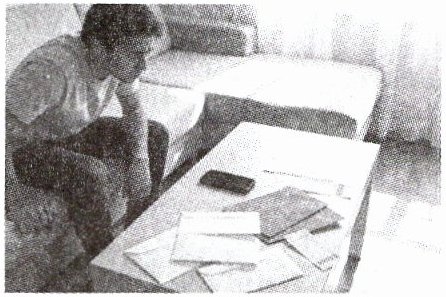
Is my plan to stop using my cell phone bad for my family life? Will this terrible challenge ruin (毁坏) so many happy years with a wonderful woman? If I keep troubling her, she'll end up leaving me. Children will laugh at me, and the seller at the local shop will say to other buyers, "It's so sad. He was a travel writer. He was on TV. And then one day he got this strange idea and it was the beginning of his bad luck."
It would be shameful to ruin my life for this. What if I took just a peek (偷看)? Come on! No one will know. It's Thursday, 2 p.m. Three-and-a-half days in. Halfway through, that's not bad. Important messages are probably waiting for me in my email box. I should handle them.
I feel ashamed and sorry. But I turn on my phone. Hundreds of emails and messages pour in. I deal with three important messages, but to be honest, they were nothing that couldn't have waited a few days.
"Excellent," I answer quickly. "The first few days are difficult, but then you get into it." In fact, I'm sorry that I told a lie (说谎) to the parent. It's hard not to use a cell phone, but I can't give up so early. I have to keep my promise that I will not use my phone for seven days. It is my plan, and I must finish it.
(素材来源: Reader's Digest CA)
根据短文内容,回答问题。
1. Why did the writer feel shocked when he went to the store?
2. What made the writer want to take a look at his phone?
3. What do you think of the messages in Paragraph 5?
4. How long has the writer planned to live without a cell phone?
5. What can we learn from the writer's experience and feelings?
▶ "答案与解析"见 P25
It is the fourth day of living without a cell phone. As soon as I wake up, I reach for the bedside table. Clearly, I still have a long way to go. What is it that drives us to check our email box?
I go to check my mailbox—my real one—then go on a trip to the store. I am shocked when I find that I've forgotten my shopping card.
Is my plan to stop using my cell phone bad for my family life? Will this terrible challenge ruin (毁坏) so many happy years with a wonderful woman? If I keep troubling her, she'll end up leaving me. Children will laugh at me, and the seller at the local shop will say to other buyers, "It's so sad. He was a travel writer. He was on TV. And then one day he got this strange idea and it was the beginning of his bad luck."
It would be shameful to ruin my life for this. What if I took just a peek (偷看)? Come on! No one will know. It's Thursday, 2 p.m. Three-and-a-half days in. Halfway through, that's not bad. Important messages are probably waiting for me in my email box. I should handle them.
I feel ashamed and sorry. But I turn on my phone. Hundreds of emails and messages pour in. I deal with three important messages, but to be honest, they were nothing that couldn't have waited a few days.
"Excellent," I answer quickly. "The first few days are difficult, but then you get into it." In fact, I'm sorry that I told a lie (说谎) to the parent. It's hard not to use a cell phone, but I can't give up so early. I have to keep my promise that I will not use my phone for seven days. It is my plan, and I must finish it.
(素材来源: Reader's Digest CA)
根据短文内容,回答问题。
1. Why did the writer feel shocked when he went to the store?
Because he had forgotten his shopping card.
2. What made the writer want to take a look at his phone?
The thought that important messages were waiting for him.
3. What do you think of the messages in Paragraph 5?
They were not really important.
4. How long has the writer planned to live without a cell phone?
For seven days.
5. What can we learn from the writer's experience and feelings?
It is hard to give up using cell phones, but we should keep our promises and control ourselves.(言之有理即可)
答案
1. Because he had forgotten his shopping card. 由第二段中“I am shocked when I find that I've forgotten my shopping card.”可知,作者去商店时感到震惊是因为他忘了带购物卡。
2. The thought that important messages were waiting for him. 由第四段中“Important messages are probably waiting for me in my email box.”可知,邮箱里的重要信息使得作者想看手机。
3. They were not really important. 由第五段中they were nothing that couldn't have waited a few days 可知,那些信息并非真的非常重要。
4. For seven days. 由最后一段中I will not use my phone for seven days 可知,作者打算停用手机一个星期。
5. It is hard to give up using cell phones, but we should keep our promises and control ourselves.(言之有理即可)
2. The thought that important messages were waiting for him. 由第四段中“Important messages are probably waiting for me in my email box.”可知,邮箱里的重要信息使得作者想看手机。
3. They were not really important. 由第五段中they were nothing that couldn't have waited a few days 可知,那些信息并非真的非常重要。
4. For seven days. 由最后一段中I will not use my phone for seven days 可知,作者打算停用手机一个星期。
5. It is hard to give up using cell phones, but we should keep our promises and control ourselves.(言之有理即可)
解析
【分析】
这是一篇记叙文类任务型阅读,解题时首先通读全文理清脉络,本文讲述了作者挑战连续7天不使用手机的第四天的经历与心理活动。之后针对每个问题,带着关键词回到原文精准定位,提取对应信息即可得出前4道细节题的答案,最后一道开放题结合作者的经历和最终感悟,提炼出贴合主旨的合理观点即可。解题时优先依托原文内容,避免主观臆断,细节题尽量从原文原句整理答案,开放题做到言之有理符合文意即可。
【解析】
1. 定位到文章第二段末尾的句子"I am shocked when I find that I've forgotten my shopping card",直接提取事件原因,整理为符合问题要求的回答即可。
2. 定位到文章第四段作者动摇时的心理描写"Important messages are probably waiting for me in my email box. I should handle them",可知是作者认为有重要消息在邮箱里等着自己的想法,驱使他想要偷看手机,整理该内容即可得到答案。
3. 定位到文章第五段末尾的描述"but to be honest, they were nothing that couldn't have waited a few days",这句双重否定句的含义是这些消息完全可以等几天再处理,说明它们实际上并没有那么重要。
4. 定位到文章最后一段的句子"I have to keep my promise that I will not use my phone for seven days",直接提取作者计划停用手机的时长即可。
5. 结合全文内容,作者在停用手机的过程中多次动摇,最终意识到不能轻易放弃,要遵守自己许下的承诺,锻炼自控能力,围绕这个核心表述,言之有理即可。
【答案】
1. Because he had forgotten his shopping card.
2. The thought that important messages were waiting for him.
3. They were not really important.
4. For seven days.
5. It is hard to give up using cell phones, but we should keep our promises and control ourselves.(言之有理即可)
【知识点】
任务型阅读
文本细节定位
主旨文意理解
【点评】
本题难度适中,前四道小题均为细节查找类题型,大多可以直接从原文找到对应原句得出答案,重点考查学生快速定位文本信息的能力;最后一道开放题引导学生结合作者的经历提炼感悟,既贴合文本内容,也能引导学生思考日常使用手机的自控力、信守承诺的相关道理,符合阅读题的能力考查要求。
【难度系数】
0.7
这是一篇记叙文类任务型阅读,解题时首先通读全文理清脉络,本文讲述了作者挑战连续7天不使用手机的第四天的经历与心理活动。之后针对每个问题,带着关键词回到原文精准定位,提取对应信息即可得出前4道细节题的答案,最后一道开放题结合作者的经历和最终感悟,提炼出贴合主旨的合理观点即可。解题时优先依托原文内容,避免主观臆断,细节题尽量从原文原句整理答案,开放题做到言之有理符合文意即可。
【解析】
1. 定位到文章第二段末尾的句子"I am shocked when I find that I've forgotten my shopping card",直接提取事件原因,整理为符合问题要求的回答即可。
2. 定位到文章第四段作者动摇时的心理描写"Important messages are probably waiting for me in my email box. I should handle them",可知是作者认为有重要消息在邮箱里等着自己的想法,驱使他想要偷看手机,整理该内容即可得到答案。
3. 定位到文章第五段末尾的描述"but to be honest, they were nothing that couldn't have waited a few days",这句双重否定句的含义是这些消息完全可以等几天再处理,说明它们实际上并没有那么重要。
4. 定位到文章最后一段的句子"I have to keep my promise that I will not use my phone for seven days",直接提取作者计划停用手机的时长即可。
5. 结合全文内容,作者在停用手机的过程中多次动摇,最终意识到不能轻易放弃,要遵守自己许下的承诺,锻炼自控能力,围绕这个核心表述,言之有理即可。
【答案】
1. Because he had forgotten his shopping card.
2. The thought that important messages were waiting for him.
3. They were not really important.
4. For seven days.
5. It is hard to give up using cell phones, but we should keep our promises and control ourselves.(言之有理即可)
【知识点】
任务型阅读
文本细节定位
主旨文意理解
【点评】
本题难度适中,前四道小题均为细节查找类题型,大多可以直接从原文找到对应原句得出答案,重点考查学生快速定位文本信息的能力;最后一道开放题引导学生结合作者的经历提炼感悟,既贴合文本内容,也能引导学生思考日常使用手机的自控力、信守承诺的相关道理,符合阅读题的能力考查要求。
【难度系数】
0.7
