

 登录
登录
(D)
Liam Hannon was only ten when he started handing out free lunches to people who were
hungry. With the help from his family and other supporters, he hands out 75 to 100 lunches
every time. And he does it three times a month. We asked Liam to tell us about it.
Q: How did you get the idea of making free lunches?
A: Four summers ago, I didn't want to go camping. Instead, I did an online treasure-hunt
programme. My first task was to do something to help homeless people, and I got the idea of
making them lunch.
Q: What's the best part about what you do?
A: I'd say meeting the people. They're real people who just need a little kindness in their
lives. Some of them have become friends of our family.
Q: What would you tell other kids who want to make a difference?
A: I want to tell them to do something they enjoy and get help from friends and family. I
invite my friends to help with lunches, and almost every time, they've come and given out
lunches with me and my dad.
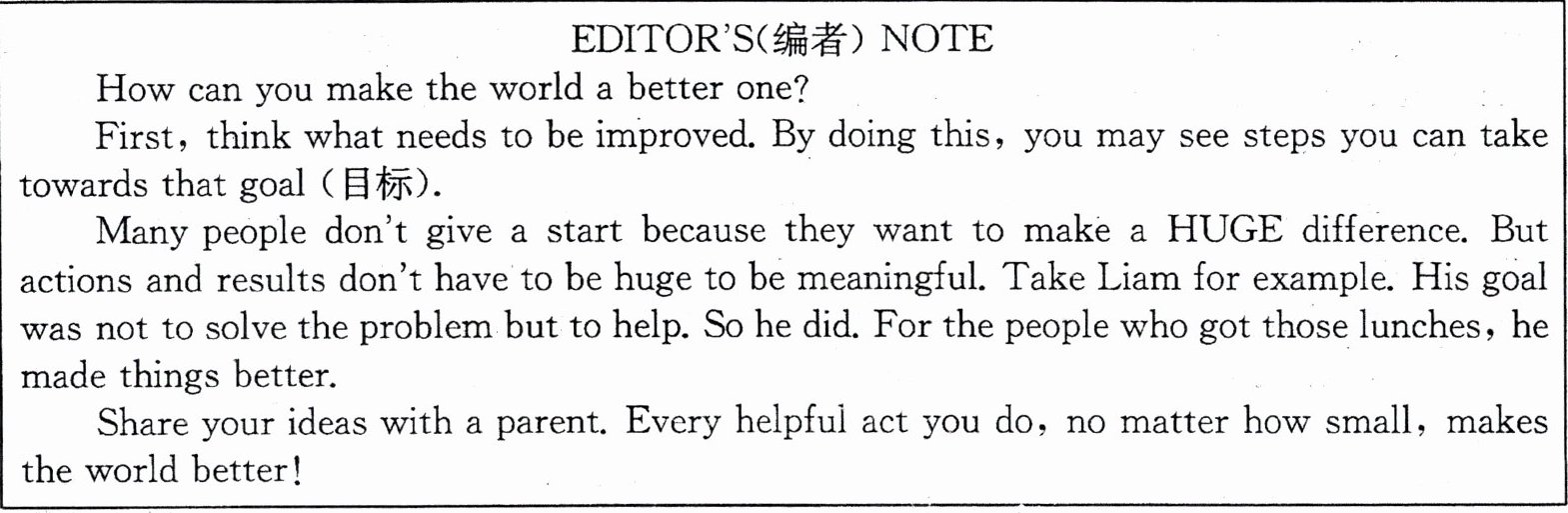
每题答案不超过8个单词
1. How long has Liam Hannon handed out free lunches?
2. How did Liam get the idea of making free lunches?
3. How many lunches does Liam hand out every month?
4. What does Liam Hannon like best about his work?
5. What would you like to do to make the world better after reading the editor's note?
Liam Hannon was only ten when he started handing out free lunches to people who were
hungry. With the help from his family and other supporters, he hands out 75 to 100 lunches
every time. And he does it three times a month. We asked Liam to tell us about it.
Q: How did you get the idea of making free lunches?
A: Four summers ago, I didn't want to go camping. Instead, I did an online treasure-hunt
programme. My first task was to do something to help homeless people, and I got the idea of
making them lunch.
Q: What's the best part about what you do?
A: I'd say meeting the people. They're real people who just need a little kindness in their
lives. Some of them have become friends of our family.
Q: What would you tell other kids who want to make a difference?
A: I want to tell them to do something they enjoy and get help from friends and family. I
invite my friends to help with lunches, and almost every time, they've come and given out
lunches with me and my dad.
每题答案不超过8个单词
1. How long has Liam Hannon handed out free lunches?
For four years.
2. How did Liam get the idea of making free lunches?
By doing an online treasure-hunt programme.
3. How many lunches does Liam hand out every month?
225 to 300 lunches.
4. What does Liam Hannon like best about his work?
Meeting the people.
5. What would you like to do to make the world better after reading the editor's note?
Donate old clothes to poor children./Visit the old people's home./Help clean the local parks.
答案
1. For four years. 2. By doing an online treasure-hunt programme.
3. 225 to 300 lunches. 4. Meeting the people.
5. Donate old clothes to poor children./Visit the old people's home./Help clean the local
parks.
3. 225 to 300 lunches. 4. Meeting the people.
5. Donate old clothes to poor children./Visit the old people's home./Help clean the local
parks.
解析
【分析】
这是一篇任务型阅读题,解题思路如下:
1. 前4道为细节题,需带着问题到原文对话部分定位关键信息,提取符合“不超过8个单词”要求的内容;
2. 第1题找时间相关表述,从Liam回答里的“Four summers ago”转换为对应时长;
3. 第2题定位产生想法的来源,抓取参与线上寻宝项目的相关内容;
4. 第3题结合每次分发数量和每月次数,通过简单计算得出每月总量范围;
5. 第4题直接提取回答里对应“best part”的内容;
6. 第5题是开放性题目,结合编者按“小善举也能让世界更好”的理念,想出合理公益行为即可。
【解析】
1. 从Liam的回答“Four summers ago”可知,他已经分发免费午餐四年,得出答案For four years.
2. 根据回答里的“I did an online treasure-hunt programme...and I got the idea of making them lunch”,可知想法来自参与线上寻宝项目,得出答案By doing an online treasure-hunt programme.
3. 原文提到每次分发75到100份,每月3次,计算可得75×3=225,100×3=300,得出每月分发225 to 300 lunches.
4. 针对“What's the best part”的问题,Liam回答“I'd say meeting the people”,直接提取该内容作为答案。
5. 结合编者倡导的小善举,列举如捐赠旧衣物、看望老人、打扫公园等合理行为,答案不唯一,符合要求即可。
【答案】
1. For four years.
2. By doing an online treasure-hunt programme.
3. 225 to 300 lunches.
4. Meeting the people.
5. Donate old clothes to poor children./Visit the old people's home./Help clean the local parks.
【知识点】
细节信息提取,简单计算应用,开放性表达
【点评】
本文围绕青少年公益行为展开,既考查学生从文本中提取细节信息的能力,又通过开放性题目引导学生践行“小善举改变世界”的理念,题目设置贴合文本,能有效锻炼学生的信息处理和实践思考能力。
【难度系数】
0.7
这是一篇任务型阅读题,解题思路如下:
1. 前4道为细节题,需带着问题到原文对话部分定位关键信息,提取符合“不超过8个单词”要求的内容;
2. 第1题找时间相关表述,从Liam回答里的“Four summers ago”转换为对应时长;
3. 第2题定位产生想法的来源,抓取参与线上寻宝项目的相关内容;
4. 第3题结合每次分发数量和每月次数,通过简单计算得出每月总量范围;
5. 第4题直接提取回答里对应“best part”的内容;
6. 第5题是开放性题目,结合编者按“小善举也能让世界更好”的理念,想出合理公益行为即可。
【解析】
1. 从Liam的回答“Four summers ago”可知,他已经分发免费午餐四年,得出答案For four years.
2. 根据回答里的“I did an online treasure-hunt programme...and I got the idea of making them lunch”,可知想法来自参与线上寻宝项目,得出答案By doing an online treasure-hunt programme.
3. 原文提到每次分发75到100份,每月3次,计算可得75×3=225,100×3=300,得出每月分发225 to 300 lunches.
4. 针对“What's the best part”的问题,Liam回答“I'd say meeting the people”,直接提取该内容作为答案。
5. 结合编者倡导的小善举,列举如捐赠旧衣物、看望老人、打扫公园等合理行为,答案不唯一,符合要求即可。
【答案】
1. For four years.
2. By doing an online treasure-hunt programme.
3. 225 to 300 lunches.
4. Meeting the people.
5. Donate old clothes to poor children./Visit the old people's home./Help clean the local parks.
【知识点】
细节信息提取,简单计算应用,开放性表达
【点评】
本文围绕青少年公益行为展开,既考查学生从文本中提取细节信息的能力,又通过开放性题目引导学生践行“小善举改变世界”的理念,题目设置贴合文本,能有效锻炼学生的信息处理和实践思考能力。
【难度系数】
0.7
