

 登录
三、任务型阅读 50/30/20预算法则
素养:思维品质 难度:中 用时:7分钟
[2025长沙市南雅中学开学考试改编]
Suppose you had a monthly income of 15,000 yuan. How much of it would you spend? And how much money would you save? Maybe you can try the 50/30/20 method. 1.
According to the 50/30/20 method, you should divide your monthly income into three groups: 50% for "needs", 30% for "wants" and 20% for savings.
"Needs" refers to the things necessary for living. Examples include electricity, transportation (交通) and food. 2.
3.
Finally, you need to save 20% of your monthly income. 5.
Try the 50/30/20 method. It will help you lead a happy life while making sure that you have some savings to depend on (依赖) whenever you need them.
根据短文内容,从下面七个选项中选出五个还原到文中
A. Savings are important.
B. These are "must-haves".
C. Money doesn't grow on trees.
D. It is a popular budgeting method.
E. You can continue using your old bag.
F. "Wants" means the unnecessary costs.
G. By then, people will no longer use cash.
拓展设问
新考法·篇章结构图题 What's the structure of the passage?
C.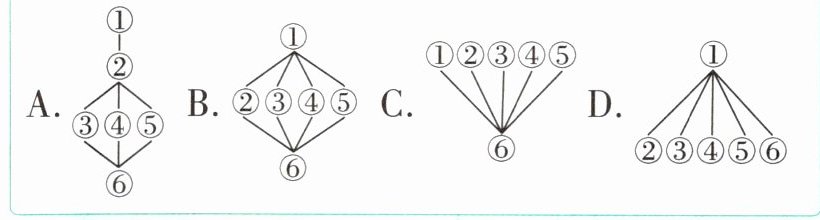
素养:思维品质 难度:中 用时:7分钟
[2025长沙市南雅中学开学考试改编]
Suppose you had a monthly income of 15,000 yuan. How much of it would you spend? And how much money would you save? Maybe you can try the 50/30/20 method. 1.
D
It tells you exactly how much to put into your savings and how much to put into your living costs.According to the 50/30/20 method, you should divide your monthly income into three groups: 50% for "needs", 30% for "wants" and 20% for savings.
"Needs" refers to the things necessary for living. Examples include electricity, transportation (交通) and food. 2.
B
If you have to spend more than 50% of your income on your "needs", you may need to change your lifestyle. For example, you may consider cooking at home rather than eating out often.3.
F
You choose to spend your money on these things, but you could live without them if you had to. You can work out at home instead of going to the gym. You can watch sports on TV instead of getting tickets to the game. 4. E
Finally, you need to save 20% of your monthly income. 5.
A
You never know when you may lose your job or when something bad may happen.Try the 50/30/20 method. It will help you lead a happy life while making sure that you have some savings to depend on (依赖) whenever you need them.
根据短文内容,从下面七个选项中选出五个还原到文中
A. Savings are important.
B. These are "must-haves".
C. Money doesn't grow on trees.
D. It is a popular budgeting method.
E. You can continue using your old bag.
F. "Wants" means the unnecessary costs.
G. By then, people will no longer use cash.
拓展设问
新考法·篇章结构图题 What's the structure of the passage?
C.
答案
【解题导语】 本文介绍了“50/30/20预算法则”,这种方法建议将收入的50%用于“需要”、30%用于“想要”、20%用于“储蓄”。
长难句解读
It will help you lead a happy life while making sure
主语 谓语 宾语 宾语补足语 连词 伴随状语
( that you have some savings to depend on whenever you need
引导宾语从句 时间状语
them).→作making sure的宾语
从句
它会帮助你过上幸福的生活,同时保证你在任何需要的时候都有一些储蓄可以依赖。
1. D 根据空后的“It tells you exactly...your living costs”可知,此处介绍什么是“50/30/20预算法则”,D项“这是一种流行的预算方法”符合语境。
2. B 根据空前的“Examples include electricity, transportation(交通)and food”可知,此处是介绍“needs”这一概念,B项“这些是‘必需品’”符合语境。
3. F 空后的“You choose to spend your money on these things, but you could live without them if you had to”说明了什么是“wants”,故空处应是引入“wants”这一概念,F项“‘想要’指的是不必要的开销”符合语境。
4. E 根据空前的“You can work out at home...getting tickets to the game”可知,此处是列举如何控制不必要的开销,E项“你可以继续用你的旧包”符合语境。
5. A 根据空后的“You never know when...may happen”可推知,此处是指出储蓄的重要性,A项“储蓄很重要”符合语境。
【拓展设问】
A 篇章结构题。文章第一段引入“50/30/20预算法则”,第二段介绍具体做法,第三、四、五段分别解释说明“需要”“想要”“储蓄”,最后一段号召读者行动。A项最符合本文结构。
解析
【分析】
本题包含还原句子和篇章结构两类题型:还原句子需先把握文章主旨(介绍50/30/20预算法则),再结合空格前后的语境逻辑、关键词匹配选项;篇章结构需梳理段落间的逻辑层次,明确各段作用,从而确定整体结构。
【解析】
1. 还原句子解析:
第1空:空格后是对“50/30/20预算法则”的解释,D项“这是一种流行的预算方法”符合引入法则的语境,故1选D。
第2空:空前介绍“Needs”的例子,B项“这些是‘必需品’”承接对“needs”的解释,故2选B。
第3空:后文解释“wants”是可省略的开销,F项“‘想要’指的是不必要的开销”引出“wants”概念,故3选F。
第4空:前文举了控制不必要开销的例子,E项“你可以继续用你的旧包”是同类例子,故4选E。
第5空:后文强调储蓄的必要性,A项“储蓄很重要”引出该内容,故5选A。
2. 拓展设问(篇章结构)解析:
文章第一段引入法则,第二段介绍分组,第三至五段分别解释三类开销,最后一段号召行动,为“总-分-总”结构,对应选项A。
【答案】
还原句子:1.D 2.B 3.F 4.E 5.A;拓展设问:A
【知识点】
英语任务型阅读、语境推理、篇章结构分析
【点评】
本题结合任务型阅读的两类题型,既考查细节语境的逻辑匹配,又考查语篇整体结构梳理,能有效检验学生的语篇理解能力,难度中等。
【难度系数】
0.6
