

 登录
登录
一、用括号内所给单词的适当形式填空
1. (扬州邗江区期末) I think we should eat
2. Why not
3. The giraffes are eating the
4. The Great Wall is a
5. Many people
1. (扬州邗江区期末) I think we should eat
sandwiches
(sandwich) in a healthy way.2. Why not
grow
(grow) some vegetables? They are good for your health.3. The giraffes are eating the
leaves
(leaf) on the tree.4. The Great Wall is a
wonder
and it has wonderful
history. (wonder)5. Many people
visit
this place of interest and many of them are visitors
from foreign countries. (visit)答案
1. sandwiches 2. grow 3. leaves 4. wonder; wonderful 5. visit; visitors
解析
【分析】
要解决这些用所给词适当形式填空的题目,需结合语境、固定搭配、词性变化及语法规则分析:1. 第1题中sandwich是可数名词,此处表泛指一类食物,需用复数;2. 第2题涉及固定句型“Why not + 动词原形”表建议,直接用动词原形;3. 第3题leaf是可数名词,此处指树上的叶子,需用复数,注意其不规则复数变化;4. 第4题第一空由不定冠词a可知需填名词,第二空修饰名词history需用形容词,故进行词性转换;5. 第5题第一空作谓语,主语many people是复数,用动词原形,第二空指“游客”,由many of them可知用名词复数。
【解析】
1. sandwich是可数名词,此处表泛指“三明治”这类食物,故填复数形式sandwiches;
2. 固定句型“Why not + 动词原形”用于提出建议,因此填grow;
3. leaf的复数形式为leaves,此处指树上的多片叶子,故填leaves;
4. 第一空不定冠词a后接名词wonder(奇迹),第二空修饰名词history需用形容词wonderful,故依次填wonder、wonderful;
5. 第一空作谓语,主语many people为复数,用动词原形visit;第二空表示“游客”,由many of them可知用复数名词visitors,故依次填visit、visitors。
【答案】
1. sandwiches 2. grow 3. leaves 4. wonder; wonderful 5. visit; visitors
【知识点】
可数名词单复数、固定句型、词性转换
【点评】
本题考查初中英语基础词汇的形式运用,涵盖名词单复数、常用固定搭配、词性转换等核心知识点,题型基础,旨在巩固学生的词汇变形能力和语法基础。
【难度系数】
0.8
要解决这些用所给词适当形式填空的题目,需结合语境、固定搭配、词性变化及语法规则分析:1. 第1题中sandwich是可数名词,此处表泛指一类食物,需用复数;2. 第2题涉及固定句型“Why not + 动词原形”表建议,直接用动词原形;3. 第3题leaf是可数名词,此处指树上的叶子,需用复数,注意其不规则复数变化;4. 第4题第一空由不定冠词a可知需填名词,第二空修饰名词history需用形容词,故进行词性转换;5. 第5题第一空作谓语,主语many people是复数,用动词原形,第二空指“游客”,由many of them可知用名词复数。
【解析】
1. sandwich是可数名词,此处表泛指“三明治”这类食物,故填复数形式sandwiches;
2. 固定句型“Why not + 动词原形”用于提出建议,因此填grow;
3. leaf的复数形式为leaves,此处指树上的多片叶子,故填leaves;
4. 第一空不定冠词a后接名词wonder(奇迹),第二空修饰名词history需用形容词wonderful,故依次填wonder、wonderful;
5. 第一空作谓语,主语many people为复数,用动词原形visit;第二空表示“游客”,由many of them可知用复数名词visitors,故依次填visit、visitors。
【答案】
1. sandwiches 2. grow 3. leaves 4. wonder; wonderful 5. visit; visitors
【知识点】
可数名词单复数、固定句型、词性转换
【点评】
本题考查初中英语基础词汇的形式运用,涵盖名词单复数、常用固定搭配、词性转换等核心知识点,题型基础,旨在巩固学生的词汇变形能力和语法基础。
【难度系数】
0.8
1. Mrs Brown a big house a swimming pool.
A.have; in
B.has; in
C.has; with
D.have; with
A.have; in
B.has; in
C.has; with
D.have; with
答案
1. C [解析]考查动词时态和介词辨析。句意:布朗夫人有一个带游泳池的大房子。have 有,动词原形;has 有,动词的第三人称单数形式;in 在……里面;with 带有。由于主语 Mrs Brown 是第三人称单数,所以谓语动词应使用动词 have 的第三人称单数形式 has。根据句意可知此处是指带游泳池的大房子,用 with。故选 C。
解析
【分析】
首先确定句子主语Mrs Brown是第三人称单数,一般现在时中谓语动词需用第三人称单数形式;其次分析第二个空的介词含义,结合句意判断应选表示“带有”的介词,最终选出正确选项。
【解析】
句子主语Mrs Brown为第三人称单数,一般现在时中,谓语动词要用have的第三人称单数形式has,因此排除A、D选项;根据句意“布朗夫人有一个带游泳池的大房子”,此处需表达“带有”的含义,介词with符合要求,in表示“在……里面”不符合语境,排除B选项,故选C。
【答案】
C
【知识点】
一般现在时、介词with的用法
【点评】
本题考查一般现在时的主谓一致规则和介词的基本含义,属于英语基础题型,需掌握基础语法和介词用法即可解答。
【难度系数】
0.8
首先确定句子主语Mrs Brown是第三人称单数,一般现在时中谓语动词需用第三人称单数形式;其次分析第二个空的介词含义,结合句意判断应选表示“带有”的介词,最终选出正确选项。
【解析】
句子主语Mrs Brown为第三人称单数,一般现在时中,谓语动词要用have的第三人称单数形式has,因此排除A、D选项;根据句意“布朗夫人有一个带游泳池的大房子”,此处需表达“带有”的含义,介词with符合要求,in表示“在……里面”不符合语境,排除B选项,故选C。
【答案】
C
【知识点】
一般现在时、介词with的用法
【点评】
本题考查一般现在时的主谓一致规则和介词的基本含义,属于英语基础题型,需掌握基础语法和介词用法即可解答。
【难度系数】
0.8
2. 中考新考法 图片理解 (2025·南通海安期末)—Millie, what can you see from the picture?
—I can see a bear standing a table.
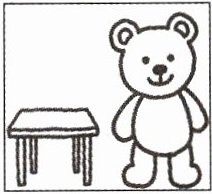
A.below
B.above
C.under
D.beside
—I can see a bear standing a table.
A.below
B.above
C.under
D.beside
答案
2. D [解析]考查介词辨析。句意:——米莉,从图片中你可以看到什么? ——我可以看到一只小熊站在桌子旁边。below 在……下方;above 在……上方;under 在……下面;beside 在……旁边。根据图片可知,桌子旁边站着一只小熊。故选 D。
解析
【分析】本题考查介词辨析,需先明确各选项介词的含义,再结合图片中小熊与桌子的位置关系判断。先回忆各介词词义:below指在……下方;above指在……上方;under指在……正下方;beside指在……旁边。观察图片可知,小熊在桌子旁边,据此选出正确选项。
【解析】逐一分析选项:A选项below意为“在……下方”,不符合图片位置;B选项above意为“在……上方”,与图片不符;C选项under意为“在……正下方”,不符合;D选项beside意为“在……旁边”,结合图片,小熊站在桌子旁边,因此选D。
【答案】D
【知识点】介词辨析、图片理解
【点评】本题是结合图片的介词考查题,难度不大,需要学生掌握常见介词词义,结合图片信息判断,属于基础英语知识应用题目。
【难度系数】0.2
【解析】逐一分析选项:A选项below意为“在……下方”,不符合图片位置;B选项above意为“在……上方”,与图片不符;C选项under意为“在……正下方”,不符合;D选项beside意为“在……旁边”,结合图片,小熊站在桌子旁边,因此选D。
【答案】D
【知识点】介词辨析、图片理解
【点评】本题是结合图片的介词考查题,难度不大,需要学生掌握常见介词词义,结合图片信息判断,属于基础英语知识应用题目。
【难度系数】0.2
3. Sandy sits the classroom. She is looking the window at the tree in class.
A.in the front of; out of
B.in the front of; at
C.in front of; out of
D.in front of; out
A.in the front of; out of
B.in the front of; at
C.in front of; out of
D.in front of; out
答案
3. A [解析]考查介词(短语)辨析。句意:桑迪坐在教室的前面。她正在教室里看着窗外的树。in front of 在……前面,指外部的前面;in the front of 在……前面,指内部的前面;look at 看,后跟宾语;look out of 看向……的外面。故选 A。
解析
【分析】
本题考查介词短语的辨析,解题思路如下:1. 区分“in the front of”与“in front of”:前者表示在某一物体内部的前面,后者表示在某一物体外部的前面;2. 区分“look”相关短语:“look at”意为“看(具体对象)”,“look out of”意为“从……向外看”。结合句意,桑迪坐在教室内部的前面,且是从窗户向外看树,据此可确定答案。
【解析】
首先分析第一空:“in front of”指在物体外部的前面,“in the front of”指在物体内部的前面,桑迪是在教室内部的前面,故第一空填“in the front of”;再分析第二空:“look at”后接具体观看的对象,“look out of”表示“从……向外看”,此处是从窗户向外看树,故第二空填“out of”,因此选A。
【答案】A
【知识点】介词短语辨析;动词短语辨析
【点评】本题考查英语中易混介词短语和动词短语的基础用法,需要准确掌握短语的含义及适用范围,属于英语基础知识点的常规考查,难度适中。
【难度系数】0.8
本题考查介词短语的辨析,解题思路如下:1. 区分“in the front of”与“in front of”:前者表示在某一物体内部的前面,后者表示在某一物体外部的前面;2. 区分“look”相关短语:“look at”意为“看(具体对象)”,“look out of”意为“从……向外看”。结合句意,桑迪坐在教室内部的前面,且是从窗户向外看树,据此可确定答案。
【解析】
首先分析第一空:“in front of”指在物体外部的前面,“in the front of”指在物体内部的前面,桑迪是在教室内部的前面,故第一空填“in the front of”;再分析第二空:“look at”后接具体观看的对象,“look out of”表示“从……向外看”,此处是从窗户向外看树,故第二空填“out of”,因此选A。
【答案】A
【知识点】介词短语辨析;动词短语辨析
【点评】本题考查英语中易混介词短语和动词短语的基础用法,需要准确掌握短语的含义及适用范围,属于英语基础知识点的常规考查,难度适中。
【难度系数】0.8
4. (2025·无锡锡东片期中)—What's wrong with Bill? He is sitting there for a long time without talking to anyone else.
—Don't worry. It's usual way for him to relax himself.
A./; a
B.the; a
C.the; an
D./; an
—Don't worry. It's usual way for him to relax himself.
A./; a
B.the; a
C.the; an
D./; an
答案
4. A [解析]考查冠词的用法。句意:——比尔怎么了? 他在那里坐了很长时间,不和任何人说话。——不要担心。这是他放松自己的常用方式。What's wrong with sb 意为“某人怎么了”;第二处表示泛指,“usual”是发音以辅音音素开头的单词,因此用不定冠词 a。故选 A。
解析
【分析】
本题考查英语冠词的用法,分两空分析。第一空涉及固定句型“What's wrong with sb.”,该句型中wrong前无需加冠词;第二空需判断不定冠词的使用,此处表泛指,且“usual”发音以辅音音素开头,需用不定冠词a。解题时先回忆固定句型的冠词规则,再根据泛指和单词发音判断不定冠词的选择。
【解析】
1. 第一空:固定句型“What's wrong with sb.”是固定表达,意为“某人怎么了”,wrong为形容词,此处无需加冠词,故第一空不填;2. 第二空:此处表示“一种通常的方式”,表泛指,需用不定冠词,“usual”的发音以辅音音素/ju:/开头,因此用不定冠词a。综上,两空分别为/和a,对应选项A。
【答案】
A
【知识点】
冠词的用法;固定句型
【点评】
本题考查冠词的基础应用,涉及固定搭配的冠词规则和不定冠词的选择依据,属于初中英语基础题型,掌握基础规则即可解答。
【难度系数】
0.7
本题考查英语冠词的用法,分两空分析。第一空涉及固定句型“What's wrong with sb.”,该句型中wrong前无需加冠词;第二空需判断不定冠词的使用,此处表泛指,且“usual”发音以辅音音素开头,需用不定冠词a。解题时先回忆固定句型的冠词规则,再根据泛指和单词发音判断不定冠词的选择。
【解析】
1. 第一空:固定句型“What's wrong with sb.”是固定表达,意为“某人怎么了”,wrong为形容词,此处无需加冠词,故第一空不填;2. 第二空:此处表示“一种通常的方式”,表泛指,需用不定冠词,“usual”的发音以辅音音素/ju:/开头,因此用不定冠词a。综上,两空分别为/和a,对应选项A。
【答案】
A
【知识点】
冠词的用法;固定句型
【点评】
本题考查冠词的基础应用,涉及固定搭配的冠词规则和不定冠词的选择依据,属于初中英语基础题型,掌握基础规则即可解答。
【难度系数】
0.7
5. (2025·南京玄武区期末)—How do you like film Ne Zha 2?
—It is so wonderful. And it is my third time to watch it.
A.a; the
B.the; /
C.the; the
D.a; /
—It is so wonderful. And it is my third time to watch it.
A.a; the
B.the; /
C.the; the
D.a; /
答案
5. B [解析]考查冠词的用法。句意:——你觉得电影《哪吒 2》怎么样? ——太棒了。这是我第三次观看它。a 一个,表泛指,用于发音以辅音音素开头的单词前;the 这个,表特指;/零冠词。根据“Ne Zha 2”可知,此处特指电影《哪吒 2》,故第一空用定冠词 the;名词“time”前已经有形容词性物主代词“my”,不再加任何冠词,故第二空不使用冠词。故选 B。
解析
【分析】首先,第一空需要特指电影《哪吒2》,需用定冠词表特指;第二空,序数词third前已有形容词性物主代词my修饰,此时不需要加冠词,据此分析选项得出答案。
【解析】第一空:此处特指电影《哪吒2》,应用定冠词the表特指;第二空:序数词third前已有形容词性物主代词my修饰,无需再加冠词,即使用零冠词。结合选项,B选项符合要求,故选B。
【答案】B
【知识点】定冠词用法、零冠词用法、序数词的冠词搭配
【点评】本题考查冠词的基础用法,核心是掌握“序数词前有物主代词时不用冠词”的规则,需准确区分泛指与特指的冠词使用场景。
【难度系数】0.6
【解析】第一空:此处特指电影《哪吒2》,应用定冠词the表特指;第二空:序数词third前已有形容词性物主代词my修饰,无需再加冠词,即使用零冠词。结合选项,B选项符合要求,故选B。
【答案】B
【知识点】定冠词用法、零冠词用法、序数词的冠词搭配
【点评】本题考查冠词的基础用法,核心是掌握“序数词前有物主代词时不用冠词”的规则,需准确区分泛指与特指的冠词使用场景。
【难度系数】0.6
三、根据要求完成句子
1. There's no dog food in the fridge. (改为同义句)
There
2. I miss the opera shows there. (改为否定句)
I
3. You can learn how to sing Beijing opera in the city. (改为一般疑问句)
4. The exchange students' homes are in the UK. (对画线部分提问)
5. You can't play the violin in the classroom. (改为祈使句)
1. There's no dog food in the fridge. (改为同义句)
There
isn't
any
dog food in the fridge.2. I miss the opera shows there. (改为否定句)
I
don't
miss
the opera shows there.3. You can learn how to sing Beijing opera in the city. (改为一般疑问句)
Can
you
learn
how to sing Beijing opera in the city?4. The exchange students' homes are in the UK. (对画线部分提问)
Whose
homes
are
in the UK?5. You can't play the violin in the classroom. (改为祈使句)
Don't
play
the violin in the classroom.答案
1. isn't any 2. don't miss 3. Can you learn 4. Whose homes are 5. Don't play
解析
【分析】
本题为英语句型转换题,需根据不同句式的转换规则逐一解答:
1. 第一题:there be句型中,“no + 名词”可替换为“not any + 对应名词”,因food为不可数名词,be动词用is,故转换为isn't any。
2. 第二题:原句为一般现在时,主语是I,谓语是实义动词miss,变否定需加助动词don't,后接动词原形miss,故为don't miss。
3. 第三题:含情态动词can的句子变一般疑问句,需将can提至句首,主语调整为you,后接动词原形learn,故为Can you learn。
4. 第四题:画线部分是名词所有格(表所属),用whose提问,后接名词homes,再将be动词are提前,故为Whose homes are。
5. 第五题:原句为禁止做某事,转换为否定祈使句,结构为Don't + 动词原形,故为Don't play。
【解析】
1. 原句为There be句型的否定句,“no dog food”等价于“not any dog food”,因food不可数,be动词用is,故填isn't any。
2. 原句是一般现在时的肯定句,主语I为非第三人称单数,变否定句需借助助动词don't,后接动词原形miss,故填don't miss。
3. 原句含情态动词can,变一般疑问句时,将can置于句首,主语变为you,后接动词原形learn,故填Can you learn。
4. 画线部分是名词所有格,提问所属用whose,后接名词homes,剩余部分be动词are提前,故填Whose homes are。
5. 原句是禁止性表达,转换为否定祈使句,结构为Don't + 动词原形,故填Don't play。
【答案】
1. isn't any 2. don't miss 3. Can you learn 4. Whose homes are 5. Don't play
【知识点】
英语句型转换;there be结构;祈使句构成
【点评】
本题考查初中英语基础句型转换,涵盖there be同义转换、否定句、一般疑问句、特殊疑问句、祈使句的转换规则,是英语学习的核心基础题型,需熟练掌握各类句式的转换逻辑。
【难度系数】
0.8
本题为英语句型转换题,需根据不同句式的转换规则逐一解答:
1. 第一题:there be句型中,“no + 名词”可替换为“not any + 对应名词”,因food为不可数名词,be动词用is,故转换为isn't any。
2. 第二题:原句为一般现在时,主语是I,谓语是实义动词miss,变否定需加助动词don't,后接动词原形miss,故为don't miss。
3. 第三题:含情态动词can的句子变一般疑问句,需将can提至句首,主语调整为you,后接动词原形learn,故为Can you learn。
4. 第四题:画线部分是名词所有格(表所属),用whose提问,后接名词homes,再将be动词are提前,故为Whose homes are。
5. 第五题:原句为禁止做某事,转换为否定祈使句,结构为Don't + 动词原形,故为Don't play。
【解析】
1. 原句为There be句型的否定句,“no dog food”等价于“not any dog food”,因food不可数,be动词用is,故填isn't any。
2. 原句是一般现在时的肯定句,主语I为非第三人称单数,变否定句需借助助动词don't,后接动词原形miss,故填don't miss。
3. 原句含情态动词can,变一般疑问句时,将can置于句首,主语变为you,后接动词原形learn,故填Can you learn。
4. 画线部分是名词所有格,提问所属用whose,后接名词homes,剩余部分be动词are提前,故填Whose homes are。
5. 原句是禁止性表达,转换为否定祈使句,结构为Don't + 动词原形,故填Don't play。
【答案】
1. isn't any 2. don't miss 3. Can you learn 4. Whose homes are 5. Don't play
【知识点】
英语句型转换;there be结构;祈使句构成
【点评】
本题考查初中英语基础句型转换,涵盖there be同义转换、否定句、一般疑问句、特殊疑问句、祈使句的转换规则,是英语学习的核心基础题型,需熟练掌握各类句式的转换逻辑。
【难度系数】
0.8
四、阅读理解
词数: 241 体裁: 记叙文 核心素养: 思维品质
话题: 家乡 难度: 中 建议用时: 6 分钟
I grew up in a small town in the heart of the countryside, and my hometown holds a special place in my heart.
My hometown has rich history. Dating back to the early 1800s, some people came to the countryside from the noisy city and built the town. They tilled (耕种) the land, made the roads and built buildings along them. As I walk down the wide streets, I can see the buildings still stand tall today. By looking back at the town's history, I always feel so proud.
My hometown is also a lively community, where neighbours greet each other with a smile and lend a helping hand in times of need. From festivals that bring the town together to volunteer chances that make the town better, there is a strong sense of family. Along the streets, there are many local businesses run by hard-working people. They offer places for people to catch up over a cup of coffee or share a meal with friends.
My hometown is rich in natural beauty. The rolling hills surround (包围) the town. In spring, flowers are everywhere in town, while in the fall, the leaves turn red and gold. The local park offers a peaceful place where I often rest and connect with nature.
From the Main Street with mum-and-pop shops to the fields that spread as far as the eye can see, every corner of this town is filled with memories of my childhood.
1. Who built the town in the early 1800s?
A. People from the countryside.
B. People from the city.
C. People from other countries.
D. People from the nearby town.
2. What can we learn about people in the writer's hometown?
A. They help volunteers a lot.
B. They are friendly to each other.
C. They are good at running businesses.
D. They often have meals with friends at home.
3. What does the writer often do in the local park?
A. Think about his shop.
B. Climb the hills with his family.
C. Relax and enjoy nature.
D. Have festival activities with neighbours.
4. 中考新考法 推断作者情感态度 From the passage, we know the writer .
A. likes spring much more than fall
B. has a great love for his hometown
C. will write a book about his hometown
D. left his hometown after his childhood
词数: 241 体裁: 记叙文 核心素养: 思维品质
话题: 家乡 难度: 中 建议用时: 6 分钟
I grew up in a small town in the heart of the countryside, and my hometown holds a special place in my heart.
My hometown has rich history. Dating back to the early 1800s, some people came to the countryside from the noisy city and built the town. They tilled (耕种) the land, made the roads and built buildings along them. As I walk down the wide streets, I can see the buildings still stand tall today. By looking back at the town's history, I always feel so proud.
My hometown is also a lively community, where neighbours greet each other with a smile and lend a helping hand in times of need. From festivals that bring the town together to volunteer chances that make the town better, there is a strong sense of family. Along the streets, there are many local businesses run by hard-working people. They offer places for people to catch up over a cup of coffee or share a meal with friends.
My hometown is rich in natural beauty. The rolling hills surround (包围) the town. In spring, flowers are everywhere in town, while in the fall, the leaves turn red and gold. The local park offers a peaceful place where I often rest and connect with nature.
From the Main Street with mum-and-pop shops to the fields that spread as far as the eye can see, every corner of this town is filled with memories of my childhood.
1. Who built the town in the early 1800s?
A. People from the countryside.
B. People from the city.
C. People from other countries.
D. People from the nearby town.
2. What can we learn about people in the writer's hometown?
A. They help volunteers a lot.
B. They are friendly to each other.
C. They are good at running businesses.
D. They often have meals with friends at home.
3. What does the writer often do in the local park?
A. Think about his shop.
B. Climb the hills with his family.
C. Relax and enjoy nature.
D. Have festival activities with neighbours.
4. 中考新考法 推断作者情感态度 From the passage, we know the writer .
A. likes spring much more than fall
B. has a great love for his hometown
C. will write a book about his hometown
D. left his hometown after his childhood
答案
[文章大意]本文主要介绍了作者家乡的历史、人物和风景等。
1. B [解析]细节理解题。根据第二段中的“Dating back to the early 1800s, some people came to the countryside from the noisy city and built the town.”可知,十九世纪初,来自喧嚣的城市的人们建造了这座小镇。故选 B。
2. B [解析]细节理解题。根据第三段中的“My hometown is also a lively community, where neighbours greet each other with a smile and lend a helping hand in times of need.”可知,作者的家乡也是一个热闹的社区,邻居们微笑着互相问候,并在需要的时候伸出援手,所以作者家乡的人们对彼此都很友好。故选 B。
3. C [解析]细节理解题。根据倒数第二段中的“The local park offers a peaceful place where I often rest and connect with nature.”可知,作者经常在当地的公园里休息并享受大自然。故选 C。
4. B [解析]推理判断题。根据第一段中的“my hometown holds a special place in my heart”以及最后一段中的“every corner of this town is filled with memories of my childhood”可知,家乡在作者心中占有特殊的地位,这个小镇的每一个角落都充满了作者童年的回忆,作者热爱自己的家乡。故选 B。
1. B [解析]细节理解题。根据第二段中的“Dating back to the early 1800s, some people came to the countryside from the noisy city and built the town.”可知,十九世纪初,来自喧嚣的城市的人们建造了这座小镇。故选 B。
2. B [解析]细节理解题。根据第三段中的“My hometown is also a lively community, where neighbours greet each other with a smile and lend a helping hand in times of need.”可知,作者的家乡也是一个热闹的社区,邻居们微笑着互相问候,并在需要的时候伸出援手,所以作者家乡的人们对彼此都很友好。故选 B。
3. C [解析]细节理解题。根据倒数第二段中的“The local park offers a peaceful place where I often rest and connect with nature.”可知,作者经常在当地的公园里休息并享受大自然。故选 C。
4. B [解析]推理判断题。根据第一段中的“my hometown holds a special place in my heart”以及最后一段中的“every corner of this town is filled with memories of my childhood”可知,家乡在作者心中占有特殊的地位,这个小镇的每一个角落都充满了作者童年的回忆,作者热爱自己的家乡。故选 B。
解析
【分析】
解答此类英语阅读理解题,需先通读全文把握主旨(本文为作者介绍家乡的记叙文,表达对家乡的热爱);针对不同题型,细节理解题需精准定位原文对应语句,对比选项得出答案;推理判断题需结合全文作者的表述,推断隐含的情感或信息。
【解析】
1. 本题为细节理解题,根据第二段中“Dating back to the early 1800s, some people came to the countryside from the noisy city and built the town.”可知,19世纪初是来自城市的人们建造了这座小镇,故选B。
2. 本题为细节理解题,根据第三段中“neighbours greet each other with a smile and lend a helping hand in times of need.”可知,作者家乡的邻居们微笑问候、互相帮助,说明人们彼此友好,故选B。
3. 本题为细节理解题,根据倒数第二段中“The local park offers a peaceful place where I often rest and connect with nature.”可知,作者常去当地公园休息并亲近自然,故选C。
4. 本题为推理判断题,结合第一段“my hometown holds a special place in my heart”和最后一段“every corner of this town is filled with memories of my childhood”可知,家乡在作者心中地位特殊,充满童年回忆,体现作者对家乡的热爱,故选B。
【答案】
1.B 2.B 3.C 4.B
【知识点】
英语阅读理解、细节理解题、推理判断题
【点评】
本文围绕家乡的历史、人文、自然景观展开,考查学生对细节信息的定位能力和作者情感的推断能力,贴合中考新考法,难度适中,需学生结合原文信息准确作答。
【难度系数】
0.6
解答此类英语阅读理解题,需先通读全文把握主旨(本文为作者介绍家乡的记叙文,表达对家乡的热爱);针对不同题型,细节理解题需精准定位原文对应语句,对比选项得出答案;推理判断题需结合全文作者的表述,推断隐含的情感或信息。
【解析】
1. 本题为细节理解题,根据第二段中“Dating back to the early 1800s, some people came to the countryside from the noisy city and built the town.”可知,19世纪初是来自城市的人们建造了这座小镇,故选B。
2. 本题为细节理解题,根据第三段中“neighbours greet each other with a smile and lend a helping hand in times of need.”可知,作者家乡的邻居们微笑问候、互相帮助,说明人们彼此友好,故选B。
3. 本题为细节理解题,根据倒数第二段中“The local park offers a peaceful place where I often rest and connect with nature.”可知,作者常去当地公园休息并亲近自然,故选C。
4. 本题为推理判断题,结合第一段“my hometown holds a special place in my heart”和最后一段“every corner of this town is filled with memories of my childhood”可知,家乡在作者心中地位特殊,充满童年回忆,体现作者对家乡的热爱,故选B。
【答案】
1.B 2.B 3.C 4.B
【知识点】
英语阅读理解、细节理解题、推理判断题
【点评】
本文围绕家乡的历史、人文、自然景观展开,考查学生对细节信息的定位能力和作者情感的推断能力,贴合中考新考法,难度适中,需学生结合原文信息准确作答。
【难度系数】
0.6
