

 登录
登录
Ⅵ. 阅读还原(有一项多余)
(2026·凉山州模拟)Without numbers, life would be difficult. You couldn't tell the time, know how many brothers and sisters you have, or how much things cost. Numbers are the basis of maths, but where did they come from?
Numbers on Hand
When people first started to count, they probably used the most handy tool, their fingers. Even before they had names for numbers, they could simply touch their fingers to count. 1 That's why we still count in groups of ten today—because we have ten fingers. Some ancient people even used their toes to count, leading to the twenty-based counting system in some cultures.
Making a Mark
The problem with finger counting is that it can't keep a record. 2 So about 6,000 years ago, the Sumerians began making marks on clay to keep track of things like sold corn bags. 3 The Egyptians developed a clever system using pictures called hieroglyphs to represent numbers. For example, a cattle hobble symbol for 10, and a lotus flower for 1,000.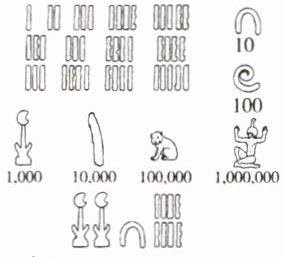
Roman Numerals
During the Roman Empire, the Romans created a regular number system using letters, known as numerals. 4 Symbols like Ⅰ (1), Ⅴ (5), Ⅹ (10), and L (50) are combined to show different values. They are still used today in some cases, such as in the names of kings and queens—Queen Elizabeth $Ⅱ$ means the second Elizabeth. 5 You can also find them on clock faces or book chapters.
A. This simple counting method was easy to learn and use.
B. You might have seen them in movies or on old buildings.
C. They wanted a system that was easy to write and understand.
D. This way, their counting records could be kept for a long time.
E. It was hard to remember the exact number of things after a long time.
F. Many people prefer Arabic numerals to Roman numerals in daily life.
1.
(2026·凉山州模拟)Without numbers, life would be difficult. You couldn't tell the time, know how many brothers and sisters you have, or how much things cost. Numbers are the basis of maths, but where did they come from?
Numbers on Hand
When people first started to count, they probably used the most handy tool, their fingers. Even before they had names for numbers, they could simply touch their fingers to count. 1 That's why we still count in groups of ten today—because we have ten fingers. Some ancient people even used their toes to count, leading to the twenty-based counting system in some cultures.
Making a Mark
The problem with finger counting is that it can't keep a record. 2 So about 6,000 years ago, the Sumerians began making marks on clay to keep track of things like sold corn bags. 3 The Egyptians developed a clever system using pictures called hieroglyphs to represent numbers. For example, a cattle hobble symbol for 10, and a lotus flower for 1,000.
Roman Numerals
During the Roman Empire, the Romans created a regular number system using letters, known as numerals. 4 Symbols like Ⅰ (1), Ⅴ (5), Ⅹ (10), and L (50) are combined to show different values. They are still used today in some cases, such as in the names of kings and queens—Queen Elizabeth $Ⅱ$ means the second Elizabeth. 5 You can also find them on clock faces or book chapters.
A. This simple counting method was easy to learn and use.
B. You might have seen them in movies or on old buildings.
C. They wanted a system that was easy to write and understand.
D. This way, their counting records could be kept for a long time.
E. It was hard to remember the exact number of things after a long time.
F. Many people prefer Arabic numerals to Roman numerals in daily life.
1.
A
2. E
3. D
4. C
5. B
答案
1.A 2.E 3.D 4.C 5.B
【语篇解读】本文是一篇说明文。文章主要介绍了数字的起源和发展。
1. A 解析:根据下文“That's why we still count in groups of ten today—because we have ten fingers.”可知人们仍用手指计数,此处应介绍用手指计数的便利性;A 项“这种简单的计数方法易于学习和使用。”符合语境。故选 A。
2. E 解析:根据上文“The problem with finger counting is that it can't keep a record.”可知手指计数无法长期保存记录,此处应进一步介绍问题;E 项“经过很长时间后,很难记住事情的确切数量。”符合语境。故选 E。
3. D 解析:根据上文“the Sumerians began making marks on clay to keep track of things like sold corn bags”可知此处应介绍苏美尔人用黏土标记计数的目的;D 项“这样一来,他们的计数记录就能被长期保存。”符合语境。故选 D。
4. C 解析:根据上文“During the Roman Empire,the Romans created a regular number system using letters,known as numerals.”可知此处应介绍罗马人创建数字系统的动机;C 项“他们想要一个易于编写和理解的系统。”符合语境。故选 C。
5. B 解析:根据上文“They are still used today in some cases ...”可知此处应继续举例说明罗马数字在现代的应用;B 项“你或许在电影或古建筑见过它们。”符合语境。故选 B。
【语篇解读】本文是一篇说明文。文章主要介绍了数字的起源和发展。
1. A 解析:根据下文“That's why we still count in groups of ten today—because we have ten fingers.”可知人们仍用手指计数,此处应介绍用手指计数的便利性;A 项“这种简单的计数方法易于学习和使用。”符合语境。故选 A。
2. E 解析:根据上文“The problem with finger counting is that it can't keep a record.”可知手指计数无法长期保存记录,此处应进一步介绍问题;E 项“经过很长时间后,很难记住事情的确切数量。”符合语境。故选 E。
3. D 解析:根据上文“the Sumerians began making marks on clay to keep track of things like sold corn bags”可知此处应介绍苏美尔人用黏土标记计数的目的;D 项“这样一来,他们的计数记录就能被长期保存。”符合语境。故选 D。
4. C 解析:根据上文“During the Roman Empire,the Romans created a regular number system using letters,known as numerals.”可知此处应介绍罗马人创建数字系统的动机;C 项“他们想要一个易于编写和理解的系统。”符合语境。故选 C。
5. B 解析:根据上文“They are still used today in some cases ...”可知此处应继续举例说明罗马数字在现代的应用;B 项“你或许在电影或古建筑见过它们。”符合语境。故选 B。
解析
【分析】
做阅读还原题时,需先通读全文把握主旨(本文介绍数字的起源与发展),再逐一分析每个空格前后的语境,结合句子间的逻辑关系(如因果、顺承、举例等)匹配选项。具体思路:1空后提到十进制源于十根手指,需选介绍手指计数优点的选项;2空前说明手指计数无法记录,需选其带来的问题;3空前讲苏美尔人在黏土上做标记计数,需选该行为的作用;4空前讲罗马人创建字母数字系统,需选其创建的动机;5空前提及罗马数字的现代应用,需选补充举例的选项。
【解析】
1. 根据下文“That's why we still count in groups of ten today—because we have ten fingers.”可知,此处需介绍手指计数的便利性,A项“这种简单的计数方法易于学习和使用”符合语境,故选A。
2. 根据上文“The problem with finger counting is that it can't keep a record.”可知,此处需进一步说明手指计数的问题,E项“经过很长时间后,很难记住事情的确切数量”符合语境,故选E。
3. 根据上文“the Sumerians began making marks on clay to keep track of things like sold corn bags”可知,此处需说明该行为的目的,D项“这样一来,他们的计数记录就能被长期保存”符合语境,故选D。
4. 根据上文“During the Roman Empire, the Romans created a regular number system using letters, known as numerals.”可知,此处需说明罗马人创建该系统的动机,C项“他们想要一个易于编写和理解的系统”符合语境,故选C。
5. 根据上文“They are still used today in some cases ...”可知,此处需补充罗马数字的现代应用例子,B项“你或许在电影或古建筑见过它们”符合语境,故选B。
【答案】
1.A 2.E 3.D 4.C 5.B
【知识点】
英语阅读还原、语篇逻辑分析
【点评】
本题围绕数字的起源发展展开,考查学生对语篇上下文逻辑关系的把握能力,需结合语境匹配合适的句子,难度适中。
【难度系数】
0.5
做阅读还原题时,需先通读全文把握主旨(本文介绍数字的起源与发展),再逐一分析每个空格前后的语境,结合句子间的逻辑关系(如因果、顺承、举例等)匹配选项。具体思路:1空后提到十进制源于十根手指,需选介绍手指计数优点的选项;2空前说明手指计数无法记录,需选其带来的问题;3空前讲苏美尔人在黏土上做标记计数,需选该行为的作用;4空前讲罗马人创建字母数字系统,需选其创建的动机;5空前提及罗马数字的现代应用,需选补充举例的选项。
【解析】
1. 根据下文“That's why we still count in groups of ten today—because we have ten fingers.”可知,此处需介绍手指计数的便利性,A项“这种简单的计数方法易于学习和使用”符合语境,故选A。
2. 根据上文“The problem with finger counting is that it can't keep a record.”可知,此处需进一步说明手指计数的问题,E项“经过很长时间后,很难记住事情的确切数量”符合语境,故选E。
3. 根据上文“the Sumerians began making marks on clay to keep track of things like sold corn bags”可知,此处需说明该行为的目的,D项“这样一来,他们的计数记录就能被长期保存”符合语境,故选D。
4. 根据上文“During the Roman Empire, the Romans created a regular number system using letters, known as numerals.”可知,此处需说明罗马人创建该系统的动机,C项“他们想要一个易于编写和理解的系统”符合语境,故选C。
5. 根据上文“They are still used today in some cases ...”可知,此处需补充罗马数字的现代应用例子,B项“你或许在电影或古建筑见过它们”符合语境,故选B。
【答案】
1.A 2.E 3.D 4.C 5.B
【知识点】
英语阅读还原、语篇逻辑分析
【点评】
本题围绕数字的起源发展展开,考查学生对语篇上下文逻辑关系的把握能力,需结合语境匹配合适的句子,难度适中。
【难度系数】
0.5
