

 登录
二、阅读理解
A
This is the word “family” written in Chinese “家”. It's a pictographic character (象形文字). The “宀” looks like the roof (屋顶) of a house, and the “豕” is a pictographic character for “pig”. It is developed from a picture like this: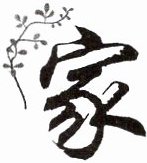
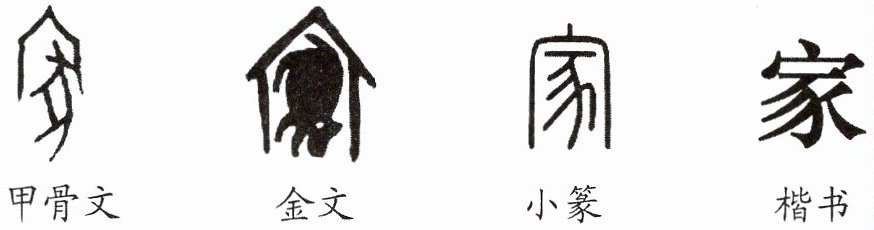
The word “家” with a pig under the roof of a house may show the importance of domestic animals (家畜) to traditional Chinese families.
There is a strong feeling among parents, children and other family members. The father is usually very strict with his children. Parents work very hard to set a good example for their children, while children study hard. Brothers and sisters in the family are very friendly and helpful to each other. All the family members try hard to lead a joyful and fulfilling life.
Our ancestors (祖先) will be part of our life and a warm memory forever. ▲ We remember our ancestors, not for any advantages (优势) for ourselves but to make our feelings more active. Whenever we think of them, they make us stronger inside.
Everyone values (重视) the idea of “making all the members of the family happy”. We should all have the same idea as the great “Chinese dream”. There are thousands of families in China. Just because every family goes well, China is getting better and better.
1. The word “家” may show us
A. houses' roofs
B. domestic animals
C. more children
D. hard-working fathers
2. All the family members try their best to
A. live a happy life
B. become very strict
C. help other families
D. set a good example
3. Which of the following sentences may be put in “▲” in the fourth paragraph?
A. Every family has their own warm house.
B. We would like to live and study in the past.
C. People always get together to celebrate the day.
D. They connect (连接) all the family members together.
4. What is the passage mainly about?
A. The importance of pigs.
B. Traditional ideas about ancestors.
C. Strong feelings about children.
D. The meaning of Chinese families.
A
This is the word “family” written in Chinese “家”. It's a pictographic character (象形文字). The “宀” looks like the roof (屋顶) of a house, and the “豕” is a pictographic character for “pig”. It is developed from a picture like this:
The word “家” with a pig under the roof of a house may show the importance of domestic animals (家畜) to traditional Chinese families.
There is a strong feeling among parents, children and other family members. The father is usually very strict with his children. Parents work very hard to set a good example for their children, while children study hard. Brothers and sisters in the family are very friendly and helpful to each other. All the family members try hard to lead a joyful and fulfilling life.
Our ancestors (祖先) will be part of our life and a warm memory forever. ▲ We remember our ancestors, not for any advantages (优势) for ourselves but to make our feelings more active. Whenever we think of them, they make us stronger inside.
Everyone values (重视) the idea of “making all the members of the family happy”. We should all have the same idea as the great “Chinese dream”. There are thousands of families in China. Just because every family goes well, China is getting better and better.
1. The word “家” may show us
B
are important to traditional Chinese families.A. houses' roofs
B. domestic animals
C. more children
D. hard-working fathers
2. All the family members try their best to
A
.A. live a happy life
B. become very strict
C. help other families
D. set a good example
3. Which of the following sentences may be put in “▲” in the fourth paragraph?
A. Every family has their own warm house.
B. We would like to live and study in the past.
C. People always get together to celebrate the day.
D. They connect (连接) all the family members together.
4. What is the passage mainly about?
A. The importance of pigs.
B. Traditional ideas about ancestors.
C. Strong feelings about children.
D. The meaning of Chinese families.
答案
【文章大意】本文是一篇说明文,主要介绍了“家”字的演变及其所体现的中国的家庭观。
1. B 细节理解题。根据“The word '家' with a pig under the roof of a house may show the importance of domestic animals to traditional Chinese families.”可知,“家”字中包含了“豕(猪)”,这表明了家畜对传统中国家庭的重要性。故选B。
2. A 细节理解题。根据“There is a strong feeling among parents, children and other family members. The father...All the family members try hard to lead a joyful and fulfilling life.”可知,所有家庭成员都努力过上幸福的生活。故选A。
3. D 补全文章题。根据“Our ancestors will be part of our life and a warm memory forever.”及“We remember our ancestors, not for any advantages for ourselves but to make our feelings more active.”可知,此处讲述的是我们的祖先将所有家庭成员联系在一起,使得关系更加紧密。故选D。
4. D 主旨大意题。通读全文可知,本文通过介绍“家”字的演变讨论了中国家庭的意义,因此选项D最符合文章主题。故选D。
解析
【分析】首先通读全文,明确文章主旨是介绍“家”字的象形含义及所体现的中国传统家庭观。解题时,1题是细节理解题,需定位原文对应句子;2题同样为细节题,查找家庭成员的目标相关表述;3题是补全句子题,需结合上下文逻辑,分析祖先与家庭成员的关联;4题为主旨大意题,需总结全文核心内容。
【解析】1. 细节理解题:根据第一段最后一句“The word “家” with a pig under the roof of a house may show the importance of domestic animals (家畜) to traditional Chinese families.”可知,“家”字体现了家畜对传统中国家庭的重要性,故选B。
2. 细节理解题:根据第二段最后一句“All the family members try hard to lead a joyful and fulfilling life.”可知,所有家庭成员努力过上幸福的生活,joyful与happy同义,故选A。
3. 补全文章题:空格前句提到“Our ancestors (祖先) will be part of our life and a warm memory forever.”,后句说明记住祖先的意义,结合逻辑,此处需表达祖先对家庭成员的连接作用,D选项“They connect (连接) all the family members together.”符合语境,故选D。
4. 主旨大意题:全文围绕“家”字的含义展开,讨论中国传统家庭的意义,A选项仅涉及猪,B选项仅涉及祖先,C选项仅涉及孩子,均片面,D选项“The meaning of Chinese families.”概括全面,故选D。
【答案】1.B 2.A 3.D 4.D
【知识点】阅读理解、细节理解题、主旨大意题
【点评】本文以“家”字为切入点,介绍其象形含义及背后的中国家庭文化,题目类型涵盖细节理解、补全句子和主旨大意,考查学生信息定位、逻辑推理及主旨总结能力,内容贴近学生生活,难度适中。
【难度系数】0.7
B
The mangrove wetlands (红树林湿地) of Shenzhen's Futian and Hong Kong's Mai Po are very valuable. Every year, many waterbirds fly from East Asia to Australia. These wetlands are a key place for them to rest. These years, Shenzhen and Hong Kong have worked together to protect these important wetlands.
Why are these mangrove wetlands so important? Because they are like nature's protectors. They make a natural wall, protecting coasts from big storms (暴风雨). Besides, the thick forest of mangrove trees provides a perfect home for birds. They build nests there and look after their babies. “Even during storms, baby birds are safe in the mangroves,” said Simon Wong from Hong Kong's nature team. What's more, mangroves help take in CO₂ and clean the water. As a result, they are helpful for both nature and humans.
To protect the wetlands together, Shenzhen and Hong Kong have used different ways since 2023. One of them is to protect birds' homes with the help of modern AI technology. Thanks to their efforts, the population of endangered (濒危的) birds in the wetlands has grown. For example, there were only about 300 black-faced spoonbills (黑脸琵鹭) around 30 years ago. Now there are nearly 7,000.
In November 2024, the two cities started a new part of their teamwork. The International Mangrove Centre (IMC) in Shenzhen opened. The IMC does research on mangrove protection, shares useful ideas and gives classes to the public. Its opening helps Shenzhen and Hong Kong work better to protect the wetlands. It also shows the world how cities can join hands to protect the environment.
1. What does the underlined word “them” in Paragraph 1 mean?
A. Cities.
B. Wetlands.
C. Waterbirds.
D. Mangroves.
2. What can we learn from Paragraph 2?
A. Mangroves are not safe for baby birds.
B. Mangroves can protect tall buildings from storms.
C. Mangroves can produce a lot of CO₂ and dirty water.
D. Mangroves are good for not only nature but also people.
3. What can we infer from the last paragraph?
A. Students can do research on mangrove protection in the IMC.
B. The IMC guides cities how to work better together and protect nature.
C. The IMC mainly helps the two cities to build more mangrove forests.
D. People don't need to worry about wetland problems because of the IMC.
4. What is the main idea of the passage?
A. Mangroves bring safe homes to waterbirds.
B. The IMC in Shenzhen helps protect the wetlands.
C. There are more black-faced spoonbills in Shenzhen.
D. The two cities protect the mangrove wetlands together.
答案
【文章大意】本文是一篇说明文,主要介绍了深圳和香港合作保护红树林湿地,包括湿地的价值、保护措施、成效和IMC的成立。
1. C 代词指代题。根据“Every year, many waterbirds fly from East Asia to Australia. These wetlands are a key place for them to rest.”可知,每年都有许多水鸟从东亚飞到澳大利亚,这些湿地是它们休息的关键场所,所以画线词“them”指代水鸟。故选C。
2. D 段落大意题。根据“As a result, they are helpful for both nature and humans.”并结合本段内容可知,本段主要介绍了红树林的作用:形成天然屏障保护海岸,为鸟类提供安全家园,吸收CO₂和净化水源,即红树林不仅对自然有好处,对人类也有好处。故选D。
3. B 推理判断题。根据“Its opening helps Shenzhen and Hong Kong work better to protect the wetlands. It also shows the world how cities can join hands to protect the environment.”可知,它的落成有助于深圳和香港更好地保护湿地,它还向世界展示了城市如何携手保护环境,即IMC指导城市更好地合作和保护自然。故选B。
4. D 主旨大意题。本文主要介绍了深圳和香港合作保护红树林湿地,包括湿地的价值、保护措施、成效和IMC的成立,所以本文的主旨是两个城市共同保护红树林湿地。故选D。
解析
【分析】
本题是一篇关于深圳与香港合作保护红树林湿地的环保类说明文,设置4道阅读理解题,分别考查代词指代、段落大意、推理判断和文章主旨。解题思路:1. 代词指代题需定位画线词所在句的前文,明确其指代的名词;2. 段落大意题需抓住段落的核心总结句,提炼段落主旨;3. 推理判断题需结合段落关键语句,推断隐含信息;4. 主旨大意题需梳理全文内容,确定核心主题。
【解析】
1. 代词指代题:定位到第一段画线词“them”的前文,“Every year, many waterbirds fly from East Asia to Australia. These wetlands are a key place for them to rest.”,可知“them”指代“waterbirds”,故选C。
2. 段落大意题:第二段最后一句“As a result, they are helpful for both nature and humans.”是段落总结句,结合本段介绍的红树林的多重作用,可知红树林对自然和人类都有益,对应选项D。
3. 推理判断题:根据最后一段关键句“Its opening helps Shenzhen and Hong Kong work better to protect the wetlands. It also shows the world how cities can join hands to protect the environment.”,可推断出国际红树林中心(IMC)指导城市更好地合作与保护自然,故选B。
4. 主旨大意题:全文围绕深圳和香港合作保护红树林湿地展开,涵盖湿地价值、保护措施、成效及IMC的成立,核心是两地共同保护红树林湿地,故选D。
【答案】
1. C 2. D 3. B 4. D
【知识点】
说明文阅读、代词指代、主旨大意
【点评】
本文主题为环境保护,属于说明文,考查学生英语阅读的核心解题能力,题型常规,注重对文本细节、段落逻辑及全文主旨的把握,有助于学生了解环保合作的意义。
【难度系数】
0.5
