

 登录
登录
一、用方框中所给单词或短语的正确形式填空。
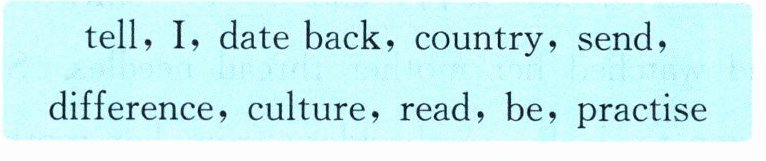
Weifang in Shandong Province is famous as the birthplace of kites. It has a long history of making kites. Weifang kite - making 1 to over 2,000 years ago. At first, the army(军队) often used kites 2 messages. During the Ming dynasty (1368—1644), kites became popular.
Yang Hongwei, 56, grew up in a kite - making family in Weifang. She learnt to make kites from her grandfather at the age of 16. After 3 the skill for 10 years, she started her own shop in 1992.
"Many places around the world have a tradition of flying kites," Yang said. "But I think the 4 idea behind our kites is unusual." On Yang's kites, people can see not only pictures like butterflies(蝴蝶) and birds, but also some pictures 5 Chinese stories. For example, she once made a kite showing a phoenix(凤凰). On each side of the phoenix, there 6 pictures of 50 famous women from Chinese history. Each woman's picture is a little 7 from the others. Yang spent lots of time 8 history books and talking about the stories.
In her free time, she also travels to other 9 including Germany, Australia, the USA and New Zealand to tell people stories of Chinese kites and the traditional ways they are made. "It is an important job of 10 to spread our culture around the world and on to the next generation," she said.
1. 2. 3. 4. 5. 6. 7. 8. 9. 10.
Weifang in Shandong Province is famous as the birthplace of kites. It has a long history of making kites. Weifang kite - making 1 to over 2,000 years ago. At first, the army(军队) often used kites 2 messages. During the Ming dynasty (1368—1644), kites became popular.
Yang Hongwei, 56, grew up in a kite - making family in Weifang. She learnt to make kites from her grandfather at the age of 16. After 3 the skill for 10 years, she started her own shop in 1992.
"Many places around the world have a tradition of flying kites," Yang said. "But I think the 4 idea behind our kites is unusual." On Yang's kites, people can see not only pictures like butterflies(蝴蝶) and birds, but also some pictures 5 Chinese stories. For example, she once made a kite showing a phoenix(凤凰). On each side of the phoenix, there 6 pictures of 50 famous women from Chinese history. Each woman's picture is a little 7 from the others. Yang spent lots of time 8 history books and talking about the stories.
In her free time, she also travels to other 9 including Germany, Australia, the USA and New Zealand to tell people stories of Chinese kites and the traditional ways they are made. "It is an important job of 10 to spread our culture around the world and on to the next generation," she said.
1. 2. 3. 4. 5. 6. 7. 8. 9. 10.
答案
1. dates back 2. to send 3. practising
4. cultural 5. telling 6. are 7. different
8. reading 9. countries 10. mine
4. cultural 5. telling 6. are 7. different
8. reading 9. countries 10. mine
解析
【分析】
首先通读全文,了解文章围绕潍坊风筝及传承人杨红卫展开,讲述风筝历史、制作及文化传播。然后逐个分析空格:
1. 第一空:根据句意“潍坊风筝制作追溯到2000多年前”,需用短语date back to,主语是单数第三人称,故用dates back。
2. 第二空:“用风筝做某事”,use sth to do sth是固定搭配,传递消息用send,所以填to send。
3. 第三空:after是介词,后接动名词,“练习技能”用practise,动名词形式为practising。
4. 第四空:修饰名词idea,需用形容词,culture的形容词形式是cultural,表示“文化的理念”。
5. 第五空:此处需要定语修饰pictures,“讲述中国故事”用tell,现在分词telling作定语,表主动含义。
6. 第六空:there be句型,be动词的单复数由后面的名词决定,pictures是复数,故用are。
7. 第七空:固定搭配be different from,表示“和……不同”,所以填different。
8. 第八空:spend time doing sth是固定句型,“读历史书”用read,动名词形式为reading。
9. 第九空:other后接可数名词复数,“国家”country的复数是countries。
10. 第十空:of后接名词性物主代词,指代“我的(工作)”,用mine。
【解析】
1. 空格1:主语“Weifang kite-making”是单数第三人称,结合短语date back to(追溯到),故填dates back。
2. 空格2:use sth to do sth是固定用法,表示“用某物做某事”,此处表示用风筝传递消息,故填to send。
3. 空格3:after为介词,介词后接动词的动名词形式,practise的动名词是practising,故填practising。
4. 空格4:修饰名词idea需要形容词,culture的形容词形式是cultural,故填cultural。
5. 空格5:此处需要现在分词作定语修饰pictures,表示“讲述中国故事的图片”,tell的现在分词是telling,故填telling。
6. 空格6:there be句型遵循“就近原则”,后面的名词pictures是复数,故be动词用are。
7. 空格7:固定搭配be different from,意为“与……不同”,故填different。
8. 空格8:spend time (in) doing sth是固定句型,read的动名词是reading,故填reading。
9. 空格9:other后接可数名词复数,country的复数形式是countries,故填countries。
10. 空格10:of后需用名词性物主代词,指代“我的(工作)”,故填mine。
【答案】
1. dates back 2. to send 3. practising
4. cultural 5. telling 6. are 7. different
8. reading 9. countries 10. mine
【知识点】
固定短语搭配、词性转换、非谓语动词
【点评】
本题围绕潍坊风筝文化展开,考查了动词短语、非谓语动词、词性转换、there be句型等基础语法点,既需要结合语境理解句意,又要掌握常用的语法规则,有助于学生在语境中运用词汇和语法,同时了解传统文化。
【难度系数】
0.6
首先通读全文,了解文章围绕潍坊风筝及传承人杨红卫展开,讲述风筝历史、制作及文化传播。然后逐个分析空格:
1. 第一空:根据句意“潍坊风筝制作追溯到2000多年前”,需用短语date back to,主语是单数第三人称,故用dates back。
2. 第二空:“用风筝做某事”,use sth to do sth是固定搭配,传递消息用send,所以填to send。
3. 第三空:after是介词,后接动名词,“练习技能”用practise,动名词形式为practising。
4. 第四空:修饰名词idea,需用形容词,culture的形容词形式是cultural,表示“文化的理念”。
5. 第五空:此处需要定语修饰pictures,“讲述中国故事”用tell,现在分词telling作定语,表主动含义。
6. 第六空:there be句型,be动词的单复数由后面的名词决定,pictures是复数,故用are。
7. 第七空:固定搭配be different from,表示“和……不同”,所以填different。
8. 第八空:spend time doing sth是固定句型,“读历史书”用read,动名词形式为reading。
9. 第九空:other后接可数名词复数,“国家”country的复数是countries。
10. 第十空:of后接名词性物主代词,指代“我的(工作)”,用mine。
【解析】
1. 空格1:主语“Weifang kite-making”是单数第三人称,结合短语date back to(追溯到),故填dates back。
2. 空格2:use sth to do sth是固定用法,表示“用某物做某事”,此处表示用风筝传递消息,故填to send。
3. 空格3:after为介词,介词后接动词的动名词形式,practise的动名词是practising,故填practising。
4. 空格4:修饰名词idea需要形容词,culture的形容词形式是cultural,故填cultural。
5. 空格5:此处需要现在分词作定语修饰pictures,表示“讲述中国故事的图片”,tell的现在分词是telling,故填telling。
6. 空格6:there be句型遵循“就近原则”,后面的名词pictures是复数,故be动词用are。
7. 空格7:固定搭配be different from,意为“与……不同”,故填different。
8. 空格8:spend time (in) doing sth是固定句型,read的动名词是reading,故填reading。
9. 空格9:other后接可数名词复数,country的复数形式是countries,故填countries。
10. 空格10:of后需用名词性物主代词,指代“我的(工作)”,故填mine。
【答案】
1. dates back 2. to send 3. practising
4. cultural 5. telling 6. are 7. different
8. reading 9. countries 10. mine
【知识点】
固定短语搭配、词性转换、非谓语动词
【点评】
本题围绕潍坊风筝文化展开,考查了动词短语、非谓语动词、词性转换、there be句型等基础语法点,既需要结合语境理解句意,又要掌握常用的语法规则,有助于学生在语境中运用词汇和语法,同时了解传统文化。
【难度系数】
0.6
二、(2024·镇江)信息还原。
During the Chinese New Year, people can watch colourful dragon dances in the street or on TV programmes. 1 It is because both in the north and in the south, Chinese can express hope for a happy life through the activity.
Dragons are respected and loved in Chinese culture. In ancient China, the dragon was thought as a mythical(神话里的) animal that could make clouds and bring rains, prevent disasters and bring happiness. 2 And they are also said to scare away evil spirits and bad luck.
Guided by a big dragon ball, the dragon dancers make different kinds of movements while holding the cloth dragon. 3 As many as 9 to 15 dancers use long poles to guide the dragon's head and snakelike body. Usually one dancer does tricks on the dragon. Tricks are often jumps and moves that make the dragon turn in different ways.
4 It is usually performed in the evening. One of Hong Kong's modern - looking neighbourhoods in Wan Chai District is home to the Tai Hang Fire Dragon Dance, a folk art form with a history of over 100 years. 5 Then the villagers started to perform a fire dragon dance for three days to drive it away. Since then, around the Mid - Autumn Festival every year, the villagers perform fire dragon dances to make wishes.
Today people often see dragon dances during holidays, festivals and the opening of new businesses. These performances invite wealth and good luck.
A. A special kind is the Fire Dragon Dance.
B. The Cloth Dragon Dance has a long history.
C. It is said that a disease swept through the village.
D. Why is the dragon dance so popular across China?
E. Where can people usually enjoy the dragon dance?
F. Now they still represent wisdom, power and wealth.
G. Dragon dancers have to work as a team to make the dragon come to life.
1. 2. 3. 4. 5.
During the Chinese New Year, people can watch colourful dragon dances in the street or on TV programmes. 1 It is because both in the north and in the south, Chinese can express hope for a happy life through the activity.
Dragons are respected and loved in Chinese culture. In ancient China, the dragon was thought as a mythical(神话里的) animal that could make clouds and bring rains, prevent disasters and bring happiness. 2 And they are also said to scare away evil spirits and bad luck.
Guided by a big dragon ball, the dragon dancers make different kinds of movements while holding the cloth dragon. 3 As many as 9 to 15 dancers use long poles to guide the dragon's head and snakelike body. Usually one dancer does tricks on the dragon. Tricks are often jumps and moves that make the dragon turn in different ways.
4 It is usually performed in the evening. One of Hong Kong's modern - looking neighbourhoods in Wan Chai District is home to the Tai Hang Fire Dragon Dance, a folk art form with a history of over 100 years. 5 Then the villagers started to perform a fire dragon dance for three days to drive it away. Since then, around the Mid - Autumn Festival every year, the villagers perform fire dragon dances to make wishes.
Today people often see dragon dances during holidays, festivals and the opening of new businesses. These performances invite wealth and good luck.
A. A special kind is the Fire Dragon Dance.
B. The Cloth Dragon Dance has a long history.
C. It is said that a disease swept through the village.
D. Why is the dragon dance so popular across China?
E. Where can people usually enjoy the dragon dance?
F. Now they still represent wisdom, power and wealth.
G. Dragon dancers have to work as a team to make the dragon come to life.
1. 2. 3. 4. 5.
答案
1-5 DFGAC
解析
【分析】
这是一道信息还原题,解题核心是紧扣上下文逻辑关系,通过衔接词、指代内容、话题一致性来匹配选项:
1. 第1空:后文出现“It is because...”,说明前文是询问原因的问句,选项D以“Why”开头,询问舞龙在中国流行的原因,与后文的原因解释完全呼应,应选D。
2. 第2空:前文讲古代龙的象征意义,后文用“also”补充龙的其他寓意,F选项“Now they still represent wisdom, power and wealth.”承接古代到现在的龙的象征,衔接自然,应选F。
3. 第3空:前文描述舞者动作,后文提到9-15名舞者协作引导龙身,G选项强调舞者需团队合作让龙“活”起来,契合后文的团队协作描述,应选G。
4. 第4空:后文具体介绍火龙舞,A选项直接引出这个特殊舞龙种类,起到开启话题的作用,应选A。
5. 第5空:后文提到村民跳火龙舞驱赶“it”,C选项提到村庄爆发疾病,“it”指代疾病,符合后文驱赶的逻辑,应选C。
【解析】
1. 第1空:根据后文的原因引导词“It is because...”,可知此处需填询问原因的问句,选项D“Why is the dragon dance so popular across China?”符合语境,故选D。
2. 第2空:前文介绍古代龙的象征,F选项“Now they still represent wisdom, power and wealth.”承接古代,说明现代龙的象征意义,与后文“also”引导的并列内容衔接顺畅,故选F。
3. 第3空:后文提及多名舞者协作完成舞龙动作,G选项“Dragon dancers have to work as a team to make the dragon come to life.”点明团队合作的必要性,与后文内容逻辑一致,故选G。
4. 第4空:后文开始介绍火龙舞的具体信息,A选项“A special kind is the Fire Dragon Dance.”引出该特殊舞龙类型,开启下文介绍,故选A。
5. 第5空:后文提到村民跳火龙舞驱赶“it”,C选项“It is said that a disease swept through the village.”中的“disease”正是后文“it”的指代对象,逻辑通顺,故选C。
【答案】
1-5 DFGAC
【知识点】
1. 语篇逻辑衔接
2. 指代关系判断
3. 话题引出与承接
【点评】
本题考查学生对语篇整体逻辑的把控能力,涉及因果、承接、指代等多种逻辑关系,既要求学生理解问句与答句的对应关系,也需要把握话题的引出与延伸,能有效提升学生的语篇整合与理解能力。
【难度系数】
0.6
这是一道信息还原题,解题核心是紧扣上下文逻辑关系,通过衔接词、指代内容、话题一致性来匹配选项:
1. 第1空:后文出现“It is because...”,说明前文是询问原因的问句,选项D以“Why”开头,询问舞龙在中国流行的原因,与后文的原因解释完全呼应,应选D。
2. 第2空:前文讲古代龙的象征意义,后文用“also”补充龙的其他寓意,F选项“Now they still represent wisdom, power and wealth.”承接古代到现在的龙的象征,衔接自然,应选F。
3. 第3空:前文描述舞者动作,后文提到9-15名舞者协作引导龙身,G选项强调舞者需团队合作让龙“活”起来,契合后文的团队协作描述,应选G。
4. 第4空:后文具体介绍火龙舞,A选项直接引出这个特殊舞龙种类,起到开启话题的作用,应选A。
5. 第5空:后文提到村民跳火龙舞驱赶“it”,C选项提到村庄爆发疾病,“it”指代疾病,符合后文驱赶的逻辑,应选C。
【解析】
1. 第1空:根据后文的原因引导词“It is because...”,可知此处需填询问原因的问句,选项D“Why is the dragon dance so popular across China?”符合语境,故选D。
2. 第2空:前文介绍古代龙的象征,F选项“Now they still represent wisdom, power and wealth.”承接古代,说明现代龙的象征意义,与后文“also”引导的并列内容衔接顺畅,故选F。
3. 第3空:后文提及多名舞者协作完成舞龙动作,G选项“Dragon dancers have to work as a team to make the dragon come to life.”点明团队合作的必要性,与后文内容逻辑一致,故选G。
4. 第4空:后文开始介绍火龙舞的具体信息,A选项“A special kind is the Fire Dragon Dance.”引出该特殊舞龙类型,开启下文介绍,故选A。
5. 第5空:后文提到村民跳火龙舞驱赶“it”,C选项“It is said that a disease swept through the village.”中的“disease”正是后文“it”的指代对象,逻辑通顺,故选C。
【答案】
1-5 DFGAC
【知识点】
1. 语篇逻辑衔接
2. 指代关系判断
3. 话题引出与承接
【点评】
本题考查学生对语篇整体逻辑的把控能力,涉及因果、承接、指代等多种逻辑关系,既要求学生理解问句与答句的对应关系,也需要把握话题的引出与延伸,能有效提升学生的语篇整合与理解能力。
【难度系数】
0.6
