

 登录
[2026辽宁阜新期中]Even though there are many electronic communication methods, paper is still one of the most widely used materials in the world. We need lots of trees, electricity and water to produce paper. So, look at these ways to reduce paper consumption(消耗量). They can help save the planet's valuable resources.
Donate your old books. Placing old books where they are needed will bring out their value of use. There are many places that need old books, especially places with a waiting room such as hospitals. But be sure to donate old books to the places in need. Some places might not need them.
Print on both sides of the paper. This will reduce the consumption of printing paper by half. Waste paper is also a good choice when you print some unofficial things, such as notes and reading materials. This can make full use of waste paper and ensure that it is not wasted.
Use an erasable board to take notes at home. Pick up a whiteboard or a blackboard and keep it close! It's convenient for saving paper. You can use it to take down important information from phone calls.
Use notebooks until the end and save empty pages. Rather than throwing away empty notebooks at the end of a term, tear out the unused pages. Then put them together to create a new notebook.
()16. Which of the following places probably won't need old books?
A. Hospitals.
B. Airports.
C. Train stations.
D. Roadside stalls.
()17. can't be printed on waste paper.
A. Exercises
B. Reading materials
C. The notes taken in class
D. An official document

()18. Which of the following ways is not mentioned?
A. Donating your old books.
B. No more writing on paper.
C. Printing on both sides of the paper.
D. Using notebooks until the end and saving empty pages.
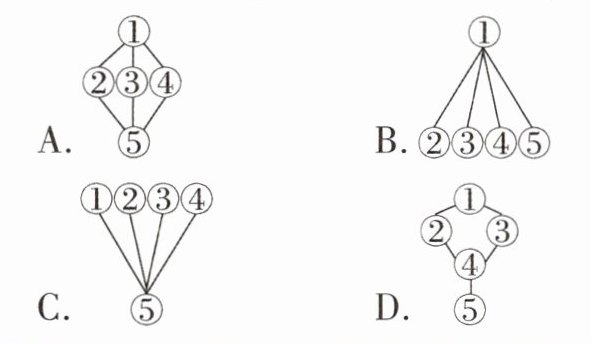
()19. 新考法篇章结构 How is the text organised?
(①=Paragraph 1, ②=Paragraph 2...)
情境4 Ben阐述了塑料污染的严重性,提供了减少使用塑料的几种建议,如使用可重复使用的购物袋、拒绝吸管等。
任务四 阅读还原(10分)
答案 20—24
[2025江西中考] Plastic pollution is a serious problem, and it's getting worse. Plastic can stay for a long time. Scientists are trying to create plastic that breaks down quickly, but the best way for now is to use less plastic. 20
Stop using plastic bags. Instead, take your own reusable shopping bag to the store. Every year, people use tons of plastic bags worldwide. Some countries try to stop using plastic bags. 21
Say no to the straw (吸管). A study showed that around 8.3 billion plastic straws cover the world's beaches. So when you order a drink, say no to the straw, or bring your own reusable one.
22 Carry a reusable water bottle with you. Around the world, nearly a million plastic bottles are thrown away every minute. The problem is so bad that in some countries, stores aren't allowed to sell bottled water any more.
Avoid plastic packaging. 23 It's almost everywhere. But there is something you can do, too: avoid fruit or vegetables packed in plastic.
Recycle what you can. You can't recycle all plastic things. 24 For example, you can recycle bottles and milk or juice bags. In some countries, machines take the bottles and give a little money back for each bottle.
A. They are fresh.
B. Don't buy bottled water.
C. Bottled water is expensive.
D. But it is possible to start small.
E. Here are five tips that can help you.
F. Other countries make customers pay for them.
G. Most things you buy come in plastic packaging.
情境5 Coco强调了森林对环境的重要性,讨论了森林减少的原因及保护森林的举措,如制定法律等。
Donate your old books. Placing old books where they are needed will bring out their value of use. There are many places that need old books, especially places with a waiting room such as hospitals. But be sure to donate old books to the places in need. Some places might not need them.
Print on both sides of the paper. This will reduce the consumption of printing paper by half. Waste paper is also a good choice when you print some unofficial things, such as notes and reading materials. This can make full use of waste paper and ensure that it is not wasted.
Use an erasable board to take notes at home. Pick up a whiteboard or a blackboard and keep it close! It's convenient for saving paper. You can use it to take down important information from phone calls.
Use notebooks until the end and save empty pages. Rather than throwing away empty notebooks at the end of a term, tear out the unused pages. Then put them together to create a new notebook.
()16. Which of the following places probably won't need old books?
A. Hospitals.
B. Airports.
C. Train stations.
D. Roadside stalls.
()17. can't be printed on waste paper.
A. Exercises
B. Reading materials
C. The notes taken in class
D. An official document
()18. Which of the following ways is not mentioned?
A. Donating your old books.
B. No more writing on paper.
C. Printing on both sides of the paper.
D. Using notebooks until the end and saving empty pages.
()19. 新考法篇章结构 How is the text organised?
(①=Paragraph 1, ②=Paragraph 2...)
情境4 Ben阐述了塑料污染的严重性,提供了减少使用塑料的几种建议,如使用可重复使用的购物袋、拒绝吸管等。
任务四 阅读还原(10分)
答案 20—24
[2025江西中考] Plastic pollution is a serious problem, and it's getting worse. Plastic can stay for a long time. Scientists are trying to create plastic that breaks down quickly, but the best way for now is to use less plastic. 20
Stop using plastic bags. Instead, take your own reusable shopping bag to the store. Every year, people use tons of plastic bags worldwide. Some countries try to stop using plastic bags. 21
Say no to the straw (吸管). A study showed that around 8.3 billion plastic straws cover the world's beaches. So when you order a drink, say no to the straw, or bring your own reusable one.
22 Carry a reusable water bottle with you. Around the world, nearly a million plastic bottles are thrown away every minute. The problem is so bad that in some countries, stores aren't allowed to sell bottled water any more.
Avoid plastic packaging. 23 It's almost everywhere. But there is something you can do, too: avoid fruit or vegetables packed in plastic.
Recycle what you can. You can't recycle all plastic things. 24 For example, you can recycle bottles and milk or juice bags. In some countries, machines take the bottles and give a little money back for each bottle.
A. They are fresh.
B. Don't buy bottled water.
C. Bottled water is expensive.
D. But it is possible to start small.
E. Here are five tips that can help you.
F. Other countries make customers pay for them.
G. Most things you buy come in plastic packaging.
情境5 Coco强调了森林对环境的重要性,讨论了森林减少的原因及保护森林的举措,如制定法律等。
答案
16—19 D D B B
16. D 细节理解题。根据“There are many places that need old books, especially places with a waiting room such as hospitals.”可知,需要旧书的是那些设有等候室的场所,路边摊不符合。故选 D 项。
17. D 细节理解题。根据“Waste paper is also a good choice when you print some unofficial things, such as notes and reading materials.”可知,使用废纸打印的是一些非正式的文件,D 选项(官方文件)不能用废纸打印,故选 D 项。
18. B 细节理解题。根据“Donate your old books.”“Print on both sides of the paper.”和“Use notebooks until the end and save empty pages.”可知选 B 项。
19. B 推理判断题。通读全文可知,第一段引出本文主题,第二段到第五段分别介绍减少
[图2 第5题图]
纸张消耗的方法,所以本文是“总分”结构,故选 B 项。
20—24 E F B G D
20. E 根据后文提到的五个减少使用塑料的建议可知,此处引出下文。故选 E 项。
21. F 根据前文“Some countries try to stop using plastic bags.”及选项可知,后文要说明其他国家采取的措施。故选 F 项。
22. B 根据后文“Around the world, nearly a million plastic bottles are thrown away every minute.”及选项可知,此处应是建议不要购买瓶装水。故选 B 项。
23. G 根据“Avoid plastic packaging.”和“It’s almost everywhere.”及选项可知,此处需要说明塑料包装的普遍性。故选 G 项。
24. D 根据前文“You can’t recycle all plastic things.”及选项可知,此处表示虽然不能回收所有塑料,但可以从一些小的方面开始。故选 D 项。
