

 登录
一、完形填空。
The compass brings a lot to the whole world. It is an important 1 in both Chinese history and the world history. Before it was invented, ancient Chinese on the sea had to 2 the stars to find directions. Travelling was 3 in bad weather. The compass allowed them to tell the directions of east, west, south and north 4.
The first compass was called “Sinan”. It was invented in China over 2,000 years ago.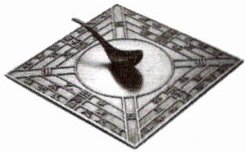
It’s said that a farmer wrote down all he had found. In his 5, he described that some rocks stuck to all iron(铁) objects. He felt very 6, because he had never seen that before. After that, people called those rocks magnetite(磁铁矿). They found a 7 scene: the magnetite could point in the same direction if it was hung up in a 8 way. After improvement, the spoon-shaped “Sinan” was 9. Its handle(柄) points south all the time. Ancient Chinese used it to choose 10 to build houses.
Later, people developed “Sinan” into “Luopan” with a magnetized steel needle. In the 11th century, people started to use the compass to 11 the sea. This made it possible for people to 12 across the world’s oceans and helped people travel to find the new world. As time went on, the compass became more correct to use. Small 13 in direction became much fewer. Today, the compass 14 plays an important role in some fields. It shows us the great wisdom of ancient people and 15 their inventions have changed the world.
(
C. dream D. plan
(
C. look at D. find out
(
(
C. happily D. patiently
(
(
C. surprised D. tired
(
C. main D. simple
(
(
C. created D. needed
(
C. time D. money
(
C. protect D. explore
(
(
C. accidents D. mistakes
(
(
The compass brings a lot to the whole world. It is an important 1 in both Chinese history and the world history. Before it was invented, ancient Chinese on the sea had to 2 the stars to find directions. Travelling was 3 in bad weather. The compass allowed them to tell the directions of east, west, south and north 4.
The first compass was called “Sinan”. It was invented in China over 2,000 years ago.
It’s said that a farmer wrote down all he had found. In his 5, he described that some rocks stuck to all iron(铁) objects. He felt very 6, because he had never seen that before. After that, people called those rocks magnetite(磁铁矿). They found a 7 scene: the magnetite could point in the same direction if it was hung up in a 8 way. After improvement, the spoon-shaped “Sinan” was 9. Its handle(柄) points south all the time. Ancient Chinese used it to choose 10 to build houses.
Later, people developed “Sinan” into “Luopan” with a magnetized steel needle. In the 11th century, people started to use the compass to 11 the sea. This made it possible for people to 12 across the world’s oceans and helped people travel to find the new world. As time went on, the compass became more correct to use. Small 13 in direction became much fewer. Today, the compass 14 plays an important role in some fields. It shows us the great wisdom of ancient people and 15 their inventions have changed the world.
(
B
)1. A. project B. inventionC. dream D. plan
(
C
)2. A. think of B. care forC. look at D. find out
(
D
)3. A. fast B. safe C. fun D. hard(
A
)4. A. easily B. actuallyC. happily D. patiently
(
D
)5. A. sign B. order C. result D. note(
C
)6. A. bored B. relaxedC. surprised D. tired
(
A
)7. A. strange B. popularC. main D. simple
(
B
)8. A. safe B. certain C. quiet D. sudden(
C
)9. A. drawn B. brokenC. created D. needed
(
A
)10. A. places B. sightsC. time D. money
(
D
)11. A. spread B. discoverC. protect D. explore
(
B
)12. A. come B. travel C. meet D. swim(
D
)13. A. purposes B. secretsC. accidents D. mistakes
(
A
)14. A. still B. only C. ever D. never(
C
)15. A. why B. when C. how D. what答案
1. B 2. C 3. D 4. A 5. D 6. C 7. A 8. B 9. C 10. A 11. D 12. B 13. D 14. A 15. C
解析
【分析】
做完形填空需先通读全文把握主旨(本文介绍指南针的发明与发展历史),再结合上下文语境、词义辨析、逻辑关系逐空分析,确保所选选项符合文章主题与语境要求。
【解析】
1. 考查名词辨析:指南针是中国和世界历史上重要的发明,故选B(invention);A为项目、C为梦想、D为计划,均不符合。
2. 考查动词短语:古代海上航行靠“看”星星辨别方向,故选C(look at);A为想起、B为关心、D为找出,不符合语境。
3. 考查形容词辨析:坏天气里旅行是困难的,故选D(hard);A为快、B为安全、C为有趣,不符合。
4. 考查副词辨析:指南针让人们“容易地”辨别方向,故选A(easily);B为实际上、C为开心地、D为耐心地,不符合。
5. 考查名词辨析:农民在自己的“笔记”中描述发现,故选D(note);A为标志、B为命令、C为结果,不符合。
6. 考查形容词辨析:从没见过这种现象所以感到“惊讶”,故选C(surprised);A为无聊、B为放松、D为疲惫,不符合。
7. 考查形容词辨析:磁铁矿指向同一方向是“奇怪的”现象,故选A(strange);B为流行的、C为主要的、D为简单的,不符合。
8. 考查形容词辨析:磁铁矿以“某种”方式悬挂会指同一方向,故选B(certain);A为安全的、C为安静的、D为突然的,不符合。
9. 考查动词辨析:经过改进,勺形的司南被“创造”出来,故选C(created);A为画、B为打破、D为需要,不符合。
10. 考查名词辨析:古代中国人用司南选“地方”建房子,故选A(places);B为风景、C为时间、D为钱,不符合。
11. 考查动词辨析:11世纪人们用指南针“探索”海洋,故选D(explore);A为传播、B为发现、C为保护,不符合。
12. 考查动词辨析:指南针让人们能环球“旅行”,故选B(travel);A为来、C为遇见、D为游泳,不符合。
13. 考查名词辨析:随着发展,方向的“错误”变少,故选D(mistakes);A为目的、B为秘密、C为事故,不符合。
14. 考查副词辨析:如今指南针“仍然”在很多领域重要,故选A(still);B为仅仅、C为曾经、D为从不,不符合。
15. 考查宾语从句引导词:此处指发明“如何”改变世界,故选C(how);A为为什么、B为何时、D为什么,不符合。
【答案】
1.B 2.C 3.D 4.A 5.D 6.C 7.A 8.B 9.C 10.A 11.D 12.B 13.D 14.A 15.C
【知识点】
完形填空解题技巧、词义辨析、语境理解
【点评】
本文围绕指南针的发明与发展展开,既考查词汇短语辨析能力,又渗透中国古代科技文化知识,需结合上下文逻辑与词义选择,是一道兼顾语言知识与文化素养的典型完形题。
【难度系数】
0.5
二、阅读理解。
A
The Chinese pingfeng is an ancient invention and traditional Chinese furniture(家具). It can date back to the Han Dynasty. The term "pingfeng" means protection from wind, showing its purpose at the very beginning.
As time passes, it has been made in different sizes with colourful paintings. On the screens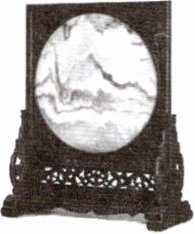 usually appears a dragon. It's a symbol of light, growth and life. It also stands for nobility(高贵)and power. The peacock(孔雀),a beautiful bird, can be seen on the screens too. It's a symbol of everlasting life. Beautiful flowers, which mean wealth and good luck, are also chosen as a popular design of the pingfeng.
Behind the pingfeng lies a fun story. In the past,the unmarried daughter of a rich family was not supposed to see or be seen by men except her father, brothers or very close male cousins. When an admirer came to visit,however,she might take a secret look at him from a screen behind,where she would be completely hidden. Her father would discuss poems with the young man and ask him to create one. If the daughter and her father were satisfied with the young man's poem and appearance,she might agree to marry him.
Today the pingfeng is back in fashion for its beauty and practical use as furniture. Acting as a movable wall or divider, it can be the perfect match for modern sofas and walls. The pingfeng is more than just beautiful furniture.
( )1. What was the pingfeng used for at the very beginning?
A. Dividing a room.
B. Hiding a person.
C. Making a room beautiful.
D. Protecting people from wind.
(
A. The dragon.
B. The peacock.
C. The water.
D. The flowers.
(
A. By telling a story.
B. By asking a question.
C. By explaining the result.
D. By comparing differences.
(
A. It is not practical at all now.
B. It is not just used as furniture.
C. It is not popular any more.
D. It won't be used in the future.
A
The Chinese pingfeng is an ancient invention and traditional Chinese furniture(家具). It can date back to the Han Dynasty. The term "pingfeng" means protection from wind, showing its purpose at the very beginning.
As time passes, it has been made in different sizes with colourful paintings. On the screens
usually appears a dragon. It's a symbol of light, growth and life. It also stands for nobility(高贵)and power. The peacock(孔雀),a beautiful bird, can be seen on the screens too. It's a symbol of everlasting life. Beautiful flowers, which mean wealth and good luck, are also chosen as a popular design of the pingfeng.Behind the pingfeng lies a fun story. In the past,the unmarried daughter of a rich family was not supposed to see or be seen by men except her father, brothers or very close male cousins. When an admirer came to visit,however,she might take a secret look at him from a screen behind,where she would be completely hidden. Her father would discuss poems with the young man and ask him to create one. If the daughter and her father were satisfied with the young man's poem and appearance,she might agree to marry him.
Today the pingfeng is back in fashion for its beauty and practical use as furniture. Acting as a movable wall or divider, it can be the perfect match for modern sofas and walls. The pingfeng is more than just beautiful furniture.
( )1. What was the pingfeng used for at the very beginning?
A. Dividing a room.
B. Hiding a person.
C. Making a room beautiful.
D. Protecting people from wind.
(
D
)2. Which design of the pingfeng is a symbol of wealth and good luck?A. The dragon.
B. The peacock.
C. The water.
D. The flowers.
(
A
)3. 新考法 写作手法 How does the writer develop Paragraph 3?A. By telling a story.
B. By asking a question.
C. By explaining the result.
D. By comparing differences.
(
B
)4. How does the writer like the pingfeng?A. It is not practical at all now.
B. It is not just used as furniture.
C. It is not popular any more.
D. It won't be used in the future.
答案
1. D 2. D 3. A 4. B
解析
【分析】
解题思路为针对每道题,先定位原文对应内容,结合题干要求匹配选项:1题查找屏风最初用途,定位第一段相关表述;2题查找象征财富好运的图案,定位第二段对应句子;3题分析第三段的写作手法,判断段落结构;4题查找作者对屏风的看法,定位最后一段相关语句。
【解析】
1. 细节理解题:根据第一段最后一句“The term 'pingfeng' means protection from wind, showing its purpose at the very beginning.”可知,屏风最初的用途是挡风,对应选项D。
2. 细节理解题:根据第二段最后一句“Beautiful flowers, which mean wealth and good luck, are also chosen as a popular design of the pingfeng.”可知,花朵图案象征财富和好运,对应选项D。
3. 写作手法题:第三段首句“Behind the pingfeng lies a fun story.”点明该段围绕屏风背后的故事展开,整段通过讲述故事推进,对应选项A。
4. 细节理解题:根据最后一段最后一句“The pingfeng is more than just beautiful furniture.”可知,作者认为屏风不只是家具,对应选项B。
【答案】
1.D 2.D 3.A 4.B
【知识点】
英语阅读理解细节理解、写作手法分析
【点评】
本题为介绍中国传统屏风的阅读理解题,考查细节定位与写作手法分析能力,难度适中,需学生精准提取原文关键信息。
【难度系数】
0.7
