

 登录
B KEY→P39
范畴:人与社会 主题:著名人物 体裁:记叙文 难度:★★★★ 建议用时:7分钟 评价:/4
热考素材 社会主义先进文化 ① Yang Chen-Ning, a world-famous physicist and China's first Nobel Prize(诺贝尔奖) winner, died in Beijing at the age of 103. This Nobel Prize winner was also an academician(院士) of the Chinese Academy of Sciences and a Tsinghua University professor. His death is a great loss to the world.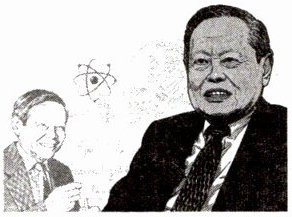
② Born in 1922 in Hefei, Anhui Province, Yang Chen-Ning showed excellent learning talent in his childhood. When he was four years old, his mother began to teach him to read Chinese characters, and he learned 3,000 Chinese characters in just over a year. During his childhood, he achieved excellent results in both mathematics and Chinese. Later, Yang studied at Tsinghua University and went to the University of Chicago and got his PhD(博士) there.
③ Yang's most well-known success was working with Tsung-Dao Lee. Together, they won the Nobel Prize in Physics in 1957. They showed an idea that changed modern physics a lot. What's more, his Yang-Mills theory(杨-米尔斯理论) is seen as a basis of modern physics.
④ Besides his science work, Yang loved his motherland deeply. In 1971, he was one of the first overseas Chinese scholars to visit China. When he returned to Tsinghua University, he helped to set up and develop the Institute for Advanced Study(高等研究院). This had a big effect on China's higher education and the training of science talents. It also showed his love for his country.
⑤ Yang Chen-Ning's life was not only a great story in science, but also a bridge between the East and the West. His life journey became an unforgettable part of human knowledge and cross-cultural communication. His motto(座右铭) "Be honest rather than clever" encourages the young to seek truth in science and life.
——文章选自 China Daily
(
A. He was born in 1922 in Beijing.
B. He didn't study at Tsinghua University.
C. He showed talent only for maths during his early years.
D. He learned 3,000 Chinese characters in over a year with his mother's help.
(
A. Yang's research fields.
B. How Yang became successful.
C. Yang's main achievements in science.
D. Where Yang once studied and worked.
(
a. Yang won the Nobel Prize with Tsung-Dao Lee.
b. Yang learned many Chinese characters in a short time.
c. Yang visited China in 1971.
d. Yang got his PhD in Chicago.
e. Yang helped set up the Institute for Advanced Study.
A. b-d-a-c-e
B. b-a-d-c-e
C. b-d-c-e-a
D. d-c-e-a-b
(
A. ①②/③④⑤
B. ①/②③④/⑤
C. ①②③/④⑤
D. ①/②/③/④/⑤
范畴:人与社会 主题:著名人物 体裁:记叙文 难度:★★★★ 建议用时:7分钟 评价:/4
热考素材 社会主义先进文化 ① Yang Chen-Ning, a world-famous physicist and China's first Nobel Prize(诺贝尔奖) winner, died in Beijing at the age of 103. This Nobel Prize winner was also an academician(院士) of the Chinese Academy of Sciences and a Tsinghua University professor. His death is a great loss to the world.
② Born in 1922 in Hefei, Anhui Province, Yang Chen-Ning showed excellent learning talent in his childhood. When he was four years old, his mother began to teach him to read Chinese characters, and he learned 3,000 Chinese characters in just over a year. During his childhood, he achieved excellent results in both mathematics and Chinese. Later, Yang studied at Tsinghua University and went to the University of Chicago and got his PhD(博士) there.
③ Yang's most well-known success was working with Tsung-Dao Lee. Together, they won the Nobel Prize in Physics in 1957. They showed an idea that changed modern physics a lot. What's more, his Yang-Mills theory(杨-米尔斯理论) is seen as a basis of modern physics.
④ Besides his science work, Yang loved his motherland deeply. In 1971, he was one of the first overseas Chinese scholars to visit China. When he returned to Tsinghua University, he helped to set up and develop the Institute for Advanced Study(高等研究院). This had a big effect on China's higher education and the training of science talents. It also showed his love for his country.
⑤ Yang Chen-Ning's life was not only a great story in science, but also a bridge between the East and the West. His life journey became an unforgettable part of human knowledge and cross-cultural communication. His motto(座右铭) "Be honest rather than clever" encourages the young to seek truth in science and life.
——文章选自 China Daily
(
D
)1. Which fact about Yang Chen-Ning is true?A. He was born in 1922 in Beijing.
B. He didn't study at Tsinghua University.
C. He showed talent only for maths during his early years.
D. He learned 3,000 Chinese characters in over a year with his mother's help.
(
C
)2. What is the third paragraph mainly about?A. Yang's research fields.
B. How Yang became successful.
C. Yang's main achievements in science.
D. Where Yang once studied and worked.
(
A
)3. Which of the following shows the correct order of these events?a. Yang won the Nobel Prize with Tsung-Dao Lee.
b. Yang learned many Chinese characters in a short time.
c. Yang visited China in 1971.
d. Yang got his PhD in Chicago.
e. Yang helped set up the Institute for Advanced Study.
A. b-d-a-c-e
B. b-a-d-c-e
C. b-d-c-e-a
D. d-c-e-a-b
(
B
)4. What is the structure of the text?A. ①②/③④⑤
B. ①/②③④/⑤
C. ①②③/④⑤
D. ①/②/③/④/⑤
答案
本文主要介绍了世界著名物理学家、诺贝尔奖得主杨振宁的生平及伟大贡献。
1. D 细节理解题。根据短文第二段的“When he was four years old, his mother began to teach him to read Chinese characters, and he learned 3,000 Chinese characters in just over a year.”可知,在母亲的帮助下,杨振宁在一年多的时间里学会了3 000个汉字。
2. C 段落大意题。阅读第三段可知,本段提到了杨振宁获得诺贝尔物理学奖和提出杨-米尔斯理论,这些都是其在科学领域的成就。
3. A 信息排序题。阅读全文可知,杨振宁的主要经历先后顺序是:在短时间内学会了许多汉字;在芝加哥大学获得了博士学位;与李政道共同获得了诺贝尔奖;于1971年访问了中国;帮助建立了高等研究院。所以正确顺序为:b-d-a-c-e。
4. B 篇章结构题。通读全文可知,第一段引出杨振宁及其成就;第二至四段分别介绍了杨振宁的教育经历、科学贡献和他回国后对教育的贡献;最后一段总结其科学与文化桥梁作用。故本文为“总—分—总”结构。
