

 登录
登录
一、完形填空。
主题:人与社会——人际沟通·社交礼仪
体裁:记叙文 难易度:☆☆☆
An old saying goes, "When in Rome, do as the Romans do." I learned the
One day I
How bad a(n)
I felt
Finding the differences between
(
C. happiness D. habit
(
C. told D. taught
(
C. thirsty D. excited
(
C. warmly D. carefully
(
C. noise D. laughter
(
C. meal D. food
(
C. conversation D. custom
(
C. natural D. interesting
(
C. have D. keep
(
C. angry D. nervous
(
C. impolite D. confusing
(
(
C. going on D. looking for
(
C. everything D. anything
(
C. people D. cultures
主题:人与社会——人际沟通·社交礼仪
体裁:记叙文 难易度:☆☆☆
An old saying goes, "When in Rome, do as the Romans do." I learned the
A
1 of this when I studied in Russia.One day I
B
2 some of my Chinese friends to a famous local restaurant in Moscow. My guests and I were D
3 about visiting Red Square and happy about our meeting. We chatted C
4 until the waiter told me that we were talking too loudly. We turned our B
5 lower. But this didn't last long. The waiter came over to us two more times with the same A
6.How bad a(n)
A
7 we must have left on the local people! In China, it's C
8 and important for a host to make a lively atmosphere (气氛). However, in Russia and Western countries, having a meal in a public place means you must D
9 your voice low. You need to be polite to others.I felt
A
10 about this. Even though we tried our best, it's very A
11 to form a new habit. Russians have their own special habits. My Russian friend Andrey always looks around and thinks for a while before leaving home. I asked him C
12 he did this. "Aha," Andrey said, "In Russia, people always spend about a minute B
13 things and plans in their minds before leaving. So they won't leave D
14 necessary behind."Finding the differences between
D
15 is very interesting. I'd like to keep my eyes and mind open.(
A
)1. A. meaning B. difficultyC. happiness D. habit
(
B
)2. A. made B. invitedC. told D. taught
(
D
)3. A. sad B. hungryC. thirsty D. excited
(
C
)4. A. surprisingly B. friendlyC. warmly D. carefully
(
B
)5. A. sound B. voicesC. noise D. laughter
(
A
)6. A. message B. menuC. meal D. food
(
A
)7. A. impression B. appearanceC. conversation D. custom
(
C
)8. A. terrible B. seriousC. natural D. interesting
(
D
)9. A. take B. turnC. have D. keep
(
A
)10. A. embarrassed B. comfortableC. angry D. nervous
(
A
)11. A. difficult B. differentC. impolite D. confusing
(
C
)12. A. how B. when C. why D. where(
B
)13. A. walking around B. going overC. going on D. looking for
(
D
)14. A. nothing B. somethingC. everything D. anything
(
D
)15. A. friends B. knowledgeC. people D. cultures
答案
1.A 2.B 3.D 4.C 5.B 6.A 7.A 8.C 9.D 10.A 11.A 12.C 13.B 14.D 15.D
解析
【分析】
做完形填空需先通读全文,把握核心主题为“入乡随俗”及中西方文化差异,再结合上下文语境、固定搭配、词义辨析和文化背景逐一解题。例如第1题需理解谚语含义,第2题考查“邀请某人去某地”的固定搭配,第5题区分表示“人的声音”的词汇,第9题运用“keep+宾语+形容词”结构,第15题紧扣文化差异主题,确保选项符合语篇逻辑。
【解析】
1. 结合谚语"When in Rome, do as the Romans do."(入乡随俗),作者在俄罗斯学习时学到了这句话的含义,故选A.meaning。
2. 固定搭配invite sb to sp(邀请某人去某地),此处指邀请中国朋友去莫斯科的餐厅,故选B.invited。
3. 结合后文“happy about our meeting”及参观红场的心情,可知作者和朋友很兴奋,故选D.excited。
4. 此处指热情地聊天,warmly(热情地)符合语境,故选C.warmly。
5. 表示“人的说话声”用voices,sound泛指各类声音,noise指噪音,laughter指笑声,此处指压低说话的声音,故选B.voices。
6. 服务员两次过来传达同样的信息(说话太大声),message(信息)符合语境,故选A.message。
7. 固定搭配leave impression on sb(给某人留下印象),此处指我们给当地人留下的印象不好,故选A.impression。
8. 在中国,主人营造活跃气氛是自然且重要的,natural(自然的)符合语境,故选C.natural。
9. 固定搭配keep one's voice low(保持声音低),故选D.keep。
10. 因为被服务员提醒说话太大声,作者感到尴尬,embarrassed(尴尬的)符合语境,故选A.embarrassed。
11. 形成新的习惯是困难的,difficult(困难的)符合语境,故选A.difficult。
12. 作者问朋友这么做的原因,why(为什么)引导宾语从句,故选C.why。
13. go over意为“仔细思考、复习”,此处指出门前在脑子里过事情和计划,故选B.going over。
14. 否定句中用anything,指不会落下任何必要的东西,故选D.anything。
15. 全文围绕中西方文化差异展开,cultures(文化)符合主题,故选D.cultures。
【答案】
1.A 2.B 3.D 4.C 5.B 6.A 7.A 8.C 9.D 10.A 11.A 12.C 13.B 14.D 15.D
【知识点】
完形填空、词义辨析、固定搭配
【点评】
本文以作者在俄罗斯的亲身经历为载体,围绕“入乡随俗”的核心主题,通过餐厅用餐被提醒、朋友出门前准备两个事例,展现了中西方在社交礼仪、生活习惯上的文化差异,既考查词汇运用与固定搭配的掌握,又渗透跨文化交际意识,语篇逻辑清晰,是典型的完形填空训练材料。
【难度系数】
0.5
做完形填空需先通读全文,把握核心主题为“入乡随俗”及中西方文化差异,再结合上下文语境、固定搭配、词义辨析和文化背景逐一解题。例如第1题需理解谚语含义,第2题考查“邀请某人去某地”的固定搭配,第5题区分表示“人的声音”的词汇,第9题运用“keep+宾语+形容词”结构,第15题紧扣文化差异主题,确保选项符合语篇逻辑。
【解析】
1. 结合谚语"When in Rome, do as the Romans do."(入乡随俗),作者在俄罗斯学习时学到了这句话的含义,故选A.meaning。
2. 固定搭配invite sb to sp(邀请某人去某地),此处指邀请中国朋友去莫斯科的餐厅,故选B.invited。
3. 结合后文“happy about our meeting”及参观红场的心情,可知作者和朋友很兴奋,故选D.excited。
4. 此处指热情地聊天,warmly(热情地)符合语境,故选C.warmly。
5. 表示“人的说话声”用voices,sound泛指各类声音,noise指噪音,laughter指笑声,此处指压低说话的声音,故选B.voices。
6. 服务员两次过来传达同样的信息(说话太大声),message(信息)符合语境,故选A.message。
7. 固定搭配leave impression on sb(给某人留下印象),此处指我们给当地人留下的印象不好,故选A.impression。
8. 在中国,主人营造活跃气氛是自然且重要的,natural(自然的)符合语境,故选C.natural。
9. 固定搭配keep one's voice low(保持声音低),故选D.keep。
10. 因为被服务员提醒说话太大声,作者感到尴尬,embarrassed(尴尬的)符合语境,故选A.embarrassed。
11. 形成新的习惯是困难的,difficult(困难的)符合语境,故选A.difficult。
12. 作者问朋友这么做的原因,why(为什么)引导宾语从句,故选C.why。
13. go over意为“仔细思考、复习”,此处指出门前在脑子里过事情和计划,故选B.going over。
14. 否定句中用anything,指不会落下任何必要的东西,故选D.anything。
15. 全文围绕中西方文化差异展开,cultures(文化)符合主题,故选D.cultures。
【答案】
1.A 2.B 3.D 4.C 5.B 6.A 7.A 8.C 9.D 10.A 11.A 12.C 13.B 14.D 15.D
【知识点】
完形填空、词义辨析、固定搭配
【点评】
本文以作者在俄罗斯的亲身经历为载体,围绕“入乡随俗”的核心主题,通过餐厅用餐被提醒、朋友出门前准备两个事例,展现了中西方在社交礼仪、生活习惯上的文化差异,既考查词汇运用与固定搭配的掌握,又渗透跨文化交际意识,语篇逻辑清晰,是典型的完形填空训练材料。
【难度系数】
0.5
二、阅读理解。
主题:人与社会——人际沟通·社交礼仪
体裁:说明文 难易度:☆☆☆
Teaching good manners to kids is very important. It's best to let them develop good table manners when they are young. So they can carry these when they grow up.
Good eating manners begin with good table manners. Tell your kids that dinner time is family time. There should be no mobile phones or text messages at the table. Instead, mealtime should be used for talking about family things.
Kids should say "please" and "thank you" when asking for things on the table. They should not reach over(越过) other people to get things that they want.
Teach your children not to eat with their mouths open or talk with their mouths full. If it's hard for them to understand, try showing them how it looks and sounds. When they see this, they'll understand how they look to other people. They should also eat slowly and take small bites (咬).
Washing hands before and after eating is important to health. When eating at a friend's house, tell your kids to remember to thank the host for the meal. Let them put their own dishes in the sink after dinner. For elder children, they can help do the dishes.
1. 新考向 图片理解 What should NOT kids do according to the text? (
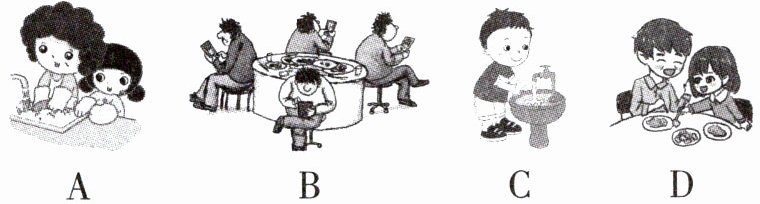
A B C D
2. 新考向 词义猜测 The underlined word "sink" means "" in Chinese. (
A. 消毒柜 B. 碗橱
C. 水槽 D. 冰箱
3. From the text we know that kids . (
A. can only talk about delicious food during mealtime
B. can reach over people to get things when eating
C. should wash their own dishes after dinner
D. should say thanks to the host for the meal after eating
4. 新考向 主旨归纳 The main idea of the text is . (
A. asking kids to help parents do housework
B. teaching kids about good manners
C. what kids should do to live happily
D. what kids should eat to keep healthy
主题:人与社会——人际沟通·社交礼仪
体裁:说明文 难易度:☆☆☆
Teaching good manners to kids is very important. It's best to let them develop good table manners when they are young. So they can carry these when they grow up.
Good eating manners begin with good table manners. Tell your kids that dinner time is family time. There should be no mobile phones or text messages at the table. Instead, mealtime should be used for talking about family things.
Kids should say "please" and "thank you" when asking for things on the table. They should not reach over(越过) other people to get things that they want.
Teach your children not to eat with their mouths open or talk with their mouths full. If it's hard for them to understand, try showing them how it looks and sounds. When they see this, they'll understand how they look to other people. They should also eat slowly and take small bites (咬).
Washing hands before and after eating is important to health. When eating at a friend's house, tell your kids to remember to thank the host for the meal. Let them put their own dishes in the sink after dinner. For elder children, they can help do the dishes.
1. 新考向 图片理解 What should NOT kids do according to the text? (
B
)A B C D
2. 新考向 词义猜测 The underlined word "sink" means "" in Chinese. (
C
)A. 消毒柜 B. 碗橱
C. 水槽 D. 冰箱
3. From the text we know that kids . (
D
)A. can only talk about delicious food during mealtime
B. can reach over people to get things when eating
C. should wash their own dishes after dinner
D. should say thanks to the host for the meal after eating
4. 新考向 主旨归纳 The main idea of the text is . (
B
)A. asking kids to help parents do housework
B. teaching kids about good manners
C. what kids should do to live happily
D. what kids should eat to keep healthy
答案
1.B 2.C 3.D 4.B
解析
【分析】
本题为英语阅读理解题,包含图片理解、词义猜测、细节理解、主旨归纳四类题型。解题时需先通读全文把握核心内容(教孩子良好餐桌礼仪),再逐一结合题目要求分析:第1题需结合文本中餐桌礼仪的规定匹配图片;第2题结合语境猜测词义;第3题定位文本细节判断选项正误;第4题梳理全文主旨确定答案。
【解析】
1. 第1题:根据文本第二段“There should be no mobile phones or text messages at the table”,可知吃饭时不能使用手机。观察图片,B图中所有人用餐时都在看手机,是不应该做的行为,故选B。
2. 第2题:根据语境“put their own dishes in the sink after dinner”(饭后把自己的盘子放进...),结合生活常识,洗餐具的设施为“水槽”,对应选项C。
3. 第3题:A选项对应文本“mealtime should be used for talking about family things”,并非只谈美食,错误;B选项对应文本“They should not reach over other people to get things”,错误;C选项文本要求是“把盘子放进水槽”,而非洗碗,错误;D选项对应“when eating at a friend's house, tell your kids to remember to thank the host for the meal”,正确,故选D。
4. 第4题:全文围绕“Teaching good manners to kids is very important”展开,核心是教孩子良好礼仪,故选B。
【答案】1.B 2.C 3.D 4.B
【知识点】英语阅读理解、词义猜测、主旨归纳
【点评】本题结合文本与图片考查英语阅读理解能力,涵盖多种题型,需学生准确提取文本信息并结合图片分析,难度适中。
【难度系数】0.6
本题为英语阅读理解题,包含图片理解、词义猜测、细节理解、主旨归纳四类题型。解题时需先通读全文把握核心内容(教孩子良好餐桌礼仪),再逐一结合题目要求分析:第1题需结合文本中餐桌礼仪的规定匹配图片;第2题结合语境猜测词义;第3题定位文本细节判断选项正误;第4题梳理全文主旨确定答案。
【解析】
1. 第1题:根据文本第二段“There should be no mobile phones or text messages at the table”,可知吃饭时不能使用手机。观察图片,B图中所有人用餐时都在看手机,是不应该做的行为,故选B。
2. 第2题:根据语境“put their own dishes in the sink after dinner”(饭后把自己的盘子放进...),结合生活常识,洗餐具的设施为“水槽”,对应选项C。
3. 第3题:A选项对应文本“mealtime should be used for talking about family things”,并非只谈美食,错误;B选项对应文本“They should not reach over other people to get things”,错误;C选项文本要求是“把盘子放进水槽”,而非洗碗,错误;D选项对应“when eating at a friend's house, tell your kids to remember to thank the host for the meal”,正确,故选D。
4. 第4题:全文围绕“Teaching good manners to kids is very important”展开,核心是教孩子良好礼仪,故选B。
【答案】1.B 2.C 3.D 4.B
【知识点】英语阅读理解、词义猜测、主旨归纳
【点评】本题结合文本与图片考查英语阅读理解能力,涵盖多种题型,需学生准确提取文本信息并结合图片分析,难度适中。
【难度系数】0.6
