

 登录
登录
五、核心素养 中华优秀传统文化 阅读理解。

主题群
子主题
语篇类型
难度
历史、社会与文化
节日介绍
说明文
★★
Name China is a country with many colourful days and festivals. Dragon Head-raising Day (Longtaitou) is one of them.
Date of the festival This special day is on the second day of the second month in the Chinese lunar calendar. It stands for the start of spring and farming.
Customs(风俗) People celebrate Dragon Head-raising Day with many customs about dragons. In ancient times people put ash(灰)in the kitchen on that day. This was to lead the dragon into the house. People believed that with the help of the dragon they could have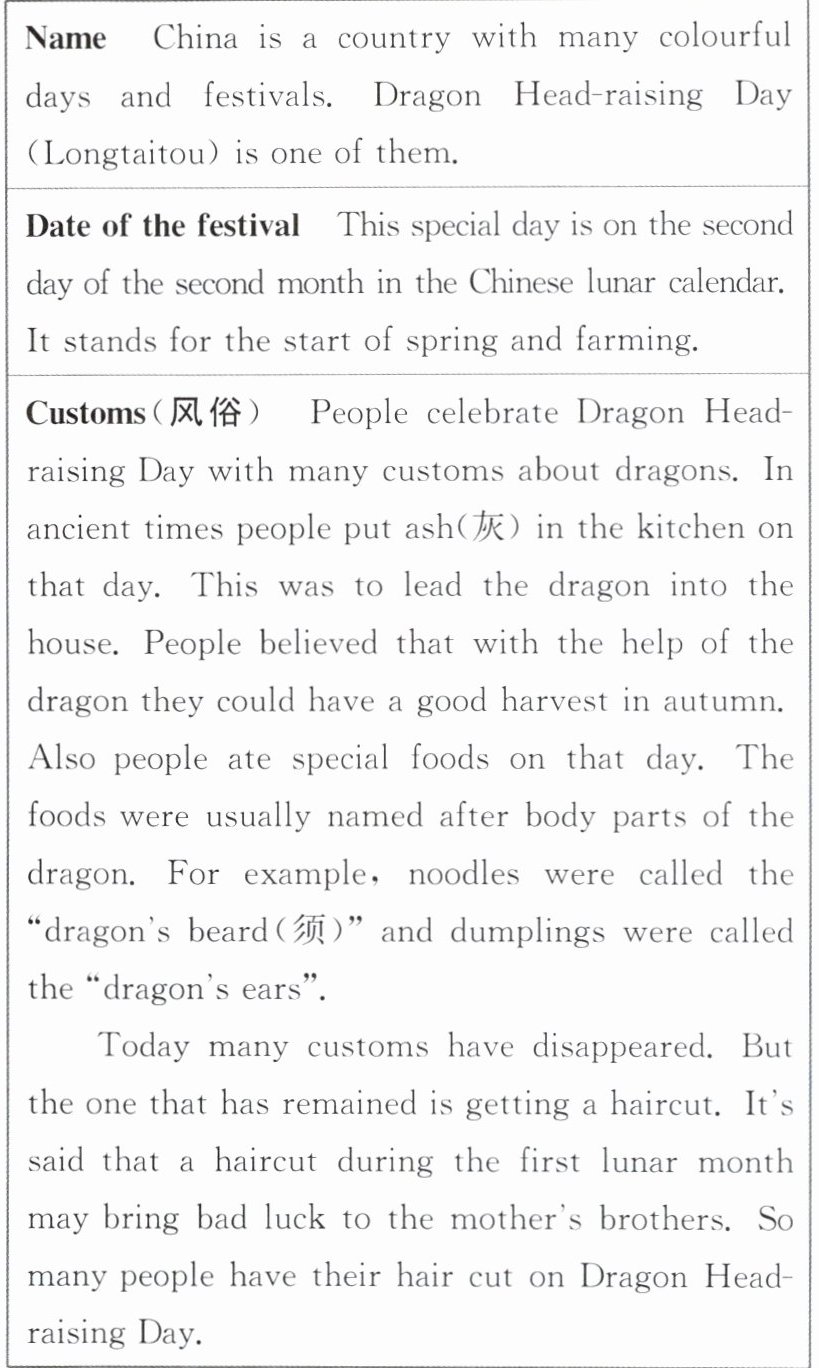 good harvest in autumn. Also people ate special foods on that day. The foods were usually named after body parts of the dragon. For example, noodles were called the “dragon's beard(须)” and dumplings were called the “dragon's ears”.
Today many customs have disappeared. But the one that has remained is getting a haircut. It's said that a haircut during the first lunar month may bring bad luck to the mother's brothers. So many people have their hair cut on Dragon Head-raising Day.
1. Why did ancient people put ash in the kitchen on Dragon Head-raising Day?
A. Because the dragon liked ash.
B. Because ash stood for a good harvest.
C. Because ash stood for happiness.
D. Because ash led the dragon into the house.
2. Which is the custom of the day?
A. Getting a haircut.
B. Eating rice dumplings.
C. Putting ash on the face.
D. Watching dragon boat races.
3. In which part of a magazine can we read the material?
A. Culture.
B. Language.
C. Nature.
D. Family.
主题群
子主题
语篇类型
难度
历史、社会与文化
节日介绍
说明文
★★
Name China is a country with many colourful days and festivals. Dragon Head-raising Day (Longtaitou) is one of them.
Date of the festival This special day is on the second day of the second month in the Chinese lunar calendar. It stands for the start of spring and farming.
Customs(风俗) People celebrate Dragon Head-raising Day with many customs about dragons. In ancient times people put ash(灰)in the kitchen on that day. This was to lead the dragon into the house. People believed that with the help of the dragon they could have
good harvest in autumn. Also people ate special foods on that day. The foods were usually named after body parts of the dragon. For example, noodles were called the “dragon's beard(须)” and dumplings were called the “dragon's ears”.Today many customs have disappeared. But the one that has remained is getting a haircut. It's said that a haircut during the first lunar month may bring bad luck to the mother's brothers. So many people have their hair cut on Dragon Head-raising Day.
1. Why did ancient people put ash in the kitchen on Dragon Head-raising Day?
A. Because the dragon liked ash.
B. Because ash stood for a good harvest.
C. Because ash stood for happiness.
D. Because ash led the dragon into the house.
2. Which is the custom of the day?
A. Getting a haircut.
B. Eating rice dumplings.
C. Putting ash on the face.
D. Watching dragon boat races.
3. In which part of a magazine can we read the material?
A. Culture.
B. Language.
C. Nature.
D. Family.
答案
1~3. DAA
解析
【分析】
本题是关于中国传统节日“龙抬头”的说明文阅读理解,三道题均为细节理解类题目。解题时需根据题干关键词定位原文对应段落,逐一匹配原文信息,排除错误选项得出答案。第1题关键词为“put ash in the kitchen”,定位到风俗介绍部分;第2题关键词为“custom of the day”,定位到现代保留的习俗部分;第3题需根据文章主题判断杂志板块。
【解析】
1. 第1题:根据原文“Customs”部分“In ancient times people put ash in the kitchen on that day. This was to lead the dragon into the house.”可知,古人在厨房放灰是为了引龙进屋,对应选项D。
2. 第2题:根据原文最后一段“But the one that has remained is getting a haircut.”可知,保留至今的习俗是理发,对应选项A;B选项吃粽子是端午节习俗,C选项放灰是在厨房而非脸上,D选项赛龙舟是端午节习俗,均排除。
3. 第3题:文章围绕中国传统节日文化展开,属于文化类内容,应在杂志的Culture板块,对应选项A。
【答案】
1~3. DAA
【知识点】
阅读理解(细节理解)、中华传统文化
【点评】
本题以中国传统节日“龙抬头”为主题,考查细节信息查找与文章出处判断,难度适中,需准确提取原文关键内容。
【难度系数】
0.6
本题是关于中国传统节日“龙抬头”的说明文阅读理解,三道题均为细节理解类题目。解题时需根据题干关键词定位原文对应段落,逐一匹配原文信息,排除错误选项得出答案。第1题关键词为“put ash in the kitchen”,定位到风俗介绍部分;第2题关键词为“custom of the day”,定位到现代保留的习俗部分;第3题需根据文章主题判断杂志板块。
【解析】
1. 第1题:根据原文“Customs”部分“In ancient times people put ash in the kitchen on that day. This was to lead the dragon into the house.”可知,古人在厨房放灰是为了引龙进屋,对应选项D。
2. 第2题:根据原文最后一段“But the one that has remained is getting a haircut.”可知,保留至今的习俗是理发,对应选项A;B选项吃粽子是端午节习俗,C选项放灰是在厨房而非脸上,D选项赛龙舟是端午节习俗,均排除。
3. 第3题:文章围绕中国传统节日文化展开,属于文化类内容,应在杂志的Culture板块,对应选项A。
【答案】
1~3. DAA
【知识点】
阅读理解(细节理解)、中华传统文化
【点评】
本题以中国传统节日“龙抬头”为主题,考查细节信息查找与文章出处判断,难度适中,需准确提取原文关键内容。
【难度系数】
0.6
