

 登录
登录
教材回顾
根据教材Integration部分的文段,填入适当的内容补全短文(每空一词)
There is a heated discussion on good literature in the Book Club. Millie has found many great writers express their love for 1.
Sandy admires The Border Town by Shen Congwen for its 6.
Many students take an active part in it, including Millie.
根据教材Integration部分的文段,填入适当的内容补全短文(每空一词)
There is a heated discussion on good literature in the Book Club. Millie has found many great writers express their love for 1.
nature
in their works. Chinese writer Zhu Ziqing is good at creating 2. beautiful
images
in nature. Henry David Thoreau, an American writer, wrote Walden, telling people how 3. important
nature is. William Wordsworth, a British poet, also shows his respect for nature’s power. Millie thinks good literature shares common feelings and has 4. lasting
values
. In addition, she shares Jane Eyre, telling a story about love, loss and 5. personal
growth
. It makes her want to write novels on her own!Sandy admires The Border Town by Shen Congwen for its 6.
local
colour
. Daniel loves Great Expectations by Charles Dickens, realizing real happiness comes from 7. kindness
rather than wealth. And then the Book Club invited students to write 8. short
plays
for students to perform during the Literature Week.Many students take an active part in it, including Millie.
答案
1. nature
2. beautiful images
3. important
4. lasting values
5. personal growth
6. local colour
7. kindness
8. short plays
2. beautiful images
3. important
4. lasting values
5. personal growth
6. local colour
7. kindness
8. short plays
解析
【分析】
解题时需紧扣教材Integration部分的原文语境,结合上下文逻辑、作家作品的文学常识及词数要求补全短文。比如第1空由下文多位作家围绕自然创作可判断;第2空对应朱自清的创作特点;第3空结合《瓦尔登湖》主题;第4空关联好文学的共性;第5空对应《简爱》主题;第6空关联《边城》特色;第7空对应《远大前程》主旨;第8空结合文学周表演的内容要求。
【解析】
1. 下文多位作家(朱自清、梭罗、华兹华斯)均围绕自然展开创作,故填nature;
2. 朱自清擅长在作品中创造自然里的美丽意象,符合语境,填beautiful images;
3. 《瓦尔登湖》传达自然对人的重要意义,故填important;
4. 好文学的共性是具有持久的价值,填lasting values;
5. 《简爱》的主题涉及爱、失去与个人成长,填personal growth;
6. 沈从文的《边城》以浓郁的地方色彩为特色,填local colour;
7. 《远大前程》传达真正的幸福源于善良而非财富,填kindness;
8. 为文学周表演创作短剧,填short plays。
【答案】
1. nature;2. beautiful images;3. important;4. lasting values;5. personal growth;6. local colour;7. kindness;8. short plays
【知识点】
英语课文内容理解、词汇运用
【点评】
本题为教材回顾类题目,主要考查学生对指定教材Integration部分文段的熟悉程度,结合文学常识与语境即可完成填空,难度较低。
【难度系数】
0.8
解题时需紧扣教材Integration部分的原文语境,结合上下文逻辑、作家作品的文学常识及词数要求补全短文。比如第1空由下文多位作家围绕自然创作可判断;第2空对应朱自清的创作特点;第3空结合《瓦尔登湖》主题;第4空关联好文学的共性;第5空对应《简爱》主题;第6空关联《边城》特色;第7空对应《远大前程》主旨;第8空结合文学周表演的内容要求。
【解析】
1. 下文多位作家(朱自清、梭罗、华兹华斯)均围绕自然展开创作,故填nature;
2. 朱自清擅长在作品中创造自然里的美丽意象,符合语境,填beautiful images;
3. 《瓦尔登湖》传达自然对人的重要意义,故填important;
4. 好文学的共性是具有持久的价值,填lasting values;
5. 《简爱》的主题涉及爱、失去与个人成长,填personal growth;
6. 沈从文的《边城》以浓郁的地方色彩为特色,填local colour;
7. 《远大前程》传达真正的幸福源于善良而非财富,填kindness;
8. 为文学周表演创作短剧,填short plays。
【答案】
1. nature;2. beautiful images;3. important;4. lasting values;5. personal growth;6. local colour;7. kindness;8. short plays
【知识点】
英语课文内容理解、词汇运用
【点评】
本题为教材回顾类题目,主要考查学生对指定教材Integration部分文段的熟悉程度,结合文学常识与语境即可完成填空,难度较低。
【难度系数】
0.8
阅读理解 诺贝尔文学奖得主拉斯洛
素养:语言能力 难度:中 用时:8分钟
新素材 [2026武汉东西湖区期末改编]The Hungarian(匈牙利的) writer László Krasznahorkai has been awarded the 2025 Nobel Prize in Literature(文学).
László was born in 1954 in Gyula, a small town in southeast Hungary close to Romania. He became famous as a writer with his first book, Sátántangó. This novel came out in 1985 and is considered as his most important work. It is also one of the most important books of 20th-century literature. Many agree it’s difficult to read and translate. However, its unique(独特的) writing style and deep themes made it a classic, and thanks to this novel, László became one of Hungary’s best-known modern writers around the world.
Yu Zemin, who translated László’s work
Sátántangó into Chinese, shared that László often eats Chinese food, enjoys Beijing Opera and talks about China a lot. He especially loves ancient Chinese philosophy(哲学), has read Tao Te Ching many times, and thinks highly of it. He even takes notes while reading to work on understanding it better.
In 1998, László came to China and followed the travels of the Tang Dynasty poet Li Bai across almost ten Chinese cities full of culture. Yu Zemin went along with him. This trip had a profound influence on László, and later he even wrote about Yu in his books. László has his own Chinese name card, on which the name “Hao Qiu” is printed. One of his Chinese friends gave this Chinese name to him. There were two reasons for choosing it. First, “Hao Qiu” means “beautiful hill”. His last name, Krasznahorkai, is the name of a hill. Second, the word “Qiu” is connected with Confucius, whose full name was Kong Qiu.
Now, as a Nobel Prize in Literature winner with deep ties to Chinese culture, László often says that his love for Chinese traditions has opened up a whole new world for his writing.
1. Why is the book Sátántangó important according to the passage?
A. It made László a world-famous Hungarian writer.
B. It was easy for readers to understand and translate.
C. It was the first novel of 20th-century literature.
D. It was translated into Chinese by Yu Zemin in 1985.
2. How does László feel about Chinese philosophy?
A. He reads it mostly to help him write his novels.
B. He is very interested in it and studies it carefully.
C. He finds it very difficult and only reads it a few times.
D. He likes it but never spends much time reading it.
3. What does the underlined word “profound” probably mean in Paragraph 4?
A. common B. weak
C. quick D. great
4. In the following writing order, which is the most suitable for the blank?
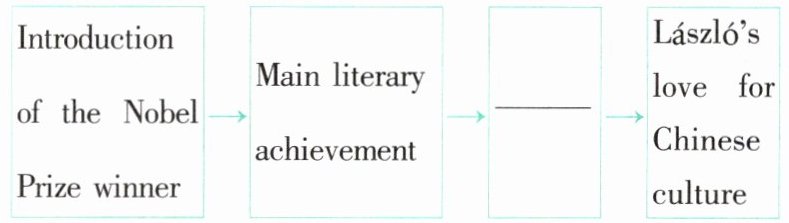
A. His Chinese name and its story
B. His cultural interest and experience in China
C. His travel to China in 1998
D. His reading of Tao Te Ching
5. What’s the best title for the passage?
A. Nobel Winner’s Journey of Learning Chinese Culture
B. The Story of László’s Chinese Name “Hao Qiu”
C. A Nobel Winner with Deep Ties to Chinese Culture
D. The Most Important Work of 20th-Century Literature
素养:语言能力 难度:中 用时:8分钟
新素材 [2026武汉东西湖区期末改编]The Hungarian(匈牙利的) writer László Krasznahorkai has been awarded the 2025 Nobel Prize in Literature(文学).
László was born in 1954 in Gyula, a small town in southeast Hungary close to Romania. He became famous as a writer with his first book, Sátántangó. This novel came out in 1985 and is considered as his most important work. It is also one of the most important books of 20th-century literature. Many agree it’s difficult to read and translate. However, its unique(独特的) writing style and deep themes made it a classic, and thanks to this novel, László became one of Hungary’s best-known modern writers around the world.
Yu Zemin, who translated László’s work
Sátántangó into Chinese, shared that László often eats Chinese food, enjoys Beijing Opera and talks about China a lot. He especially loves ancient Chinese philosophy(哲学), has read Tao Te Ching many times, and thinks highly of it. He even takes notes while reading to work on understanding it better.
In 1998, László came to China and followed the travels of the Tang Dynasty poet Li Bai across almost ten Chinese cities full of culture. Yu Zemin went along with him. This trip had a profound influence on László, and later he even wrote about Yu in his books. László has his own Chinese name card, on which the name “Hao Qiu” is printed. One of his Chinese friends gave this Chinese name to him. There were two reasons for choosing it. First, “Hao Qiu” means “beautiful hill”. His last name, Krasznahorkai, is the name of a hill. Second, the word “Qiu” is connected with Confucius, whose full name was Kong Qiu.
Now, as a Nobel Prize in Literature winner with deep ties to Chinese culture, László often says that his love for Chinese traditions has opened up a whole new world for his writing.
1. Why is the book Sátántangó important according to the passage?
A. It made László a world-famous Hungarian writer.
B. It was easy for readers to understand and translate.
C. It was the first novel of 20th-century literature.
D. It was translated into Chinese by Yu Zemin in 1985.
2. How does László feel about Chinese philosophy?
A. He reads it mostly to help him write his novels.
B. He is very interested in it and studies it carefully.
C. He finds it very difficult and only reads it a few times.
D. He likes it but never spends much time reading it.
3. What does the underlined word “profound” probably mean in Paragraph 4?
A. common B. weak
C. quick D. great
4. In the following writing order, which is the most suitable for the blank?
A. His Chinese name and its story
B. His cultural interest and experience in China
C. His travel to China in 1998
D. His reading of Tao Te Ching
5. What’s the best title for the passage?
A. Nobel Winner’s Journey of Learning Chinese Culture
B. The Story of László’s Chinese Name “Hao Qiu”
C. A Nobel Winner with Deep Ties to Chinese Culture
D. The Most Important Work of 20th-Century Literature
答案
1. A 细节理解题。根据第二段中的“thanks to this novel, László became one of Hungary’s best-known modern writers around the world”可知,《撒旦探戈》让拉斯洛成为享誉世界的匈牙利作家,这是该书的重要意义。故选A。
2. B 细节理解题。根据第三段中的“He especially loves ancient Chinese philosophy(哲学), has read Tao Te Ching many times, and thinks highly of it. He even takes notes while reading”可知,拉斯洛对中国哲学很感兴趣,认真研读并做笔记。故选B。
3. D 词义猜测题。
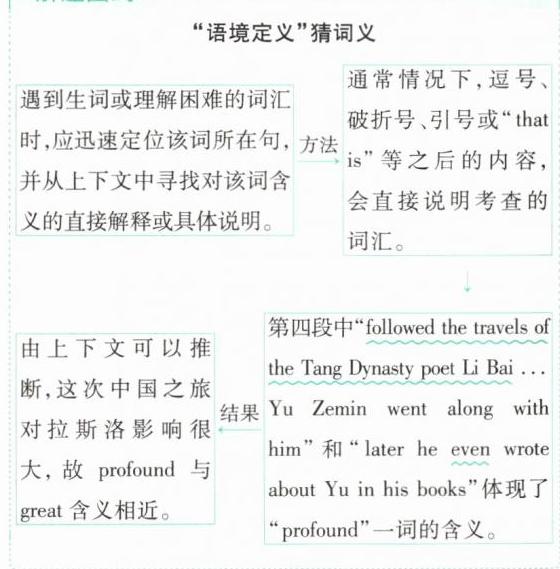
4. B 推理判断题。通读全文可知,文章分为四部分:介绍诺贝尔文学奖得主(第一段);主要文学成就(第二段);对中国文化的兴趣和中国之行对其写作的影响(第三、四段);拉斯洛对中国文化的热爱(第五段)。第三部分涵盖他对中国哲学的喜爱、1998年中国之行及其影响,“His cultural interest and experience in China”最能概括这一内容。
5. C 标题归纳题。全文围绕拉斯洛的文学成就和他与中国文化的深厚联系展开,“A Nobel Winner with Deep Ties to Chinese Culture”是最佳标题。
解析
【分析】
本题为关于诺贝尔文学奖得主拉斯洛的阅读理解题,共5道小题,分别考查细节理解、词义猜测、文章结构推理及标题归纳。解题思路如下:
1. 第1题:定位关键词“Sátántangó”,查找原文对应内容匹配选项;
2. 第2题:定位关键词“Chinese philosophy”,找到原文描述拉斯洛对中国哲学态度的语句筛选选项;
3. 第3题:结合上下文语境,根据后文拉斯洛因中国之行创作相关书籍,推断“profound”的含义;
4. 第4题:梳理文章段落结构,分析中间部分内容核心,匹配图示空白处的概括;
5. 第5题:通读全文把握主旨,提炼最贴合的标题。
【解析】
1. 第1题:细节理解题。根据第二段最后一句“thanks to this novel, László became one of Hungary’s best-known modern writers around the world”可知,《撒旦探戈》让拉斯洛成为享誉世界的匈牙利作家,对应选项A。B选项与原文“Many agree it’s difficult to read and translate”相悖;C选项原文未提及是20世纪第一部小说;D选项《撒旦探戈》1985年出版,并非1985年被翻译,排除B、C、D,选A。
2. 第2题:细节理解题。根据第三段“He especially loves ancient Chinese philosophy, has read Tao Te Ching many times, and thinks highly of it. He even takes notes while reading”可知,拉斯洛对中国哲学很感兴趣,认真研读并做笔记,对应选项B。A选项原文未提及为写小说读;C选项与“read many times”相悖;D选项与“thinks highly of it”相悖,选B。
3. 第3题:词义猜测题。根据第四段后文“later he even wrote about Yu in his books”可知,这次中国之行对拉斯洛影响很大,故“profound”意为“巨大的”,对应选项D。A(普通的)、B(微弱的)、C(快速的)均不符合语境,选D。
4. 第4题:推理判断题。文章结构为:介绍诺贝尔文学奖得主→主要文学成就→对中国文化的兴趣及中国经历→拉斯洛对中国文化的热爱。空白处需概括中间部分,即他对中国文化的兴趣和中国之行的经历,对应选项B。A选项仅涉及中文名字,不全面;C选项仅为中国之行,未涵盖文化兴趣;D选项仅为读《道德经》,片面,选B。
5. 第5题:标题归纳题。全文围绕诺贝尔文学奖得主拉斯洛的文学成就及他与中国文化的深厚联系展开,对应选项C。A选项侧重学习中国文化的旅程,未突出诺贝尔得主身份;B选项仅为中文名字的故事,片面;D选项仅为重要作品,未体现与中国文化的联系,选C。
【答案】
1. A
2. B
3. D
4. B
5. C
【知识点】
细节理解题、词义猜测题、主旨大意题
【点评】
本题以诺贝尔文学奖得主拉斯洛与中国文化的联系为素材,考查学生英语阅读理解的核心能力,涵盖细节查找、词义推断、结构分析及主旨提炼,难度适中,需学生精准定位原文信息并结合语境推理。
【难度系数】
0.6
本题为关于诺贝尔文学奖得主拉斯洛的阅读理解题,共5道小题,分别考查细节理解、词义猜测、文章结构推理及标题归纳。解题思路如下:
1. 第1题:定位关键词“Sátántangó”,查找原文对应内容匹配选项;
2. 第2题:定位关键词“Chinese philosophy”,找到原文描述拉斯洛对中国哲学态度的语句筛选选项;
3. 第3题:结合上下文语境,根据后文拉斯洛因中国之行创作相关书籍,推断“profound”的含义;
4. 第4题:梳理文章段落结构,分析中间部分内容核心,匹配图示空白处的概括;
5. 第5题:通读全文把握主旨,提炼最贴合的标题。
【解析】
1. 第1题:细节理解题。根据第二段最后一句“thanks to this novel, László became one of Hungary’s best-known modern writers around the world”可知,《撒旦探戈》让拉斯洛成为享誉世界的匈牙利作家,对应选项A。B选项与原文“Many agree it’s difficult to read and translate”相悖;C选项原文未提及是20世纪第一部小说;D选项《撒旦探戈》1985年出版,并非1985年被翻译,排除B、C、D,选A。
2. 第2题:细节理解题。根据第三段“He especially loves ancient Chinese philosophy, has read Tao Te Ching many times, and thinks highly of it. He even takes notes while reading”可知,拉斯洛对中国哲学很感兴趣,认真研读并做笔记,对应选项B。A选项原文未提及为写小说读;C选项与“read many times”相悖;D选项与“thinks highly of it”相悖,选B。
3. 第3题:词义猜测题。根据第四段后文“later he even wrote about Yu in his books”可知,这次中国之行对拉斯洛影响很大,故“profound”意为“巨大的”,对应选项D。A(普通的)、B(微弱的)、C(快速的)均不符合语境,选D。
4. 第4题:推理判断题。文章结构为:介绍诺贝尔文学奖得主→主要文学成就→对中国文化的兴趣及中国经历→拉斯洛对中国文化的热爱。空白处需概括中间部分,即他对中国文化的兴趣和中国之行的经历,对应选项B。A选项仅涉及中文名字,不全面;C选项仅为中国之行,未涵盖文化兴趣;D选项仅为读《道德经》,片面,选B。
5. 第5题:标题归纳题。全文围绕诺贝尔文学奖得主拉斯洛的文学成就及他与中国文化的深厚联系展开,对应选项C。A选项侧重学习中国文化的旅程,未突出诺贝尔得主身份;B选项仅为中文名字的故事,片面;D选项仅为重要作品,未体现与中国文化的联系,选C。
【答案】
1. A
2. B
3. D
4. B
5. C
【知识点】
细节理解题、词义猜测题、主旨大意题
【点评】
本题以诺贝尔文学奖得主拉斯洛与中国文化的联系为素材,考查学生英语阅读理解的核心能力,涵盖细节查找、词义推断、结构分析及主旨提炼,难度适中,需学生精准定位原文信息并结合语境推理。
【难度系数】
0.6
