

 登录
登录
(
—My mother. She helps others.
A.never
B.seldom
C.always
D.hardly
C
)3. —Who is your hero in your daily life?—My mother. She helps others.
A.never
B.seldom
C.always
D.hardly
答案
3. C
解析
【分析】首先理解对话语境:问句询问日常生活中的英雄是谁,答语指出是妈妈,说明妈妈具有值得敬佩的正面品质。空格处需填入修饰动词helps的频率副词,结合“英雄”的正面形象,可知妈妈是经常帮助别人的。再分析各选项含义:A.never(从不)、B.seldom(很少)、D.hardly(几乎不)均为表否定或低频率的副词,不符合语境;C.always(总是)表高频,符合妈妈乐于助人的正面设定,由此确定答案。
【解析】根据对话语境,“我的妈妈是我的英雄”体现妈妈的正面特质,“帮助别人”是正面行为,需选表高频的频率副词。选项中,A.never、B.seldom、D.hardly均表否定或低频率,不符合语境;C.always表高频,符合要求,故答案为C。
【答案】C
【知识点】频率副词辨析;副词用法
【点评】本题考查基础的频率副词词义辨析,解题关键是结合语境判断副词的频率含义,属于易得分的基础题型。
【难度系数】0.8
【解析】根据对话语境,“我的妈妈是我的英雄”体现妈妈的正面特质,“帮助别人”是正面行为,需选表高频的频率副词。选项中,A.never、B.seldom、D.hardly均表否定或低频率,不符合语境;C.always表高频,符合要求,故答案为C。
【答案】C
【知识点】频率副词辨析;副词用法
【点评】本题考查基础的频率副词词义辨析,解题关键是结合语境判断副词的频率含义,属于易得分的基础题型。
【难度系数】0.8
(
— We can also learn a lot from ordinary(普通的) people around us.
A.That's true.
B.I don't think so.
C.You're right.
D.Good idea.
B
)4. —I think we can only learn from famous people in history.— We can also learn a lot from ordinary(普通的) people around us.
A.That's true.
B.I don't think so.
C.You're right.
D.Good idea.
答案
4. B
解析
【分析】本题为情景交际题,需结合对话双方的观点判断应答。第一句说话者提出“只能向历史名人学习”的观点,第二句说话者补充“也能从身边普通人学习”,说明第二句说话者不认同前者的观点,需选择表达不同意的选项。
【解析】逐一分析选项:A选项“That's true.”意为“那是对的”,表示赞同,不符合语境;B选项“I don't think so.”意为“我不这么认为”,用于表达不同意对方的观点,符合对话逻辑;C选项“You're right.”意为“你是对的”,表示赞同,不符合;D选项“Good idea.”意为“好主意”,用于赞同提议,此处并非提议,排除。因此正确答案为B。
【答案】B
【知识点】情景交际
【点评】本题考查日常情景对话的应答,需准确理解上下文的观点态度,掌握常用交际用语的含义即可轻松作答,属于基础题型。
【难度系数】0.7
【解析】逐一分析选项:A选项“That's true.”意为“那是对的”,表示赞同,不符合语境;B选项“I don't think so.”意为“我不这么认为”,用于表达不同意对方的观点,符合对话逻辑;C选项“You're right.”意为“你是对的”,表示赞同,不符合;D选项“Good idea.”意为“好主意”,用于赞同提议,此处并非提议,排除。因此正确答案为B。
【答案】B
【知识点】情景交际
【点评】本题考查日常情景对话的应答,需准确理解上下文的观点态度,掌握常用交际用语的含义即可轻松作答,属于基础题型。
【难度系数】0.7
Li Hua: Hi Tom! 1.
Tom: Yes, it's great! Look at this model. Is it about paper-making?
Li Hua: Exactly! In the Han Dynasty, people often wrote on bamboo or silk. But bamboo was heavy and silk was dear.
Tom: That sounds difficult. 2.
Li Hua: Cai Lun. He improved the paper-making process(改进造纸工艺).
Tom: 3.
Li Hua: He used cheap things like tree bark, old fishing nets, and cloth. He mixed them with water, pressed them flat, and dried them in the sun.
Tom: That's clever! So, why was this invention so important?
Li Hua: 4.
Tom: Did it take a long time to go to other places?
Li Hua: Yes, it did. 5.
D
Tom: Yes, it's great! Look at this model. Is it about paper-making?
Li Hua: Exactly! In the Han Dynasty, people often wrote on bamboo or silk. But bamboo was heavy and silk was dear.
Tom: That sounds difficult. 2.
B
Li Hua: Cai Lun. He improved the paper-making process(改进造纸工艺).
Tom: 3.
A
Li Hua: He used cheap things like tree bark, old fishing nets, and cloth. He mixed them with water, pressed them flat, and dried them in the sun.
Tom: That's clever! So, why was this invention so important?
Li Hua: 4.
G
Tom: Did it take a long time to go to other places?
Li Hua: Yes, it did. 5.
F
Slowly, it went along the Silk Road to the Middle East and then to Europe.答案
1. D 2. B 3. A 4. G 5. F
解析
【分析】
本题为英语补全对话题,解题思路是先通读对话,明确对话围绕“造纸术”展开,梳理每处空格前后的问答逻辑:第1空需对应Tom的肯定回答,是询问对某事物的评价;第2空对应答语“蔡伦”,是问改进造纸术的人物;第3空对应答语的原料,是问所用材料;第4空对应问发明重要性,需答原因;第5空对应传播过程,结合上下文匹配选项。
【解析】
1. 由Tom的回答“Yes, it's great!”可知,Li Hua是在询问对某事物的看法,匹配选项D;
2. 由Li Hua的答语“Cai Lun”可知,Tom是在询问改进造纸术的人,匹配选项B;
3. 由Li Hua提到的“tree bark, old fishing nets, and cloth”等原料,可知Tom是在问所用材料,匹配选项A;
4. 由Tom问“why was this invention so important?”,Li Hua需回答重要原因,匹配选项G;
5. 由Tom问是否花很久传到其他地方,Li Hua说明传播路径,匹配选项F。
【答案】
1.D 2.B 3.A 4.G 5.F
【知识点】
英语补全对话、情景交际
【点评】
本题以造纸术为话题,考查学生的情景交际与逻辑推理能力,需结合上下文语境匹配选项,属于基础题型,难度适中。
【难度系数】
0.6
本题为英语补全对话题,解题思路是先通读对话,明确对话围绕“造纸术”展开,梳理每处空格前后的问答逻辑:第1空需对应Tom的肯定回答,是询问对某事物的评价;第2空对应答语“蔡伦”,是问改进造纸术的人物;第3空对应答语的原料,是问所用材料;第4空对应问发明重要性,需答原因;第5空对应传播过程,结合上下文匹配选项。
【解析】
1. 由Tom的回答“Yes, it's great!”可知,Li Hua是在询问对某事物的看法,匹配选项D;
2. 由Li Hua的答语“Cai Lun”可知,Tom是在询问改进造纸术的人,匹配选项B;
3. 由Li Hua提到的“tree bark, old fishing nets, and cloth”等原料,可知Tom是在问所用材料,匹配选项A;
4. 由Tom问“why was this invention so important?”,Li Hua需回答重要原因,匹配选项G;
5. 由Tom问是否花很久传到其他地方,Li Hua说明传播路径,匹配选项F。
【答案】
1.D 2.B 3.A 4.G 5.F
【知识点】
英语补全对话、情景交际
【点评】
本题以造纸术为话题,考查学生的情景交际与逻辑推理能力,需结合上下文语境匹配选项,属于基础题型,难度适中。
【难度系数】
0.6
六 根据短文内容判断句子正(T)误(F)。
Louis Braille was born in France(法国) in 1809. When he was three years old, he had an accident(事故) and became blind. He couldn't see anything. He wanted to read and write like his friends, so he invented the Braille system(系统) when he was 15 years old. He got the idea from a secret code(代码) used by the military(军队). Louis Braille made a unique(独特的) way of writing with raised dots(凸起的点) that people could touch and feel. He worked with his friends and teachers to make learning better and easier. Braille's invention helped blind people all over the world read and write on their own. He was a great inventor.
(
(
(
(
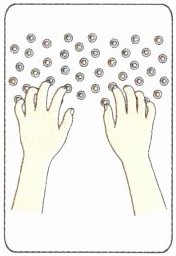
Louis Braille was born in France(法国) in 1809. When he was three years old, he had an accident(事故) and became blind. He couldn't see anything. He wanted to read and write like his friends, so he invented the Braille system(系统) when he was 15 years old. He got the idea from a secret code(代码) used by the military(军队). Louis Braille made a unique(独特的) way of writing with raised dots(凸起的点) that people could touch and feel. He worked with his friends and teachers to make learning better and easier. Braille's invention helped blind people all over the world read and write on their own. He was a great inventor.
(
F
)1. Louis Braille was born in France in 1890.(
T
)2. When he was three years old, he became blind.(
T
)3. Louis Braille invented the Braille system when he was 15 years old.(
T
)4. Braille's invention can help blind people.答案
1. F 2. T 3. T 4. T
解析
【分析】
本题是英语阅读理解的判断正误题,解题思路为:先明确每个句子的核心信息,再回到短文中定位对应内容,将句子表述与原文信息逐一对比,一致则判断为正(T),不一致则为误(F)。
【解析】
1. 句子1:“Louis Braille was born in France in 1890.” 原文第一句明确写“Louis Braille was born in France(法国) in 1809.”,年份不符,故判断为F。
2. 句子2:“When he was three years old, he became blind.” 原文提到“When he was three years old, he had an accident(事故) and became blind.”,表述一致,故判断为T。
3. 句子3:“Louis Braille invented the Braille system when he was 15 years old.” 原文写“he invented the Braille system(系统) when he was 15 years old.”,表述一致,故判断为T。
4. 句子4:“Braille's invention can help blind people.” 原文最后部分提到“Braille's invention helped blind people all over the world read and write on their own.”,表述一致,故判断为T。
【答案】
1.F 2.T 3.T 4.T
【知识点】
英语阅读理解,细节理解,判断正误
【点评】
本题为基础的英语阅读理解细节判断题,解题时只需准确定位原文对应信息,对比句子内容即可得出答案,难度较低,适合低年级学生练习。
【难度系数】
0.8
本题是英语阅读理解的判断正误题,解题思路为:先明确每个句子的核心信息,再回到短文中定位对应内容,将句子表述与原文信息逐一对比,一致则判断为正(T),不一致则为误(F)。
【解析】
1. 句子1:“Louis Braille was born in France in 1890.” 原文第一句明确写“Louis Braille was born in France(法国) in 1809.”,年份不符,故判断为F。
2. 句子2:“When he was three years old, he became blind.” 原文提到“When he was three years old, he had an accident(事故) and became blind.”,表述一致,故判断为T。
3. 句子3:“Louis Braille invented the Braille system when he was 15 years old.” 原文写“he invented the Braille system(系统) when he was 15 years old.”,表述一致,故判断为T。
4. 句子4:“Braille's invention can help blind people.” 原文最后部分提到“Braille's invention helped blind people all over the world read and write on their own.”,表述一致,故判断为T。
【答案】
1.F 2.T 3.T 4.T
【知识点】
英语阅读理解,细节理解,判断正误
【点评】
本题为基础的英语阅读理解细节判断题,解题时只需准确定位原文对应信息,对比句子内容即可得出答案,难度较低,适合低年级学生练习。
【难度系数】
0.8
