

 登录
登录
一、听句子,选出你听到的单词或短语。
(10 分)
(
(
(
(
(
(10 分)
(
A
)1. A. mouse B. house C. horse(
B
)2. A. let B. net C. wet(
C
)3. A. bottle B. buy C. bite(
B
)4. A. ready B. really C. reach(
C
)5. A. wake me up B. wake him up C. wake her up答案
1. A 2. B 3. C 4. B 5. C
二、听句子或对话,给下列图片排序。(10 分)
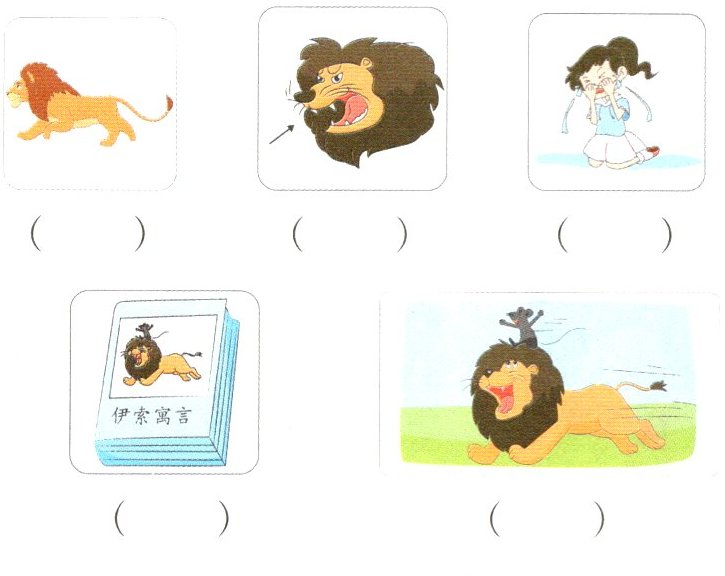
答案
从上到下,从左到右:3 5 4 1 2
三、听短文,根据短文内容判断句子的正(T)误(F)。(10 分)
(
(
(
(
(
(
T
)1. The children were in Mr Green's house last Thursday.(
T
)2. The toy dragon boat was for Mr Green.(
F
)3. Wang Bing and Liu Tao made a beautiful card for Miss Li.(
F
)4. They said "Happy New Year!" to each other.(
T
)5. They all had a good time.答案
1. T 2. T 3. F 4. F 5. T
四、根据首字母提示填空。(10 分)
1. Keep q
2. A little child can't use a s
3. Don't be s
4. Helen is a good girl. She always studies h
5. Sam has an i
1. Keep q
uiet
. Don't wake
up your grandma. She is too tired.2. A little child can't use a s
harp
knife.3. Don't be s
ad
. It doesn't matter
.4. Helen is a good girl. She always studies h
ard
.5. Sam has an i
dea
. He can reach
the top of the tall tree.答案
1. quiet;wake 2. sharp 3. sad;matter 4. hard 5. idea;reach
解析
【分析】
本题为根据首字母提示填英语单词的题型,解题时需结合句子语境、固定搭配及首字母提示,回忆对应英语单词,确保单词符合语法和句意要求。
【解析】
1. 第一空:“keep+形容词”表示保持某种状态,结合首字母q和语境“不要吵醒奶奶”,应填quiet(安静的);第二空:wake up是固定短语,意为“吵醒”,结合首字母w,填wake。
2. 句意为“小孩不能用什么样的刀”,结合首字母s,修饰刀的形容词为sharp(锋利的)。
3. 第一空:结合首字母s和语境“别……”,填sad(难过的);第二空:It doesn't matter是固定搭配,意为“没关系”,结合首字母m,填matter。
4. 固定短语study hard意为“努力学习”,结合首字母h,填hard。
5. 第一空:have an idea意为“有个主意”,结合首字母i,填idea;第二空:结合首字母r和语境“够到树顶”,填reach(到达,够到)。
【答案】
1. quiet;wake 2. sharp 3. sad;matter 4. hard 5. idea;reach
【知识点】
英语单词拼写、固定短语搭配、形容词与动词用法
【点评】
本题考查基础英语词汇及常用固定搭配,均为学生需掌握的核心内容,难度较低,只要结合语境和首字母回忆对应词汇即可完成。
【难度系数】
0.8
本题为根据首字母提示填英语单词的题型,解题时需结合句子语境、固定搭配及首字母提示,回忆对应英语单词,确保单词符合语法和句意要求。
【解析】
1. 第一空:“keep+形容词”表示保持某种状态,结合首字母q和语境“不要吵醒奶奶”,应填quiet(安静的);第二空:wake up是固定短语,意为“吵醒”,结合首字母w,填wake。
2. 句意为“小孩不能用什么样的刀”,结合首字母s,修饰刀的形容词为sharp(锋利的)。
3. 第一空:结合首字母s和语境“别……”,填sad(难过的);第二空:It doesn't matter是固定搭配,意为“没关系”,结合首字母m,填matter。
4. 固定短语study hard意为“努力学习”,结合首字母h,填hard。
5. 第一空:have an idea意为“有个主意”,结合首字母i,填idea;第二空:结合首字母r和语境“够到树顶”,填reach(到达,够到)。
【答案】
1. quiet;wake 2. sharp 3. sad;matter 4. hard 5. idea;reach
【知识点】
英语单词拼写、固定短语搭配、形容词与动词用法
【点评】
本题考查基础英语词汇及常用固定搭配,均为学生需掌握的核心内容,难度较低,只要结合语境和首字母回忆对应词汇即可完成。
【难度系数】
0.8
五、从方框中选择合适的短语,补全句子。(12 分)
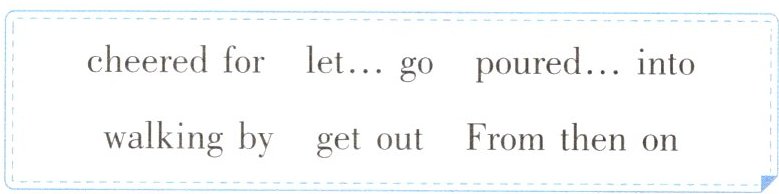
cheered for let... go poured... into walking by get out From then on
1. Peter
2. Please
3. The hole in the door is so small. The fat cat can't
4. I won the table tennis match. All my classmates
5. Look! The old man is
6.
cheered for let... go poured... into walking by get out From then on
1. Peter
poured
the water into
the hole quickly just now.2. Please
let
him go
. It's getting late.3. The hole in the door is so small. The fat cat can't
get out
.4. I won the table tennis match. All my classmates
cheered for
me.5. Look! The old man is
walking by
the house now.6.
From then on
, English became my favourite subject.答案
1. poured;into 2. let;go 3. get out 4. cheered for 5. walking by 6. From then on
解析
【分析】
本题为短语填空题,需先理解每个句子的句意,再结合方框内短语的含义,根据句子时态、固定搭配等规则匹配合适的短语。逐个分析句子:1. 句中时间状语just now提示用过去式,需选表示“把…倒入”的短语;2. 祈使句用动词原形,需选表示“让…走”的短语;3. 情态动词can't后接动词原形,需选表示“出来”的短语;4. 前句为过去时,需选表示“为…欢呼”的过去式短语;5. 句中now提示用现在进行时,需选表示“走过”的现在分词短语;6. 需选表示“从那时起”的短语符合句意。
【解析】
1. 由时间状语just now可知用一般过去时,短语poured...into意为“把…倒入”,符合句意“Peter刚才快速把水倒入洞里”,故填poured;into。
2. 祈使句以动词原形开头,短语let...go意为“让…走”,符合句意“请让他走吧,天晚了”,故填let;go。
3. 情态动词can't后接动词原形,短语get out意为“出来”,符合句意“门上的洞太小,胖猫出不来”,故填get out。
4. 前句won为过去式,本句用一般过去时,短语cheered for意为“为…欢呼”,符合句意“我赢了乒乓球赛,所有同学为我欢呼”,故填cheered for。
5. 句中now提示用现在进行时(be+doing),短语walking by意为“走过”,符合句意“看!老人正走过房子”,故填walking by。
6. 短语From then on意为“从那时起”,符合句意“从那时起,英语成了我最喜欢的科目”,故填From then on。
【答案】
1. poured;into 2. let;go 3. get out 4. cheered for 5. walking by 6. From then on
【知识点】
动词短语、时态运用、固定搭配
【点评】
本题考查常用动词短语的辨析及在句子中的正确运用,需结合句意、时态和固定搭配选择,属于基础题型,注重对短语基础用法的掌握。
【难度系数】
0.6
本题为短语填空题,需先理解每个句子的句意,再结合方框内短语的含义,根据句子时态、固定搭配等规则匹配合适的短语。逐个分析句子:1. 句中时间状语just now提示用过去式,需选表示“把…倒入”的短语;2. 祈使句用动词原形,需选表示“让…走”的短语;3. 情态动词can't后接动词原形,需选表示“出来”的短语;4. 前句为过去时,需选表示“为…欢呼”的过去式短语;5. 句中now提示用现在进行时,需选表示“走过”的现在分词短语;6. 需选表示“从那时起”的短语符合句意。
【解析】
1. 由时间状语just now可知用一般过去时,短语poured...into意为“把…倒入”,符合句意“Peter刚才快速把水倒入洞里”,故填poured;into。
2. 祈使句以动词原形开头,短语let...go意为“让…走”,符合句意“请让他走吧,天晚了”,故填let;go。
3. 情态动词can't后接动词原形,短语get out意为“出来”,符合句意“门上的洞太小,胖猫出不来”,故填get out。
4. 前句won为过去式,本句用一般过去时,短语cheered for意为“为…欢呼”,符合句意“我赢了乒乓球赛,所有同学为我欢呼”,故填cheered for。
5. 句中now提示用现在进行时(be+doing),短语walking by意为“走过”,符合句意“看!老人正走过房子”,故填walking by。
6. 短语From then on意为“从那时起”,符合句意“从那时起,英语成了我最喜欢的科目”,故填From then on。
【答案】
1. poured;into 2. let;go 3. get out 4. cheered for 5. walking by 6. From then on
【知识点】
动词短语、时态运用、固定搭配
【点评】
本题考查常用动词短语的辨析及在句子中的正确运用,需结合句意、时态和固定搭配选择,属于基础题型,注重对短语基础用法的掌握。
【难度系数】
0.6
六、按要求改写句子。(8 分)
1. Finally, the lion let the mouse go.(改为否定句)
2. He opened the door with a key.(对画线部分提问)
3. They are good friends now.(用 From then on 改写句子)
4. The woman is sad. The woman is crying.(合并为一句)
1. Finally, the lion let the mouse go.(改为否定句)
Finally, the lion didn't let the mouse go.
2. He opened the door with a key.(对画线部分提问)
How did he open the door?
3. They are good friends now.(用 From then on 改写句子)
From then on, they were good friends.
4. The woman is sad. The woman is crying.(合并为一句)
答案
1. Finally, the lion didn't let the mouse go.
2. How did he open the door?
3. From then on, they were good friends.
4. The woman is sad and crying. 或 The woman is crying because she is sad.
2. How did he open the door?
3. From then on, they were good friends.
4. The woman is sad and crying. 或 The woman is crying because she is sad.
解析
【分析】
1. 原句为一般过去时的肯定句,改为否定句时,需在主语后加助动词didn't,谓语动词还原为原形,据此改写。
2. 画线部分是表方式的状语,提问需用How;原句是一般过去时,变疑问句时借助助动词did,谓语动词还原为原形,调整为疑问语序。
3. "From then on"是一般过去时的时间标志,需将原句的一般现在时改为一般过去时,be动词are变为were,时间状语置于句首。
4. 两个句子主语均为"the woman",描述其状态,可通过并列连词连接表语,或用原因状语从句合并,保持语义连贯。
【解析】
1. 一般过去时肯定句改否定句:结构为“主语+didn't+动词原形”,故在"the lion"后加"didn't","let"保持原形,得到改写结果。
2. 对方式状语提问用How,一般过去时特殊疑问句结构为“How+did+主语+动词原形+其他”,将"opened"还原为"open",调整语序即可。
3. "From then on"提示用一般过去时,将"are"改为"were",时间状语"From then on"置于句首,其余部分调整。
4. 合并同主语的句子时,用并列连词and连接两个表语,或用because说明因果关系,符合语法规则。
【答案】
1. Finally, the lion didn't let the mouse go.
2. How did he open the door?
3. From then on, they were good friends.
4. The woman is sad and crying. 或 The woman is crying because she is sad.
【知识点】
一般过去时的运用、特殊疑问句、句子合并
【点评】
本题考查英语基础句型转换,涵盖时态运用、特殊疑问句构成、句子合并等核心知识点,是初中英语常见基础题型,注重对基础语法的掌握。
【难度系数】
0.6
1. 原句为一般过去时的肯定句,改为否定句时,需在主语后加助动词didn't,谓语动词还原为原形,据此改写。
2. 画线部分是表方式的状语,提问需用How;原句是一般过去时,变疑问句时借助助动词did,谓语动词还原为原形,调整为疑问语序。
3. "From then on"是一般过去时的时间标志,需将原句的一般现在时改为一般过去时,be动词are变为were,时间状语置于句首。
4. 两个句子主语均为"the woman",描述其状态,可通过并列连词连接表语,或用原因状语从句合并,保持语义连贯。
【解析】
1. 一般过去时肯定句改否定句:结构为“主语+didn't+动词原形”,故在"the lion"后加"didn't","let"保持原形,得到改写结果。
2. 对方式状语提问用How,一般过去时特殊疑问句结构为“How+did+主语+动词原形+其他”,将"opened"还原为"open",调整语序即可。
3. "From then on"提示用一般过去时,将"are"改为"were",时间状语"From then on"置于句首,其余部分调整。
4. 合并同主语的句子时,用并列连词and连接两个表语,或用because说明因果关系,符合语法规则。
【答案】
1. Finally, the lion didn't let the mouse go.
2. How did he open the door?
3. From then on, they were good friends.
4. The woman is sad and crying. 或 The woman is crying because she is sad.
【知识点】
一般过去时的运用、特殊疑问句、句子合并
【点评】
本题考查英语基础句型转换,涵盖时态运用、特殊疑问句构成、句子合并等核心知识点,是初中英语常见基础题型,注重对基础语法的掌握。
【难度系数】
0.6
