

 登录
登录
【主题实践探究】
湖南近几十年有什么变化?采访一位长辈(父母、老师或邻居),了解他们小时候的生活和现在有什么不同。可以根据下面思维导图中的提示选取问题提问。
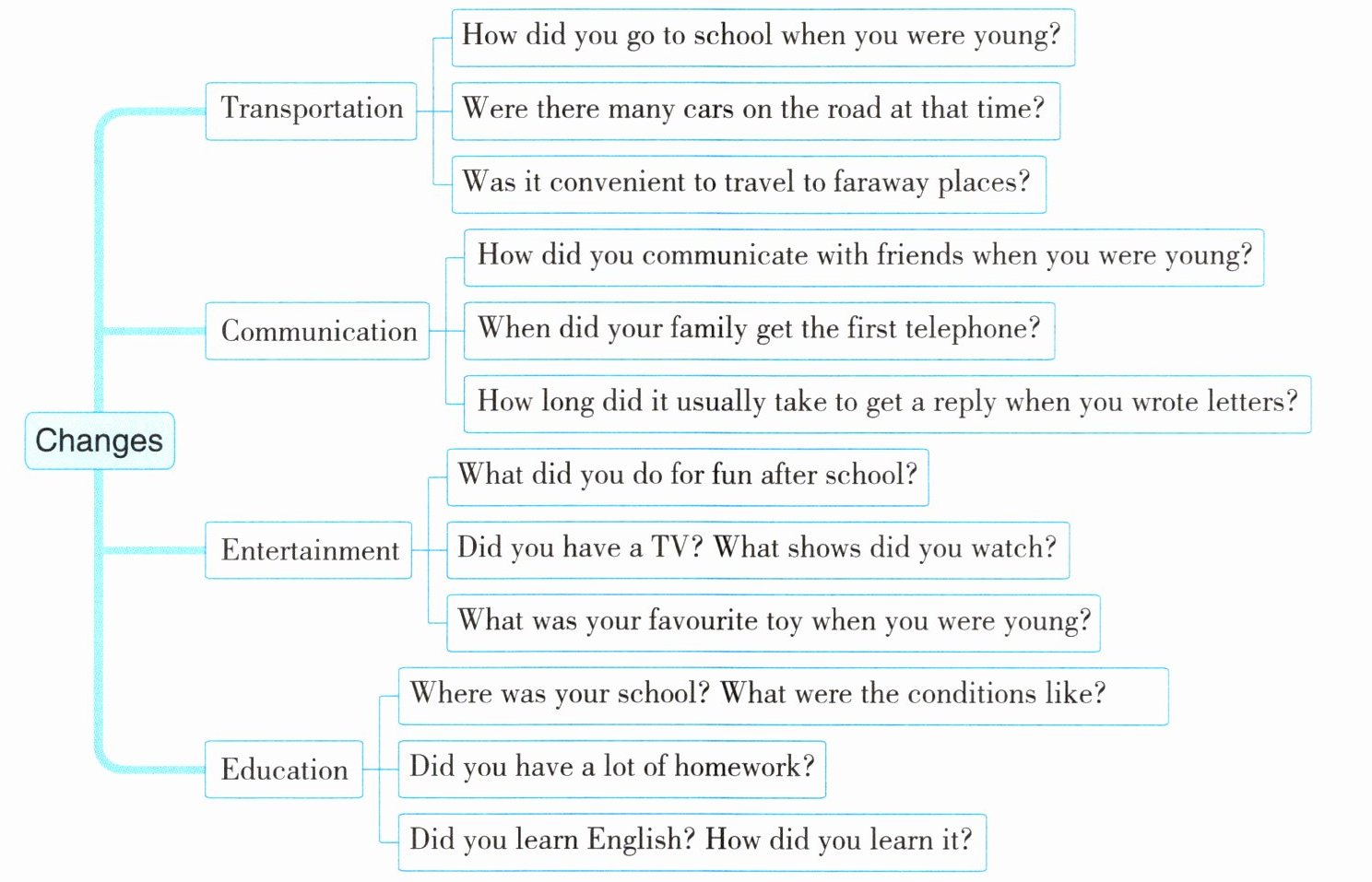
从上面的调查采访中,选择至少3个问题,用英文记录采访内容(可以是一个小对话或摘要)。
例子:
Interviewer: How did you communicate with friends when you were young?
Interviewee: We wrote letters. Sometimes it took weeks to get a reply.
Interviewer: What did you do for fun?
Interviewee: We played outside with neighbours. There were no mobile phones.
湖南近几十年有什么变化?采访一位长辈(父母、老师或邻居),了解他们小时候的生活和现在有什么不同。可以根据下面思维导图中的提示选取问题提问。
从上面的调查采访中,选择至少3个问题,用英文记录采访内容(可以是一个小对话或摘要)。
例子:
Interviewer: How did you communicate with friends when you were young?
Interviewee: We wrote letters. Sometimes it took weeks to get a reply.
Interviewer: What did you do for fun?
Interviewee: We played outside with neighbours. There were no mobile phones.
答案
开放性题目,言之有理即可
解析
【分析】本题为英语开放性实践题,解题思路是:1. 从思维导图的交通、交流、教育等类别中选取至少3个问题;2. 模拟采访长辈的场景,用英文构造采访者与受访者的对话,对话需符合长辈小时候的生活实际,运用正确的过去时态,体现时代差异;3. 确保对话自然合理,符合日常交流逻辑。
【解析】选取交通、交流、教育类的问题,构造如下采访对话:
Interviewer: How did you go to school when you were young?
Interviewee: I walked to school every day. There was no convenient public transport near my home at that time.
Interviewer: When did your family get the first telephone?
Interviewee: We got our first telephone in 1992. It was a large fixed phone, and only my parents could use it to make calls.
Interviewer: Did you learn English? How did you learn it?
Interviewee: Yes, I started learning English in Grade 7 of junior high school. We only used textbooks and listened to English tapes. There were no online courses or smart phones to help us learn.
【答案】
Interviewer: How did you go to school when you were young?
Interviewee: I walked to school every day. There was no convenient public transport near my home at that time.
Interviewer: When did your family get the first telephone?
Interviewee: We got our first telephone in 1992. It was a large fixed phone, and only my parents could use it to make calls.
Interviewer: Did you learn English? How did you learn it?
Interviewee: Yes, I started learning English in Grade 7 of junior high school. We only used textbooks and listened to English tapes. There were no online courses or smart phones to help us learn.
【知识点】英语日常对话、一般过去时运用、采访类英文表达
【点评】本题为开放性实践题,结合生活实际考查英语运用能力,引导学生关注时代变化,语言要求贴近日常交流,符合实践类题目的考查目标。
【难度系数】0.2
【解析】选取交通、交流、教育类的问题,构造如下采访对话:
Interviewer: How did you go to school when you were young?
Interviewee: I walked to school every day. There was no convenient public transport near my home at that time.
Interviewer: When did your family get the first telephone?
Interviewee: We got our first telephone in 1992. It was a large fixed phone, and only my parents could use it to make calls.
Interviewer: Did you learn English? How did you learn it?
Interviewee: Yes, I started learning English in Grade 7 of junior high school. We only used textbooks and listened to English tapes. There were no online courses or smart phones to help us learn.
【答案】
Interviewer: How did you go to school when you were young?
Interviewee: I walked to school every day. There was no convenient public transport near my home at that time.
Interviewer: When did your family get the first telephone?
Interviewee: We got our first telephone in 1992. It was a large fixed phone, and only my parents could use it to make calls.
Interviewer: Did you learn English? How did you learn it?
Interviewee: Yes, I started learning English in Grade 7 of junior high school. We only used textbooks and listened to English tapes. There were no online courses or smart phones to help us learn.
【知识点】英语日常对话、一般过去时运用、采访类英文表达
【点评】本题为开放性实践题,结合生活实际考查英语运用能力,引导学生关注时代变化,语言要求贴近日常交流,符合实践类题目的考查目标。
【难度系数】0.2
