

 登录
二、阅读理解
A(2024·北京西城期末)
The keys to keeping a healthy weight(体重) are regular(规律的) exercise and good eating habits. It may sound difficult to try to work them into our lives, but in fact, the best way is by making small changes. Here's the information you need to make healthy habits easy.
Teens should get 60 minutes or more of physical activity a day. Notice the word "activity": as long as you're getting your body moving, any kind of exercise will do. What's important is that each week you get the right balance(平衡) of activity, including aerobic, strength(力量) building, and stretching exercises. Make exercise a habit by doing some of them every day.
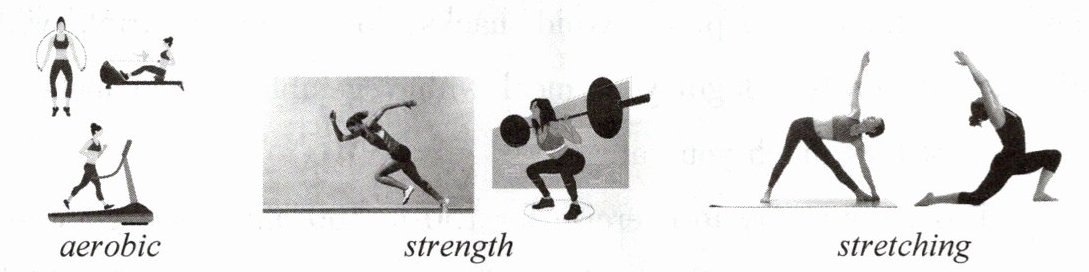
On days when you don't have football practice or a PE lesson, 60 minutes a day of activity seems like a lot of time for busy students. The good news is that it's OK to take shorter "exercise breaks" during the day. So get up 15 minutes early and do some stretching. Fast walk for 15 minutes at lunch. Walk or bike home after school.
Eating well doesn't mean dieting over and over again. In fact, studies have shown that dieting often doesn't work—and diets may have the reverse effect, with dieters putting on more weight than before they started.
One reason why diets don't work is that they can make people think of foods as "good" or "bad", but the truth is, everything is OK in moderation(适量地). Dieters are also more likely to "give up" some foods; we may end up longing for these foods while our bodies don't get enough important nutrients(营养). Teens should eat all kinds of food, and there's nothing wrong with a treat occasionally. A candy bar somehow tastes more special if we treat ourselves from time to time, not every day.
Try to come up with ways to fit exercise and healthy eating into your life in a way that works for you. We're all different. Your best friend might like gym time better, while you enjoy walks with your dog in the park. Knowing what's right for you will make staying at a healthy weight a lot easier!
1. We can work healthy exercise and eating habits into our lives by .
A. not giving up easily
B. making small changes
C. learning from our friends
D. following others' advice
2. What can we learn from this passage?
A. Teens should go on a diet to get to a healthy weight.
B. The key to healthy eating is to give up food with sugar.
C. Teens can get enough physical activity by taking "exercise breaks".
D. A candy bar tastes good if we treat ourselves every day.
3. The underlined word "occasionally" in Paragraph 5 probably means "".
A. sometimes
B. never
C. always
D. every day
4. Why does the writer write this passage?
A. To tell why teens should play more sports.
B. To ask teens to go on diets from time to time.
C. To introduce how to make healthy habits easy.
D. To tell teens how to live a healthy life.
A(2024·北京西城期末)
The keys to keeping a healthy weight(体重) are regular(规律的) exercise and good eating habits. It may sound difficult to try to work them into our lives, but in fact, the best way is by making small changes. Here's the information you need to make healthy habits easy.
Teens should get 60 minutes or more of physical activity a day. Notice the word "activity": as long as you're getting your body moving, any kind of exercise will do. What's important is that each week you get the right balance(平衡) of activity, including aerobic, strength(力量) building, and stretching exercises. Make exercise a habit by doing some of them every day.
On days when you don't have football practice or a PE lesson, 60 minutes a day of activity seems like a lot of time for busy students. The good news is that it's OK to take shorter "exercise breaks" during the day. So get up 15 minutes early and do some stretching. Fast walk for 15 minutes at lunch. Walk or bike home after school.
Eating well doesn't mean dieting over and over again. In fact, studies have shown that dieting often doesn't work—and diets may have the reverse effect, with dieters putting on more weight than before they started.
One reason why diets don't work is that they can make people think of foods as "good" or "bad", but the truth is, everything is OK in moderation(适量地). Dieters are also more likely to "give up" some foods; we may end up longing for these foods while our bodies don't get enough important nutrients(营养). Teens should eat all kinds of food, and there's nothing wrong with a treat occasionally. A candy bar somehow tastes more special if we treat ourselves from time to time, not every day.
Try to come up with ways to fit exercise and healthy eating into your life in a way that works for you. We're all different. Your best friend might like gym time better, while you enjoy walks with your dog in the park. Knowing what's right for you will make staying at a healthy weight a lot easier!
1. We can work healthy exercise and eating habits into our lives by .
A. not giving up easily
B. making small changes
C. learning from our friends
D. following others' advice
2. What can we learn from this passage?
A. Teens should go on a diet to get to a healthy weight.
B. The key to healthy eating is to give up food with sugar.
C. Teens can get enough physical activity by taking "exercise breaks".
D. A candy bar tastes good if we treat ourselves every day.
3. The underlined word "occasionally" in Paragraph 5 probably means "".
A. sometimes
B. never
C. always
D. every day
4. Why does the writer write this passage?
A. To tell why teens should play more sports.
B. To ask teens to go on diets from time to time.
C. To introduce how to make healthy habits easy.
D. To tell teens how to live a healthy life.
答案
二、阅读理解
A
【语篇导读】本文介绍了一些帮助你轻松养成健康习惯的方法。
1. B 提示:细节理解题。根据第一段第二句“It may sound difficult to try to work them into our lives, but in fact, the best way is by making small changes.”可知,我们可以通过微小的改变将健康的锻炼和饮食习惯融入我们的生活。
2. C 提示:推理判断题。根据第三段第一、二句“On days when you don’t have football practice or a PE lesson, 60 minutes a day of activity seems like a lot of time for busy students. The good news is that it’s OK to take shorter ‘exercise breaks’ during the day.”可知,在没有足球练习或体育课的日子里,对于忙碌的学生来说,每天 60 分钟的活动似乎是很多时间,因此青少年可以充分利用零散的运动时间来获得足够的体育活动。
3. A 提示:词义猜测题。根据画线词下一句“A candy bar somehow tastes more special if we treat ourselves from time to time, not every day.”可知,如果我们时不时地犒劳自己,而不是每天都犒劳自己的话,一块巧克力棒的味道会更特别;故 occasionally 与 from time to time 同义,表示“时不时地,有时”,相当于 sometimes。
4. C 提示:主旨大意题。通读全文尤其是第一段最后一句“Here’s the information you need to make healthy habits easy.”可知,作者写这篇文章是为了给大家介绍一些轻松养成健康习惯的方法。
解析
【分析】
本题为英语阅读理解题,包含细节理解、推理判断、词义猜测、主旨大意四类题型。解题时需先通读全文把握主旨,再针对各题型特点定位原文:细节题直接找原文对应句子;推理题结合上下文合理推断;词义猜测题联系画线词前后语境;主旨题关注首尾段主题句,进而选出正确答案。
【解析】
1. 细节理解题:根据第一段第二句“It may sound difficult to try to work them into our lives, but in fact, the best way is by making small changes.”可知,将健康锻炼和饮食习惯融入生活的最佳方式是做出小改变,故选B。
2. 推理判断题:根据第三段“On days when you don’t have football practice or a PE lesson... it’s OK to take shorter ‘exercise breaks’ during the day.”可知,忙碌的学生可利用零散的“运动休息时间”获得足够体育活动,故选C。
3. 词义猜测题:根据画线词后的“A candy bar somehow tastes more special if we treat ourselves from time to time, not every day.”可知,occasionally与from time to time(有时)语义相近,故选A。
4. 主旨大意题:通读全文,尤其第一段最后一句“Here’s the information you need to make healthy habits easy.”可知,作者写作目的是介绍轻松养成健康习惯的方法,故选C。
【答案】
1.B 2.C 3.A 4.C
【知识点】
英语阅读理解、细节理解题、词义猜测题
【点评】
本文围绕青少年养成健康习惯展开,贴近学生生活,题目类型全面,注重考查学生的信息定位、逻辑推理及词义猜测能力,有助于学生理解健康生活的方法。
【难度系数】
0.6
