

 登录
登录
任务二 [2026广东深圳期中] 阅读理解(A)(10分)
In Mexico, Luke and a team of scientists discovered a lost Maya city. It was covered by thick forests for centuries. The Mayans lived there over 1,000 years ago. They were good at farming, writing, maths and building amazing stone buildings like temples and palaces.
▲ The main reason was that most work had to be done by hand to make a discovery. Scientists had to cut down overgrown plants as they walked through the forest. It was hard and took lots of time.
Later, a technology, LiDAR, makes it possible for scientists to discover hidden ancient villages more easily. To use LiDAR, scientists fly a tiny flying machine over an area. The machine sends out thousands of laser beams (激光束). By recording how long it takes for the beams to return to the machine, scientists can make a 3D map of the ground below. This way, scientists can further study the remains long before they finally enter them.
However, Luke’s team was not able to use LiDAR because it was too expensive. Luckily, Luke found a 2013 LiDAR map online made by other researchers. When Luke and his team studied the information, they were surprised to find thousands of Mayan structures (建筑) which made a large city. The city even had a field for ancient Mayan ball games.
Luke believes that their discovery means there is a lot more to discover in that area. They plan to enter the newly discovered city to continue their research. “Maya cities are completely different from modern ones,” Luke said. “Studying them can give us ideas to make our cities better.”
(
A. When did Luke make this important discovery?
B. Why did the city remain undiscovered for so long?
C. How long did it take scientists to discover the city?
D. What difficulties did scientists have during the process?
(
A. 3D maps. B. Thick forests. C. Laser lights. D. Ancient villages.
(
A. With the help of some photos. B. By entering the forest in person.
C. With the help of a LiDAR map. D. By making a 3D map with a machine.
(
A. The value of this discovery. B. The abilities of his team.
C. The customs of ancient people. D. The difficulties they faced.
(
A. More Technologies for Research B. Hidden Maya City Found
C. Meet the Powerful Ancient Maya D. New Technology Discovered
In Mexico, Luke and a team of scientists discovered a lost Maya city. It was covered by thick forests for centuries. The Mayans lived there over 1,000 years ago. They were good at farming, writing, maths and building amazing stone buildings like temples and palaces.
▲ The main reason was that most work had to be done by hand to make a discovery. Scientists had to cut down overgrown plants as they walked through the forest. It was hard and took lots of time.
Later, a technology, LiDAR, makes it possible for scientists to discover hidden ancient villages more easily. To use LiDAR, scientists fly a tiny flying machine over an area. The machine sends out thousands of laser beams (激光束). By recording how long it takes for the beams to return to the machine, scientists can make a 3D map of the ground below. This way, scientists can further study the remains long before they finally enter them.
However, Luke’s team was not able to use LiDAR because it was too expensive. Luckily, Luke found a 2013 LiDAR map online made by other researchers. When Luke and his team studied the information, they were surprised to find thousands of Mayan structures (建筑) which made a large city. The city even had a field for ancient Mayan ball games.
Luke believes that their discovery means there is a lot more to discover in that area. They plan to enter the newly discovered city to continue their research. “Maya cities are completely different from modern ones,” Luke said. “Studying them can give us ideas to make our cities better.”
(
B
)11. 新考法·内容还原 Which of the following can be put in ▲ in Paragraph 2?A. When did Luke make this important discovery?
B. Why did the city remain undiscovered for so long?
C. How long did it take scientists to discover the city?
D. What difficulties did scientists have during the process?
(
D
)12. What does the underlined word “them” in Paragraph 3 refer to?A. 3D maps. B. Thick forests. C. Laser lights. D. Ancient villages.
(
C
)13. How did Luke and his team discover the Maya city?A. With the help of some photos. B. By entering the forest in person.
C. With the help of a LiDAR map. D. By making a 3D map with a machine.
(
A
)14. What does Luke talk about in the last paragraph?A. The value of this discovery. B. The abilities of his team.
C. The customs of ancient people. D. The difficulties they faced.
(
B
)15. What’s the best title for the passage?A. More Technologies for Research B. Hidden Maya City Found
C. Meet the Powerful Ancient Maya D. New Technology Discovered
答案
任务二 答案速查 11.B 12.D 13.C 14.A 15.B
【主旨大意】本文主要讲述了Luke和一个科学家团队在墨西哥发现一座玛雅城市的相关情况,包括发现的过程、借助的技术以及该发现的意义等。
11. B【点拨】推理判断题。根据第二段中“The main reason was that most work...It was hard and took lots of time.”可知,这里在解释这座城市长时间未被发现的原因。选项B符合语境。
12. D【点拨】代词指代题。根据第三段中“Later, a technology, LiDAR, makes...hidden ancient villages more easily.” 以及“This way, scientists can further study the remains long before they finally enter them.”可知,them指代的是前面提到的ancient villages。
13. C【点拨】细节理解题。根据第四段中“Luckily, Luke found a 2013 LiDAR map...which made a large city.”可知,Luke和他的团队是在一张激光雷达地图的帮助下发现了玛雅城市。
14. A【点拨】推理判断题。根据最后一段可知,Luke在最后一段谈论的是这次发现的价值。
15. B【点拨】最佳标题题。通读全文可知,文章主要讲述了Luke和一个科学家团队在墨西哥发现一座玛雅城市的相关情况。选项B最适合作为文章的标题。
【主旨大意】本文主要讲述了Luke和一个科学家团队在墨西哥发现一座玛雅城市的相关情况,包括发现的过程、借助的技术以及该发现的意义等。
11. B【点拨】推理判断题。根据第二段中“The main reason was that most work...It was hard and took lots of time.”可知,这里在解释这座城市长时间未被发现的原因。选项B符合语境。
12. D【点拨】代词指代题。根据第三段中“Later, a technology, LiDAR, makes...hidden ancient villages more easily.” 以及“This way, scientists can further study the remains long before they finally enter them.”可知,them指代的是前面提到的ancient villages。
13. C【点拨】细节理解题。根据第四段中“Luckily, Luke found a 2013 LiDAR map...which made a large city.”可知,Luke和他的团队是在一张激光雷达地图的帮助下发现了玛雅城市。
14. A【点拨】推理判断题。根据最后一段可知,Luke在最后一段谈论的是这次发现的价值。
15. B【点拨】最佳标题题。通读全文可知,文章主要讲述了Luke和一个科学家团队在墨西哥发现一座玛雅城市的相关情况。选项B最适合作为文章的标题。
解析
【分析】
11题(内容还原):需关注空格后句子的逻辑,后文以“The main reason was...”解释原因,说明空格处应是询问“城市长期未被发现的原因”的问题,据此匹配选项;12题(代词指代):代词指代需找前文对应的名词,结合语境判断指代对象;13题(细节理解):定位原文对应段落,查找Luke团队发现玛雅城市的具体方式;14题(推理判断):分析最后一段Luke的表述,明确其谈论的核心内容;15题(主旨大意):梳理全文核心内容,提炼最贴合的标题。
【解析】
11. 内容还原题:空格后句子以“The main reason was...”引出原因,说明空格处应是询问“城市长期未被发现的原因”,选项B符合上下文逻辑,故选B;
12. 代词指代题:根据第三段前文“hidden ancient villages”,结合语境“study the remains long before they finally enter them”,可知them指代前文的ancient villages,故选D;
13. 细节理解题:定位第四段,Luke团队因LiDAR太贵无法使用,转而找到2013年的LiDAR地图,借助该地图发现玛雅城市,对应选项C,故选C;
14. 推理判断题:最后一段Luke提到该发现意味着区域内还有更多可探索,研究玛雅城市能为现代城市建设提供思路,阐述的是发现的价值,故选A;
15. 主旨大意题:全文围绕Luke团队发现隐藏的玛雅城市展开,核心是“隐藏的玛雅城市被发现”,选项B最贴合主旨,故选B;
【答案】
11.B 12.D 13.C 14.A 15.B
【知识点】
内容还原题、代词指代题、主旨大意题
【点评】
本题为深圳期中阅读理解题,涵盖多种阅读题型,考察学生的逻辑衔接、细节定位、代词判断及主旨把握能力,新考法的内容还原题注重上下文逻辑关联,符合初中英语阅读考察方向,难度适中。
【难度系数】
0.6
11题(内容还原):需关注空格后句子的逻辑,后文以“The main reason was...”解释原因,说明空格处应是询问“城市长期未被发现的原因”的问题,据此匹配选项;12题(代词指代):代词指代需找前文对应的名词,结合语境判断指代对象;13题(细节理解):定位原文对应段落,查找Luke团队发现玛雅城市的具体方式;14题(推理判断):分析最后一段Luke的表述,明确其谈论的核心内容;15题(主旨大意):梳理全文核心内容,提炼最贴合的标题。
【解析】
11. 内容还原题:空格后句子以“The main reason was...”引出原因,说明空格处应是询问“城市长期未被发现的原因”,选项B符合上下文逻辑,故选B;
12. 代词指代题:根据第三段前文“hidden ancient villages”,结合语境“study the remains long before they finally enter them”,可知them指代前文的ancient villages,故选D;
13. 细节理解题:定位第四段,Luke团队因LiDAR太贵无法使用,转而找到2013年的LiDAR地图,借助该地图发现玛雅城市,对应选项C,故选C;
14. 推理判断题:最后一段Luke提到该发现意味着区域内还有更多可探索,研究玛雅城市能为现代城市建设提供思路,阐述的是发现的价值,故选A;
15. 主旨大意题:全文围绕Luke团队发现隐藏的玛雅城市展开,核心是“隐藏的玛雅城市被发现”,选项B最贴合主旨,故选B;
【答案】
11.B 12.D 13.C 14.A 15.B
【知识点】
内容还原题、代词指代题、主旨大意题
【点评】
本题为深圳期中阅读理解题,涵盖多种阅读题型,考察学生的逻辑衔接、细节定位、代词判断及主旨把握能力,新考法的内容还原题注重上下文逻辑关联,符合初中英语阅读考察方向,难度适中。
【难度系数】
0.6
任务三 ★★ 阅读理解(B)(10分)
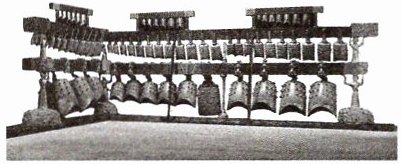
The Zeng Houyi Chime Bells were found from the Zeng Houyi Tomb in Suizhou, Hubei Province in 1978. They are historically important treasure of China.
The Zeng Houyi Chime Bells are hung(悬挂)at three levels and are divided into(划分为)eight groups. There are 19 bells in three groups at the top level, 33 bells in three groups at the middle level and 12 bells in two groups at the bottom level. In addition, there is a single and much larger bell used to change pitch(音高). The bells in each row are different from one another in shape and size.
The Zeng Houyi Chime Bells are hung on two sets of wood racks(架子). One rack is 7.48 meters long and 2.65 meters wide. The other rack is 3.35 meters long and 2.73 meters wide. The two racks are perpendicular to each other, and they make an angle of ninety degrees.
The Zeng Houyi Chime Bells weigh a total of 5 tons. The biggest bell is 153.4 cm in height and 203.6 kg in weight while the smallest bell is 20.4 cm in height and 2.4 kg in weight.
Five musicians were needed to play the instrument in the past. These bells are sounded by striking. Because of their shapes, each bell could produce two different pitches—one if struck at the side; the other at the center. The whole set of chime bells is able to produce all the pitches of a modern piano.
There are more than 2,800 Chinese characters about music and the making of the instrument on the bells. Instruments of such a level were quite uncommon in the world at that time.
(
A. 45. B. 52 C. 64 D. 65
(

(
A. Why the chime bells are struck.
B. How these bells were played in the past.
C. How many pitches each bell could produce.
D. How many musicians were needed to play the bells in the past.
(
A. They have a history of 46 years.
B. They were made in the same shape and size.
C. They can’t produce all the pitches of a modern instrument.
D. They need striking in different places to produce two different pitches.
(
A. He is proud of them.
B. He dislikes them.
C. He doesn’t care about them.
D. He is worried about them.
情境4 考古学家从野外发掘、动物遗存研究、沉船探索、室内研究等多元角度,揭开过去生活的秘密,让大众读懂历史。
任务四 ☣ 阅读还原(有两项多余)(10分)
Do you enjoy learning about life in the past? If so, you might consider a job in archaeology when you grow up. 21.
Some archaeologists work outside in the field, digging and searching where people lived long ago. 22.
Some archaeologists are often experts in certain areas of study. 23.
Some archaeologists study the remains of shipwrecks(沉船). 24.
Not all archaeologists work outdoors. 25.
A. Some work at museums, universities, or parks.
B. They uncover all kinds of things from the past.
C. Some of them study the remains of animals, for example.
D. Some archaeologists work outside near rivers, searching for clues to ancient settlements.
E. Archaeologists are scientists who study human life and cultures of the past.
F. The experts have discovered the secrets about life long ago.
G. They look for clues that explain why these wrecks appeared.
情境5 兵马俑是秦朝遗址,1974年被发现,通过它我们可以了解古代士兵的生活、服饰,感受古人的智慧与创造力。
The Zeng Houyi Chime Bells were found from the Zeng Houyi Tomb in Suizhou, Hubei Province in 1978. They are historically important treasure of China.
The Zeng Houyi Chime Bells are hung(悬挂)at three levels and are divided into(划分为)eight groups. There are 19 bells in three groups at the top level, 33 bells in three groups at the middle level and 12 bells in two groups at the bottom level. In addition, there is a single and much larger bell used to change pitch(音高). The bells in each row are different from one another in shape and size.
The Zeng Houyi Chime Bells are hung on two sets of wood racks(架子). One rack is 7.48 meters long and 2.65 meters wide. The other rack is 3.35 meters long and 2.73 meters wide. The two racks are perpendicular to each other, and they make an angle of ninety degrees.
The Zeng Houyi Chime Bells weigh a total of 5 tons. The biggest bell is 153.4 cm in height and 203.6 kg in weight while the smallest bell is 20.4 cm in height and 2.4 kg in weight.
Five musicians were needed to play the instrument in the past. These bells are sounded by striking. Because of their shapes, each bell could produce two different pitches—one if struck at the side; the other at the center. The whole set of chime bells is able to produce all the pitches of a modern piano.
There are more than 2,800 Chinese characters about music and the making of the instrument on the bells. Instruments of such a level were quite uncommon in the world at that time.
(
D
)16. The number of the whole set of chime bells is .A. 45. B. 52 C. 64 D. 65
(
C
)17. 新考法·图文转换 Which picture shows the meaning of “perpendicular” in Paragraph 3? (
B
)18. What is Paragraph 5 mainly about?A. Why the chime bells are struck.
B. How these bells were played in the past.
C. How many pitches each bell could produce.
D. How many musicians were needed to play the bells in the past.
(
D
)19. Which of the following is TRUE about the the Zeng Houyi Chime Bells?A. They have a history of 46 years.
B. They were made in the same shape and size.
C. They can’t produce all the pitches of a modern instrument.
D. They need striking in different places to produce two different pitches.
(
A
)20. 新考法·观点态度 What is the writer’s attitude(态度)to the Zeng Houyi Chime Bells?A. He is proud of them.
B. He dislikes them.
C. He doesn’t care about them.
D. He is worried about them.
情境4 考古学家从野外发掘、动物遗存研究、沉船探索、室内研究等多元角度,揭开过去生活的秘密,让大众读懂历史。
任务四 ☣ 阅读还原(有两项多余)(10分)
Do you enjoy learning about life in the past? If so, you might consider a job in archaeology when you grow up. 21.
E
Some archaeologists work outside in the field, digging and searching where people lived long ago. 22.
B
What they discover includes homes, roads, tools, art objects, and even garbage holes.Some archaeologists are often experts in certain areas of study. 23.
C
They want to know more about the animals that people hunted, raised for food, or kept as companions.Some archaeologists study the remains of shipwrecks(沉船). 24.
G
The treasures they find at the bottom of the ocean can show and tell where people travelled, how they got there, and whom they traded goods with.Not all archaeologists work outdoors. 25.
A
They study the records that other archaeologists created and help protect the artifacts that field crews dug up. These experts not only discover secrets about life long ago, but they also help the public to understand those discoveries.A. Some work at museums, universities, or parks.
B. They uncover all kinds of things from the past.
C. Some of them study the remains of animals, for example.
D. Some archaeologists work outside near rivers, searching for clues to ancient settlements.
E. Archaeologists are scientists who study human life and cultures of the past.
F. The experts have discovered the secrets about life long ago.
G. They look for clues that explain why these wrecks appeared.
情境5 兵马俑是秦朝遗址,1974年被发现,通过它我们可以了解古代士兵的生活、服饰,感受古人的智慧与创造力。
答案
任务三 答案速查 16.D 17.C 18.B 19.D 20.A
【主旨大意】本文主要介绍了湖北随州曾侯乙墓出土的曾侯乙编钟。
16. D【点拨】数字计算题。根据“There are 19 bells in three groups... much larger bell used to change pitch (音高).” 可知,这套编钟总共有$19+33+12+1=65$个钟。
17. C【点拨】图文转换题。根据“The two racks are perpendicular to each other, and they make an angle of ninety degrees.”可知,两个架子互相垂直,形成90度角。
18. B【点拨】段落大意题。根据“Five musicians were needed to play the instrument in the past.”及本段内容可知,本段主要介绍了这些钟在过去是如何演奏的。
19. D【点拨】推理判断题。根据“Because of their shapes, each bell... the other at the center.”可推出,需要在两个不同的地方击打产生不同的音高。
20. A【点拨】观点态度题。根据“Instruments of such a level were quite uncommon in the world at that time.”可知,作者对曾侯乙编钟的态度是引以为豪的。
任务四【主旨大意】本文主要介绍了考古学家的工作内容和研究领域,包括户外挖掘、动物遗骸研究、沉船考古以及室内研究工作等。
21.E 22.B 23.C 24.G 25.A
【主旨大意】本文主要介绍了湖北随州曾侯乙墓出土的曾侯乙编钟。
16. D【点拨】数字计算题。根据“There are 19 bells in three groups... much larger bell used to change pitch (音高).” 可知,这套编钟总共有$19+33+12+1=65$个钟。
17. C【点拨】图文转换题。根据“The two racks are perpendicular to each other, and they make an angle of ninety degrees.”可知,两个架子互相垂直,形成90度角。
18. B【点拨】段落大意题。根据“Five musicians were needed to play the instrument in the past.”及本段内容可知,本段主要介绍了这些钟在过去是如何演奏的。
19. D【点拨】推理判断题。根据“Because of their shapes, each bell... the other at the center.”可推出,需要在两个不同的地方击打产生不同的音高。
20. A【点拨】观点态度题。根据“Instruments of such a level were quite uncommon in the world at that time.”可知,作者对曾侯乙编钟的态度是引以为豪的。
任务四【主旨大意】本文主要介绍了考古学家的工作内容和研究领域,包括户外挖掘、动物遗骸研究、沉船考古以及室内研究工作等。
21.E 22.B 23.C 24.G 25.A
解析
【分析】
任务三需根据文中细节、数字计算、段落核心内容、作者评价及词汇含义解题:16题定位各层编钟数量加总后加变音钟数量得总数;17题根据“perpendicular”(垂直,90度角)匹配图片;18题找第五段核心内容判断演奏方式;19题根据编钟音高产生的描述推理选项;20题通过作者评价句判断态度。任务四需依据上下文逻辑衔接,选择符合语境的句子:21题引出考古学家定义;22题承接户外挖掘的发现;23题对应动物研究内容;24题衔接沉船研究;25题对应室内工作地点。
【解析】
任务三:
16. 数字计算题:文中提到顶层19个、中层33个、底层12个,加1个变音钟,总数为19+33+12+1=65,故选D。
17. 图文转换题:根据“perpendicular”意为“垂直的,形成90度角”,匹配对应图片C,故选C。
18. 段落大意题:第五段围绕“过去如何演奏编钟”展开,提到演奏需5人、击打产生音高,故选B。
19. 细节推理题:文中指出每个钟击打侧面和中心产生两个音高,对应D选项“需在不同位置击打产生两个音高”,故选D。
20. 观点态度题:作者称编钟在当时世界水平罕见,体现自豪态度,故选A。
任务四:
21. 前句提到考古工作,E选项是考古学家的定义,衔接自然,故选E。
22. 前句讲户外挖掘,B选项承接挖掘发现的物品,故选B。
23. 后句讲动物研究,C选项对应动物遗骸研究,故选C。
24. 前句讲沉船研究,G选项衔接沉船线索,故选G。
25. 前句讲室内工作,A选项对应室内工作地点,故选A。
【答案】
任务三:16.D 17.C 18.B 19.D 20.A
任务四:21.E 22.B 23.C 24.G 25.A
【知识点】
英语阅读理解、阅读还原、数字计算
【点评】
本题结合中国文化常识(曾侯乙编钟)与考古主题,涵盖细节理解、数字计算、逻辑衔接等题型,考查学生信息处理与推理能力,难度适中,适合巩固英语阅读解题技巧。
【难度系数】
0.6
任务三需根据文中细节、数字计算、段落核心内容、作者评价及词汇含义解题:16题定位各层编钟数量加总后加变音钟数量得总数;17题根据“perpendicular”(垂直,90度角)匹配图片;18题找第五段核心内容判断演奏方式;19题根据编钟音高产生的描述推理选项;20题通过作者评价句判断态度。任务四需依据上下文逻辑衔接,选择符合语境的句子:21题引出考古学家定义;22题承接户外挖掘的发现;23题对应动物研究内容;24题衔接沉船研究;25题对应室内工作地点。
【解析】
任务三:
16. 数字计算题:文中提到顶层19个、中层33个、底层12个,加1个变音钟,总数为19+33+12+1=65,故选D。
17. 图文转换题:根据“perpendicular”意为“垂直的,形成90度角”,匹配对应图片C,故选C。
18. 段落大意题:第五段围绕“过去如何演奏编钟”展开,提到演奏需5人、击打产生音高,故选B。
19. 细节推理题:文中指出每个钟击打侧面和中心产生两个音高,对应D选项“需在不同位置击打产生两个音高”,故选D。
20. 观点态度题:作者称编钟在当时世界水平罕见,体现自豪态度,故选A。
任务四:
21. 前句提到考古工作,E选项是考古学家的定义,衔接自然,故选E。
22. 前句讲户外挖掘,B选项承接挖掘发现的物品,故选B。
23. 后句讲动物研究,C选项对应动物遗骸研究,故选C。
24. 前句讲沉船研究,G选项衔接沉船线索,故选G。
25. 前句讲室内工作,A选项对应室内工作地点,故选A。
【答案】
任务三:16.D 17.C 18.B 19.D 20.A
任务四:21.E 22.B 23.C 24.G 25.A
【知识点】
英语阅读理解、阅读还原、数字计算
【点评】
本题结合中国文化常识(曾侯乙编钟)与考古主题,涵盖细节理解、数字计算、逻辑衔接等题型,考查学生信息处理与推理能力,难度适中,适合巩固英语阅读解题技巧。
【难度系数】
0.6
