

 登录
登录
新素材 素材来源:iSL Collective
[2026 原创] Did you know that since the 1950s, people have thrown away over 8 billion tons of plastic? That’s a huge amount!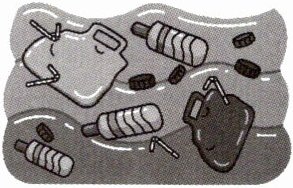
If you look around you, you can see plastic everywhere. Many clothes contain plastic. Your phone is mostly plastic, and so is your computer. Much of our food and drinks come in plastic bags or bottles.
Plastic is everywhere because people make it in large amounts. It is cheap and useful. Plastic things also last a very long time. However, this creates a big problem for the environment because most plastics can stay in nature for hundreds of years.
Most plastics are difficult to recycle. Some people burn plastics to make electricity, but most plastics go to garbage dumps. A lot of plastic waste goes into rivers, lakes and oceans.
Many sea animals try to eat the plastic because they think it is food. Sea animals like dolphins and turtles often get caught in plastic nets and die. Plastics can also harm the animals that eat them. Over time, much of the plastic goes down to the ocean floor or washes up on beaches around the world.
We need to use less plastic and recycle more to protect our oceans and sea animals.
(
A. By explaining why people use plastic.
B. By telling a story about plastic pollution.
C. By asking a question with a surprising fact.
D. By comparing plastic with other materials.
(
A. Because it is difficult to find.
B. Because it is cheap and useful.
C. Because it is good for animals.
D. Because it breaks down very fast.
(
A. The fact that plastic is useful.
B. The fact that plastic is popular.
C. The fact that plastic is hard to break.
D. The fact that plastic is made by people.
(
A. It turns into clean energy.
B. It is eaten by land animals.
C. It is all recycled successfully.
D. It goes into rivers and oceans.
(
A. To describe where plastic waste goes.
B. To show why plastic is useful in daily life.
C. To encourage people to reduce plastic use.
D. To explain how plastic products are made.
[2026 原创] Did you know that since the 1950s, people have thrown away over 8 billion tons of plastic? That’s a huge amount!
If you look around you, you can see plastic everywhere. Many clothes contain plastic. Your phone is mostly plastic, and so is your computer. Much of our food and drinks come in plastic bags or bottles.
Plastic is everywhere because people make it in large amounts. It is cheap and useful. Plastic things also last a very long time. However, this creates a big problem for the environment because most plastics can stay in nature for hundreds of years.
Most plastics are difficult to recycle. Some people burn plastics to make electricity, but most plastics go to garbage dumps. A lot of plastic waste goes into rivers, lakes and oceans.
Many sea animals try to eat the plastic because they think it is food. Sea animals like dolphins and turtles often get caught in plastic nets and die. Plastics can also harm the animals that eat them. Over time, much of the plastic goes down to the ocean floor or washes up on beaches around the world.
We need to use less plastic and recycle more to protect our oceans and sea animals.
(
C
)1. 新考法 写作手法 How does the writer start the passage?A. By explaining why people use plastic.
B. By telling a story about plastic pollution.
C. By asking a question with a surprising fact.
D. By comparing plastic with other materials.
(
B
)2. According to the passage, why do people use so much plastic?A. Because it is difficult to find.
B. Because it is cheap and useful.
C. Because it is good for animals.
D. Because it breaks down very fast.
(
C
)3. What does “this” refer to in Paragraph 3?A. The fact that plastic is useful.
B. The fact that plastic is popular.
C. The fact that plastic is hard to break.
D. The fact that plastic is made by people.
(
D
)4. What happens to a lot of plastic waste?A. It turns into clean energy.
B. It is eaten by land animals.
C. It is all recycled successfully.
D. It goes into rivers and oceans.
(
C
)5. 新考法 写作意图 What is the writer’s main purpose in writing this passage?A. To describe where plastic waste goes.
B. To show why plastic is useful in daily life.
C. To encourage people to reduce plastic use.
D. To explain how plastic products are made.
答案
阅读理解·语篇导读 本文是一篇关于塑料污染的科普文章。
快速对答案 1—5 C B C D C
1. C 推理判断题。文章开头第一句是一个问句,给出了一个惊人的事实。故选 C 项。
2. B 细节理解题。根据第三段的"Plastic is everywhere because people make it in large amounts. It is cheap and useful."可知,人们大量使用塑料是因为它既便宜又有用。故选 B 项。
3. C 词义猜测题。根据"Plastic things also last a very long time. However, this creates a big problem..."可知,这里的 this 指代前一句的核心内容,即塑料制品"持久"的特性。选项 C(塑料很难分解的事实。)是对此的同义转述。故选 C 项。
4. D 细节理解题。根据"A lot of plastic waste goes into rivers, lakes and oceans"可知,大量的塑料垃圾最终进入了河流和海洋。故选 D 项。
5. C 推理判断题。文章在详细描述了塑料污染的现状和危害之后,在最后一段提出了解决方案和呼吁。这表明作者的最终目的是说服和鼓励读者采取行动,减少塑料的使用。故选 C 项。
快速对答案 1—5 C B C D C
1. C 推理判断题。文章开头第一句是一个问句,给出了一个惊人的事实。故选 C 项。
2. B 细节理解题。根据第三段的"Plastic is everywhere because people make it in large amounts. It is cheap and useful."可知,人们大量使用塑料是因为它既便宜又有用。故选 B 项。
3. C 词义猜测题。根据"Plastic things also last a very long time. However, this creates a big problem..."可知,这里的 this 指代前一句的核心内容,即塑料制品"持久"的特性。选项 C(塑料很难分解的事实。)是对此的同义转述。故选 C 项。
4. D 细节理解题。根据"A lot of plastic waste goes into rivers, lakes and oceans"可知,大量的塑料垃圾最终进入了河流和海洋。故选 D 项。
5. C 推理判断题。文章在详细描述了塑料污染的现状和危害之后,在最后一段提出了解决方案和呼吁。这表明作者的最终目的是说服和鼓励读者采取行动,减少塑料的使用。故选 C 项。
解析
【分析】
这是一篇关于塑料污染的英语阅读理解题,涵盖写作手法、细节理解、词义猜测、写作意图等题型。解题时需先通读全文把握主旨,再针对各题定位原文信息,结合题型特点逐一分析选项:1题考查开头写作手法,需关注首句结构;2题考查原因类细节,定位原文对应原因句;3题考查代词指代,需联系前文内容;4题考查塑料垃圾去向,定位原文相关语句;5题考查写作意图,需关注结尾的呼吁内容。
【解析】
1. 文章开头第一句为“Did you know that since the 1950s, people have thrown away over 8 billion tons of plastic?”,是一个问句且给出了惊人事实,符合选项C的描述,故选C。
2. 根据第三段“Plastic is everywhere because people make it in large amounts. It is cheap and useful.”,明确说明人们大量使用塑料的原因是便宜且有用,对应选项B,故选B。
3. 第三段前一句提到“Plastic things also last a very long time.”,后一句“However, this creates a big problem...”中,this指代前文“塑料持久(难分解)”的事实,对应选项C,故选C。
4. 根据第四段“A lot of plastic waste goes into rivers, lakes and oceans.”,可知大量塑料垃圾进入河流和海洋,对应选项D,故选D。
5. 文章最后一段“We need to use less plastic and recycle more to protect our oceans and sea animals.”,体现作者呼吁减少塑料使用的意图,对应选项C,故选C。
【答案】
1.C 2.B 3.C 4.D 5.C
【知识点】
英语阅读理解、细节理解、词义猜测
【点评】
本文为科普类英语阅读,考查学生对文章不同维度信息的理解能力,题型全面,需学生具备快速定位原文、分析信息的能力,整体难度适中。
【难度系数】
0.6
这是一篇关于塑料污染的英语阅读理解题,涵盖写作手法、细节理解、词义猜测、写作意图等题型。解题时需先通读全文把握主旨,再针对各题定位原文信息,结合题型特点逐一分析选项:1题考查开头写作手法,需关注首句结构;2题考查原因类细节,定位原文对应原因句;3题考查代词指代,需联系前文内容;4题考查塑料垃圾去向,定位原文相关语句;5题考查写作意图,需关注结尾的呼吁内容。
【解析】
1. 文章开头第一句为“Did you know that since the 1950s, people have thrown away over 8 billion tons of plastic?”,是一个问句且给出了惊人事实,符合选项C的描述,故选C。
2. 根据第三段“Plastic is everywhere because people make it in large amounts. It is cheap and useful.”,明确说明人们大量使用塑料的原因是便宜且有用,对应选项B,故选B。
3. 第三段前一句提到“Plastic things also last a very long time.”,后一句“However, this creates a big problem...”中,this指代前文“塑料持久(难分解)”的事实,对应选项C,故选C。
4. 根据第四段“A lot of plastic waste goes into rivers, lakes and oceans.”,可知大量塑料垃圾进入河流和海洋,对应选项D,故选D。
5. 文章最后一段“We need to use less plastic and recycle more to protect our oceans and sea animals.”,体现作者呼吁减少塑料使用的意图,对应选项C,故选C。
【答案】
1.C 2.B 3.C 4.D 5.C
【知识点】
英语阅读理解、细节理解、词义猜测
【点评】
本文为科普类英语阅读,考查学生对文章不同维度信息的理解能力,题型全面,需学生具备快速定位原文、分析信息的能力,整体难度适中。
【难度系数】
0.6
