

 登录
登录
Step ① Think and plan your route. 动物园里可爱的动物在向你招手哦!你想去看哪些动物?请你规划一下路线,画一画,并向大家介绍一下吧!
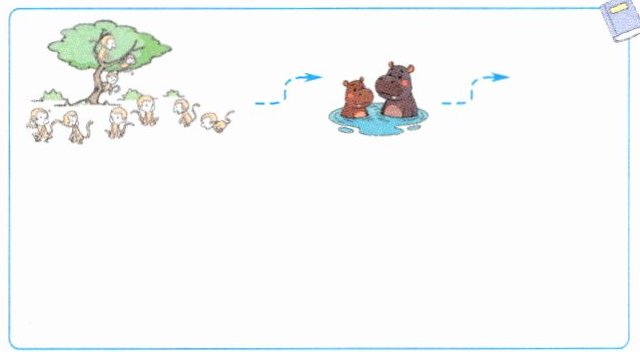
First, I want to see monkeys. Then I see hippos. Hippos are big. They like grass...
First, I want to see monkeys. Then I see hippos. Hippos are big. They like grass...
答案
First, I want to see monkeys. They are very clever and like eating bananas. Then I see hippos. Hippos are big. They like grass. Next, I go to see pandas. They are black and white, so cute. Finally, I visit elephants. They have long noses and are very friendly.
解析
【解析】
这是一道开放性英语实践表达题,可参考示例完成任务:
1. 先在图中河马区域的右侧空白处,自行补充绘制你想要参观的动物区域,比如熊猫馆、大象馆等,用虚线箭头连贯连接各个动物区域,完成参观路线的绘制。
2. 参考给出的开头,完成英文介绍,示例参考:
First, I want to see monkeys. They are clever and like eating bananas. Then I see hippos. Hippos are big. They like grass. Next, I want to see pandas. They are black and white, very cute. After that, I will go to see elephants. They have long noses and big ears.
【答案】
示例内容(答案不唯一,符合要求即可):先绘制连贯的动物园参观路线,英文介绍参考:First, I want to see monkeys. They are very clever and like eating bananas. Then I see hippos. Hippos are big. They like grass. Next, I go to see pandas. They are black and white, so cute. Finally, I visit elephants. They have long noses and are very friendly.
【知识点】
动物类英语词汇
顺序表达句型
情景口语写作
【点评】
本题属于开放性实践类题目,既锻炼学生的动手规划能力,也能引导学生熟练运用已学的动物相关英语词汇和顺序描述句型进行简单的表达输出,贴合小学英语的生活化应用要求。
【难度系数】
0.7
这是一道开放性英语实践表达题,可参考示例完成任务:
1. 先在图中河马区域的右侧空白处,自行补充绘制你想要参观的动物区域,比如熊猫馆、大象馆等,用虚线箭头连贯连接各个动物区域,完成参观路线的绘制。
2. 参考给出的开头,完成英文介绍,示例参考:
First, I want to see monkeys. They are clever and like eating bananas. Then I see hippos. Hippos are big. They like grass. Next, I want to see pandas. They are black and white, very cute. After that, I will go to see elephants. They have long noses and big ears.
【答案】
示例内容(答案不唯一,符合要求即可):先绘制连贯的动物园参观路线,英文介绍参考:First, I want to see monkeys. They are very clever and like eating bananas. Then I see hippos. Hippos are big. They like grass. Next, I go to see pandas. They are black and white, so cute. Finally, I visit elephants. They have long noses and are very friendly.
【知识点】
动物类英语词汇
顺序表达句型
情景口语写作
【点评】
本题属于开放性实践类题目,既锻炼学生的动手规划能力,也能引导学生熟练运用已学的动物相关英语词汇和顺序描述句型进行简单的表达输出,贴合小学英语的生活化应用要求。
【难度系数】
0.7
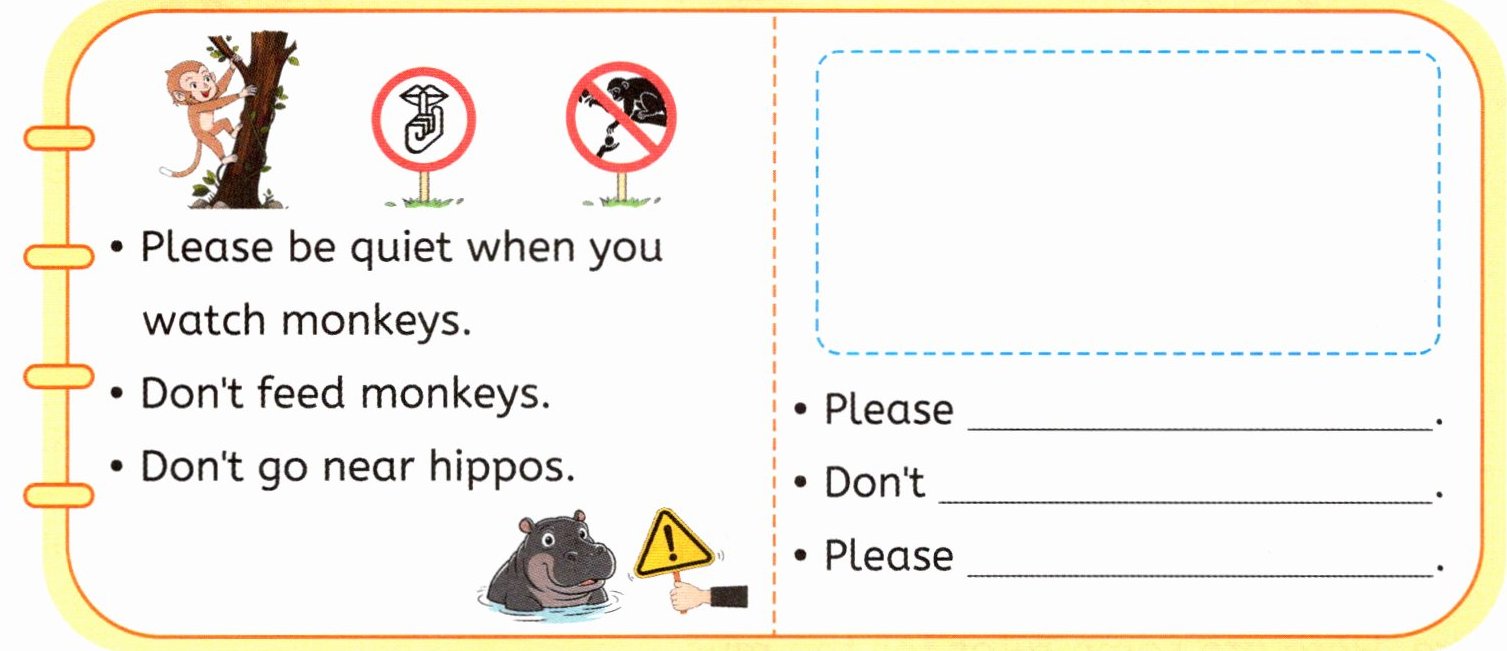
Step 2 Search the fun animal facts and write down zoo rules. 上网搜索有关动物的习性知识,再画一画,写一写,制作动物园小贴士提醒同学们相关注意事项。
答案
示例:
Please keep far away when you watch tigers.
Don't throw food to the elephants.
Please follow the zoo guide when you visit the wildlife area.
Please keep far away when you watch tigers.
Don't throw food to the elephants.
Please follow the zoo guide when you visit the wildlife area.
解析
【解析】
这是开放性实践类习题,可结合不同动物的习性,参照左侧给出的动物园规则示例的祈使句格式,编写符合场景的动物园提示规则:
1. 第一条以Please开头编写合规提示:Please keep far away when you watch tigers.
2. 第二条以Don't开头编写禁止类提示:Don't throw food to the elephants.
3. 第三条以Please开头编写引导类提示:Please follow the zoo guide when you visit the wildlife area.
内容贴合动物园游览场景,符合题目要求即可。
【答案】
示例:
Please keep far away when you watch tigers.
Don't throw food to the elephants.
Please follow the zoo guide when you visit the wildlife area.
【知识点】
英语祈使句;动物园场景表达
【点评】
本题属于开放性实践类习题,既考察学生对英语祈使句的掌握运用能力,也引导学生结合动物常识梳理游览注意事项,贴合生活实际,答案灵活不唯一,学生可以结合自身积累写出符合要求的内容。
【难度系数】
0.7
这是开放性实践类习题,可结合不同动物的习性,参照左侧给出的动物园规则示例的祈使句格式,编写符合场景的动物园提示规则:
1. 第一条以Please开头编写合规提示:Please keep far away when you watch tigers.
2. 第二条以Don't开头编写禁止类提示:Don't throw food to the elephants.
3. 第三条以Please开头编写引导类提示:Please follow the zoo guide when you visit the wildlife area.
内容贴合动物园游览场景,符合题目要求即可。
【答案】
示例:
Please keep far away when you watch tigers.
Don't throw food to the elephants.
Please follow the zoo guide when you visit the wildlife area.
【知识点】
英语祈使句;动物园场景表达
【点评】
本题属于开放性实践类习题,既考察学生对英语祈使句的掌握运用能力,也引导学生结合动物常识梳理游览注意事项,贴合生活实际,答案灵活不唯一,学生可以结合自身积累写出符合要求的内容。
【难度系数】
0.7
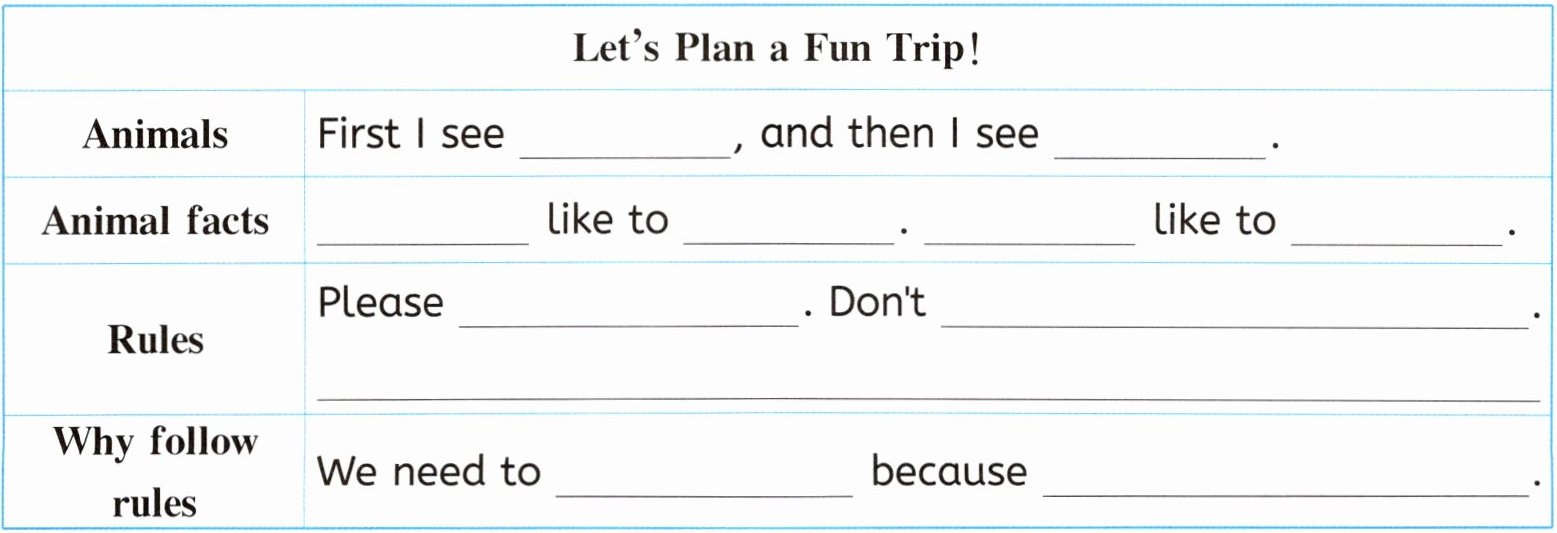
Step 3 Be a little guide. 补全表格,将你的出游计划记录下来,和同学们一起竞选小导游吧!
答案
Animals: pandas; elephants
Animal facts: Pandas; eat bamboo; Elephants; play with water
Rules: keep quiet; feed the animals; Don't run around in the zoo
Why follow rules: follow these rules; it can keep us and the animals safe, and we can have a great time on the trip
Animal facts: Pandas; eat bamboo; Elephants; play with water
Rules: keep quiet; feed the animals; Don't run around in the zoo
Why follow rules: follow these rules; it can keep us and the animals safe, and we can have a great time on the trip
解析
【分析】
本题是英语情景补全题,要求完成“出游计划”表格,核心是结合动物园相关常识和英语基础词汇、句型填写内容。解题时,先选择常见的动物园动物,再匹配对应动物的典型习性,接着填写文明参观规则,最后说明遵守规则的意义,确保内容符合逻辑、英语表达准确。
【解析】
根据表格各栏要求,结合常见的动物园相关知识,逐一填写:
1. Animals栏:填写两种常见的动物园动物,即pandas和elephants;
2. Animal facts栏:对应动物的典型习性,Pandas like to eat bamboo,Elephants like to play with water;
3. Rules栏:填写文明参观的祈使句,Please keep quiet, Don't feed the animals,Don't run around in the zoo;
4. Why follow rules栏:说明遵守规则的原因,We need to follow these rules because it can keep us and the animals safe, and we can have a great time on the trip。
【答案】
Animals: pandas; elephants
Animal facts: Pandas; eat bamboo; Elephants; play with water
Rules: keep quiet; feed the animals; Don't run around in the zoo
Why follow rules: follow these rules; it can keep us and the animals safe, and we can have a great time on the trip
【知识点】
英语情景应用、动物园词汇、祈使句
【点评】
本题以“小导游竞选”为情境,贴近生活实际,考查学生英语基础词汇、句型的实际运用能力,既巩固了知识,又培养了语言表达和逻辑思维能力,实用性较强。
【难度系数】
0.5
本题是英语情景补全题,要求完成“出游计划”表格,核心是结合动物园相关常识和英语基础词汇、句型填写内容。解题时,先选择常见的动物园动物,再匹配对应动物的典型习性,接着填写文明参观规则,最后说明遵守规则的意义,确保内容符合逻辑、英语表达准确。
【解析】
根据表格各栏要求,结合常见的动物园相关知识,逐一填写:
1. Animals栏:填写两种常见的动物园动物,即pandas和elephants;
2. Animal facts栏:对应动物的典型习性,Pandas like to eat bamboo,Elephants like to play with water;
3. Rules栏:填写文明参观的祈使句,Please keep quiet, Don't feed the animals,Don't run around in the zoo;
4. Why follow rules栏:说明遵守规则的原因,We need to follow these rules because it can keep us and the animals safe, and we can have a great time on the trip。
【答案】
Animals: pandas; elephants
Animal facts: Pandas; eat bamboo; Elephants; play with water
Rules: keep quiet; feed the animals; Don't run around in the zoo
Why follow rules: follow these rules; it can keep us and the animals safe, and we can have a great time on the trip
【知识点】
英语情景应用、动物园词汇、祈使句
【点评】
本题以“小导游竞选”为情境,贴近生活实际,考查学生英语基础词汇、句型的实际运用能力,既巩固了知识,又培养了语言表达和逻辑思维能力,实用性较强。
【难度系数】
0.5
