

 登录
登录
四、〔北京市〕你知道纸是如何发明的吗?阅读短文,完成下列任务。
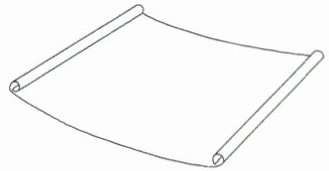
A long time ago, there was no paper. People wrote on things they found in nature. They wrote on wet mud. But the rain washed it away. They wrote on stones. But they were hard and heavy. In China, people once wrote on bamboo slips(竹简), but they were heavy, too. They also wrote on silk but it was too expensive.
In the Eastern Han Dynasty, Cai Lun found a better way to make paper. First, he found tree bark, old cloth and other things. Then, he boiled these things in a pot. After that, he made them into pulp(浆). Next, he put the pulp on a flat surface(表面). Last, he dried it in the sun, and then soft and light paper was made. It was the perfect material to write on and it was easy to carry and share. Then the art of paper-making travelled around the world. By the 19th century(世纪), paper was made from cheap wood pulp. More people had the chance to read. Now look around—paper is everywhere.
任务一:根据短文内容,用数字1~5给下列图片排序。

(
任务二:根据短文内容,判断句子正(T)误(F)。
(
(
(
(
任务三:根据短文内容,选择正确答案。
(
A. Because the mud was dirty.
B. Because there wasn't enough mud.
C. Because the rain washed it away.
(
A. Silk was expensive.
B. Cai Lun found a better way to make paper.
C. The bamboo slips were easy to carry.
(
A. 煮沸 B. 清洗 C. 制作
A long time ago, there was no paper. People wrote on things they found in nature. They wrote on wet mud. But the rain washed it away. They wrote on stones. But they were hard and heavy. In China, people once wrote on bamboo slips(竹简), but they were heavy, too. They also wrote on silk but it was too expensive.
In the Eastern Han Dynasty, Cai Lun found a better way to make paper. First, he found tree bark, old cloth and other things. Then, he boiled these things in a pot. After that, he made them into pulp(浆). Next, he put the pulp on a flat surface(表面). Last, he dried it in the sun, and then soft and light paper was made. It was the perfect material to write on and it was easy to carry and share. Then the art of paper-making travelled around the world. By the 19th century(世纪), paper was made from cheap wood pulp. More people had the chance to read. Now look around—paper is everywhere.
任务一:根据短文内容,用数字1~5给下列图片排序。
(
5
) (1
) (3
) (4
) (2
)任务二:根据短文内容,判断句子正(T)误(F)。
(
T
)1. A long time ago, people wrote on stones, bamboo slips and silk.(
F
)2. In the Tang Dynasty, a man made paper.(
T
)3. It was easy to carry paper and share paper with others.(
F
)4. Paper was made from expensive wood pulp by the 19th century.任务三:根据短文内容,选择正确答案。
(
C
)1. Why didn't people write on wet mud?A. Because the mud was dirty.
B. Because there wasn't enough mud.
C. Because the rain washed it away.
(
C
)2. Which of the following is NOT TRUE?A. Silk was expensive.
B. Cai Lun found a better way to make paper.
C. The bamboo slips were easy to carry.
(
A
)3. The word "boiled" means "" in Chinese.A. 煮沸 B. 清洗 C. 制作
答案
任务一:5 1 3 4 2
任务二:1. T 2. F 3. T
4. F 【解析】根据材料中“By the 19th century, paper was made from cheap wood pulp.”可知,到19世纪时,纸由便宜的纸浆制成,本题描述与原文内容不符。
任务三:1. C
2. C 【解析】第一段中“They also wrote on silk but it was too expensive.”表明,丝绸很贵,A项正确;第二段中“In the Eastern Han Dynasty, Cai Lun found a better way to make paper.”表明,东汉时期,蔡伦改进了造纸术,B项正确;第一段中“In China, people once wrote on bamboo slips, but they were heavy, too.”表明,竹简很重,不便于携带,C项错误。
3. A
任务二:1. T 2. F 3. T
4. F 【解析】根据材料中“By the 19th century, paper was made from cheap wood pulp.”可知,到19世纪时,纸由便宜的纸浆制成,本题描述与原文内容不符。
任务三:1. C
2. C 【解析】第一段中“They also wrote on silk but it was too expensive.”表明,丝绸很贵,A项正确;第二段中“In the Eastern Han Dynasty, Cai Lun found a better way to make paper.”表明,东汉时期,蔡伦改进了造纸术,B项正确;第一段中“In China, people once wrote on bamboo slips, but they were heavy, too.”表明,竹简很重,不便于携带,C项错误。
3. A
解析
【分析】本题是英语阅读理解题,分为三个任务。任务一需梳理蔡伦造纸的步骤,对应图片顺序,解题时从原文第二段提取造纸的先后步骤,匹配图片即可;任务二为判断正误题,需将每个句子与原文细节逐一比对,重点关注朝代、材料特性等细节;任务三为选择题,需根据题干关键词定位原文,排除错误选项选出正确答案。
【解析】
任务一:根据原文第二段蔡伦造纸的步骤:First(找原料)→Then(煮原料)→After that(制作纸浆)→Next(将纸浆放在平面上)→Last(晒干纸浆成纸),对应图片排序为5、1、3、4、2。
任务二:1. 原文第一段提到古代人们在湿泥、石头、竹简、丝绸上写字,本题与原文一致,故为T;2. 原文是东汉而非唐代,本题错误,故为F;3. 原文提到纸“easy to carry”,本题与原文一致,故为T;4. 原文19世纪纸由便宜木浆制成,本题说“昂贵木浆”,与原文不符,故为F。
任务三:1. 原文明确提到湿泥被雨水冲走,选C;2. 原文指出竹简很重,C项表述错误,选C;3. “boiled”意为煮沸,选A。
【答案】
任务一:5 1 3 4 2
任务二:1.T 2.F 3.T 4.F
任务三:1.C 2.C 3.A
【知识点】
英语阅读理解、细节理解、判断推理
【点评】
本题围绕蔡伦造纸的英语短文展开,重点考查学生对短文细节信息的提取与比对能力,题型涵盖排序、判断、选择,难度适中,需学生仔细阅读原文,找准对应细节即可解答。
【难度系数】
0.6
【解析】
任务一:根据原文第二段蔡伦造纸的步骤:First(找原料)→Then(煮原料)→After that(制作纸浆)→Next(将纸浆放在平面上)→Last(晒干纸浆成纸),对应图片排序为5、1、3、4、2。
任务二:1. 原文第一段提到古代人们在湿泥、石头、竹简、丝绸上写字,本题与原文一致,故为T;2. 原文是东汉而非唐代,本题错误,故为F;3. 原文提到纸“easy to carry”,本题与原文一致,故为T;4. 原文19世纪纸由便宜木浆制成,本题说“昂贵木浆”,与原文不符,故为F。
任务三:1. 原文明确提到湿泥被雨水冲走,选C;2. 原文指出竹简很重,C项表述错误,选C;3. “boiled”意为煮沸,选A。
【答案】
任务一:5 1 3 4 2
任务二:1.T 2.F 3.T 4.F
任务三:1.C 2.C 3.A
【知识点】
英语阅读理解、细节理解、判断推理
【点评】
本题围绕蔡伦造纸的英语短文展开,重点考查学生对短文细节信息的提取与比对能力,题型涵盖排序、判断、选择,难度适中,需学生仔细阅读原文,找准对应细节即可解答。
【难度系数】
0.6
