

 登录
登录
一、根据括号内的汉语提示填空。
1. Miss Li’s lively classes succeeded in drawing students’
2. If you take your teacher’s advice, you will
3. Today, there are more new ways to
4. It is a good habit to check our homework
5. Never believe a
1. Miss Li’s lively classes succeeded in drawing students’
attention
(注意).2. If you take your teacher’s advice, you will
surely
(必定) make more progress.3. Today, there are more new ways to
pay
(付费) for things we buy.4. It is a good habit to check our homework
carefully
(仔细地) before we hand it in.5. Never believe a
stranger
(陌生人) before seeing the truth with your own eyes.答案
1. attention 2. surely 3. pay 4. carefully 5. stranger
解析
【分析】
本题为英语词汇填空题,需结合句子结构、固定搭配及汉语提示确定单词的正确形式。先分析每个句子的成分,判断所需单词的词性,再匹配对应的汉语提示写出正确单词,注意固定短语的用法和词性修饰规则。
【解析】
1. 固定搭配draw one's attention表示“吸引某人的注意”,汉语提示为“注意”,需填名词,故填attention;
2. 此处需副词修饰动词make,汉语提示“必定”对应的副词是surely,故填surely;
3. 固定短语pay for表示“为……付费”,不定式符号to后接动词原形,故填pay;
4. 此处需副词修饰动词check,汉语提示“仔细地”对应的副词是carefully,故填carefully;
5. 不定冠词a后接可数名词单数,汉语提示“陌生人”对应的名词是stranger,故填stranger。
【答案】
1. attention 2. surely 3. pay 4. carefully 5. stranger
【知识点】
英语词汇运用;固定搭配;词性辨析
【点评】
本题考查基础英语词汇的拼写及运用,涉及固定短语、词性修饰等基础知识点,难度较低,适合巩固基础词汇。
【难度系数】
0.8
本题为英语词汇填空题,需结合句子结构、固定搭配及汉语提示确定单词的正确形式。先分析每个句子的成分,判断所需单词的词性,再匹配对应的汉语提示写出正确单词,注意固定短语的用法和词性修饰规则。
【解析】
1. 固定搭配draw one's attention表示“吸引某人的注意”,汉语提示为“注意”,需填名词,故填attention;
2. 此处需副词修饰动词make,汉语提示“必定”对应的副词是surely,故填surely;
3. 固定短语pay for表示“为……付费”,不定式符号to后接动词原形,故填pay;
4. 此处需副词修饰动词check,汉语提示“仔细地”对应的副词是carefully,故填carefully;
5. 不定冠词a后接可数名词单数,汉语提示“陌生人”对应的名词是stranger,故填stranger。
【答案】
1. attention 2. surely 3. pay 4. carefully 5. stranger
【知识点】
英语词汇运用;固定搭配;词性辨析
【点评】
本题考查基础英语词汇的拼写及运用,涉及固定短语、词性修饰等基础知识点,难度较低,适合巩固基础词汇。
【难度系数】
0.8
二、用括号内所给单词的适当形式填空。
1. To be a good speaker, one should become a good
2. The famous doctor gave people some
3. Jane is unhappy now. She wants others to give her some
4. It is
5. This restaurant is popular because the prices of its food are
1. To be a good speaker, one should become a good
listener
(listen) at first.2. The famous doctor gave people some
tips
(tip) on how to eat healthily.3. Jane is unhappy now. She wants others to give her some
personal
(person) space.4. It is
impolite
(polite) to shout loudly in public places, like libraries and museums.5. This restaurant is popular because the prices of its food are
reasonable
(reason).答案
1. listener 2. tips 3. personal 4. impolite 5. reasonable
解析
【分析】本题考查英语单词的适当形式填空,需结合句子结构、词性要求、语境及词形变化规则解题:1. 需填名词作宾语;2. some后接可数名词复数;3. 需形容词修饰名词;4. 结合语境判断反义词;5. 需形容词作表语。
【解析】1. 不定冠词a和形容词good后需接名词,listen的名词形式为listener,故填listener;2. some修饰可数名词复数,tip的复数是tips,故填tips;3. 修饰名词space需用形容词,person的形容词是personal,故填personal;4. 句意是在公共场合大声喊叫不礼貌,polite的反义词为impolite,故填impolite;5. 系动词are后接形容词,reason的形容词是reasonable,故填reasonable。
【答案】1. listener 2. tips 3. personal 4. impolite 5. reasonable
【知识点】名词的适当形式、形容词的用法、词形变化
【点评】本题为基础英语词汇变形题,考查词性转换、名词复数、反义词等基础知识点,难度较低,适合巩固词汇基础。
【难度系数】0.8
【解析】1. 不定冠词a和形容词good后需接名词,listen的名词形式为listener,故填listener;2. some修饰可数名词复数,tip的复数是tips,故填tips;3. 修饰名词space需用形容词,person的形容词是personal,故填personal;4. 句意是在公共场合大声喊叫不礼貌,polite的反义词为impolite,故填impolite;5. 系动词are后接形容词,reason的形容词是reasonable,故填reasonable。
【答案】1. listener 2. tips 3. personal 4. impolite 5. reasonable
【知识点】名词的适当形式、形容词的用法、词形变化
【点评】本题为基础英语词汇变形题,考查词性转换、名词复数、反义词等基础知识点,难度较低,适合巩固词汇基础。
【难度系数】0.8
三、从方框中选择适当的单词并用其正确形式填空。
point nervous offer continue sincere
1. Ben’s article got a low grade because it didn’t get the
2. Simon
3. To achieve continuous development is a
4. AI can
5. The boy was
微信扫码
掌握重点难点
point nervous offer continue sincere
1. Ben’s article got a low grade because it didn’t get the
point
.2. Simon
continued
to pack up things after he rested for a while.3. To achieve continuous development is a
sincere
hope of our Chinese people.4. AI can
offer
us great help, but we lose the ability to think on our own.5. The boy was
nervous
because he gave a wrong answer to the teacher’s question.微信扫码
掌握重点难点
答案
1. point 2. continued 3. sincere 4. offer 5. nervous
解析
【分析】
本题为选词填空题型,需结合句子语境判断每个空缺处的语法成分(词性、时态等),再从给定单词中选择并调整为正确形式。先通读各句明确句意,再逐一分析空缺需求:1空需名词作宾语;2空需动词作谓语,结合时态用过去式;3空需形容词修饰名词;4空需动词原形(情态动词后);5空需形容词作表语。
【解析】
1. 句意:本的文章得分低,因为它没有抓住要点。定冠词the后接名词,point表示“要点”,符合语境,用原形,故填point。
2. 句意:西蒙休息了一会儿后继续收拾东西。由rested(过去式)可知句子为一般过去时,谓语动词需用过去式,continue的过去式为continued,故填continued。
3. 句意:实现持续发展是中国人民的真诚愿望。修饰名词hope需用形容词,sincere是形容词“真诚的”,符合语境,故填sincere。
4. 句意:AI能给我们提供很大帮助,但我们失去自主思考能力。情态动词can后接动词原形,offer是动词“提供”,符合语境,故填offer。
5. 句意:男孩因为答错老师的问题而紧张。be动词后接形容词作表语,nervous是形容词“紧张的”,符合语境,故填nervous。
【答案】
1. point 2. continued 3. sincere 4. offer 5. nervous
【知识点】
动词时态变化、形容词用法、名词用法
【点评】
本题考查基础词汇的正确形式运用,要求学生结合语境判断词性和时态,侧重核心词汇的掌握,是英语学习中常见的基础题型,难度适中。
【难度系数】
0.5
本题为选词填空题型,需结合句子语境判断每个空缺处的语法成分(词性、时态等),再从给定单词中选择并调整为正确形式。先通读各句明确句意,再逐一分析空缺需求:1空需名词作宾语;2空需动词作谓语,结合时态用过去式;3空需形容词修饰名词;4空需动词原形(情态动词后);5空需形容词作表语。
【解析】
1. 句意:本的文章得分低,因为它没有抓住要点。定冠词the后接名词,point表示“要点”,符合语境,用原形,故填point。
2. 句意:西蒙休息了一会儿后继续收拾东西。由rested(过去式)可知句子为一般过去时,谓语动词需用过去式,continue的过去式为continued,故填continued。
3. 句意:实现持续发展是中国人民的真诚愿望。修饰名词hope需用形容词,sincere是形容词“真诚的”,符合语境,故填sincere。
4. 句意:AI能给我们提供很大帮助,但我们失去自主思考能力。情态动词can后接动词原形,offer是动词“提供”,符合语境,故填offer。
5. 句意:男孩因为答错老师的问题而紧张。be动词后接形容词作表语,nervous是形容词“紧张的”,符合语境,故填nervous。
【答案】
1. point 2. continued 3. sincere 4. offer 5. nervous
【知识点】
动词时态变化、形容词用法、名词用法
【点评】
本题考查基础词汇的正确形式运用,要求学生结合语境判断词性和时态,侧重核心词汇的掌握,是英语学习中常见的基础题型,难度适中。
【难度系数】
0.5
四、从方框中选择适当的短语并用其正确形式填空。
show interest in argue with find out
move on to pay attention to be yourself
1. While going across the roads, we must
2. Mary is a born musician. She
3. When making new friends, it’s best to
4. Usually,
5. Although the twins are almost the same, their parents can still
6. The conversation about life was getting quite heavy, so the host quickly
show interest in argue with find out
move on to pay attention to be yourself
1. While going across the roads, we must
pay attention to
the traffic lights.2. Mary is a born musician. She
showed interest in
music at an early age.3. When making new friends, it’s best to
be yourself
so others can get to know the real you.4. Usually,
arguing with
other people won’t solve problems, but will make things worse.5. Although the twins are almost the same, their parents can still
find out
the differences.6. The conversation about life was getting quite heavy, so the host quickly
moved on to
something relaxing.答案
1. pay attention to 2. showed interest in 3. be yourself 4. arguing with 5. find out 6. moved on to
解析
【分析】
本题为英语短语填空题,解题思路如下:1. 先明确方框内每个短语的含义:show interest in(对……感兴趣)、argue with(和……争论)、find out(找出,查明)、move on to(转到,继续)、pay attention to(注意)、be yourself(做你自己);2. 通读每个句子,结合句意匹配对应的短语;3. 根据句子的语法规则(如情态动词后接动词原形、一般过去时的时态要求、动名词作主语等)调整短语的正确形式,确保符合语境和语法。
【解析】
1. 句意:过马路时,我们必须注意交通灯。“pay attention to”意为“注意”,情态动词“must”后接动词原形,故填pay attention to。
2. 句意:玛丽是天生的音乐家,她很小的时候就对音乐感兴趣。“show interest in”意为“对……感兴趣”,时间状语“at an early age”表示过去,需用一般过去时,故填showed interest in。
3. 句意:交新朋友时,最好做你自己,这样别人才能了解真实的你。“be yourself”意为“做你自己”,“it's best to do sth.”结构中用动词原形,故填be yourself。
4. 句意:通常,和别人争论不会解决问题,反而会让事情更糟。“argue with”意为“和……争论”,此处作主语,需用动名词形式,故填arguing with。
5. 句意:虽然双胞胎几乎一样,但他们的父母还是能找出差异。“find out”意为“找出,查明”,情态动词“can”后接动词原形,故填find out。
6. 句意:关于生活的谈话变得很沉重,所以主持人迅速转到了轻松的话题。“move on to”意为“转到,继续”,前半句为一般过去时,此处需用过去式,故填moved on to。
【答案】
1. pay attention to 2. showed interest in 3. be yourself 4. arguing with 5. find out 6. moved on to
【知识点】
动词短语辨析;一般过去时;动名词作主语
【点评】
本题考查常用英语短语的词义及形式变化,需结合句意和语法规则作答,是初中英语基础题型,重点考查学生对短语的掌握和基本语法的运用能力。
【难度系数】
0.6
本题为英语短语填空题,解题思路如下:1. 先明确方框内每个短语的含义:show interest in(对……感兴趣)、argue with(和……争论)、find out(找出,查明)、move on to(转到,继续)、pay attention to(注意)、be yourself(做你自己);2. 通读每个句子,结合句意匹配对应的短语;3. 根据句子的语法规则(如情态动词后接动词原形、一般过去时的时态要求、动名词作主语等)调整短语的正确形式,确保符合语境和语法。
【解析】
1. 句意:过马路时,我们必须注意交通灯。“pay attention to”意为“注意”,情态动词“must”后接动词原形,故填pay attention to。
2. 句意:玛丽是天生的音乐家,她很小的时候就对音乐感兴趣。“show interest in”意为“对……感兴趣”,时间状语“at an early age”表示过去,需用一般过去时,故填showed interest in。
3. 句意:交新朋友时,最好做你自己,这样别人才能了解真实的你。“be yourself”意为“做你自己”,“it's best to do sth.”结构中用动词原形,故填be yourself。
4. 句意:通常,和别人争论不会解决问题,反而会让事情更糟。“argue with”意为“和……争论”,此处作主语,需用动名词形式,故填arguing with。
5. 句意:虽然双胞胎几乎一样,但他们的父母还是能找出差异。“find out”意为“找出,查明”,情态动词“can”后接动词原形,故填find out。
6. 句意:关于生活的谈话变得很沉重,所以主持人迅速转到了轻松的话题。“move on to”意为“转到,继续”,前半句为一般过去时,此处需用过去式,故填moved on to。
【答案】
1. pay attention to 2. showed interest in 3. be yourself 4. arguing with 5. find out 6. moved on to
【知识点】
动词短语辨析;一般过去时;动名词作主语
【点评】
本题考查常用英语短语的词义及形式变化,需结合句意和语法规则作答,是初中英语基础题型,重点考查学生对短语的掌握和基本语法的运用能力。
【难度系数】
0.6
五、阅读理解。
When we talk about communication, we often think of communicating with others. But do you know that we also do communication with ourselves from time to time? Picture this: Your mum asks you what you would like for breakfast. Many foods come to your mind: pancakes, bread, cheese ... You think that it would be great to have pancakes. Until you tell your mum what you want to eat, you are communicating with yourself.
We call this kind of communication intrapersonal communication(自我沟通). This can be talking to ourselves, reading, writing, thinking, understanding and remembering something.
Intrapersonal communication plays a big role in our lives. Good intrapersonal communication allows you to understand yourself better. When you’re comfortable with who you are, and you know what you want, you can better get on with yourself. Also, intrapersonal communication helps you to keep an eye on your thoughts and feelings. When you find that your mind is full of negative(消极的) thoughts and feelings, and they make you sad, you will try to cheer up(振作) and get rid of these bad thoughts and feelings.
What’s more, intrapersonal communication helps with your communication with others. Understanding your thoughts and feelings better allows you to put yourself in others’ shoes when you talk to or listen to them. Then, you can better understand and get on with them. So, keep working on intrapersonal communication. It’ll surely make your life more harmonious(和谐的) and enjoyable.
1. How does the writer explain the idea of intrapersonal communication in Paragraph 1?
A. By listing numbers.
B. By giving an example.
C. By showing some facts.
D. By asking and answering a question.
2. What do the underlined words“get rid of” in Paragraph 3 mean in Chinese?
A. 摆脱 B. 看待 C. 珍惜 D. 参与
3. From Paragraphs 3 & 4, we can learn about the
A. right process B. good points
C. serious problems D. interesting rules
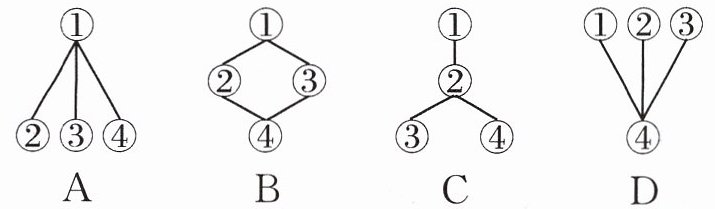
4. What is the right structure of the passage?
(①=Paragraph 1 ②=Paragraph 2, ...)
5. What is the best title for the passage?
A. The Importance of Communication
B. Learn to Communicate with Yourself
C. How to Communicate Better with Others
D. Get Rid of Negative Thoughts Through Communication

When we talk about communication, we often think of communicating with others. But do you know that we also do communication with ourselves from time to time? Picture this: Your mum asks you what you would like for breakfast. Many foods come to your mind: pancakes, bread, cheese ... You think that it would be great to have pancakes. Until you tell your mum what you want to eat, you are communicating with yourself.
We call this kind of communication intrapersonal communication(自我沟通). This can be talking to ourselves, reading, writing, thinking, understanding and remembering something.
Intrapersonal communication plays a big role in our lives. Good intrapersonal communication allows you to understand yourself better. When you’re comfortable with who you are, and you know what you want, you can better get on with yourself. Also, intrapersonal communication helps you to keep an eye on your thoughts and feelings. When you find that your mind is full of negative(消极的) thoughts and feelings, and they make you sad, you will try to cheer up(振作) and get rid of these bad thoughts and feelings.
What’s more, intrapersonal communication helps with your communication with others. Understanding your thoughts and feelings better allows you to put yourself in others’ shoes when you talk to or listen to them. Then, you can better understand and get on with them. So, keep working on intrapersonal communication. It’ll surely make your life more harmonious(和谐的) and enjoyable.
1. How does the writer explain the idea of intrapersonal communication in Paragraph 1?
A. By listing numbers.
B. By giving an example.
C. By showing some facts.
D. By asking and answering a question.
2. What do the underlined words“get rid of” in Paragraph 3 mean in Chinese?
A. 摆脱 B. 看待 C. 珍惜 D. 参与
3. From Paragraphs 3 & 4, we can learn about the
good points
of intrapersonal communication.A. right process B. good points
C. serious problems D. interesting rules
4. What is the right structure of the passage?
(①=Paragraph 1 ②=Paragraph 2, ...)
5. What is the best title for the passage?
A. The Importance of Communication
B. Learn to Communicate with Yourself
C. How to Communicate Better with Others
D. Get Rid of Negative Thoughts Through Communication
答案
1.B 2.A 3.B 4.C 5.B
解析
【分析】
做此类英语阅读理解题,需先通读全文把握主旨,再针对每个小题回到原文定位,结合语境、词义猜测、文章结构等方法逐一分析选项:第1题定位第一段,判断作者解释自我沟通的方式;第2题结合上下文语境猜测短语含义;第3题分析3、4段内容,明确其阐述的核心;第4题梳理文章各段落的作用,确定整体结构;第5题总结全文主旨,选出最佳标题。
【解析】
1. 第1题:根据第一段内容,作者以“妈妈问早餐,自己在脑海中选择食物”的例子解释自我沟通,并非列数字、展示事实或问答,故选B。
2. 第2题:第三段提到消极想法让你难过,你要振作,由此推测“get rid of”意为“摆脱”,故选A。
3. 第3题:第三、四段分别阐述自我沟通能让你更好了解自己、帮助与他人沟通,这些都是自我沟通的好处,故选B。
4. 第4题:文章结构为:①引出自我沟通话题;②定义自我沟通;③④说明自我沟通的重要性;⑤总结呼吁,对应选项C的结构,故选C。
5. 第5题:全文围绕“自我沟通”展开,强调其重要性,呼吁学会与自己沟通,最佳标题为B选项。
【答案】1.B 2.A 3.B 4.C 5.B
【知识点】英语阅读理解(细节理解、词义猜测、主旨大意、文章结构)
【点评】本题为英语阅读理解常规题型,考查学生对文章细节、词义、主旨及结构的理解,需学生具备一定的语篇分析能力,难度适中。
【难度系数】0.6
做此类英语阅读理解题,需先通读全文把握主旨,再针对每个小题回到原文定位,结合语境、词义猜测、文章结构等方法逐一分析选项:第1题定位第一段,判断作者解释自我沟通的方式;第2题结合上下文语境猜测短语含义;第3题分析3、4段内容,明确其阐述的核心;第4题梳理文章各段落的作用,确定整体结构;第5题总结全文主旨,选出最佳标题。
【解析】
1. 第1题:根据第一段内容,作者以“妈妈问早餐,自己在脑海中选择食物”的例子解释自我沟通,并非列数字、展示事实或问答,故选B。
2. 第2题:第三段提到消极想法让你难过,你要振作,由此推测“get rid of”意为“摆脱”,故选A。
3. 第3题:第三、四段分别阐述自我沟通能让你更好了解自己、帮助与他人沟通,这些都是自我沟通的好处,故选B。
4. 第4题:文章结构为:①引出自我沟通话题;②定义自我沟通;③④说明自我沟通的重要性;⑤总结呼吁,对应选项C的结构,故选C。
5. 第5题:全文围绕“自我沟通”展开,强调其重要性,呼吁学会与自己沟通,最佳标题为B选项。
【答案】1.B 2.A 3.B 4.C 5.B
【知识点】英语阅读理解(细节理解、词义猜测、主旨大意、文章结构)
【点评】本题为英语阅读理解常规题型,考查学生对文章细节、词义、主旨及结构的理解,需学生具备一定的语篇分析能力,难度适中。
【难度系数】0.6
