

 登录
登录
情境素材 月壤砖 「2026江苏南京郑和外国语学校期末」
①On Earth, we use bricks to build houses, but what about building things on the moon?
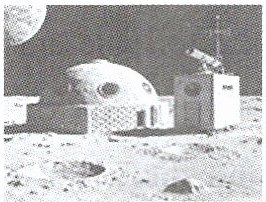
▲ Scientists at Huazhong University of Science and Technology (HUST) have developed “lunar bricks”. They hope to use the bricks to build a research station on the moon.
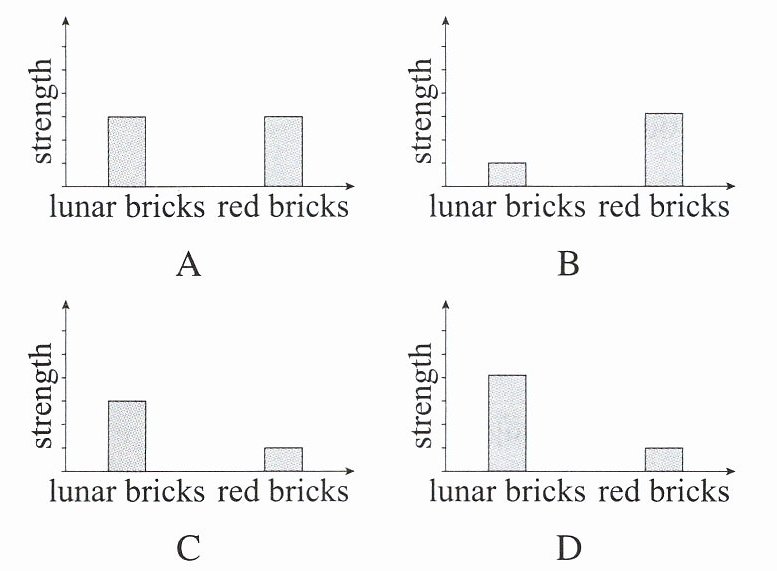
②To make the bricks, the scientists used a lunar soil simulant(模拟月壤). The bricks are more than three times stronger than normal red bricks. They also have special structures, which were used in ancient Chinese buildings. This makes it possible to simply put these bricks together.
③Professor Zhou Cheng from HUST said that they had tested five different kinds of simulated lunar soil composition(成分)and used three ways to harden them. In this way they could choose the best materials for making the bricks. “Lunar soil isn’t the same everywhere on the moon,” Zhou said. “For example, one of the kinds tested simulates the lunar soil at the landing site of ‘Chang’e-5’, which is mainly basalt(玄武岩).”
④The lunar bricks need to be tested well before being used because the moon has an extreme(极端的)environment. Quakes often happen there. And it gets as hot as $127° C$ during the day and as cold as $-183° C$ at night. The lunar bricks have been sent to China’s space station on the “Tianzhou-8” spacecraft. There, scientists will carry out tests to see how well the bricks work in space. The first brick is expected to return to Earth by the end of 2025.
1. 特色考法 信息还原题 Which of the following can be put in “ ▲ ” in Paragraph 1?
A. We use “lunar bricks”, of course!
B. The question is too difficult to answer.
C. Many people dream of going to the moon.
D. Scientists may study the topic in the future!
2. 特色考法 图文转换题 Which properly shows the strength comparison of lunar bricks and red bricks?
3. How did scientists find the best materials for lunar bricks?
A. They learned about lunar soil from scientific reports.
B. They compared different bricks used widely nowadays.
C. They read many books about ancient Chinese buildings.
D. They did many tests on simulated lunar soil and treated it in different ways.
4. What is the main idea of the fourth paragraph?
A. The introduction of China’s “Tianzhou-8” spacecraft.
B. The reasons why lunar bricks need to be tested in space.
C. The temperature difference on the moon between day and night.
D. The time when the lunar brick will return to Earth.
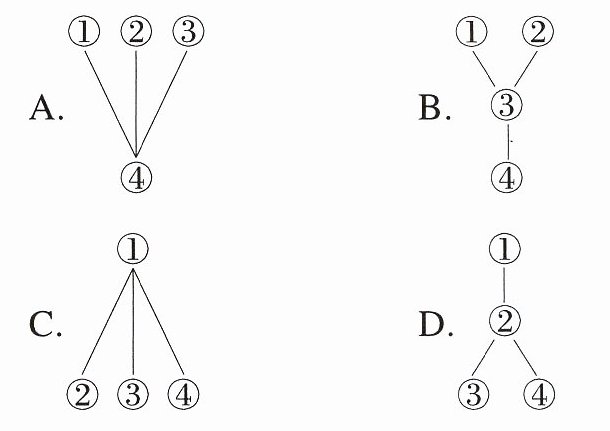
5. 特色考法 文章结构题 What is most probably the structure of the passage?
①On Earth, we use bricks to build houses, but what about building things on the moon?
▲ Scientists at Huazhong University of Science and Technology (HUST) have developed “lunar bricks”. They hope to use the bricks to build a research station on the moon.
②To make the bricks, the scientists used a lunar soil simulant(模拟月壤). The bricks are more than three times stronger than normal red bricks. They also have special structures, which were used in ancient Chinese buildings. This makes it possible to simply put these bricks together.
③Professor Zhou Cheng from HUST said that they had tested five different kinds of simulated lunar soil composition(成分)and used three ways to harden them. In this way they could choose the best materials for making the bricks. “Lunar soil isn’t the same everywhere on the moon,” Zhou said. “For example, one of the kinds tested simulates the lunar soil at the landing site of ‘Chang’e-5’, which is mainly basalt(玄武岩).”
④The lunar bricks need to be tested well before being used because the moon has an extreme(极端的)environment. Quakes often happen there. And it gets as hot as $127° C$ during the day and as cold as $-183° C$ at night. The lunar bricks have been sent to China’s space station on the “Tianzhou-8” spacecraft. There, scientists will carry out tests to see how well the bricks work in space. The first brick is expected to return to Earth by the end of 2025.
1. 特色考法 信息还原题 Which of the following can be put in “ ▲ ” in Paragraph 1?
A. We use “lunar bricks”, of course!
B. The question is too difficult to answer.
C. Many people dream of going to the moon.
D. Scientists may study the topic in the future!
2. 特色考法 图文转换题 Which properly shows the strength comparison of lunar bricks and red bricks?
3. How did scientists find the best materials for lunar bricks?
A. They learned about lunar soil from scientific reports.
B. They compared different bricks used widely nowadays.
C. They read many books about ancient Chinese buildings.
D. They did many tests on simulated lunar soil and treated it in different ways.
4. What is the main idea of the fourth paragraph?
A. The introduction of China’s “Tianzhou-8” spacecraft.
B. The reasons why lunar bricks need to be tested in space.
C. The temperature difference on the moon between day and night.
D. The time when the lunar brick will return to Earth.
5. 特色考法 文章结构题 What is most probably the structure of the passage?
答案
1.A 信息还原题。根据“Scientists at Huazhong University of Science and Technology (HUST) have developed ‘lunar bricks’.”可以推测,此处内容和“月球砖”有关。选项A“当然,我们使用‘月球砖’”符合语境。故选A。
2.C 图文转换题。根据“The bricks are more than three times stronger than normal red bricks.”可知,月球砖比普通红砖结实三倍。故选C。
3.D 细节理解题。根据“Professor Zhou Cheng from HUST said...materials for making the bricks.”可知,科学家们通过做多次的测试和用不同的方法处理月球土壤来找到适合制作月球砖的材料。故选D。
4.B 段落大意题。根据“The lunar bricks need to...extreme environment.”及通读第四段可知,第四段主要说明月球环境极端,即需要在空间站进一步测试月球砖的原因。故选B。
5.B. 文章结构题。通读全文可知,①②段介绍月球砖的提出与特点;③段讲如何挑选制砖材料;④段说明需在太空测试及未来计划。故选B。
2.C 图文转换题。根据“The bricks are more than three times stronger than normal red bricks.”可知,月球砖比普通红砖结实三倍。故选C。
3.D 细节理解题。根据“Professor Zhou Cheng from HUST said...materials for making the bricks.”可知,科学家们通过做多次的测试和用不同的方法处理月球土壤来找到适合制作月球砖的材料。故选D。
4.B 段落大意题。根据“The lunar bricks need to...extreme environment.”及通读第四段可知,第四段主要说明月球环境极端,即需要在空间站进一步测试月球砖的原因。故选B。
5.B. 文章结构题。通读全文可知,①②段介绍月球砖的提出与特点;③段讲如何挑选制砖材料;④段说明需在太空测试及未来计划。故选B。
