

 登录
登录
教育学习
Monday/Week 2
n June 20, six volunteer teachers went to
Tielu Primary School in the mountains.
They turned two classrooms into a lab,
a history corner, and a VR room. Fifteen students came
every day for five days.
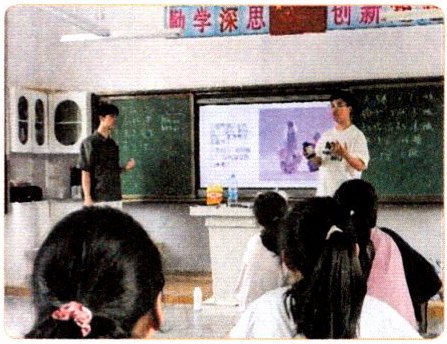
They learned about science,
culture, and sports.
In the morning, they
had history class. They read old stories and used VR
headsets (虚拟现实头戴式显示器). *A student surnamed
Zhu saw the Forbidden City in Beijing with the headset. "I
never went to Beijing, but now I know about it," he said.
Other students loved history too. One said, "Our culture
is so big and deep!" Another said, "I want to protect our
culture when I grow up."
After lunch, it was science time. They watched the
teacher do a chemistry experiment. They also learned
about flying basics (基本原理). They made paper planes.
By Friday, they could make models by themselves.
Every day ended with sports science. A Beijing
shooting (射击) coach taught them online. A fifth grader
said, "I never learned to shoot at school! I hope to visit
Beijing one day."
The volunteers say this is just the start. "Education
takes time," said Lu Youming, the leader. The team wants
to raise money to build a permanent (永久的) lab and a
VR room.
▶题型: 阅读理解
▶主题: 公益事业
▶语篇类型: 记叙文
▶词数: 203
▶难度: ■■■■
▶建议用时: 6分钟
1 What can we know about the volunteers?
A. They all came from Beijing.
B. They try to help countryside students.
C. They stayed at the school for two weeks.
D. They only taught history classes.
2 Why did the students use VR
headsets in class?
A. To read history books.
B. To learn about shooting.
C. To do chemical experiments.
D. To learn about Chinese culture.
3 What can we guess from Paragraph 3
about the science classes?
A. The students' ability improved.
B. The students wanted to see real planes.
C. The students had difficulty doing
the experiments.
D. The students thought science
classes were difficult.
4 Which of the following may be the
best end of the story?
A. And they will leave for the school
next week.
B. So Lu Youming will become a
history teacher.
C. But the students will give up
science experiments.
D. Then Tielu students can keep
learning and exploring.
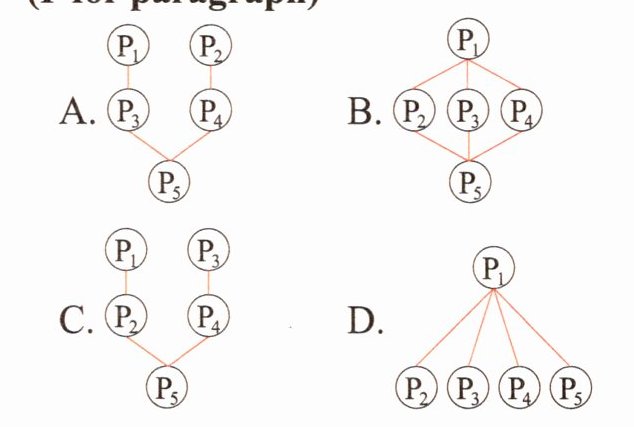
5 What is the structure of the passage?
(P for paragraph)
Monday/Week 2
n June 20, six volunteer teachers went to
Tielu Primary School in the mountains.
They turned two classrooms into a lab,
a history corner, and a VR room. Fifteen students came
every day for five days.
They learned about science,
culture, and sports.
In the morning, they
had history class. They read old stories and used VR
headsets (虚拟现实头戴式显示器). *A student surnamed
Zhu saw the Forbidden City in Beijing with the headset. "I
never went to Beijing, but now I know about it," he said.
Other students loved history too. One said, "Our culture
is so big and deep!" Another said, "I want to protect our
culture when I grow up."
After lunch, it was science time. They watched the
teacher do a chemistry experiment. They also learned
about flying basics (基本原理). They made paper planes.
By Friday, they could make models by themselves.
Every day ended with sports science. A Beijing
shooting (射击) coach taught them online. A fifth grader
said, "I never learned to shoot at school! I hope to visit
Beijing one day."
The volunteers say this is just the start. "Education
takes time," said Lu Youming, the leader. The team wants
to raise money to build a permanent (永久的) lab and a
VR room.
▶题型: 阅读理解
▶主题: 公益事业
▶语篇类型: 记叙文
▶词数: 203
▶难度: ■■■■
▶建议用时: 6分钟
1 What can we know about the volunteers?
A. They all came from Beijing.
B. They try to help countryside students.
C. They stayed at the school for two weeks.
D. They only taught history classes.
2 Why did the students use VR
headsets in class?
A. To read history books.
B. To learn about shooting.
C. To do chemical experiments.
D. To learn about Chinese culture.
3 What can we guess from Paragraph 3
about the science classes?
A. The students' ability improved.
B. The students wanted to see real planes.
C. The students had difficulty doing
the experiments.
D. The students thought science
classes were difficult.
4 Which of the following may be the
best end of the story?
A. And they will leave for the school
next week.
B. So Lu Youming will become a
history teacher.
C. But the students will give up
science experiments.
D. Then Tielu students can keep
learning and exploring.
5 What is the structure of the passage?
(P for paragraph)
答案
Monday
6月20日,六名志愿者教师来到大山里的铁炉小学。他们改造教室、开设课程。他们教授学生们学科学、文化和体育知识。这些志愿者计划筹款建永久实验室和虚拟现实教室,供铁炉小学学生持续探索学习。
1. B 推理判断题。第一段提及志愿者在山村学校改造教室、开设课程的行为。由此可知,他们设法帮助乡村学生。
2. D 推理判断题。由第二段第三句可知,一个学生表示他通过VR头显看到了故宫。由此可推知,学生们在课堂上使用VR头显是为了学习中国文化。
3. A 推理判断题。第三段提到学生从一开始观看化学实验、学习飞行原理、制作纸飞机,到周五能自己独立制作模型。由此可推知,在科学课上学生们的能力得到提高。
4. D 推理判断题。上文提及该团队想要为建造永久的实验室和虚拟现实教室筹集资金。由此可推知,文章最有可能的结尾是:那么,铁炉小学的学生就可以继续学习和探索。
5. B 篇章结构题。通读全文可知,第一段总述志愿者去大山里的小学支教;第二、三、四段按时间顺序介绍支教老师每天给学生们上的课程;最后一段介绍志愿者未来打算。由此可推知,本文为总分总的结构。
6月20日,六名志愿者教师来到大山里的铁炉小学。他们改造教室、开设课程。他们教授学生们学科学、文化和体育知识。这些志愿者计划筹款建永久实验室和虚拟现实教室,供铁炉小学学生持续探索学习。
1. B 推理判断题。第一段提及志愿者在山村学校改造教室、开设课程的行为。由此可知,他们设法帮助乡村学生。
2. D 推理判断题。由第二段第三句可知,一个学生表示他通过VR头显看到了故宫。由此可推知,学生们在课堂上使用VR头显是为了学习中国文化。
3. A 推理判断题。第三段提到学生从一开始观看化学实验、学习飞行原理、制作纸飞机,到周五能自己独立制作模型。由此可推知,在科学课上学生们的能力得到提高。
4. D 推理判断题。上文提及该团队想要为建造永久的实验室和虚拟现实教室筹集资金。由此可推知,文章最有可能的结尾是:那么,铁炉小学的学生就可以继续学习和探索。
5. B 篇章结构题。通读全文可知,第一段总述志愿者去大山里的小学支教;第二、三、四段按时间顺序介绍支教老师每天给学生们上的课程;最后一段介绍志愿者未来打算。由此可推知,本文为总分总的结构。
