

 登录
登录
一、★★★ [跨学科·地理] 阅读理解 主题:人与社会——宇宙探索 学科素养:语言能力 词数:约280 建议用时:7分钟
① According to Ken Croswell, the Sun shines all the time. It shines during the day when we see it, and even at night when we don’t.
② As the Earth turns, sometimes we face the Sun. That’s when we get day. When the Earth’s spin(自转)turns us away from the Sun and we are in the Earth’s shadow, we get night. When people on the opposite side of the Earth face the Sun, those people have day while we have night.
③ The Moon is a different story. Unlike the Sun, it doesn’t make its own light. Moonlight is actually the Sun’s light reflecting(反射)the Moon back to us.
④ The Sun lights up only the side of the Moon that faces the Sun. At Full Moon, the Moon is on the opposite(相反的)side of the Earth from the Sun. Then the side of the Moon facing the Earth is all lit up. During Full Moon, the Moon rises around sunset, shines all night, and sets around sunrise. Since the moonlight is so bright, you can sometimes see it during the day, too. A few days before Full Moon, if you look east in the afternoon, you may see the Moon in the sky. After Full Moon, you may find it if you look west in the morning.
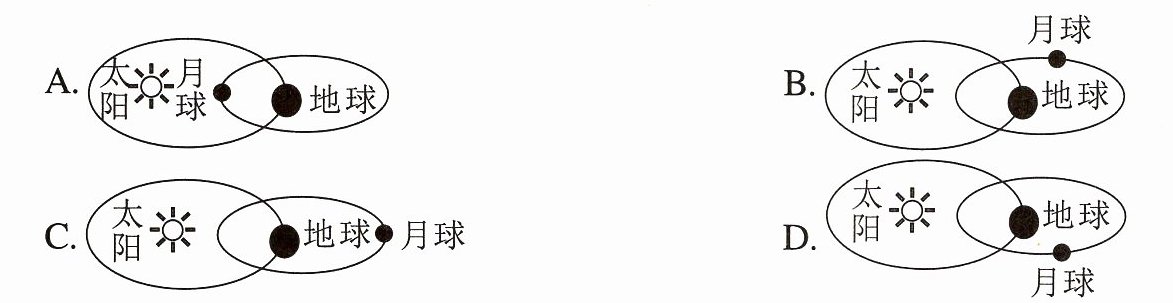
⑤ The Moon is the most difficult to see at New Moon, when its orbit(轨道)puts it between the Earth and the Sun. Then, the side of the Moon facing the Earth is dark and we can’t see the Moon at all.
(
A. The Sun rules the Moon.
B. The Sun shines during both day and night.
C. The Sun lights up all the sides of the Moon.
D. The Sun shines everywhere on the Earth at the same time.
(
A. The shape of the Earth.
B. The force from the Sun.
C. The dark area on the Earth.
D. The opposite side of the Sun.
(
A. How the Moon makes its light.
B. Why there is day and night on the Earth.
C. Why the Moon can be seen during the day.
D. What the difference is between Full Moon and New Moon.
(新 考法·图文转换 Which of the following pictures shows us New Moon?
(
A. Culture.
B. Technology.
C. Education.
D. Science.
① According to Ken Croswell, the Sun shines all the time. It shines during the day when we see it, and even at night when we don’t.
② As the Earth turns, sometimes we face the Sun. That’s when we get day. When the Earth’s spin(自转)turns us away from the Sun and we are in the Earth’s shadow, we get night. When people on the opposite side of the Earth face the Sun, those people have day while we have night.
③ The Moon is a different story. Unlike the Sun, it doesn’t make its own light. Moonlight is actually the Sun’s light reflecting(反射)the Moon back to us.
④ The Sun lights up only the side of the Moon that faces the Sun. At Full Moon, the Moon is on the opposite(相反的)side of the Earth from the Sun. Then the side of the Moon facing the Earth is all lit up. During Full Moon, the Moon rises around sunset, shines all night, and sets around sunrise. Since the moonlight is so bright, you can sometimes see it during the day, too. A few days before Full Moon, if you look east in the afternoon, you may see the Moon in the sky. After Full Moon, you may find it if you look west in the morning.
⑤ The Moon is the most difficult to see at New Moon, when its orbit(轨道)puts it between the Earth and the Sun. Then, the side of the Moon facing the Earth is dark and we can’t see the Moon at all.
(
B
)1. What can we know about the Sun?A. The Sun rules the Moon.
B. The Sun shines during both day and night.
C. The Sun lights up all the sides of the Moon.
D. The Sun shines everywhere on the Earth at the same time.
(
C
)2. Which of the following best explains the underlined word “shadow” in Paragraph 2?A. The shape of the Earth.
B. The force from the Sun.
C. The dark area on the Earth.
D. The opposite side of the Sun.
(
C
)3. What does Paragraph 4 mainly talk about?A. How the Moon makes its light.
B. Why there is day and night on the Earth.
C. Why the Moon can be seen during the day.
D. What the difference is between Full Moon and New Moon.
(
A
)4. (
D
)5. What is the theme(主题)of the text?A. Culture.
B. Technology.
C. Education.
D. Science.
答案
1.B 2.C 3.C 4.A 5.D
【主旨大意】本文主要科普了一些关于太阳、月球和地球的知识。
1. B 【点拨】细节理解题。根据“...the Sun shines all the time. It shines during the day when we see it, and even at night when we don't.”可知,太阳一直照耀着。
2. C 【点拨】词义猜测题。根据“When the Earth's spin(自转)turns us away from the Sun and we are in the Earth's shadow, we get night.”可知,shadow 指地球上的黑暗区域。
3. C 【点拨】段落大意题。根据“During Full Moon, the Moon rises around sunset... you can sometimes see it during the day, too.”可知,第四段主要讲述了为什么在白天可以看到月亮。
4. A 【点拨】推理判断题。根据“The Moon is the most difficult to see... we can't see the Moon at all.”并结合图片可推知,A 选项符合。
5. D 【点拨】主旨大意题。通读全文可知,文章主要科普了一些关于太阳、月球和地球的知识,所以本文主题为科学。
【主旨大意】本文主要科普了一些关于太阳、月球和地球的知识。
1. B 【点拨】细节理解题。根据“...the Sun shines all the time. It shines during the day when we see it, and even at night when we don't.”可知,太阳一直照耀着。
2. C 【点拨】词义猜测题。根据“When the Earth's spin(自转)turns us away from the Sun and we are in the Earth's shadow, we get night.”可知,shadow 指地球上的黑暗区域。
3. C 【点拨】段落大意题。根据“During Full Moon, the Moon rises around sunset... you can sometimes see it during the day, too.”可知,第四段主要讲述了为什么在白天可以看到月亮。
4. A 【点拨】推理判断题。根据“The Moon is the most difficult to see... we can't see the Moon at all.”并结合图片可推知,A 选项符合。
5. D 【点拨】主旨大意题。通读全文可知,文章主要科普了一些关于太阳、月球和地球的知识,所以本文主题为科学。
解析
【分析】
本题为跨学科英语阅读理解题,需先通读全文把握核心内容(太阳、月球、地球的天文知识),再针对不同题型逐一突破:1.细节理解题需定位原文关于太阳的描述;2.词义猜测题结合上下文语境推断生词含义;3.段落大意题提炼第四段的核心内容;4.图文转换题需结合新月的天文特征(月球在地球与太阳之间)匹配图片;5.主旨大意题需总结全文的核心主题。
【解析】
1. 细节理解题:根据原文第①段“the Sun shines all the time. It shines during the day when we see it, and even at night when we don’t.”可知,太阳白天和夜晚都在照耀,故选B。
2. 词义猜测题:根据第②段“we are in the Earth’s shadow, we get night”可知,处于地球的该区域时是夜晚,即黑暗区域,故选C。
3. 段落大意题:第④段围绕满月展开,提到“you can sometimes see it during the day, too”,核心是解释为何白天能看到月亮,故选C。
4. 图文转换题:根据第⑤段“New Moon... its orbit puts it between the Earth and the Sun”,新月时月球在地球与太阳之间,对应图片A,故选A。
5. 主旨大意题:全文科普太阳、月球、地球的天文知识,主题为科学,故选D。
【答案】
1.B 2.C 3.C 4.A 5.D
【知识点】
英语阅读理解、细节理解题、词义猜测题
【点评】
本题为跨学科英语阅读题,融合地理天文知识,题型覆盖细节理解、词义猜测、段落大意、图文转换、主旨大意,全面考查学生的阅读理解能力与跨学科知识应用能力,题目设置合理,难度适中。
【难度系数】
0.6
本题为跨学科英语阅读理解题,需先通读全文把握核心内容(太阳、月球、地球的天文知识),再针对不同题型逐一突破:1.细节理解题需定位原文关于太阳的描述;2.词义猜测题结合上下文语境推断生词含义;3.段落大意题提炼第四段的核心内容;4.图文转换题需结合新月的天文特征(月球在地球与太阳之间)匹配图片;5.主旨大意题需总结全文的核心主题。
【解析】
1. 细节理解题:根据原文第①段“the Sun shines all the time. It shines during the day when we see it, and even at night when we don’t.”可知,太阳白天和夜晚都在照耀,故选B。
2. 词义猜测题:根据第②段“we are in the Earth’s shadow, we get night”可知,处于地球的该区域时是夜晚,即黑暗区域,故选C。
3. 段落大意题:第④段围绕满月展开,提到“you can sometimes see it during the day, too”,核心是解释为何白天能看到月亮,故选C。
4. 图文转换题:根据第⑤段“New Moon... its orbit puts it between the Earth and the Sun”,新月时月球在地球与太阳之间,对应图片A,故选A。
5. 主旨大意题:全文科普太阳、月球、地球的天文知识,主题为科学,故选D。
【答案】
1.B 2.C 3.C 4.A 5.D
【知识点】
英语阅读理解、细节理解题、词义猜测题
【点评】
本题为跨学科英语阅读题,融合地理天文知识,题型覆盖细节理解、词义猜测、段落大意、图文转换、主旨大意,全面考查学生的阅读理解能力与跨学科知识应用能力,题目设置合理,难度适中。
【难度系数】
0.6
