

 登录
登录
一、用括号内所给单词的适当形式填空。
1. —Are the visitors all from
—No, there are only 5
2. —Will Mr Lin attend the meeting?
—Well, that
3. The bowl is very
4. Every family should keep a
5. (枣庄改编)Even if it’s full of
1. —Are the visitors all from
Germany
?—No, there are only 5
Germans
in the group. (German)2. —Will Mr Lin attend the meeting?
—Well, that
depends
(depend). He may not have time.3. The bowl is very
valuable
(value). Please take good care of it.4. Every family should keep a
medical
(medicine) kit(工具包)at home for emergencies.5. (枣庄改编)Even if it’s full of
challenges
(challenge) to tell China’s stories in English, we should face them bravely.答案
1. Germany; Germans 2. depends 3. valuable
4. medical 5. challenges
4. medical 5. challenges
解析
【分析】本题为英语词汇适当形式填空题,需结合句子结构、语法规则及语境,对所给单词进行词性转换或形式变化。解题思路:先判断每个空缺处所需的词性(如名词、形容词、动词形式等),再依据单词的变化规则(如名词的国家/国人转换、动词第三人称单数、形容词构成、名词复数等)确定正确形式。
【解析】1. 第一空:be from后接表示国家的名词,German对应的国家是Germany;第二空:数词5后接可数名词复数,German表示“德国人”时复数为Germans,故填Germany; Germans。2. 主语that为第三人称单数,一般现在时中动词需用第三人称单数形式,depend的三单形式为depends,故填depends。3. be动词后需接形容词作表语,value的形容词形式为valuable,故填valuable。4. 此处修饰名词kit,需用形容词,medicine的形容词形式为medical,故填medical。5. be full of后接可数名词复数,challenge的复数形式为challenges,故填challenges。
【答案】1. Germany; Germans 2. depends 3. valuable 4. medical 5. challenges
【知识点】名词的转换与复数、动词第三人称单数、形容词的构成
【点评】本题考查初中英语基础词汇的词性转换及形式变化,属于常规基础题型,需掌握常见单词的不同词性形式、名词的国家与国人转换规则及复数变化,注重日常词汇积累,难度适中。
【难度系数】0.6
【解析】1. 第一空:be from后接表示国家的名词,German对应的国家是Germany;第二空:数词5后接可数名词复数,German表示“德国人”时复数为Germans,故填Germany; Germans。2. 主语that为第三人称单数,一般现在时中动词需用第三人称单数形式,depend的三单形式为depends,故填depends。3. be动词后需接形容词作表语,value的形容词形式为valuable,故填valuable。4. 此处修饰名词kit,需用形容词,medicine的形容词形式为medical,故填medical。5. be full of后接可数名词复数,challenge的复数形式为challenges,故填challenges。
【答案】1. Germany; Germans 2. depends 3. valuable 4. medical 5. challenges
【知识点】名词的转换与复数、动词第三人称单数、形容词的构成
【点评】本题考查初中英语基础词汇的词性转换及形式变化,属于常规基础题型,需掌握常见单词的不同词性形式、名词的国家与国人转换规则及复数变化,注重日常词汇积累,难度适中。
【难度系数】0.6
二、从方框中选择适当的单词或短语并用其正确形式填空。
task come over public
as long as depend on
1.
2. The fast development of
3. We should learn some basic(基本的) life skills since we must
4. Do you want
5. (宿迁改编) The
task come over public
as long as depend on
1.
As long as
you take your mistakes seriously, you can learn a lot from them.2. The fast development of
public
transport helps people to save much time on the trip.3. We should learn some basic(基本的) life skills since we must
depend on
ourselves some day.4. Do you want
to come over
this Sunday? My mum will make homemade cookies!5. (宿迁改编) The
task
is very difficult, but all of us will help you. After all, many hands make light work.答案
1. As long as 2. public 3. depend on 4. to come over 5. task
解析
【分析】
首先明确方框内的词汇/短语:task(任务,名词)、come over(过来,动词短语)、public(公共的,形容词;公众,名词)、as long as(只要,连词短语)、depend on(依靠,动词短语)。再结合每个句子的语境、语法要求逐一分析:
1. 句子缺少引导条件状语从句的连词,需选连词短语,符合“只要认真对待错误就能学到很多”的逻辑;
2. 此处修饰名词transport,需形容词,结合固定搭配“公共交通”确定;
3. 情态动词must后接动词原形,结合句意“依靠自己”选对应短语;
4. 固定搭配want to do sth,需用动词不定式形式;
5. 定冠词the后需名词,结合句意“任务很难”选对应名词。
【解析】
1. 空格处需连词引导条件状语从句,方框中as long as意为“只要”,符合语境,故填As long as;
2. 此处修饰名词transport,需形容词,public transport为固定短语“公共交通”,故填public;
3. 情态动词must后接动词原形,depend on oneself意为“依靠自己”,符合句意,故填depend on;
4. 固定搭配want to do sth(想要做某事),come over意为“过来”,故填to come over;
5. 定冠词the后需名词,结合句意“这个任务很难”,方框中task符合,故填task。
【答案】
1. As long as 2. public 3. depend on 4. to come over 5. task
【知识点】
连词短语、固定搭配、动词短语
【点评】
本题为选词填空题型,主要考查词汇的词义辨析、固定搭配及语境运用,需学生掌握方框内词汇的含义与用法,结合句子语法结构和逻辑关系选择正确形式,难度适中,是初中英语常见基础题型。
【难度系数】
0.6
首先明确方框内的词汇/短语:task(任务,名词)、come over(过来,动词短语)、public(公共的,形容词;公众,名词)、as long as(只要,连词短语)、depend on(依靠,动词短语)。再结合每个句子的语境、语法要求逐一分析:
1. 句子缺少引导条件状语从句的连词,需选连词短语,符合“只要认真对待错误就能学到很多”的逻辑;
2. 此处修饰名词transport,需形容词,结合固定搭配“公共交通”确定;
3. 情态动词must后接动词原形,结合句意“依靠自己”选对应短语;
4. 固定搭配want to do sth,需用动词不定式形式;
5. 定冠词the后需名词,结合句意“任务很难”选对应名词。
【解析】
1. 空格处需连词引导条件状语从句,方框中as long as意为“只要”,符合语境,故填As long as;
2. 此处修饰名词transport,需形容词,public transport为固定短语“公共交通”,故填public;
3. 情态动词must后接动词原形,depend on oneself意为“依靠自己”,符合句意,故填depend on;
4. 固定搭配want to do sth(想要做某事),come over意为“过来”,故填to come over;
5. 定冠词the后需名词,结合句意“这个任务很难”,方框中task符合,故填task。
【答案】
1. As long as 2. public 3. depend on 4. to come over 5. task
【知识点】
连词短语、固定搭配、动词短语
【点评】
本题为选词填空题型,主要考查词汇的词义辨析、固定搭配及语境运用,需学生掌握方框内词汇的含义与用法,结合句子语法结构和逻辑关系选择正确形式,难度适中,是初中英语常见基础题型。
【难度系数】
0.6
三、微语篇练词汇 从方框中选择适当的单词或短语并用其正确形式填空。
creative replace traffic solve depend on
Future transport systems will change greatly. Self-driving cars may 1.
creative replace traffic solve depend on
Future transport systems will change greatly. Self-driving cars may 1.
replace
human drivers. Accidents will be fewer and 2. traffic
will flow smoothly. This will save time and energy. Some people worry robots will take over all jobs, leaving humans jobless. But experts say 3. creativity
is key. Humans can 4. solve
unexpected problems and think of new ideas. In some places of China, there are flying cars. Maybe people will fly to work every morning in the future. These ideas sound fun, but real progress 5. depends on
technology and teamwork.答案
1. replace 2. traffic 3. creativity 4. solve 5. depends on
解析
【分析】首先通读短文理解整体语境,再结合方框内的单词或短语,根据句子的语法结构(如情态动词后接动词原形、主语的词性要求、主谓一致等)选择并调整单词形式:1. 情态动词may后需接动词原形,结合“自动驾驶汽车替代人类司机”的语境选replace;2. 句子缺主语,结合“顺畅流动”的语境选名词traffic;3. 句子缺主语,需用名词,将形容词creative转换为名词creativity;4. 情态动词can后接动词原形,结合“解决意外问题”的语境选solve;5. 句子缺谓语,主语progress为不可数名词,一般现在时谓语用第三人称单数,结合“依赖技术和团队合作”的语境选depends on。
【解析】1. 空格前有情态动词may,后接动词原形,根据句意“自动驾驶汽车可能替代人类司机”,填replace;2. 空格后是“flow smoothly”(顺畅流动),结合语境指交通,填名词traffic;3. 空格处作主语,需用名词,形容词creative的名词形式是creativity,意为“创造力”,符合“是关键”的语境;4. 空格前有情态动词can,后接动词原形,“solve problems”是固定搭配,意为解决问题,填solve;5. 空格处作谓语,主语real progress是不可数名词,一般现在时谓语动词用第三人称单数,“depend on”表示依赖,故填depends on。
【答案】1. replace 2. traffic 3. creativity 4. solve 5. depends on
【知识点】选词填空、词性转换、一般现在时主谓一致
【点评】本题考查词汇在语境中的正确运用,需结合句意和语法规则,难度适中,适合基础阶段学生练习。
【难度系数】0.6
【解析】1. 空格前有情态动词may,后接动词原形,根据句意“自动驾驶汽车可能替代人类司机”,填replace;2. 空格后是“flow smoothly”(顺畅流动),结合语境指交通,填名词traffic;3. 空格处作主语,需用名词,形容词creative的名词形式是creativity,意为“创造力”,符合“是关键”的语境;4. 空格前有情态动词can,后接动词原形,“solve problems”是固定搭配,意为解决问题,填solve;5. 空格处作谓语,主语real progress是不可数名词,一般现在时谓语动词用第三人称单数,“depend on”表示依赖,故填depends on。
【答案】1. replace 2. traffic 3. creativity 4. solve 5. depends on
【知识点】选词填空、词性转换、一般现在时主谓一致
【点评】本题考查词汇在语境中的正确运用,需结合句意和语法规则,难度适中,适合基础阶段学生练习。
【难度系数】0.6
四、阅读理解。
Spring is here, and it is time to enjoy West Lake Longjing tea. Usually, we think of workers picking tea leaves by hand. But now, some metal(金属) workers are picking Longjing tea—they are tea-picking robots!
In a Hangzhou tea garden, a smart tea-picking robot developed by Zhejiang Sci-Tech University set to work for the first time. “We took thousands of pictures of new tea buds(芽) and make the robot learn them carefully. The robot uses an AI model(模型) to find the buds that it needs to pick,” said Professor Chen Jianneng, Party branch secretary(党支部书记) of the research team. This lets the robot find the right tea buds about 90 percent of the time.
The tea-picking robot’s arm pulls and then sucks(吸) up the tea buds. These buds are quickly moved into a special box. After the robot gathers(聚集) all the buds from the area(区域) it’s working at, it moves the buds from the box to a main box that holds everything it collects.
The robot was made because there are not enough people to pick tea. In Zhejiang, about 400,000 more pickers are needed now. “Picking is the biggest challenge for the development of the tea industry,” said Professor Wu Chuanyu, who leads the research team.
“Tea-picking robots are a trend(趋势) of the future,” said Wu. “About five years from now, the robots will do the job of picking Longjing tea instead of people,” Wu added.
1. According to Paragraph 2, how can the robot find the right tea buds?
A. By using an AI model.
B. By taking pictures of tea buds.
C. By making an AI model.
D. By learning pictures of tea buds.
2. What does Paragraph 3 mainly tell us?
A. Where the robot works.
B. How the robot works.
C. How the robot is made.
D. Why the box is special.
3. According to Paragraph 4, why do people use robots to pick tea?
A. Using robots costs less money.
B. The tea industry doesn’t need people.
C. There are not enough tea pickers.
D. Robots do much better in picking tea.
4. Which is the structure of the passage?
(①=Paragraph 1 ②=Paragraph 2, …)
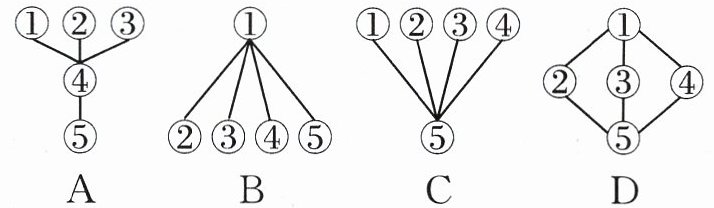
A
B
C
D
5. What will happen to West Lake Longjing tea according to Wu?
A. Robots might do the job of making tea soon.
B. There will be few people drinking Longjing tea.
C. Robots can help taste the tea in the near future.
D. There may be few human pickers in five years.

Spring is here, and it is time to enjoy West Lake Longjing tea. Usually, we think of workers picking tea leaves by hand. But now, some metal(金属) workers are picking Longjing tea—they are tea-picking robots!
In a Hangzhou tea garden, a smart tea-picking robot developed by Zhejiang Sci-Tech University set to work for the first time. “We took thousands of pictures of new tea buds(芽) and make the robot learn them carefully. The robot uses an AI model(模型) to find the buds that it needs to pick,” said Professor Chen Jianneng, Party branch secretary(党支部书记) of the research team. This lets the robot find the right tea buds about 90 percent of the time.
The tea-picking robot’s arm pulls and then sucks(吸) up the tea buds. These buds are quickly moved into a special box. After the robot gathers(聚集) all the buds from the area(区域) it’s working at, it moves the buds from the box to a main box that holds everything it collects.
The robot was made because there are not enough people to pick tea. In Zhejiang, about 400,000 more pickers are needed now. “Picking is the biggest challenge for the development of the tea industry,” said Professor Wu Chuanyu, who leads the research team.
“Tea-picking robots are a trend(趋势) of the future,” said Wu. “About five years from now, the robots will do the job of picking Longjing tea instead of people,” Wu added.
1. According to Paragraph 2, how can the robot find the right tea buds?
A. By using an AI model.
B. By taking pictures of tea buds.
C. By making an AI model.
D. By learning pictures of tea buds.
2. What does Paragraph 3 mainly tell us?
A. Where the robot works.
B. How the robot works.
C. How the robot is made.
D. Why the box is special.
3. According to Paragraph 4, why do people use robots to pick tea?
A. Using robots costs less money.
B. The tea industry doesn’t need people.
C. There are not enough tea pickers.
D. Robots do much better in picking tea.
4. Which is the structure of the passage?
(①=Paragraph 1 ②=Paragraph 2, …)
A
B
C
D
5. What will happen to West Lake Longjing tea according to Wu?
A. Robots might do the job of making tea soon.
B. There will be few people drinking Longjing tea.
C. Robots can help taste the tea in the near future.
D. There may be few human pickers in five years.
答案
1.A 2.B 3.C 4.D 5.D
解析
【分析】
本题为英语阅读理解题,需针对每个问题定位原文对应段落,提取关键信息或概括段落/全文内容作答:1. 第1题定位第2段,查找机器人寻找茶芽的方式;2. 第2题定位第3段,概括段落核心内容;3. 第3题定位第4段,明确使用采茶机器人的原因;4. 第4题梳理全文段落逻辑,判断文章结构;5. 第5题定位第5段,提取吴教授关于未来的表述,匹配对应选项。
【解析】
1. 第1题:根据第2段关键句“The robot uses an AI model(模型) to find the buds that it needs to pick”可知,机器人通过使用AI模型找到正确茶芽,故选A;
2. 第2题:第3段详细介绍了机器人的手臂动作、收集茶芽的完整流程,主要说明机器人的工作方式,故选B;
3. 第3题:根据第4段关键句“The robot was made because there are not enough people to pick tea”可知,使用采茶机器人是因为采茶人手不足,故选C;
4. 第4题:文章段落逻辑为:①引出西湖龙井采茶机器人→②介绍机器人研发及找芽原理→③说明机器人工作流程→④阐述研发原因→⑤展望未来趋势,对应结构选项D;
5. 第5题:根据第5段吴教授的表述“About five years from now, the robots will do the job of picking Longjing tea instead of people”可知,五年后机器人将代替人工采茶,即很少有人工采茶者,故选D。
【答案】
1.A 2.B 3.C 4.D 5.D
【知识点】
英语阅读理解、细节理解、主旨大意
【点评】
本题考查英语阅读理解的细节查找、主旨概括及文章结构分析能力,需学生精准定位原文信息,难度适中,适合初中阶段学生巩固阅读技巧。
【难度系数】
0.5
本题为英语阅读理解题,需针对每个问题定位原文对应段落,提取关键信息或概括段落/全文内容作答:1. 第1题定位第2段,查找机器人寻找茶芽的方式;2. 第2题定位第3段,概括段落核心内容;3. 第3题定位第4段,明确使用采茶机器人的原因;4. 第4题梳理全文段落逻辑,判断文章结构;5. 第5题定位第5段,提取吴教授关于未来的表述,匹配对应选项。
【解析】
1. 第1题:根据第2段关键句“The robot uses an AI model(模型) to find the buds that it needs to pick”可知,机器人通过使用AI模型找到正确茶芽,故选A;
2. 第2题:第3段详细介绍了机器人的手臂动作、收集茶芽的完整流程,主要说明机器人的工作方式,故选B;
3. 第3题:根据第4段关键句“The robot was made because there are not enough people to pick tea”可知,使用采茶机器人是因为采茶人手不足,故选C;
4. 第4题:文章段落逻辑为:①引出西湖龙井采茶机器人→②介绍机器人研发及找芽原理→③说明机器人工作流程→④阐述研发原因→⑤展望未来趋势,对应结构选项D;
5. 第5题:根据第5段吴教授的表述“About five years from now, the robots will do the job of picking Longjing tea instead of people”可知,五年后机器人将代替人工采茶,即很少有人工采茶者,故选D。
【答案】
1.A 2.B 3.C 4.D 5.D
【知识点】
英语阅读理解、细节理解、主旨大意
【点评】
本题考查英语阅读理解的细节查找、主旨概括及文章结构分析能力,需学生精准定位原文信息,难度适中,适合初中阶段学生巩固阅读技巧。
【难度系数】
0.5
