

 登录
登录
一、根据图片提示填空。

1. — Do you like the
— Yes, I do. It's cute.
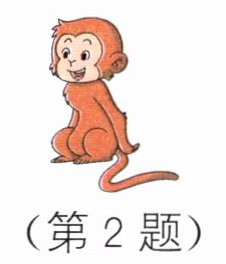
2. Look at the funny
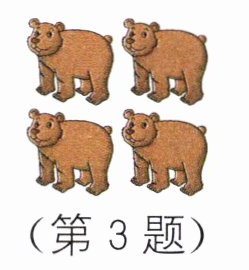
3. I can see some
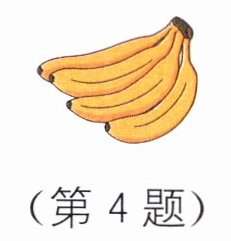
4. Would you like some
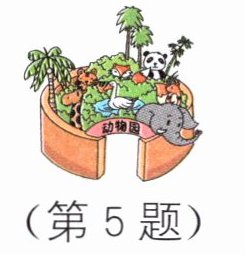
5. Let's go to the
1. — Do you like the
panda
?— Yes, I do. It's cute.
2. Look at the funny
monkey
.3. I can see some
bears
.4. Would you like some
bananas
?5. Let's go to the
zoo
.答案
1. panda 2. monkey 3. bears
解析:根据图片和 some 可知要用复数 bears。 4. bananas 解析:根据图片和 some 可知要用复数 bananas。 5. zoo
解析:根据图片和 some 可知要用复数 bears。 4. bananas 解析:根据图片和 some 可知要用复数 bananas。 5. zoo
二、用所给词的适当形式填空。
1. Look! The
2. This
3. — Do you like
— Yes, I do. They
4. I
5. — Do you like
— No, I don't.
1. Look! The
elephants
(elephant) are in the zoo.2. This
monkey
(monkey) loves to eat.3. — Do you like
bears
(bear)?— Yes, I do. They
are
(be) cute.4. I
don't
(do not) like dogs. I'm afraid(害怕) of them.5. — Do you like
fish
(fish)?— No, I don't.
答案
1. elephants 2. monkey 3. bears;are 解析:like + 可数名词复数,泛指喜欢某一类事物。 4. don't 5. fish
解析
翻译:
二、用所给单词的适当形式填空。
1. 看!这些大象(elephant)在动物园里。
2. 这只猴子(monkey)爱吃东西。
3. ——你喜欢熊(bear)吗?
——是的,我喜欢。它们很可爱。
4. 我不喜欢狗。我害怕它们。
5. ——你喜欢鱼(fish)吗?
——不,我不喜欢。
二、用所给单词的适当形式填空。
1. 看!这些大象(elephant)在动物园里。
2. 这只猴子(monkey)爱吃东西。
3. ——你喜欢熊(bear)吗?
——是的,我喜欢。它们很可爱。
4. 我不喜欢狗。我害怕它们。
5. ——你喜欢鱼(fish)吗?
——不,我不喜欢。
三、单项选择。
(
— They're cute!
A.monkey
B.duck
C.pandas
(
C
) 1.— Look at the pandas
!— They're cute!
A.monkey
B.duck
C.pandas
答案
1. C 解析:根据 They're 可知空处用复数。
解析
翻译:
三、单项选择。
(C)1. —看这些熊猫!
—它们很可爱!
A. 猴子
B. 鸭子
C. 熊猫
三、单项选择。
(C)1. —看这些熊猫!
—它们很可爱!
A. 猴子
B. 鸭子
C. 熊猫
(
— I like elephants
A.too
B.to
C.two
A
) 2.— I like elephants.— I like elephants
too
.A.too
B.to
C.two
答案
2. A
解析
翻译:
(
——我也喜欢大象。
A.也
B.朝;向
C.二
(
A
)2. ——我喜欢大象。——我也喜欢大象。
A.也
B.朝;向
C.二
(
— No, I don't.
A.lions
B.giraffe
C.banana
A
) 3.— Do you like lions
?— No, I don't.
A.lions
B.giraffe
C.banana
答案
3. A
解析
翻译:
(
——不,我不喜欢。
A. 狮子
B. 长颈鹿
C. 香蕉
(
A
)3. ——你喜欢狮子吗?——不,我不喜欢。
A. 狮子
B. 长颈鹿
C. 香蕉
(
— Don't feed my cat, please.
A.Do
B.Would
C.Should
B
) 4.— Would
you like some oranges?— Don't feed my cat, please.
A.Do
B.Would
C.Should
答案
4. B
解析
翻译:
(
— 请不要喂我的猫。
A. 助动词,无实义(用于构成疑问句等)
B. 想要(用于“Would you like...”结构,询问对方是否想要某物)
C. 应该
(
B
)4. — 你想要一些橙子吗?— 请不要喂我的猫。
A. 助动词,无实义(用于构成疑问句等)
B. 想要(用于“Would you like...”结构,询问对方是否想要某物)
C. 应该
(
— That's
A.right
B.good
C.all right
C
) 5.— I'm sorry!— That's
all right
.A.right
B.good
C.all right
答案
5. C
解析
翻译:
(
——没关系。
A. 对的
B. 好的
C. 没关系
(
C
)5. ——对不起!——没关系。
A. 对的
B. 好的
C. 没关系
四、[新考法]读故事,根据句子描述选择相应的图片。
(
(
(
(
(
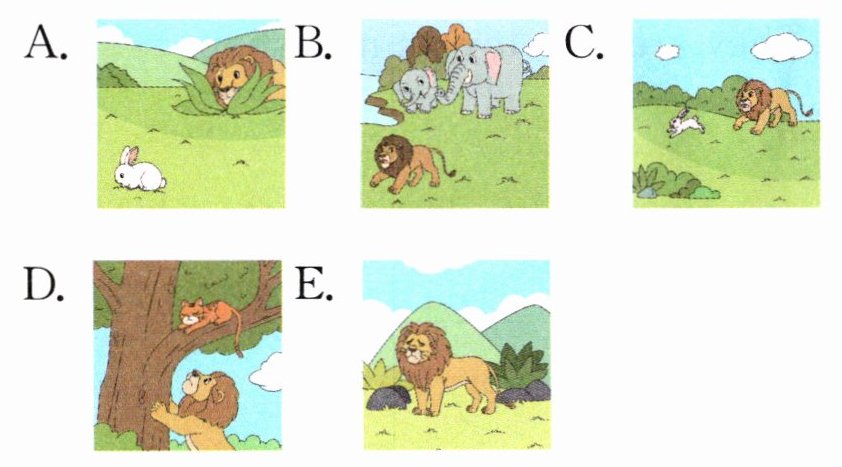
(
A
) 1. A lion is looking for food. He is behind a rabbit. He wants to eat the rabbit.(
C
) 2. The rabbit can run fast. The lion can't get the rabbit.(
B
) 3. The lion sees elephants. The elephants are too big. The lion runs away(逃跑).(
D
) 4. The lion sees a cat in the tree. But the lion can't climb the tree.(
E
) 5. The lion is sad. He has no food today.答案
1. A 2. C 3. B 4. D 5. E
解析
翻译:
四、[新考法]读故事,根据句子描述选择相应的图片。
(A)1. 一只狮子正在寻找食物。它在一只兔子的后面。它想吃掉这只兔子。
(C)2. 这只兔子跑得很快。狮子抓不到这只兔子。
(B)3. 狮子看到了大象。大象太大了。狮子逃跑了。
(D)4. 狮子看到树上有一只猫。但是狮子不会爬树。
(E)5. 狮子很伤心。它今天没有食物。
四、[新考法]读故事,根据句子描述选择相应的图片。
(A)1. 一只狮子正在寻找食物。它在一只兔子的后面。它想吃掉这只兔子。
(C)2. 这只兔子跑得很快。狮子抓不到这只兔子。
(B)3. 狮子看到了大象。大象太大了。狮子逃跑了。
(D)4. 狮子看到树上有一只猫。但是狮子不会爬树。
(E)5. 狮子很伤心。它今天没有食物。
