

 登录
一、完形填空
天星原创 One day, Andy was taking a walk and happened to pass by a pleasant farm. He noticed a farmer standing by the farm, looking worried. Feeling a little
Andy nodded in
Andy was surprised and asked again, “So, what have you planted then?” The farmer let out a deep sigh (叹息) and replied
There is no doubt that effective planning is a key driver of success. However, if you wish to do something, it is not a good idea to just
1. A. nervous B. familiar C. curious D. serious
2. A. shook B. washed C. nodded D. covered
3. A. price B. weather C. news D. invention
4. A. dirty B. wet C. short D. thin
5. A. argument B. secret
C. doubt D. understanding
6. A. glad B. disappointed
C. worried D. hopeful
7. A. risk B. lesson C. challenge D. tool
8. A. hardly B. luckily C. widely D. carefully
9. A. insects B. elephants
C. children D. bikes
10. A. hear of B. think about
C. agree with D. depend on
天星原创 One day, Andy was taking a walk and happened to pass by a pleasant farm. He noticed a farmer standing by the farm, looking worried. Feeling a little
C
1, he spoke to the farmer. “Why do you look so worried? Have you planted wheat?” Andy asked. The farmer slowly A
2 his head. His face was marked with worry as he spoke. “I’ve noticed that the B
3 isn’t great. I’m worried that if it rains, the newly planted wheat might get B
4. There’s a chance that it won’t sprout (发芽) at all, or even worse, it could rot (腐烂) in the soil.”Andy nodded in
D
5 and then asked, “Then, have you planted cotton?” The farmer thought for a time, and he said once again, “No, I’m C
6 about the insects this season. Those troublesome things might come and do harm to the newly planted cotton. I simply can’t take that A
7.”Andy was surprised and asked again, “So, what have you planted then?” The farmer let out a deep sigh (叹息) and replied
D
8, “I haven’t planted anything. I want to make sure that there’s no chance of rain harming my crops (庄稼) and no A
9 to destroy them.”There is no doubt that effective planning is a key driver of success. However, if you wish to do something, it is not a good idea to just
B
10 it. You can plan and consider for a long time, but there comes a point when action is important.1. A. nervous B. familiar C. curious D. serious
2. A. shook B. washed C. nodded D. covered
3. A. price B. weather C. news D. invention
4. A. dirty B. wet C. short D. thin
5. A. argument B. secret
C. doubt D. understanding
6. A. glad B. disappointed
C. worried D. hopeful
7. A. risk B. lesson C. challenge D. tool
8. A. hardly B. luckily C. widely D. carefully
9. A. insects B. elephants
C. children D. bikes
10. A. hear of B. think about
C. agree with D. depend on
答案
【解题导语】本文通过讲述一个农民因担心下雨或者昆虫会破坏庄稼,最终什么都没有栽种的故事告诉人们:如果你希望做一件事情,只是一味考虑它是不可取的,行动很重要。
1. C 根据下文 Andy 的问题可知,此处是说,Andy 感觉有点好奇,就跟那个农民讲话。nervous 紧张的;familiar 熟悉的;curious 好奇的;serious 严肃的。故选 C。
2. A 上文 Andy 问农民是否种过小麦了,下文说农民担心下雨造成小麦不发芽,甚至烂在土里,再结合第三段中的“I haven't planted anything”可知,农民没有种小麦。因此,此处是说,农民缓慢地摇了摇头。shake 摇头;wash 洗;nod 点头;cover 遮盖。故选 A。
3. B 根据下文中的“if it rains”可知,此处是说,农民注意到天气不好。price 价格;weather 天气;news 新闻;invention 发明。故选 B。
4. B 根据空前的“if it rains”可知,此处是说,农民担心如果下雨,新种的小麦可能会变得很湿。dirty 肮脏的;wet 湿的;short 短的;thin 细的。故选 B。
5. D 根据语境可知,此处是说,Andy 点头表示理解农民的做法。argument 争论;secret 秘密;doubt 怀疑;understanding 理解。故选 D。
6. C 下文说那些烦人的虫子可能会来损害新种的棉花,因此,此处是说,农民担心这个季节的昆虫。glad 乐意的;disappointed 失望的;worried 担心的;hopeful 满怀希望的。故选 C。
7. A 上文提到农民的担忧,下文说他什么都没有种,因此,此处是说,农民觉得自己不能冒险。risk 风险;lesson 教训;challenge 挑战;tool 工具。故选 A。
8. D 根据下文农民说的话可知,此处是说,农民深深叹了一口气,然后认真地回复 Andy。hardly 几乎不;luckily 幸运的是;widely 广泛地;carefully 认真地。故选 D。
9. A 根据第二段中的“...about the insects this season. Those troublesome things might come and do harm to the newly planted cotton”可知,此处是说,农民想确保没有雨和昆虫来破坏庄稼。故选 A。
10. B 根据上下文可知,此处是说,如果你希望做某事,只停留在考虑是不可取的。hear of 听说;think about 考虑;agree with 同意;depend on 依赖。故选 B。
解析
【分析】
做完形填空需先通读全文把握主旨(本文讲述农民因担忧下雨、昆虫等问题不敢种庄稼,最终明白需行动而非仅考虑的道理),再结合上下文语境、词义辨析及逻辑关系逐一解题:第1题根据Andy主动搭话的行为判断其情绪;第2题结合后文农民未种小麦的信息选动作;第3题由下文“下雨”的提示确定相关名词;第4题对应下雨对小麦的影响;第5题根据Andy理解农民的语境选名词;第6题结合后文“昆虫”的提示选形容词;第7题根据农民不敢种庄稼的态度选名词;第8题结合农民叹气后回答的状态选副词;第9题对应前文提到的昆虫;第10题根据主旨“行动重要”选短语。
【解析】
1. 选C。根据下文Andy主动与农民搭话询问原因,可知Andy是好奇的,curious符合语境;nervous(紧张的)、familiar(熟悉的)、serious(严肃的)均不符合。
2. 选A。由后文第三段“I haven’t planted anything”可知农民没种小麦,因此是摇头,shook(摇)符合;washed(洗)、nodded(点头,与未种小麦矛盾)、covered(遮盖)均不符合。
3. 选B。下文提到“if it rains”,说明农民注意到天气不好,weather符合;price(价格)、news(新闻)、invention(发明)均与下雨无关。
4. 选B。根据“if it rains”可知,下雨会让新种的小麦变湿,wet符合;dirty(脏的)、short(短的)、thin(细的)均不符合语境。
5. 选D。Andy理解农民的担忧,因此点头表示理解,understanding符合;argument(争论)、secret(秘密)、doubt(怀疑)均不符合。
6. 选C。下文提到“Those troublesome things might come and do harm to...cotton”,说明农民担心昆虫,worried符合;glad(高兴的)、disappointed(失望的)、hopeful(有希望的)均不符合。
7. 选A。农民因担忧昆虫不敢种棉花,即不能冒险,risk符合;lesson(教训)、challenge(挑战)、tool(工具)均不符合。
8. 选D。农民叹气后认真回答Andy的问题,carefully符合;hardly(几乎不)、luckily(幸运地)、widely(广泛地)均不符合语境。
9. 选A。前文提到农民担心昆虫,此处对应“没有昆虫来破坏庄稼”,insects符合;elephants(大象)、children(孩子)、bikes(自行车)均与文意无关。
10. 选B。根据主旨“行动重要”,可知不能只停留在考虑,think about符合;hear of(听说)、agree with(同意)、depend on(依赖)均不符合。
【答案】
1.C 2.A 3.B 4.B 5.D 6.C 7.A 8.D 9.A 10.B
【知识点】
完形填空解题、词义辨析、语境理解
【点评】
本文为故事类完形填空,通过农民因过度担忧而放弃种植的故事,传达“行动比一味考虑更重要”的道理,考查学生的阅读理解、逻辑推理及词汇运用能力,贴近学生生活,易于理解。
【难度系数】
0.5
二、从方框中选择最佳选项补全对话(有两项多余)
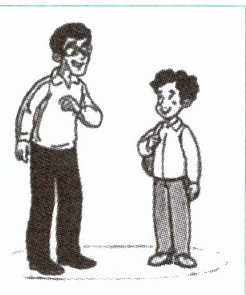
[2025汕头市金平区质量监测改编]
Mr. Lee: How are things going, Michael? Is it still hard to get used to the life here?
Michael: 1. I'm doing a lot better now.
Mr. Lee: Good. I've noticed that you are more active in class.
Michael: 2. But it has just taken me a while to fit in.
Mr. Lee: I see. After all, this is your first time living away from home, right?
Michael: Yes. 3. It's hard not to see them every day.
Mr. Lee: I am sorry to hear that. 4.
Michael: They've been so kind to me. I'm getting to know them better.
Mr. Lee: 5. I am sure everything will be more and more pleasant.
A. That's great.
B. What shall I do, Mr. Lee?
C. Thanks for asking, Mr. Lee.
D. How about your roommates?
E. What a surprise to see you here!
F. I've always been close to my parents.
G. I guess I'm feeling more confident now.
三、阅读理解
A
[新素材[2025合肥市第三十八中学教育集团信心信息卷改编]What's it like to have a cat as the headteacher of a kindergarten? It sounds crazy, but it is a real thing happening in Shenzhen.
The cat is now a superstar at Caitian Kindergarten. It has its own "office" and "mailbox". Its photos have also been posted in the corners of the kindergarten.
The story began when a homeless cat entered the kindergarten one January morning in 2021. The teachers found the cat was in poor health, and they took care of it. After the cat got well, the teachers wondered about the next step—should they let the cat go?
It was a hard decision for them, as both teachers and children had fallen in love with the cat. For this, they held a vote to decide on the cat's life. Most of them wanted it to stay and some even suggested "hiring" it as a headteacher. "It was an interesting idea. An 'inauguration(就职典礼)' was held for the cat immediately, and we gave it a new name—Xiaocai," said a teacher.
Xiaocai has a busy timetable every day, meeting its fans and receiving letters. Some fans were also surprised to receive "replies" from the "headteacher" when they shared their secrets with it.
"Hiring the cat as a headteacher makes both the children and teachers become kinder and more warm-hearted," a teacher said.
1. What special things does Xiaocai have as a headteacher?
A. Lots of nice clothes.
B. Several toy cars.
C. Many beautiful flowers.
D. Its office and mailbox.
2. Why did the teachers and children hold the vote?
A. To choose a name for the cat.
B. To choose an office for the cat.
C. To decide whether to let the cat go.
D. To decide when to hold the inauguration.
3. What does the fifth paragraph mainly talk about?
A. The headteacher's plans.
B. The headteacher's daily work.
C. The headteacher's fans.
D. The headteacher's replies.
4. What changes happened after Xiaocai became headteacher?
A. The children and teachers became kinder and more warm-hearted.
B. The school buildings were decorated more beautifully.
C. The students' test scores improved greatly.
D. More and more experienced teachers joined the kindergarten.
拓展设问
[新考法·开放性设问]What do you think is needed to take good care of a cat?
B
[2026泉州培元中学期中改编]When people think of Beijing, the hutong style always comes to mind. It is no exaggeration(夸张)to say within hutong lives the city's history. Every year, it receives more tourists from home and abroad than the high-rise buildings.
The word "hutong" referred to a place where people lived, which was borrowed from the Mongolian word to mean "water well" about 700 years ago. Until now, one can still find dry wells in hutong. Hutong we see today are made up of small paths(小路)formed by walls of siheyuan. They were built during the Yuan, Ming and Qing dynasties.
When the People's Republic of China was founded in 1949, there were more than 3,000 hutong. Most of the city's population lived in this traditional housing. But with the development of the city in the 1980s and early 1990s, many hutong were demolished to build roads, skyscrapers(摩天大楼)and modern houses.
The government has realized the importance of hutong to Chinese culture. So far, Beijing has listed 43 protected historical zones and increased its efforts to rebuild some key remains and older streets in the city. Nearly 500 hutong have been saved.
Hutong that still exist are like oases(绿洲)of calm in the noisy city. Although located downtown, hutong are free from the noise of traffic, as they are too narrow to bear much. Walking through them, it's common to see groups of elderly people sitting together playing cards, mahjong or Chinese chess. In the early mornings and evenings, they get together to practice traditional forms of exercise such as Tai Chi as well as dancing and singing folk songs or Beijing Opera. Hutong have become a museum of Beijing's folk customs and history.
5. What is the earliest meaning of the word "hutong"?
A. Small paths.
B. Siheyuan.
C. Water well.
D. A traditional house.
6. What does the underlined word "demolished" in Paragraph 3 mean?
A. Taken down.
B. Moved away.
C. Set up.
D. Cleaned up.
7. What can we know from the passage?
A. The number of hutong in Beijing is still over 3,000 now.
B. Most people in Beijing used to live in hutong in 1949.
C. Beijing has protected more than 1,000 hutong so far.
D. Hutong are the noisiest places in the city.
8. What does the last paragraph mainly tell us?
A. The future of hutong.
B. The change of hutong.
C. The beauty of hutong life.
D. The history of hutong life.
9. From which section is the text most probably taken?
A. Travel Guide.
B. Famous People.
C. Eating Customs.
D. Culture Window.
C
[新素材[2025郑州外国语中学学情诊断(四)改编]Imagine dropping your sandwich on the kitchen floor at breakfast. You quickly pick it up and ask yourself: Can I still eat it? Many people follow something called the "five-second rule". The rule says that dropped food is safe to eat if it's picked up within five seconds. But is this a reliable(可靠的)rule?
Experts say not always. Donald W. Schaffner, a food science professor, explains that bacteria(细菌)can move to food right away, especially if the food is wet. "Bacteria don't have legs. They move with the liquid. The wetter the food, the higher the risk of the transmission(传播)of bacteria," Schaffner says. For example, if a slice of watermelon falls on the floor, it might collect bacteria at once. Even if you pick it up quickly, it could still be dangerous to eat.
Many people think that food dropped on a carpeted(铺有地毯的)floor is much dirtier. However, another expert, Professor Anthony Hilton, found that carpeted floors pass on fewer bacteria than hard surfaces like wood. This is because the top of a carpet keeps food away from bacteria that lie closer to the ground. Still, he warns people to be careful. Food on the floor can never be completely safe.
But what if your food is dropped on the kitchen counter(台面)instead of the floor? Dr. Steven Dowshen, a doctor, advises against eating such food as well. Raw meat or other food can leave harmful bacteria called salmonella(沙门氏菌)on the surface. Food from a dirty counter could thus make you sick.
In the end, you can never be too careful about what you put in your mouth. When in doubt, it's probably better to just throw it away.
10. What is the "five-second rule"?
A. Food should be eaten up within five seconds after you take it out.
B. It is safe to eat dropped food if you pick it up within five seconds.
C. Bacteria disappear if dropped food is picked up within five seconds.
D. Food can be kept on the floor for at least five seconds before being eaten.
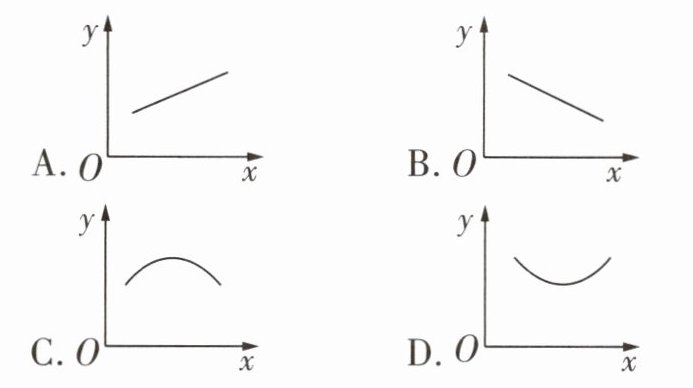
11. [新考法·图文转换题]Which one is right according to Donald W. Schaffner? (x = wetness of dropped food; y = the risk of spreading bacteria)
12. [新考法·写作手法题]Which writing skill is used in Paragraph 3?
A. Telling a story.
B. Listing numbers.
C. Giving an example.
D. Making a comparison.
13. What is the writer's purpose in writing this text?
A. To introduce different types of bacteria.
B. To explain how to avoid bacteria on dropped food.
C. To show that the "five-second rule" is not always reliable.
D. To encourage people to eat food dropped on clean surfaces.
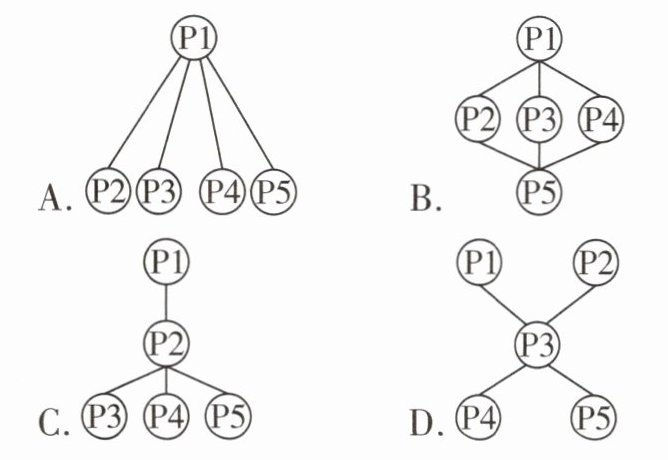
14. [新考法·篇章结构题]What's the structure of the text? (P1 = Paragraph 1, ...)
四、任务型阅读
[多模态语篇·访谈[2025西安市铁一中学综合评价(七)改编]Galante is a wildlife biologist studying animals that are nearly dying out. Daniels, who works for a magazine, spoke with him about his job. Read part of their conversation below.
Daniels: How old were you when you knew you wanted to be a biologist?
Galante: For as long as I can remember, I knew I wanted to work with animals, or study animals, or just have anything to do with animals. But it wasn't really until after graduating from college with a biology degree that I was like, "Oh, okay, I'm actually a biologist now."
Daniels: You're able to travel around the world. What are some of your favorite places that you have been to over the years?
Galante: I'm very lucky with all the places I've got to go to. Africa is always closest to my heart. You see elephants and lions and all these big animals. But my favorite place is Palau(帕劳群岛). I was amazed by the underwater scene there.
Daniels: What's the best part of your job?
Galante: The best part of my job is what we're doing right now. It's inspiring young people to care so much about wildlife. To tell you the truth, I love to travel and work with animals. But all of that can't be compared to the most exciting moment when I get an email from somebody like you. I'm so happy to hear "I want to do that when I grow up". And so that's what makes it all worth it: inspiring more young people to protect our environment.
根据短文内容回答下列问题
1. What is the type of the text?(不超过5个词)
2. What kind of animals is Galante studying?(不超过10个词)
3. What is Daniels' first question about?(不超过10个词)
4. Which place has interested Galante most?(不超过5个词)
5. What does the underlined word "that" refer to?(不超过5个词)
It refers to
[2025汕头市金平区质量监测改编]
Mr. Lee: How are things going, Michael? Is it still hard to get used to the life here?
Michael: 1. I'm doing a lot better now.
Mr. Lee: Good. I've noticed that you are more active in class.
Michael: 2. But it has just taken me a while to fit in.
Mr. Lee: I see. After all, this is your first time living away from home, right?
Michael: Yes. 3. It's hard not to see them every day.
Mr. Lee: I am sorry to hear that. 4.
Michael: They've been so kind to me. I'm getting to know them better.
Mr. Lee: 5. I am sure everything will be more and more pleasant.
A. That's great.
B. What shall I do, Mr. Lee?
C. Thanks for asking, Mr. Lee.
D. How about your roommates?
E. What a surprise to see you here!
F. I've always been close to my parents.
G. I guess I'm feeling more confident now.
三、阅读理解
A
[新素材[2025合肥市第三十八中学教育集团信心信息卷改编]What's it like to have a cat as the headteacher of a kindergarten? It sounds crazy, but it is a real thing happening in Shenzhen.
The cat is now a superstar at Caitian Kindergarten. It has its own "office" and "mailbox". Its photos have also been posted in the corners of the kindergarten.
The story began when a homeless cat entered the kindergarten one January morning in 2021. The teachers found the cat was in poor health, and they took care of it. After the cat got well, the teachers wondered about the next step—should they let the cat go?
It was a hard decision for them, as both teachers and children had fallen in love with the cat. For this, they held a vote to decide on the cat's life. Most of them wanted it to stay and some even suggested "hiring" it as a headteacher. "It was an interesting idea. An 'inauguration(就职典礼)' was held for the cat immediately, and we gave it a new name—Xiaocai," said a teacher.
Xiaocai has a busy timetable every day, meeting its fans and receiving letters. Some fans were also surprised to receive "replies" from the "headteacher" when they shared their secrets with it.
"Hiring the cat as a headteacher makes both the children and teachers become kinder and more warm-hearted," a teacher said.
1. What special things does Xiaocai have as a headteacher?
A. Lots of nice clothes.
B. Several toy cars.
C. Many beautiful flowers.
D. Its office and mailbox.
2. Why did the teachers and children hold the vote?
A. To choose a name for the cat.
B. To choose an office for the cat.
C. To decide whether to let the cat go.
D. To decide when to hold the inauguration.
3. What does the fifth paragraph mainly talk about?
A. The headteacher's plans.
B. The headteacher's daily work.
C. The headteacher's fans.
D. The headteacher's replies.
4. What changes happened after Xiaocai became headteacher?
A. The children and teachers became kinder and more warm-hearted.
B. The school buildings were decorated more beautifully.
C. The students' test scores improved greatly.
D. More and more experienced teachers joined the kindergarten.
拓展设问
[新考法·开放性设问]What do you think is needed to take good care of a cat?
To take good care of a cat, we need patience, responsibility, and love. We must provide fresh food and water every day, keep its litter box clean, and give it a safe and comfortable place to sleep.
It's also important to play with it regularly, take it for vet check-ups, and give it enough attention and care. Most of all, we should treat it gently and make it feel loved. (答案合理即可)
B
[2026泉州培元中学期中改编]When people think of Beijing, the hutong style always comes to mind. It is no exaggeration(夸张)to say within hutong lives the city's history. Every year, it receives more tourists from home and abroad than the high-rise buildings.
The word "hutong" referred to a place where people lived, which was borrowed from the Mongolian word to mean "water well" about 700 years ago. Until now, one can still find dry wells in hutong. Hutong we see today are made up of small paths(小路)formed by walls of siheyuan. They were built during the Yuan, Ming and Qing dynasties.
When the People's Republic of China was founded in 1949, there were more than 3,000 hutong. Most of the city's population lived in this traditional housing. But with the development of the city in the 1980s and early 1990s, many hutong were demolished to build roads, skyscrapers(摩天大楼)and modern houses.
The government has realized the importance of hutong to Chinese culture. So far, Beijing has listed 43 protected historical zones and increased its efforts to rebuild some key remains and older streets in the city. Nearly 500 hutong have been saved.
Hutong that still exist are like oases(绿洲)of calm in the noisy city. Although located downtown, hutong are free from the noise of traffic, as they are too narrow to bear much. Walking through them, it's common to see groups of elderly people sitting together playing cards, mahjong or Chinese chess. In the early mornings and evenings, they get together to practice traditional forms of exercise such as Tai Chi as well as dancing and singing folk songs or Beijing Opera. Hutong have become a museum of Beijing's folk customs and history.
5. What is the earliest meaning of the word "hutong"?
A. Small paths.
B. Siheyuan.
C. Water well.
D. A traditional house.
6. What does the underlined word "demolished" in Paragraph 3 mean?
A. Taken down.
B. Moved away.
C. Set up.
D. Cleaned up.
7. What can we know from the passage?
A. The number of hutong in Beijing is still over 3,000 now.
B. Most people in Beijing used to live in hutong in 1949.
C. Beijing has protected more than 1,000 hutong so far.
D. Hutong are the noisiest places in the city.
8. What does the last paragraph mainly tell us?
A. The future of hutong.
B. The change of hutong.
C. The beauty of hutong life.
D. The history of hutong life.
9. From which section is the text most probably taken?
A. Travel Guide.
B. Famous People.
C. Eating Customs.
D. Culture Window.
C
[新素材[2025郑州外国语中学学情诊断(四)改编]Imagine dropping your sandwich on the kitchen floor at breakfast. You quickly pick it up and ask yourself: Can I still eat it? Many people follow something called the "five-second rule". The rule says that dropped food is safe to eat if it's picked up within five seconds. But is this a reliable(可靠的)rule?
Experts say not always. Donald W. Schaffner, a food science professor, explains that bacteria(细菌)can move to food right away, especially if the food is wet. "Bacteria don't have legs. They move with the liquid. The wetter the food, the higher the risk of the transmission(传播)of bacteria," Schaffner says. For example, if a slice of watermelon falls on the floor, it might collect bacteria at once. Even if you pick it up quickly, it could still be dangerous to eat.
Many people think that food dropped on a carpeted(铺有地毯的)floor is much dirtier. However, another expert, Professor Anthony Hilton, found that carpeted floors pass on fewer bacteria than hard surfaces like wood. This is because the top of a carpet keeps food away from bacteria that lie closer to the ground. Still, he warns people to be careful. Food on the floor can never be completely safe.
But what if your food is dropped on the kitchen counter(台面)instead of the floor? Dr. Steven Dowshen, a doctor, advises against eating such food as well. Raw meat or other food can leave harmful bacteria called salmonella(沙门氏菌)on the surface. Food from a dirty counter could thus make you sick.
In the end, you can never be too careful about what you put in your mouth. When in doubt, it's probably better to just throw it away.
10. What is the "five-second rule"?
A. Food should be eaten up within five seconds after you take it out.
B. It is safe to eat dropped food if you pick it up within five seconds.
C. Bacteria disappear if dropped food is picked up within five seconds.
D. Food can be kept on the floor for at least five seconds before being eaten.
11. [新考法·图文转换题]Which one is right according to Donald W. Schaffner? (x = wetness of dropped food; y = the risk of spreading bacteria)
12. [新考法·写作手法题]Which writing skill is used in Paragraph 3?
A. Telling a story.
B. Listing numbers.
C. Giving an example.
D. Making a comparison.
13. What is the writer's purpose in writing this text?
A. To introduce different types of bacteria.
B. To explain how to avoid bacteria on dropped food.
C. To show that the "five-second rule" is not always reliable.
D. To encourage people to eat food dropped on clean surfaces.
14. [新考法·篇章结构题]What's the structure of the text? (P1 = Paragraph 1, ...)
四、任务型阅读
[多模态语篇·访谈[2025西安市铁一中学综合评价(七)改编]Galante is a wildlife biologist studying animals that are nearly dying out. Daniels, who works for a magazine, spoke with him about his job. Read part of their conversation below.
Daniels: How old were you when you knew you wanted to be a biologist?
Galante: For as long as I can remember, I knew I wanted to work with animals, or study animals, or just have anything to do with animals. But it wasn't really until after graduating from college with a biology degree that I was like, "Oh, okay, I'm actually a biologist now."
Daniels: You're able to travel around the world. What are some of your favorite places that you have been to over the years?
Galante: I'm very lucky with all the places I've got to go to. Africa is always closest to my heart. You see elephants and lions and all these big animals. But my favorite place is Palau(帕劳群岛). I was amazed by the underwater scene there.
Daniels: What's the best part of your job?
Galante: The best part of my job is what we're doing right now. It's inspiring young people to care so much about wildlife. To tell you the truth, I love to travel and work with animals. But all of that can't be compared to the most exciting moment when I get an email from somebody like you. I'm so happy to hear "I want to do that when I grow up". And so that's what makes it all worth it: inspiring more young people to protect our environment.
根据短文内容回答下列问题
1. What is the type of the text?(不超过5个词)
It is an interview.
2. What kind of animals is Galante studying?(不超过10个词)
He is studying endangered animals./He is studying animals that are nearly dying out.
3. What is Daniels' first question about?(不超过10个词)
It is about when Galante started his dream.
4. Which place has interested Galante most?(不超过5个词)
The underwater scene in Palau.
5. What does the underlined word "that" refer to?(不超过5个词)
It refers to
traveling and working with animals
.答案
二、补全对话
1. C
2. G
3. F
4. D
5. A
三、阅读理解
A篇
1. D
2. C
3. B
4. A
拓展设问:To take good care of a cat, we need patience, responsibility and full love. We should prepare proper cat food and clean drinking water for it every day, keep its living environment tidy, and take it for regular physical check-ups. It is also necessary to spend time playing with it to make it feel accompanied. (答案合理即可)
B篇
5. C
6. A
7. B
8. C
9. D
C篇
10. B
11. A
12. D
13. C
14. B
四、任务型阅读
1. It is an interview.
2. Animals that are nearly dying out.
3. When Galante wanted to be a biologist.
4. Palau's underwater scene.
5. traveling and working with animals
解析
【分析】
1. 补全对话:需结合上下文问答逻辑,选择符合语境的句子,注意前后句的衔接呼应,如问候回应、话题过渡等。
2. 阅读理解:先读题干定位原文对应段落,细节题找原句匹配,主旨题归纳段落核心,词义猜测题结合上下文推断词义,写作手法题分析段落表达特点。
3. 任务型阅读:根据短文提取关键信息,严格对应问题要求,注意回答的准确性和字数限制。
【解析】
一、补全对话:
1. 上文Mr. Lee问候Michael近况,Michael礼貌回应,C选项“Thanks for asking, Mr. Lee.”符合语境,故选C。
2. 上文提到Michael课堂更活跃,下文说适应需时间,G选项“I guess I'm feeling more confident now.”承接上文的积极状态,故选G。
3. 下文提到不想每天见父母,F选项“I've always been close to my parents.”解释了想念父母的原因,衔接自然,故选F。
4. 下文回答室友的情况,D选项“How about your roommates?”引出话题,故选D。
5. 上文Mr. Lee表达理解,下文说一切会更好,A选项“That's great.”承接鼓励,符合语境,故选A。
二、阅读理解A篇:
1. 细节题:原文第二段提到猫有自己的“office”和“mailbox”,对应D选项,故选D。
2. 细节题:原文第四段提到投票是为了决定猫是否留下,对应C选项,故选C。
3. 主旨题:第五段讲猫的日常日程(工作),对应B选项,故选B。
4. 细节题:原文第六段提到雇佣猫后师生更友善热心,对应A选项,故选A。
拓展设问:围绕照顾猫的要点(耐心、责任、食物、环境等)作答,合理即可。
三、阅读理解B篇:
5. 细节题:原文第二段提到“hutong”最早指“water well”,对应C选项,故选C。
6. 词义猜测题:结合上下文城市发展建道路等,“demolished”意为“拆除”,对应A选项,故选A。
7. 细节题:原文第三段提到1949年大部分人住胡同,对应B选项,故选B。
8. 主旨题:最后一段讲胡同生活场景,体现胡同生活的美好,对应C选项,故选C。
9. 推理题:文章讲胡同的历史文化,属于文化板块,对应D选项,故选D。
四、阅读理解C篇:
10. 细节题:原文第一段提到五秒规则是掉的食物五秒内捡起来安全,对应B选项,故选B。
11. 细节题:根据Schaffner的观点,食物越湿,细菌传播风险越高,对应湿度与风险正相关的图,选A。
12. 写作手法题:第三段对比地毯和硬地面的细菌传播,用了对比手法,对应D选项,故选D。
13. 主旨题:全文说明五秒规则不可靠,对应C选项,故选C。
14. 篇章结构题:第一段总起,中间分述,最后总结,为总-分-总结构,对应B选项,故选B。
五、任务型阅读:
1. 文本类型:对话形式为访谈,故答案为It is an interview.
2. Galante研究的动物:原文提到是濒临灭绝的动物,故答案为Animals that are nearly dying out.
3. Daniels的第一个问题:询问Galante何时想当生物学家,故答案为When Galante wanted to be a biologist.
4. Galante最感兴趣的地方:原文提到最喜欢帕劳的水下场景,故答案为Palau's underwater scene.
5. that指代:上文提到“traveling and working with animals”,故答案为traveling and working with animals.
【答案】
二、补全对话:1.C 2.G 3.F 4.D 5.A
三、阅读理解:
A篇:1.D 2.C 3.B 4.A;拓展设问:To take good care of a cat, we need patience, responsibility and full love. We should prepare proper cat food and clean drinking water for it every day, keep its living environment tidy, and take it for regular physical check-ups. It is also necessary to spend time playing with it to make it feel accompanied. (答案合理即可)
B篇:5.C 6.A 7.B 8.C 9.D
C篇:10.B 11.A 12.D 13.C 14.B
四、任务型阅读:
1. It is an interview.
2. Animals that are nearly dying out.
3. When Galante wanted to be a biologist.
4. Palau's underwater scene.
5. traveling and working with animals
【知识点】
英语补全对话、英语阅读理解、英语任务型阅读
【点评】
本题为初中英语综合练习题,涵盖多种题型,重点考查语境理解、细节查找、主旨归纳等核心能力,题型贴合中考趋势,拓展设问开放性强,注重语言运用能力的考查。
【难度系数】
0.6
