

 登录
登录
B
[2025 广东深圳期末] Can you say the meaning of "zero"? Can you do addition and
subtraction(加减法)? Most people can. But do you know bees can do these things too? A study shows that bees have even greater maths abilities. After some training, they can know the difference between even numbers(ending with 0, 2, 4, 6 and 8)and odd numbers(ending with 1, 3, 5, 7 and 9).
Some Australian scientists put up different cards with an odd or even number of triangles(三角形). They used the numbers 1 to 10. Then they trained the first group of bees to choose odd numbers and the second group to choose even numbers. If a bee flew to the right card, it would get sugar water. If it chose the wrong card, it got bitter(苦的)water.
In a short time, all the bees knew what odd numbers or even numbers were. They could fly to the right numbers 80% of the time. After that, the scientists added new cards with the numbers 11 and 12. The bees never saw the numbers in their training before, but they could choose rightly 70% of the time. Surprisingly, the bees even learnt odd numbers more quickly than people.
How did the bees learn the numbers so fast? Scientists didn't have a clear idea. But they believe if they find the answer, it will help them build better and faster computers. After all, a bee's brain must be smaller than ours!
(
A. By listing facts.
B. By giving examples.
C. By asking questions.
D. By using pictures.
(
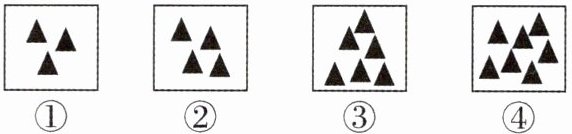
A. ①④
B. ②③
C. ①②
D. ③④
(
A. Our brains might be smarter than bees.
B. Bees like bitter water rather than sugar water.
C. After training, bees can learn even numbers more quickly than people.
D. After training, bees can know the difference between even numbers and odd numbers.
(
A. Bees may be able to contribute to science and technology.
B. Bees like odd numbers better than even numbers.
C. Scientists know how bees learn numbers.
D. Scientists know why bees can tell different numbers.
[2025 广东深圳期末] Can you say the meaning of "zero"? Can you do addition and
subtraction(加减法)? Most people can. But do you know bees can do these things too? A study shows that bees have even greater maths abilities. After some training, they can know the difference between even numbers(ending with 0, 2, 4, 6 and 8)and odd numbers(ending with 1, 3, 5, 7 and 9).
Some Australian scientists put up different cards with an odd or even number of triangles(三角形). They used the numbers 1 to 10. Then they trained the first group of bees to choose odd numbers and the second group to choose even numbers. If a bee flew to the right card, it would get sugar water. If it chose the wrong card, it got bitter(苦的)water.
In a short time, all the bees knew what odd numbers or even numbers were. They could fly to the right numbers 80% of the time. After that, the scientists added new cards with the numbers 11 and 12. The bees never saw the numbers in their training before, but they could choose rightly 70% of the time. Surprisingly, the bees even learnt odd numbers more quickly than people.
How did the bees learn the numbers so fast? Scientists didn't have a clear idea. But they believe if they find the answer, it will help them build better and faster computers. After all, a bee's brain must be smaller than ours!
(
C
)15. 新考法写作手法 How does the passage start?A. By listing facts.
B. By giving examples.
C. By asking questions.
D. By using pictures.
(
B
)16. 新考法选项选择 Which of the following card should the second group of bees fly to?A. ①④
B. ②③
C. ①②
D. ③④
(
D
)17. Which of the following is TRUE according to the passage?A. Our brains might be smarter than bees.
B. Bees like bitter water rather than sugar water.
C. After training, bees can learn even numbers more quickly than people.
D. After training, bees can know the difference between even numbers and odd numbers.
(
A
)18. What can we learn from the last paragraph?A. Bees may be able to contribute to science and technology.
B. Bees like odd numbers better than even numbers.
C. Scientists know how bees learn numbers.
D. Scientists know why bees can tell different numbers.
答案
15. C 细节理解题。根据“Can you say the meaning of ‘zero’? Can you do addition and subtraction? Most people can. But do you know bees can do these things too?”可知,文章是通过问问题的方式开始的。
16. B 细节理解题。根据 the second group to choose even numbers 可知,第二组选择偶数,所以②③符合题意。
17. D 细节理解题。根据“After some training, they can know the difference between even numbers… and odd numbers…”可知,经过训练蜜蜂可以知道偶数和奇数之间的区别。
18. A 推理判断题。根据最后一段内容可知,蜜蜂可能对科技有所贡献。
16. B 细节理解题。根据 the second group to choose even numbers 可知,第二组选择偶数,所以②③符合题意。
17. D 细节理解题。根据“After some training, they can know the difference between even numbers… and odd numbers…”可知,经过训练蜜蜂可以知道偶数和奇数之间的区别。
18. A 推理判断题。根据最后一段内容可知,蜜蜂可能对科技有所贡献。
解析
【分析】本题为英语阅读理解题,需先通读文章理解主旨,再针对每个小题的问题,回到文章中定位关键信息,结合选项逐一分析判断。第15题需关注文章开头的写作手法;第16题需明确偶数定义,数图中三角形数量,结合第二组蜜蜂的要求选择;第17题需逐一核对选项与文章细节是否一致;第18题需理解最后一段的含义,进行推理判断。
【解析】
15. 文章开头以“Can you say the meaning of 'zero'? Can you do addition and subtraction?”两个问句引出内容,因此是通过提问的方式开始,对应选项C。
16. 第二组蜜蜂需选择偶数,偶数是能被2整除的数,数各图三角形数量:①有3个(奇数),②有4个(偶数),③有6个(偶数),④有7个(奇数),符合的是②③,对应选项B。
17. 选项A:文章仅提到蜜蜂的大脑比人类小,未说明人脑更聪明,错误;选项B:蜜蜂选对得糖水,选错得苦水,说明蜜蜂更喜欢糖水,错误;选项C:文章指出蜜蜂学奇数比人快,不是偶数,错误;选项D:根据文章“After some training, they can know the difference between even numbers... and odd numbers...”,经过训练蜜蜂能区分奇偶,正确,对应选项D。
18. 最后一段提到科学家若找到蜜蜂快速学数的答案,能帮助构建更好更快的电脑,说明蜜蜂可能对科技发展有贡献,对应选项A。
【答案】
15.C 16.B 17.D 18.A
【知识点】
阅读理解、细节理解、推理判断
【点评】
本题围绕蜜蜂的数学能力展开,考查学生的阅读理解能力,需准确提取文章关键信息,结合题目要求分析选项,整体难度适中。
【难度系数】
0.6
【解析】
15. 文章开头以“Can you say the meaning of 'zero'? Can you do addition and subtraction?”两个问句引出内容,因此是通过提问的方式开始,对应选项C。
16. 第二组蜜蜂需选择偶数,偶数是能被2整除的数,数各图三角形数量:①有3个(奇数),②有4个(偶数),③有6个(偶数),④有7个(奇数),符合的是②③,对应选项B。
17. 选项A:文章仅提到蜜蜂的大脑比人类小,未说明人脑更聪明,错误;选项B:蜜蜂选对得糖水,选错得苦水,说明蜜蜂更喜欢糖水,错误;选项C:文章指出蜜蜂学奇数比人快,不是偶数,错误;选项D:根据文章“After some training, they can know the difference between even numbers... and odd numbers...”,经过训练蜜蜂能区分奇偶,正确,对应选项D。
18. 最后一段提到科学家若找到蜜蜂快速学数的答案,能帮助构建更好更快的电脑,说明蜜蜂可能对科技发展有贡献,对应选项A。
【答案】
15.C 16.B 17.D 18.A
【知识点】
阅读理解、细节理解、推理判断
【点评】
本题围绕蜜蜂的数学能力展开,考查学生的阅读理解能力,需准确提取文章关键信息,结合题目要求分析选项,整体难度适中。
【难度系数】
0.6
