

 登录
登录
一、为下列图片选择相应的句子。
A. Lily always eats healthy food. She has a healthy diet.
B. Go to bed early. Don't stay up late.
C. Exercise every day, such as running, jumping rope or playing ball games.
D. Don't be sad. Think about happy things.
E. I have fun with my family.
1. (
(
2. (
(
3. (
(
4.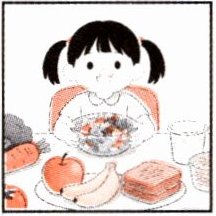 (
(
5. (
(
A. Lily always eats healthy food. She has a healthy diet.
B. Go to bed early. Don't stay up late.
C. Exercise every day, such as running, jumping rope or playing ball games.
D. Don't be sad. Think about happy things.
E. I have fun with my family.
1.
(B
)2.
(D
)3.
(C
)4.
(A
)5.
(E
)答案
1. B 2. D 3. C 4. A 5. E
解析
【分析】这是一道图片与句子的情景匹配题,解题思路为:先明确每个选项句子的含义,再结合每幅插图对应的生活场景,将句子与插图一一对应,最终确定每个插图的正确选项。
【解析】首先理解各选项句意:A句讲健康饮食,B句讲早睡不熬夜,C句讲日常锻炼,D句讲安慰他人别难过,E句讲和家人玩乐。结合插图场景:1对应早睡的场景→选B;2对应安慰情绪的场景→选D;3对应锻炼的场景→选C;4对应健康饮食的场景→选A;5对应和家人玩乐的场景→选E。
【答案】1.B 2.D 3.C 4.A 5.E
【知识点】情景匹配,句意理解
【点评】本题考查日常情景与句子的匹配能力,需准确理解句子含义并结合图片场景,属于基础题型,难度不大。
【难度系数】0.5
【解析】首先理解各选项句意:A句讲健康饮食,B句讲早睡不熬夜,C句讲日常锻炼,D句讲安慰他人别难过,E句讲和家人玩乐。结合插图场景:1对应早睡的场景→选B;2对应安慰情绪的场景→选D;3对应锻炼的场景→选C;4对应健康饮食的场景→选A;5对应和家人玩乐的场景→选E。
【答案】1.B 2.D 3.C 4.A 5.E
【知识点】情景匹配,句意理解
【点评】本题考查日常情景与句子的匹配能力,需准确理解句子含义并结合图片场景,属于基础题型,难度不大。
【难度系数】0.5
二、根据提示词及图片,仿照例子写对话。
例: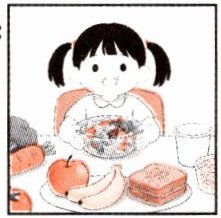
Linda
have a healthy diet
—How can Linda live a healthy life?
—She needs to have a healthy diet.
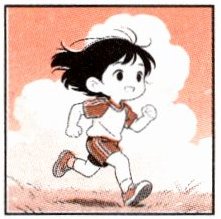
1.
Amy
exercise often
—
—
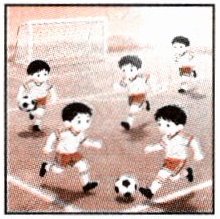
2.
we
join clubs and teams
—
—
例:
Linda
have a healthy diet
—How can Linda live a healthy life?
—She needs to have a healthy diet.
1.
Amy
exercise often
—
How can Amy live a healthy life?
—
She needs to exercise often.
2.
we
join clubs and teams
—
How can we live a healthy life?
—
We need to join clubs and teams.
答案
1. How can Amy live a healthy life?
She needs to exercise often.
2. How can we live a healthy life?
We need to join clubs and teams.
She needs to exercise often.
2. How can we live a healthy life?
We need to join clubs and teams.
解析
【分析】
先观察例子的结构:问句为“How can + 人物 + live a healthy life?”,答句为“对应主语 + need to + 提示词短语”。解题时,先确定每小题的主语,再套用问句结构,答句直接替换提示词短语即可完成仿写。
【解析】
1. 第1题主语是Amy,套用问句结构可得“How can Amy live a healthy life?”;答句将提示词“exercise often”替换例子中的内容,主语Amy对应用She,可得“She needs to exercise often.”。
2. 第2题主语是we,套用问句结构可得“How can we live a healthy life?”;答句将提示词“join clubs and teams”替换,主语对应用We,可得“We need to join clubs and teams.”。
【答案】
1. How can Amy live a healthy life?
She needs to exercise often.
2. How can we live a healthy life?
We need to join clubs and teams.
【知识点】
英语对话仿写;特殊疑问句;need to结构
【点评】
本题为基础仿写题,核心是掌握给定句型结构,只需根据提示替换对应内容即可完成,考查学生对句型的灵活运用能力。
【难度系数】
0.8
先观察例子的结构:问句为“How can + 人物 + live a healthy life?”,答句为“对应主语 + need to + 提示词短语”。解题时,先确定每小题的主语,再套用问句结构,答句直接替换提示词短语即可完成仿写。
【解析】
1. 第1题主语是Amy,套用问句结构可得“How can Amy live a healthy life?”;答句将提示词“exercise often”替换例子中的内容,主语Amy对应用She,可得“She needs to exercise often.”。
2. 第2题主语是we,套用问句结构可得“How can we live a healthy life?”;答句将提示词“join clubs and teams”替换,主语对应用We,可得“We need to join clubs and teams.”。
【答案】
1. How can Amy live a healthy life?
She needs to exercise often.
2. How can we live a healthy life?
We need to join clubs and teams.
【知识点】
英语对话仿写;特殊疑问句;need to结构
【点评】
本题为基础仿写题,核心是掌握给定句型结构,只需根据提示替换对应内容即可完成,考查学生对句型的灵活运用能力。
【难度系数】
0.8
三、选择合适的选项,补全对话。
Doctor: Hello, Tom. Please sit down. 1.
Tom: I don't feel well, Doctor. I have a cough.
Doctor: Oh, I'm sorry to hear that. Let me have a look.
Tom: 2.
Doctor: No. Your temperature is fine. 3.
Tom: I usually go to bed at 00:30.
Doctor: That's too late. You should live a healthy life.
Tom: 4.
Doctor: You should have a good rest and exercise. Don't stay up late!
Tom: OK, I will. Thank you!
Doctor: 5.
A. You're welcome.
B. What should I do?
C. What time do you go to bed?
D. What's the matter?
E. Do I have a fever?
Doctor: Hello, Tom. Please sit down. 1.
D
Tom: I don't feel well, Doctor. I have a cough.
Doctor: Oh, I'm sorry to hear that. Let me have a look.
Tom: 2.
E
Doctor: No. Your temperature is fine. 3.
C
Tom: I usually go to bed at 00:30.
Doctor: That's too late. You should live a healthy life.
Tom: 4.
B
Doctor: You should have a good rest and exercise. Don't stay up late!
Tom: OK, I will. Thank you!
Doctor: 5.
A
A. You're welcome.
B. What should I do?
C. What time do you go to bed?
D. What's the matter?
E. Do I have a fever?
答案
1. D 2. E 3. C 4. B 5. A
解析
【分析】
本题是就医场景的补全对话题,需结合上下文语境和日常交际用语的表达习惯选择合适选项。先通读对话,明确医生与病人Tom的交流逻辑:医生先询问病情→Tom说明症状→医生检查后问是否发烧→确认体温后问睡觉时间→Tom问应对建议→医生给出建议→Tom感谢,医生回应客气话,据此匹配对应选项。
【解析】
1. 第1空:医生让Tom坐下后询问病情,常用表达为“What's the matter?”,对应选项D。
2. 第2空:医生说要检查,下句医生回答“No”且提到体温正常,可知Tom询问是否发烧,对应选项E。
3. 第3空:下句Tom回答睡觉时间,可知此处医生询问睡觉时间,对应选项C。
4. 第4空:医生给出建议后,Tom询问该怎么做,对应选项B。
5. 第5空:Tom表示感谢,医生回应“不客气”,对应选项A。
【答案】
1.D 2.E 3.C 4.B 5.A
【知识点】
补全对话、日常交际用语
【点评】
本题考查就医场景的日常交际用语运用,语境清晰,选项贴合对话逻辑,属于基础题型,学生易理解。
【难度系数】
0.8
本题是就医场景的补全对话题,需结合上下文语境和日常交际用语的表达习惯选择合适选项。先通读对话,明确医生与病人Tom的交流逻辑:医生先询问病情→Tom说明症状→医生检查后问是否发烧→确认体温后问睡觉时间→Tom问应对建议→医生给出建议→Tom感谢,医生回应客气话,据此匹配对应选项。
【解析】
1. 第1空:医生让Tom坐下后询问病情,常用表达为“What's the matter?”,对应选项D。
2. 第2空:医生说要检查,下句医生回答“No”且提到体温正常,可知Tom询问是否发烧,对应选项E。
3. 第3空:下句Tom回答睡觉时间,可知此处医生询问睡觉时间,对应选项C。
4. 第4空:医生给出建议后,Tom询问该怎么做,对应选项B。
5. 第5空:Tom表示感谢,医生回应“不客气”,对应选项A。
【答案】
1.D 2.E 3.C 4.B 5.A
【知识点】
补全对话、日常交际用语
【点评】
本题考查就医场景的日常交际用语运用,语境清晰,选项贴合对话逻辑,属于基础题型,学生易理解。
【难度系数】
0.8
