

 登录
登录
三、阅读故事,从各题所给的A、B、C三个选项中,选出最佳的选项。(5分)
Mr Smith goes to a dinner party. He is wearing his
room, but people in the room don't look at him. They don't ask him to sit down. Mr Smith
feels
Mr Smith goes home and puts on his nice clothes. He goes back to the party. Everyone in
the room smiles(微笑) at him. They give Mr Smith nice food to eat.
Mr Smith gives his food to his
your clothes to eat food?" "Because when I am wearing my old clothes, you don't look at me.
You don't ask me to
give the food to my clothes not to
(
(
(
(
(
Mr Smith goes to a dinner party. He is wearing his
A
1 clothes. He comes into theroom, but people in the room don't look at him. They don't ask him to sit down. Mr Smith
feels
B
2.Mr Smith goes home and puts on his nice clothes. He goes back to the party. Everyone in
the room smiles(微笑) at him. They give Mr Smith nice food to eat.
Mr Smith gives his food to his
C
3. One of these people asks, "Why are you askingyour clothes to eat food?" "Because when I am wearing my old clothes, you don't look at me.
You don't ask me to
A
4. Now I'm wearing good clothes, and you give me nice food. So yougive the food to my clothes not to
A
5.(
A
)1. A. old B. new C. nice(
B
)2. A. happy B. angry C. tired(
C
)3. A. friends B. birds C. clothes(
A
)4. A. sit down B. stand up C. come in(
A
)5. A. me B. us C. it答案
1. A 2. B 3. C 4. A 5. A
解析
【分析】
这是一篇故事类完形填空题,解题核心思路是先通读全文理清故事整体脉络,再结合上下文给出的明确线索逐一匹配选项:通读后能明确故事核心是史密斯先生用巧妙的方式讽刺宴会上以貌取人的宾客,所有空的答案几乎都能在后文找到直接对应的提示信息,不需要复杂引申推理,只需要逐空定位前后文的关联内容,排除不符合逻辑的选项就能选出正确答案。
【解析】
1. 后文第二段提到史密斯先生回家换上了好看的衣服,同时第三段他亲口提到"when I am wearing my old clothes, you don't look at me",明确说明他最初穿的是旧衣服,选A。
2. 宴会上的人都不看他,也不邀请他坐下,这种情况下史密斯先生的情绪不可能是开心或者疲惫,只会是生气,选B。
3. 后文有宾客直接问他"Why are you asking your clothes to eat food?",说明史密斯先生是把食物递给他的衣服,选C。
4. 第一段原文明确写了"They don't ask him to sit down",此处是史密斯先生复述宾客之前的行为,对应选A。
5. 本句逻辑为“你们把食物给我的衣服,而不是给我”,介词to后指代史密斯先生本人,选A。
【答案】
1.A 2.B 3.C 4.A 5.A
【知识点】
1. 完形填空语境推理
2. 阅读细节查找
3. 词义辨析
【点评】
本题属于低难度的故事类完形填空题,所有题目的正确选项都能在短文中找到直接对应的原文线索,没有设置强干扰迷惑选项,主要考察学生的短文细节定位能力,能帮助学生养成做完形填空时前后文对照找依据的好习惯,避免脱离文本主观猜测答案。
【难度系数】
0.9
这是一篇故事类完形填空题,解题核心思路是先通读全文理清故事整体脉络,再结合上下文给出的明确线索逐一匹配选项:通读后能明确故事核心是史密斯先生用巧妙的方式讽刺宴会上以貌取人的宾客,所有空的答案几乎都能在后文找到直接对应的提示信息,不需要复杂引申推理,只需要逐空定位前后文的关联内容,排除不符合逻辑的选项就能选出正确答案。
【解析】
1. 后文第二段提到史密斯先生回家换上了好看的衣服,同时第三段他亲口提到"when I am wearing my old clothes, you don't look at me",明确说明他最初穿的是旧衣服,选A。
2. 宴会上的人都不看他,也不邀请他坐下,这种情况下史密斯先生的情绪不可能是开心或者疲惫,只会是生气,选B。
3. 后文有宾客直接问他"Why are you asking your clothes to eat food?",说明史密斯先生是把食物递给他的衣服,选C。
4. 第一段原文明确写了"They don't ask him to sit down",此处是史密斯先生复述宾客之前的行为,对应选A。
5. 本句逻辑为“你们把食物给我的衣服,而不是给我”,介词to后指代史密斯先生本人,选A。
【答案】
1.A 2.B 3.C 4.A 5.A
【知识点】
1. 完形填空语境推理
2. 阅读细节查找
3. 词义辨析
【点评】
本题属于低难度的故事类完形填空题,所有题目的正确选项都能在短文中找到直接对应的原文线索,没有设置强干扰迷惑选项,主要考察学生的短文细节定位能力,能帮助学生养成做完形填空时前后文对照找依据的好习惯,避免脱离文本主观猜测答案。
【难度系数】
0.9
四、新趋势 传统文化 阅读选择。(5分)
For Chinese people, the tiger is the king of all the animals. So in Chinese culture, "tiger"
stands for(代表) being clever and strong. Chinese people think this big cat can protect(保护)
them and make them stronger.
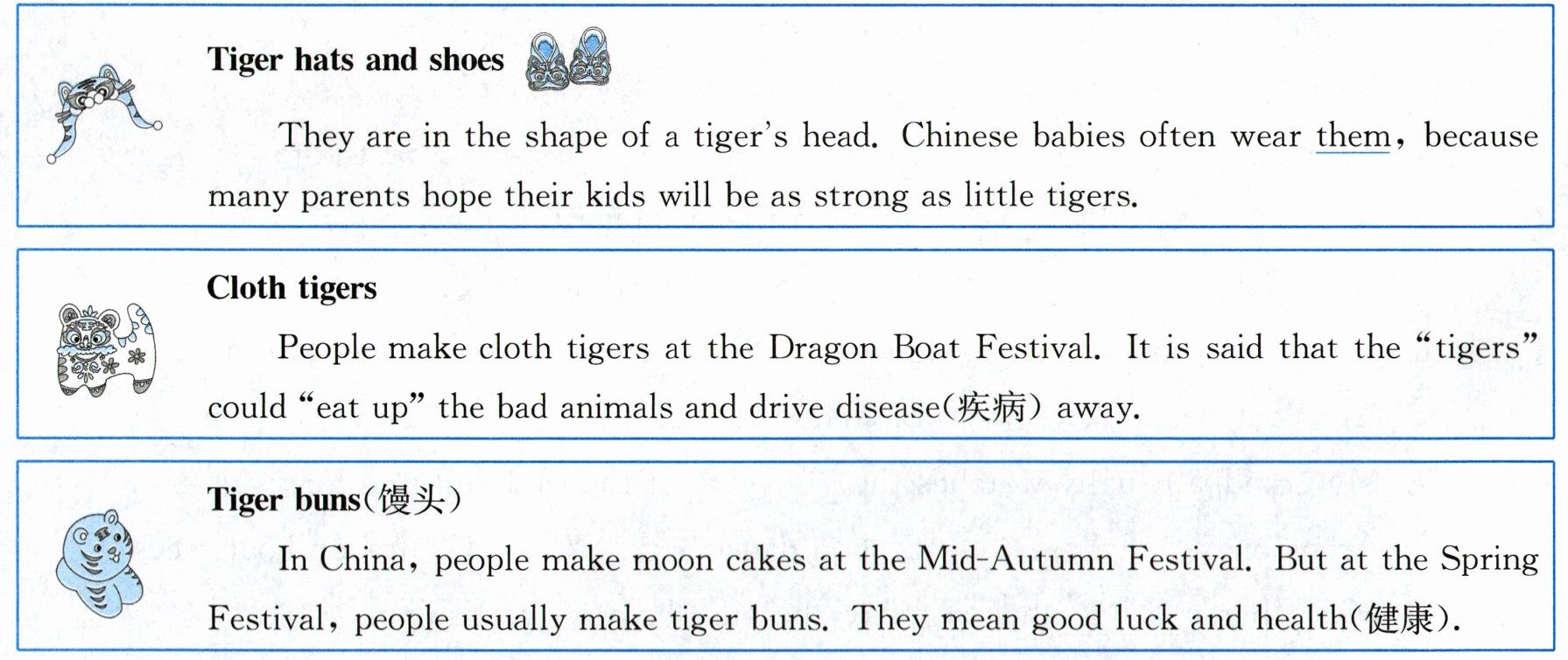
(
A. Tiger. B. Dragon. C. Cat.
(
A. At the Spring Festival. B. At the Dragon Boat Festival.
C. At the Mid-Autumn Festival.
(
A. At the Spring Festival. B. At the Dragon Boat Festival.
C. At the Mid-Autumn Festival.
(

A. B. C.
(
A. Baby clothes in China. B. How to make things about tigers.
C. "Tigers" in Chinese culture.
For Chinese people, the tiger is the king of all the animals. So in Chinese culture, "tiger"
stands for(代表) being clever and strong. Chinese people think this big cat can protect(保护)
them and make them stronger.
(
A
)1. Which animal stands for being clever and strong in China?A. Tiger. B. Dragon. C. Cat.
(
B
)2. When do Chinese people make cloth tigers?A. At the Spring Festival. B. At the Dragon Boat Festival.
C. At the Mid-Autumn Festival.
(
A
)3. When do Chinese people make tiger buns?A. At the Spring Festival. B. At the Dragon Boat Festival.
C. At the Mid-Autumn Festival.
(
C
)4. "Chinese babies often wear them ... " What does "them" mean?A. B. C.
(
C
)5. What is the WHOLE passage(整篇文章) about?A. Baby clothes in China. B. How to make things about tigers.
C. "Tigers" in Chinese culture.
答案
1. A 2. B 3. A 4. C 5. C
解析
【分析】
这是一道结合中华传统文化的创新型英语阅读理解题,解题思路如下:首先细节类题目直接提取题干关键词,回到给定的原文内容中定位对应语句,直接匹配答案;涉及传统民俗的题目,结合日常积累的中国传统节日相关习俗常识辅助判断;最后主旨大意题梳理全文所有内容,提炼核心主题,排除偏离主题的错误选项即可选出正确答案。
【解析】
1. 第1题:原文明确给出"So in Chinese culture, 'tiger' stands for(代表) being clever and strong.",直接对应A选项老虎,排除B龙、C猫两个错误选项。
2. 第2题:结合中国传统民俗常识,端午节民间有制作布老虎用来祈福驱邪的传统习俗,对应B选项端午节,排除A春节、C中秋节。
3. 第3题:我国北方多地春节期间有制作老虎造型的特色面食(虎包/老虎花馍)的节日习俗,对应A选项春节,排除B端午节、C中秋节。
4. 第4题:句子"Chinese babies often wear them..."意为中国宝宝经常穿戴它们,结合传统民俗常识,指代的是虎头鞋、虎头帽这类老虎造型的孩童传统配饰,对应正确选项C。
5. 第5题:全文围绕老虎在中国文化中的象征意义、各类和老虎相关的民俗物品展开,核心主题就是中国文化里的老虎相关内容,对应C选项,排除A中国婴儿服饰、B如何制作老虎相关物件两个偏离主题的错误选项。
【答案】
1. A 2. B 3. A 4. C 5. C
【知识点】
阅读细节定位;传统节日习俗;阅读主旨归纳
【点评】
本题属于跨文化融合的新趋势题型,既考查学生基础的英语阅读信息提取能力,也融入了中国传统民俗文化的相关考查,引导学生了解老虎在中国传统文化中的特殊寓意,部分题目需要结合课外民俗积累作答,区分度设置合理。
【难度系数】
0.7
这是一道结合中华传统文化的创新型英语阅读理解题,解题思路如下:首先细节类题目直接提取题干关键词,回到给定的原文内容中定位对应语句,直接匹配答案;涉及传统民俗的题目,结合日常积累的中国传统节日相关习俗常识辅助判断;最后主旨大意题梳理全文所有内容,提炼核心主题,排除偏离主题的错误选项即可选出正确答案。
【解析】
1. 第1题:原文明确给出"So in Chinese culture, 'tiger' stands for(代表) being clever and strong.",直接对应A选项老虎,排除B龙、C猫两个错误选项。
2. 第2题:结合中国传统民俗常识,端午节民间有制作布老虎用来祈福驱邪的传统习俗,对应B选项端午节,排除A春节、C中秋节。
3. 第3题:我国北方多地春节期间有制作老虎造型的特色面食(虎包/老虎花馍)的节日习俗,对应A选项春节,排除B端午节、C中秋节。
4. 第4题:句子"Chinese babies often wear them..."意为中国宝宝经常穿戴它们,结合传统民俗常识,指代的是虎头鞋、虎头帽这类老虎造型的孩童传统配饰,对应正确选项C。
5. 第5题:全文围绕老虎在中国文化中的象征意义、各类和老虎相关的民俗物品展开,核心主题就是中国文化里的老虎相关内容,对应C选项,排除A中国婴儿服饰、B如何制作老虎相关物件两个偏离主题的错误选项。
【答案】
1. A 2. B 3. A 4. C 5. C
【知识点】
阅读细节定位;传统节日习俗;阅读主旨归纳
【点评】
本题属于跨文化融合的新趋势题型,既考查学生基础的英语阅读信息提取能力,也融入了中国传统民俗文化的相关考查,引导学生了解老虎在中国传统文化中的特殊寓意,部分题目需要结合课外民俗积累作答,区分度设置合理。
【难度系数】
0.7
