

 登录
登录
Passage 1(2026·盐城市阜宁期末)
Marie is a famous woman in the world. She made a lot of important contributions to the development of humans. She was born in Poland in 1867. Her father worked in a middle school and taught Maths and Physics, so she enjoyed and did well in these two subjects at school. Marie went to study in Paris University in 1891. She studied Maths and Physics there and met a scientist called Pierre Curie. They got married in 1895. From then on, she was called Madame Curie. Together, Pierre and Marie discovered radium.
In 1903, Marie became the first woman to win the Nobel Prize. Then, in 1904, Pierre became a member of the "Academie Francaise(法兰西学院)". But Marie was not accepted by them because women were not allowed to become members at that time. In 1906, Pierre died in an accident, but Marie went on working until she died in 1934.
Madame Curie is our hero. Not only did she discover radium but also won the Nobel Prize twice in her lifetime.
1. What subjects did Marie's father teach in a middle school?
2. What did the Curies discover?
3. How many times did Madame Curie win the Nobel Prize in her lifetime?
4. Why wasn't Marie accepted by Academie Francaise?
5. What do you think of Marie Curie?
Marie is a famous woman in the world. She made a lot of important contributions to the development of humans. She was born in Poland in 1867. Her father worked in a middle school and taught Maths and Physics, so she enjoyed and did well in these two subjects at school. Marie went to study in Paris University in 1891. She studied Maths and Physics there and met a scientist called Pierre Curie. They got married in 1895. From then on, she was called Madame Curie. Together, Pierre and Marie discovered radium.
In 1903, Marie became the first woman to win the Nobel Prize. Then, in 1904, Pierre became a member of the "Academie Francaise(法兰西学院)". But Marie was not accepted by them because women were not allowed to become members at that time. In 1906, Pierre died in an accident, but Marie went on working until she died in 1934.
Madame Curie is our hero. Not only did she discover radium but also won the Nobel Prize twice in her lifetime.
1. What subjects did Marie's father teach in a middle school?
He taught Maths and Physics.
2. What did the Curies discover?
Radium.
3. How many times did Madame Curie win the Nobel Prize in her lifetime?
She won the Nobel Prize twice.
4. Why wasn't Marie accepted by Academie Francaise?
Because women were not allowed to become members at that time.
5. What do you think of Marie Curie?
Brave and great.(言之有理即可)
答案
1. He taught Maths and Physics.
2. Radium.
3. She won the Nobel Prize twice.
4. Because women were not allowed to become members at that time.
5. Brave and great.(言之有理即可)
2. Radium.
3. She won the Nobel Prize twice.
4. Because women were not allowed to become members at that time.
5. Brave and great.(言之有理即可)
解析
【分析】本题为人物传记类阅读理解,所有问题均为细节查找题。解题思路:先通读全文了解居里夫人的生平,再针对每个问题划出关键词,回到原文定位对应语句,提取关键信息整理成符合要求的答案;主观题需结合人物事迹给出合理评价。
【解析】1. 问题关键词为“Marie's father teach in a middle school”,定位原文第一段“Her father worked in a middle school and taught Maths and Physics”,提取信息作答;2. 问题关键词为“Curies discover”,定位原文第一段“Together, Pierre and Marie discovered radium”,提取信息作答;3. 问题关键词为“win the Nobel Prize times”,定位原文第三段“won the Nobel Prize twice”,提取信息作答;4. 问题关键词为“not accepted by Academie Francaise”,定位原文第二段“But Marie was not accepted by them because women were not allowed to become members at that time”,提取原因作答;5. 为主观评价题,结合居里夫人的贡献与经历,给出合理评价即可。
【答案】1. He taught Maths and Physics.
2. Radium.
3. She won the Nobel Prize twice.
4. Because women were not allowed to become members at that time.
5. Brave and great.(言之有理即可)
【知识点】阅读理解细节理解、人物传记阅读
【点评】本题围绕居里夫人的生平事迹设置题目,以细节考查为主,主观题开放度适中,主要检验学生的信息定位与提取能力,整体难度较低。
【难度系数】0.8
【解析】1. 问题关键词为“Marie's father teach in a middle school”,定位原文第一段“Her father worked in a middle school and taught Maths and Physics”,提取信息作答;2. 问题关键词为“Curies discover”,定位原文第一段“Together, Pierre and Marie discovered radium”,提取信息作答;3. 问题关键词为“win the Nobel Prize times”,定位原文第三段“won the Nobel Prize twice”,提取信息作答;4. 问题关键词为“not accepted by Academie Francaise”,定位原文第二段“But Marie was not accepted by them because women were not allowed to become members at that time”,提取原因作答;5. 为主观评价题,结合居里夫人的贡献与经历,给出合理评价即可。
【答案】1. He taught Maths and Physics.
2. Radium.
3. She won the Nobel Prize twice.
4. Because women were not allowed to become members at that time.
5. Brave and great.(言之有理即可)
【知识点】阅读理解细节理解、人物传记阅读
【点评】本题围绕居里夫人的生平事迹设置题目,以细节考查为主,主观题开放度适中,主要检验学生的信息定位与提取能力,整体难度较低。
【难度系数】0.8
Passage 2(2025·无锡市外国语学校一模)
For thousands of years, the Chinese people have had a deep respect for Long, the Chinese dragon. If you travel around China, you'll find images(画像) of dragons almost everywhere, especially in ancient palaces and temples. Some of them are more than 3,500 years old.
Countless Chinese artists have tried their hand at painting the dragon. One of them was Chen Rong,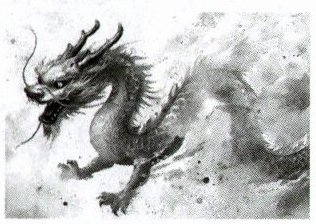
a great painter in the Southern Song Dynasty. He is widely considered as the best of the dragon painters. His *Nine Dragons* has been praised as one of the greatest paintings of the Chinese dragon.
Chen was born in Fujian in 1200. He once served as the mayor(太守) of Putian(莆田) in his home province. He also worked for the government in Hangzhou at one point. His political career wasn't very successful. However, he was widely respected for his talent in poetry, calligraphy and painting.
According to historical records, Chen usually painted after drinking a lot of wine. After getting drunk, he would shout, tear off his scarf, dip(浸) it in ink and spill(洒出) the ink madly on xuanzhi. After that, the painter would use brushes to paint some details to finish his work. Chen's inscription(题词) on *Nine Dragons* shows that he created it when he was completely drunk.
Nine Dragons* shows nine energetic dragons rolling, swimming and dancing among clouds, mist, waves, fires and cliffs. There are both crazy drops of ink and very fine lines. They show both the painter's feeling of great disappointment with his life and his great skills in brush work.
Nine Dragons* was once treasured at court(宫廷). A later inscription by the Qianlong Emperor praised it highly. It's said that the emperor liked the painting so much that he ordered a court painter to make a copy of it.
1. In which dynasty was Chen Rong born?
2. According to the article, what was Chen widely respected for?
3. What was special about Chen Rong when he created *Nine Dragons*?
4. What did the Qianlong Emperor think of *Nine Dragons*?
5. Would you like to go to see *Nine Dragons* in person? Why or why not?
For thousands of years, the Chinese people have had a deep respect for Long, the Chinese dragon. If you travel around China, you'll find images(画像) of dragons almost everywhere, especially in ancient palaces and temples. Some of them are more than 3,500 years old.
Countless Chinese artists have tried their hand at painting the dragon. One of them was Chen Rong,
a great painter in the Southern Song Dynasty. He is widely considered as the best of the dragon painters. His *Nine Dragons* has been praised as one of the greatest paintings of the Chinese dragon.
Chen was born in Fujian in 1200. He once served as the mayor(太守) of Putian(莆田) in his home province. He also worked for the government in Hangzhou at one point. His political career wasn't very successful. However, he was widely respected for his talent in poetry, calligraphy and painting.
According to historical records, Chen usually painted after drinking a lot of wine. After getting drunk, he would shout, tear off his scarf, dip(浸) it in ink and spill(洒出) the ink madly on xuanzhi. After that, the painter would use brushes to paint some details to finish his work. Chen's inscription(题词) on *Nine Dragons* shows that he created it when he was completely drunk.
Nine Dragons* shows nine energetic dragons rolling, swimming and dancing among clouds, mist, waves, fires and cliffs. There are both crazy drops of ink and very fine lines. They show both the painter's feeling of great disappointment with his life and his great skills in brush work.
Nine Dragons* was once treasured at court(宫廷). A later inscription by the Qianlong Emperor praised it highly. It's said that the emperor liked the painting so much that he ordered a court painter to make a copy of it.
1. In which dynasty was Chen Rong born?
He was born in the Southern Song Dynasty.
2. According to the article, what was Chen widely respected for?
His talent in poetry, calligraphy and painting.
3. What was special about Chen Rong when he created *Nine Dragons*?
He created it while he was completely drunk.
4. What did the Qianlong Emperor think of *Nine Dragons*?
He highly praised the painting.
5. Would you like to go to see *Nine Dragons* in person? Why or why not?
Yes. It's wonderful and worth appreciating in person.(言之有理即可)
答案
1. He was born in the Southern Song Dynasty.
2. His talent in poetry, calligraphy and painting.
3. He created it while he was completely drunk.
4. He highly praised the painting.
5. Yes. It's wonderful and worth appreciating in person.(言之有理即可)
2. His talent in poetry, calligraphy and painting.
3. He created it while he was completely drunk.
4. He highly praised the painting.
5. Yes. It's wonderful and worth appreciating in person.(言之有理即可)
解析
【分析】
这是一篇关于中国南宋画家陈容及其作品《九龙图》的英语阅读理解题,包含4道细节理解题和1道开放型表达题。解题思路为:1. 先通读全文把握主旨;2. 针对前4道细节题,带着问题回原文定位对应语句,提取信息作答;3. 第5道开放题需结合文章对《九龙图》的正面评价,合理表达个人观点,言之有理即可。
【解析】
1. 题目问陈容出生的朝代,根据原文第二段“a great painter in the Southern Song Dynasty”及相关介绍,可知他出生于南宋,据此作答。
2. 题目问陈容被广泛尊敬的原因,定位原文第三段最后一句“he was widely respected for his talent in poetry, calligraphy and painting.”,直接提取信息。
3. 题目问陈容创作《九龙图》的特别之处,根据原文第四段最后一句“Chen's inscription on *Nine Dragons* shows that he created it when he was completely drunk.”,可知他在完全喝醉时创作该作品,据此作答。
4. 题目问乾隆皇帝对《九龙图》的看法,定位原文第六段“A later inscription by the Qianlong Emperor praised it highly.”,可知乾隆皇帝高度赞扬这幅画,据此作答。
5. 题目为开放题,结合文章中对《九龙图》“one of the greatest paintings of the Chinese dragon”的正面评价,可表达愿意亲自观赏的观点,理由合理即可。
【答案】
1. He was born in the Southern Song Dynasty.
2. His talent in poetry, calligraphy and painting.
3. He created it while he was completely drunk.
4. He highly praised the painting.
5. Yes. It's wonderful and worth appreciating in person.(言之有理即可)
【知识点】
英语阅读理解、细节理解题、开放型表达题
【点评】
本文围绕中国传统文化中的南宋画家陈容及其代表作《九龙图》展开,属于文化类英语阅读。前4道细节题考查学生快速定位原文信息的能力,难度较低;第5道开放题考查学生的语言表达能力,整体题目设置贴合文化主题,有助于学生了解中国传统文化的同时提升英语阅读能力。
【难度系数】
0.7
这是一篇关于中国南宋画家陈容及其作品《九龙图》的英语阅读理解题,包含4道细节理解题和1道开放型表达题。解题思路为:1. 先通读全文把握主旨;2. 针对前4道细节题,带着问题回原文定位对应语句,提取信息作答;3. 第5道开放题需结合文章对《九龙图》的正面评价,合理表达个人观点,言之有理即可。
【解析】
1. 题目问陈容出生的朝代,根据原文第二段“a great painter in the Southern Song Dynasty”及相关介绍,可知他出生于南宋,据此作答。
2. 题目问陈容被广泛尊敬的原因,定位原文第三段最后一句“he was widely respected for his talent in poetry, calligraphy and painting.”,直接提取信息。
3. 题目问陈容创作《九龙图》的特别之处,根据原文第四段最后一句“Chen's inscription on *Nine Dragons* shows that he created it when he was completely drunk.”,可知他在完全喝醉时创作该作品,据此作答。
4. 题目问乾隆皇帝对《九龙图》的看法,定位原文第六段“A later inscription by the Qianlong Emperor praised it highly.”,可知乾隆皇帝高度赞扬这幅画,据此作答。
5. 题目为开放题,结合文章中对《九龙图》“one of the greatest paintings of the Chinese dragon”的正面评价,可表达愿意亲自观赏的观点,理由合理即可。
【答案】
1. He was born in the Southern Song Dynasty.
2. His talent in poetry, calligraphy and painting.
3. He created it while he was completely drunk.
4. He highly praised the painting.
5. Yes. It's wonderful and worth appreciating in person.(言之有理即可)
【知识点】
英语阅读理解、细节理解题、开放型表达题
【点评】
本文围绕中国传统文化中的南宋画家陈容及其代表作《九龙图》展开,属于文化类英语阅读。前4道细节题考查学生快速定位原文信息的能力,难度较低;第5道开放题考查学生的语言表达能力,整体题目设置贴合文化主题,有助于学生了解中国传统文化的同时提升英语阅读能力。
【难度系数】
0.7
