

 登录
登录
三、完形填空
KEY→P30
范畴:人与社会 主题:文学艺术 体裁:说明文 难度:★★★★ 建议用时:10分钟 评价:/15
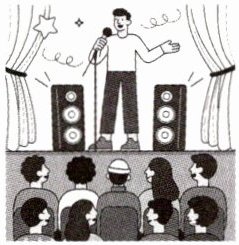
Stand-up is a type of comedy where someone stands before a live audience and performs a series of jokes. Young comedians—like you—can create a stand-up comedy show to 1 in front of family and friends or in a community talent show. Here's how to get started.
Watch and learn. A good first 2 is watching other comedians perform. Ask an adult to help you find some kid-friendly stand-up comedians online. A few to 3 might include some famous comedians. 4 what kinds of jokes work.
Write your materials. Many comedians choose to talk about their personal 5, or make funny observations about familiar topics, like sports or movies. Think about who your audience will be and what is 6 for them to understand. For example, your friends would probably understand humor about school, but your grandparents may not. When you have an idea for a 7, write it down. It should have a beginning that 8 the listeners. Then you can create any characters or provide other information people need to understand the joke.
Pull everything together. Once you have several jokes 9, you can put them together into a complete stand-up show, called a "set". As a beginner, aim for a few minutes. Open your set with a strong joke that you feel 10 will make your audience laugh. Between jokes, you can include transitions that help 11 one story to the next. Conclude with a "closer", one final strong joke that will leave your 12 laughing.
Practice your show. 13 you have your set, it's time to practice performing. Practice in front of a 14 or record yourself and make any small changes. Next, do it in front of family members or a few 15 friends. Then it's time to perform! A family party or school talent show can be a good place to start. Whatever the location, take a few deep breaths before you go onstage and have fun!
素材来源: The Week Junior
()1. A. draw B. learn C. sing D. perform
()2. A. step B. lesson C. game D. rule
()3. A. call B. wait C. watch D. ask
()4. A. Take care of B. Pay attention to C. Play roles in D. Take part in
()5. A. experiences B. dreams C. hobbies D. jobs
()6. A. strange B. easy C. boring D. funny
()7. A. play B. story C. song D. joke
()8. A. interests B. helps C. stops D. teaches
()9. A. bought B. read C. written D. found
()10. A. angry B. similar C. serious D. confident
()11. A. connect B. turn C. add D. get
()12. A. family B. audience C. classmates D. stars
()13. A. Because B. Before C. If D. Though
()14. A. TV B. mirror C. wall D. map
()15. A. touched B. worried C. trusted D. excited
KEY→P30
范畴:人与社会 主题:文学艺术 体裁:说明文 难度:★★★★ 建议用时:10分钟 评价:/15
Stand-up is a type of comedy where someone stands before a live audience and performs a series of jokes. Young comedians—like you—can create a stand-up comedy show to 1 in front of family and friends or in a community talent show. Here's how to get started.
Watch and learn. A good first 2 is watching other comedians perform. Ask an adult to help you find some kid-friendly stand-up comedians online. A few to 3 might include some famous comedians. 4 what kinds of jokes work.
Write your materials. Many comedians choose to talk about their personal 5, or make funny observations about familiar topics, like sports or movies. Think about who your audience will be and what is 6 for them to understand. For example, your friends would probably understand humor about school, but your grandparents may not. When you have an idea for a 7, write it down. It should have a beginning that 8 the listeners. Then you can create any characters or provide other information people need to understand the joke.
Pull everything together. Once you have several jokes 9, you can put them together into a complete stand-up show, called a "set". As a beginner, aim for a few minutes. Open your set with a strong joke that you feel 10 will make your audience laugh. Between jokes, you can include transitions that help 11 one story to the next. Conclude with a "closer", one final strong joke that will leave your 12 laughing.
Practice your show. 13 you have your set, it's time to practice performing. Practice in front of a 14 or record yourself and make any small changes. Next, do it in front of family members or a few 15 friends. Then it's time to perform! A family party or school talent show can be a good place to start. Whatever the location, take a few deep breaths before you go onstage and have fun!
素材来源: The Week Junior
()1. A. draw B. learn C. sing D. perform
()2. A. step B. lesson C. game D. rule
()3. A. call B. wait C. watch D. ask
()4. A. Take care of B. Pay attention to C. Play roles in D. Take part in
()5. A. experiences B. dreams C. hobbies D. jobs
()6. A. strange B. easy C. boring D. funny
()7. A. play B. story C. song D. joke
()8. A. interests B. helps C. stops D. teaches
()9. A. bought B. read C. written D. found
()10. A. angry B. similar C. serious D. confident
()11. A. connect B. turn C. add D. get
()12. A. family B. audience C. classmates D. stars
()13. A. Because B. Before C. If D. Though
()14. A. TV B. mirror C. wall D. map
()15. A. touched B. worried C. trusted D. excited
答案
1-5 DACBA 6-10 BDACD 11-15 ABCBC
本文介绍了青少年创作脱口秀的方法:先观看并学习喜剧表演,再结合个人经历编写适合观众的笑话,将其整合为完整节目,最后反复练习并在合适场合自信地进行表演。
1. D 上文提及“年轻喜剧演员可以创作脱口秀表演”,下文对应表示:在家人和朋友面前表演。
2. A 第一步是观看其他喜剧演员的表演。
3. C 可供观看的包括一些著名的喜剧演员。
4. B 注意哪些类型的笑话有用。
5. A 许多喜剧演员选择谈论自己的个人经历。
6. B 以及什么样的内容对他们来说是易于理解的。
7. D 当你有一个笑话的想法时,把它写下来。
8. A 它应该有一个让听众感兴趣的开头。
9. C 一旦你写好了几个笑话,就可以将它们整合成一场完整的脱口秀表演。
10. D 用一则你有信心能让观众发笑的有力笑话作为开场。confident意为“自信的”,符合语境。
11. A 将一个故事与下一个故事连接起来。
12. B 上文提及“以笑话作为收尾,这个笑话要足够有劲”,下文对应表示:能让观众笑个不停。
13. C “有了你自己的节目”与“就该练习表演了”是条件关系,用If引导条件状语从句。
14. B 可以在镜子前练习,或者录制下来进行微调。
15. C 在几位信任的朋友或家人面前进行表演。
本文介绍了青少年创作脱口秀的方法:先观看并学习喜剧表演,再结合个人经历编写适合观众的笑话,将其整合为完整节目,最后反复练习并在合适场合自信地进行表演。
1. D 上文提及“年轻喜剧演员可以创作脱口秀表演”,下文对应表示:在家人和朋友面前表演。
2. A 第一步是观看其他喜剧演员的表演。
3. C 可供观看的包括一些著名的喜剧演员。
4. B 注意哪些类型的笑话有用。
5. A 许多喜剧演员选择谈论自己的个人经历。
6. B 以及什么样的内容对他们来说是易于理解的。
7. D 当你有一个笑话的想法时,把它写下来。
8. A 它应该有一个让听众感兴趣的开头。
9. C 一旦你写好了几个笑话,就可以将它们整合成一场完整的脱口秀表演。
10. D 用一则你有信心能让观众发笑的有力笑话作为开场。confident意为“自信的”,符合语境。
11. A 将一个故事与下一个故事连接起来。
12. B 上文提及“以笑话作为收尾,这个笑话要足够有劲”,下文对应表示:能让观众笑个不停。
13. C “有了你自己的节目”与“就该练习表演了”是条件关系,用If引导条件状语从句。
14. B 可以在镜子前练习,或者录制下来进行微调。
15. C 在几位信任的朋友或家人面前进行表演。
解析
