

 登录
登录
一、根据图片提示,选择正确的单词补全句子。
1. The lion is (slow/fast).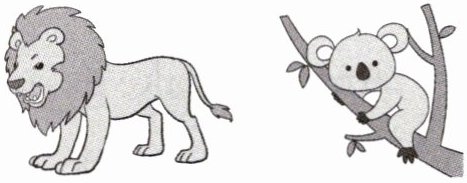
2. Tim is a (thin/fat) boy.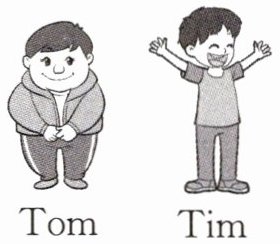
3. The monkey has a (short/long) tail.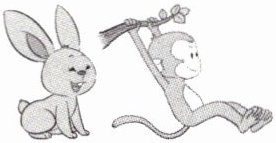
4. The panda has a (big/small) body.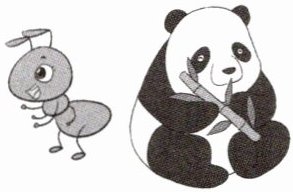
1. The lion is (slow/fast).
2. Tim is a (thin/fat) boy.
3. The monkey has a (short/long) tail.
4. The panda has a (big/small) body.
答案
1. fast 2. thin 3. long 4. big
解析
1. 观察第一幅图,狮子是行动速度很快的动物,和动作缓慢的考拉对比,fast表示“快的”,slow表示“慢的”,因此选fast。
2. 观察第二幅图,Tim和偏胖的Tom对比,身形很瘦,thin表示“瘦的”,fat表示“胖的”,因此选thin。
3. 观察第三幅图,猴子的尾巴比兔子的短尾巴长很多,long表示“长的”,short表示“短的”,因此选long。
4. 观察第四幅图,熊猫的身体和旁边的小蚂蚁对比,体型很大,big表示“大的”,small表示“小的”,因此选big。
2. 观察第二幅图,Tim和偏胖的Tom对比,身形很瘦,thin表示“瘦的”,fat表示“胖的”,因此选thin。
3. 观察第三幅图,猴子的尾巴比兔子的短尾巴长很多,long表示“长的”,short表示“短的”,因此选long。
4. 观察第四幅图,熊猫的身体和旁边的小蚂蚁对比,体型很大,big表示“大的”,small表示“小的”,因此选big。
二、两个小朋友正在讨论送给妈妈的生日礼物,请仔细阅读,将下列句子用数字1~6排序,使之成为一段完整的对话。
()Thank you. This is for my mum.
()That's good. Do you often draw pictures for your mum?
()Yes. And I also make cards for her birthday. What about you?
()Hi, Lucy. Oh, this picture is beautiful!
()I often sing songs for my mum.
()That's good too.
()Thank you. This is for my mum.
()That's good. Do you often draw pictures for your mum?
()Yes. And I also make cards for her birthday. What about you?
()Hi, Lucy. Oh, this picture is beautiful!
()I often sing songs for my mum.
()That's good too.
答案
2 3 4 1 5 6
解析
我们按照日常对话的逻辑梳理顺序:1. 对话以打招呼开场,首先是“Hi, Lucy. Oh, this picture is beautiful!”,这是对话的第1句;2. 收到别人对画作的夸赞后,要表达感谢,同时说明这幅画是送给妈妈的礼物,对应“Thank you. This is for my mum.”,是对话第2句;3. 接着对方肯定这个做法,询问对方是否经常给妈妈画画,对应“That's good. Do you often draw pictures for your mum?”,是对话第3句;4. 回答对方的问题,补充说明自己还会给妈妈做生日贺卡,同时反问对方的情况,对应“Yes. And I also make cards for her birthday. What about you?”,是对话第4句;5. 回应对方的反问,说明自己经常给妈妈唱歌,对应“I often sing songs for my mum.”,是对话第5句;6. 最后对方给出评价,认为这个做法也很棒,对应“That's good too.”,是对话第6句。
三、阅读对话,完成下列题目。
Zhang Peng: Hello.
John: Hello, Zhang Peng.
Zhang Peng: Do you make a card for your dad on Father's Day, John?
John: No, I don't. I give him a warm hug(温暖的拥抱).
Zhang Peng: Do you make a card for your dad, Sarah?
Sarah: Yes, I do.
Zhang Peng: What about you, Amy?
Amy: I make a sandwich for my dad.
Zhang Peng: Do you do this for your dad too, Chen Jie?
Chen Jie: No, I don't. I cook a bowl of noodles for my dad.
Zhang Peng: Good.
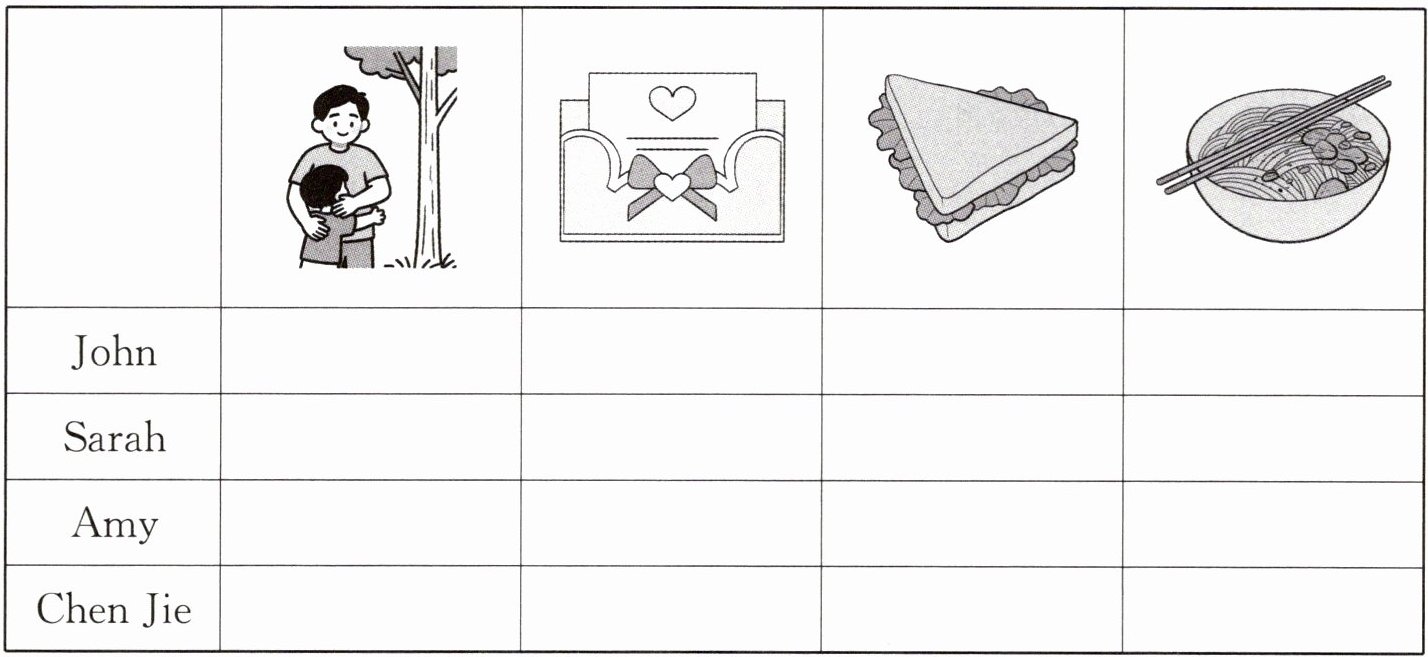
1. 阅读对话,在表格中对应人物与行为的位置画“√”。
2. 阅读对话,判断下列句子的正(T)误(F)。
()(1)John makes a card for his dad on Father's Day.
()(2)Chen Jie cooks a bowl of noodles for her dad on Father's Day.
Zhang Peng: Hello.
John: Hello, Zhang Peng.
Zhang Peng: Do you make a card for your dad on Father's Day, John?
John: No, I don't. I give him a warm hug(温暖的拥抱).
Zhang Peng: Do you make a card for your dad, Sarah?
Sarah: Yes, I do.
Zhang Peng: What about you, Amy?
Amy: I make a sandwich for my dad.
Zhang Peng: Do you do this for your dad too, Chen Jie?
Chen Jie: No, I don't. I cook a bowl of noodles for my dad.
Zhang Peng: Good.
1. 阅读对话,在表格中对应人物与行为的位置画“√”。
2. 阅读对话,判断下列句子的正(T)误(F)。
()(1)John makes a card for his dad on Father's Day.
()(2)Chen Jie cooks a bowl of noodles for her dad on Father's Day.
答案
1. John行第一列画√,Sarah行第二列画√,Amy行第三列画√,Chen Jie行第四列画√,其余单元格不做标记。
2. (1) F (2) T
2. (1) F (2) T
解析
1. 逐句对照对话内容匹配人物的父亲节相关行为:
① John表示自己没有做卡片,而是给爸爸一个温暖的拥抱,对应第一幅拥抱的插图,在John所在行、第一列的位置画√即可;
② Sarah回答自己给爸爸做了卡片,对应第二幅卡片的插图,在Sarah所在行、第二列的位置画√即可;
③ Amy说自己给爸爸做了三明治,对应第三幅三明治的插图,在Amy所在行、第三列的位置画√即可;
④ Chen Jie说自己给爸爸煮了一碗面条,对应第四幅面条的插图,在Chen Jie所在行、第四列的位置画√即可。
2. 对照对话内容判断句子正误:
(1) 对话里John明确表示自己没有给爸爸做卡片,和该句描述不符,因此判断为错误;
(2) 对话里Chen Jie说明自己给爸爸煮了一碗面条,和该句描述完全一致,因此判断为正确。
① John表示自己没有做卡片,而是给爸爸一个温暖的拥抱,对应第一幅拥抱的插图,在John所在行、第一列的位置画√即可;
② Sarah回答自己给爸爸做了卡片,对应第二幅卡片的插图,在Sarah所在行、第二列的位置画√即可;
③ Amy说自己给爸爸做了三明治,对应第三幅三明治的插图,在Amy所在行、第三列的位置画√即可;
④ Chen Jie说自己给爸爸煮了一碗面条,对应第四幅面条的插图,在Chen Jie所在行、第四列的位置画√即可。
2. 对照对话内容判断句子正误:
(1) 对话里John明确表示自己没有给爸爸做卡片,和该句描述不符,因此判断为错误;
(2) 对话里Chen Jie说明自己给爸爸煮了一碗面条,和该句描述完全一致,因此判断为正确。
