

 登录
登录
阅读理解 “爱你老己”
素养:思维品质 难度:中 用时:7分钟
新素材 “Love you, laoji” has become a catch-phrase(流行语). In fact, “laoji” means “the old self”. Calling ourselves this way sounds a bit funny, but it makes us feel warm at heart. It’s like talking to a good old friend—we feel relaxed and loved, no matter what difficulties we face.
Do you know how to love “laoji”? Here are some practical tips to help you love “laoji” more and live a happier life.
Don’t Chase Perfection
Waiting to be perfect usually stops us from starting. Many people put off their tasks because they’re afraid of making mistakes. But doing something imperfect is better than doing nothing at all. You can start with small tasks, learn from your mistakes along the way and keep improving. Remember, the first step is always the most important.
Take Real Rest
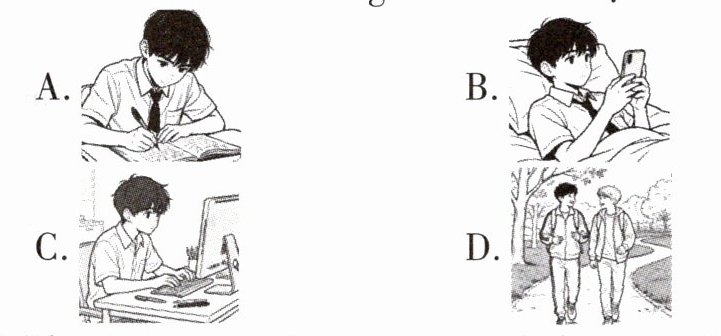
Real rest doesn’t mean sleeping the whole day or staying up late on your phone—both of these habits will only make you more tired. Instead, active rest may be of some help to your mind and body. You can enjoy the sunshine, go for a walk, exercise a little or listen to your favourite music. Choose one or two small things to do each day.
Talk to Yourself Kindly
Pay more attention to how you speak to yourself when things go terrible. Instead of saying “I’m so stupid”, try to say “It’s okay; everyone makes mistakes” or “I’ll try harder next time”. Treat yourself the way you would treat a good friend.
Add a comment...
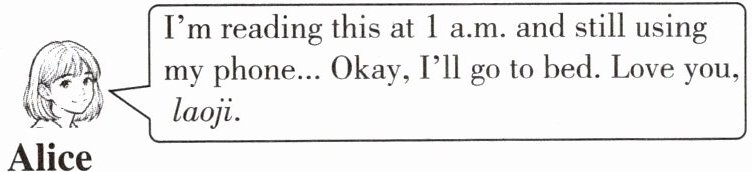
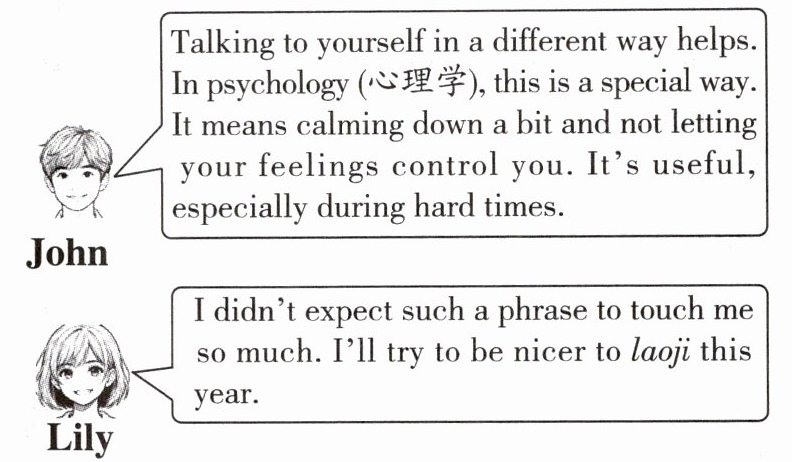
John
Talking to yourself in a different way helps. In psychology (心理学), this is a special way. It means calming down a bit and not letting your feelings control you. It’s useful, especially during hard times.
Lily
I didn’t expect such a phrase to touch me so much. I’ll try to be nicer to laoji this year.
1. What does the word “laoji” mean?
A. A funny activity. B. The old self.
C. A good old friend. D. A difficult task.
2. 新考法·图文转换题 According to the passage, which of the following is active rest?
3. The writer introduces the catchphrase mainly to
A. guide readers to learn more about psychology
B. encourage readers to care more about themselves
C. ask readers to keep the popular catchphrase in mind
D. make readers wait until they’re perfect before starting
4. Why does the passage end with the three people’s words?
A. To explain the meaning of “laoji” to readers again.
B. To show the three people have the same personality.
C. To show the catchphrase and tips really influence people.
D. To give more practical tips to help people solve problems.
5. What is the writer’s attitude (态度) towards “Love you, laoji”?
A. Unsure. B. Supportive.
C. Doubtful. D. Uninterested.
素养:思维品质 难度:中 用时:7分钟
新素材 “Love you, laoji” has become a catch-phrase(流行语). In fact, “laoji” means “the old self”. Calling ourselves this way sounds a bit funny, but it makes us feel warm at heart. It’s like talking to a good old friend—we feel relaxed and loved, no matter what difficulties we face.
Do you know how to love “laoji”? Here are some practical tips to help you love “laoji” more and live a happier life.
Don’t Chase Perfection
Waiting to be perfect usually stops us from starting. Many people put off their tasks because they’re afraid of making mistakes. But doing something imperfect is better than doing nothing at all. You can start with small tasks, learn from your mistakes along the way and keep improving. Remember, the first step is always the most important.
Take Real Rest
Real rest doesn’t mean sleeping the whole day or staying up late on your phone—both of these habits will only make you more tired. Instead, active rest may be of some help to your mind and body. You can enjoy the sunshine, go for a walk, exercise a little or listen to your favourite music. Choose one or two small things to do each day.
Talk to Yourself Kindly
Pay more attention to how you speak to yourself when things go terrible. Instead of saying “I’m so stupid”, try to say “It’s okay; everyone makes mistakes” or “I’ll try harder next time”. Treat yourself the way you would treat a good friend.
Add a comment...
John
Talking to yourself in a different way helps. In psychology (心理学), this is a special way. It means calming down a bit and not letting your feelings control you. It’s useful, especially during hard times.
Lily
I didn’t expect such a phrase to touch me so much. I’ll try to be nicer to laoji this year.
1. What does the word “laoji” mean?
A. A funny activity. B. The old self.
C. A good old friend. D. A difficult task.
2. 新考法·图文转换题 According to the passage, which of the following is active rest?
3. The writer introduces the catchphrase mainly to
B
.A. guide readers to learn more about psychology
B. encourage readers to care more about themselves
C. ask readers to keep the popular catchphrase in mind
D. make readers wait until they’re perfect before starting
4. Why does the passage end with the three people’s words?
A. To explain the meaning of “laoji” to readers again.
B. To show the three people have the same personality.
C. To show the catchphrase and tips really influence people.
D. To give more practical tips to help people solve problems.
5. What is the writer’s attitude (态度) towards “Love you, laoji”?
A. Unsure. B. Supportive.
C. Doubtful. D. Uninterested.
答案
【解题导语】 本文围绕“Love you, laoji”这一流行语展开,介绍了“laoji”的含义,并给出了如何更好地爱自己、过上更快乐的生活的实用建议,最后通过三个人的评论展示了这一流行语和建议对人们的影响。
1. B 词义猜测题。根据文章第一段中的“In fact, ‘laoji’ means ‘the old self’”可知,“laoji”的意思是“旧的自我”。“old”并非指年老,而是以亲切的、像对老朋友那样的语气称呼自己。故选 B。
2. D 图文转换题。根据第四段中的“Instead, active rest may be of some help to your mind and body. You can enjoy the sunshine, go for a walk, exercise a little or listen to your favourite music”可知,享受阳光、散步、稍微运动一下或听你最喜欢的音乐都属于积极休息,选项 D“去散步”符合积极休息的范畴。故选 D。
3. B 推理判断题。根据第二段中的“Do you know how to love ‘laoji’? Here are some practical tips to help you love ‘laoji’ more and live a happier life”以及后文给出的具体建议可知,作者介绍这个流行语主要是为了鼓励读者更多地关心自己,过上更快乐的生活。故选 B。
4. C 写作意图题。文章最后展示了 Alice、John 和 Lily 三个人的评论,他们都受到了“Love you, laoji”这一流行语和文章中建议的影响,表达了要改变自己、更好地爱自己的决心。因此,文章以这三个人的话结尾是为了展示这个流行语和这些建议真的对人们产生了影响。故选 C。
5. B 观点态度题。根据文章整体内容可知,作者介绍了“Love you, laoji”这一流行语,并给出了如何更好地爱自己的建议,且通过三个人的评论展示了这一流行语和这些建议的积极影响。可以推断出作者对“Love you, laoji”持支持的态度。故选 B。
1. B 词义猜测题。根据文章第一段中的“In fact, ‘laoji’ means ‘the old self’”可知,“laoji”的意思是“旧的自我”。“old”并非指年老,而是以亲切的、像对老朋友那样的语气称呼自己。故选 B。
2. D 图文转换题。根据第四段中的“Instead, active rest may be of some help to your mind and body. You can enjoy the sunshine, go for a walk, exercise a little or listen to your favourite music”可知,享受阳光、散步、稍微运动一下或听你最喜欢的音乐都属于积极休息,选项 D“去散步”符合积极休息的范畴。故选 D。
3. B 推理判断题。根据第二段中的“Do you know how to love ‘laoji’? Here are some practical tips to help you love ‘laoji’ more and live a happier life”以及后文给出的具体建议可知,作者介绍这个流行语主要是为了鼓励读者更多地关心自己,过上更快乐的生活。故选 B。
4. C 写作意图题。文章最后展示了 Alice、John 和 Lily 三个人的评论,他们都受到了“Love you, laoji”这一流行语和文章中建议的影响,表达了要改变自己、更好地爱自己的决心。因此,文章以这三个人的话结尾是为了展示这个流行语和这些建议真的对人们产生了影响。故选 C。
5. B 观点态度题。根据文章整体内容可知,作者介绍了“Love you, laoji”这一流行语,并给出了如何更好地爱自己的建议,且通过三个人的评论展示了这一流行语和这些建议的积极影响。可以推断出作者对“Love you, laoji”持支持的态度。故选 B。
解析
【分析】
本题为英语阅读理解题,共5道小题,涉及词义猜测、图文转换、推理判断、写作意图、观点态度等题型。解题思路如下:1. 第1题是词义猜测题,需定位原文中关于“laoji”含义的表述,直接匹配选项得出答案;2. 第2题是图文转换题,需根据原文中“active rest”的具体例子,结合选项内容选出符合要求的答案;3. 第3题是推理判断题,需结合第二段作者给出的核心目的(帮助读者更爱自己、过更快乐生活),判断介绍流行语的意图;4. 第4题是写作意图题,需分析结尾三人的评论内容,明确其体现的作用;5. 第5题是观点态度题,需通读全文把握作者对“Love you, laoji”的整体倾向。
【解析】
1. 词义猜测题:根据文章第一段“In fact, ‘laoji’ means ‘the old self’”,可知“laoji”意为“旧的自我”,对应选项B。
2. 图文转换题:根据第四段“Instead, active rest may be of some help to your mind and body. You can enjoy the sunshine, go for a walk, exercise a little or listen to your favourite music”,可知散步属于积极休息,对应选项D。
3. 推理判断题:根据第二段“Here are some practical tips to help you love ‘laoji’ more and live a happier life”及后文给出的具体建议,作者介绍该流行语主要是为了鼓励读者更多地关心自己,对应选项B。
4. 写作意图题:文章结尾三人的评论(John提到换种方式和自己说话有用,Lily表示要对自己更好),体现他们受“Love you, laoji”这一流行语和相关建议的积极影响,因此结尾的作用是展示该流行语和建议对人们的影响,对应选项C。
5. 观点态度题:全文作者围绕“Love you, laoji”介绍含义并给出关爱自己的实用建议,结尾评论也体现了积极影响,由此可推断作者对该流行语持支持态度,对应选项B。
【答案】
1.B 2.D 3.B 4.C 5.B
【知识点】
英语阅读理解、词义猜测题、推理判断题
【点评】
本题以“爱你老己”这一贴近生活的流行语为素材,题型多样,涵盖多种阅读理解解题技巧,既考查学生的英语语篇理解能力,又传递了关爱自我的积极理念,难度适中。
【难度系数】
0.5
本题为英语阅读理解题,共5道小题,涉及词义猜测、图文转换、推理判断、写作意图、观点态度等题型。解题思路如下:1. 第1题是词义猜测题,需定位原文中关于“laoji”含义的表述,直接匹配选项得出答案;2. 第2题是图文转换题,需根据原文中“active rest”的具体例子,结合选项内容选出符合要求的答案;3. 第3题是推理判断题,需结合第二段作者给出的核心目的(帮助读者更爱自己、过更快乐生活),判断介绍流行语的意图;4. 第4题是写作意图题,需分析结尾三人的评论内容,明确其体现的作用;5. 第5题是观点态度题,需通读全文把握作者对“Love you, laoji”的整体倾向。
【解析】
1. 词义猜测题:根据文章第一段“In fact, ‘laoji’ means ‘the old self’”,可知“laoji”意为“旧的自我”,对应选项B。
2. 图文转换题:根据第四段“Instead, active rest may be of some help to your mind and body. You can enjoy the sunshine, go for a walk, exercise a little or listen to your favourite music”,可知散步属于积极休息,对应选项D。
3. 推理判断题:根据第二段“Here are some practical tips to help you love ‘laoji’ more and live a happier life”及后文给出的具体建议,作者介绍该流行语主要是为了鼓励读者更多地关心自己,对应选项B。
4. 写作意图题:文章结尾三人的评论(John提到换种方式和自己说话有用,Lily表示要对自己更好),体现他们受“Love you, laoji”这一流行语和相关建议的积极影响,因此结尾的作用是展示该流行语和建议对人们的影响,对应选项C。
5. 观点态度题:全文作者围绕“Love you, laoji”介绍含义并给出关爱自己的实用建议,结尾评论也体现了积极影响,由此可推断作者对该流行语持支持态度,对应选项B。
【答案】
1.B 2.D 3.B 4.C 5.B
【知识点】
英语阅读理解、词义猜测题、推理判断题
【点评】
本题以“爱你老己”这一贴近生活的流行语为素材,题型多样,涵盖多种阅读理解解题技巧,既考查学生的英语语篇理解能力,又传递了关爱自我的积极理念,难度适中。
【难度系数】
0.5
