

 登录
登录
B
Hello,I am Wang Lei. Last month,I went to Guilin with my family. We went there by train. Guilin is in Guangxi. It is very beautiful! We saw the clean Lijiang River and the green hills. We took a boat trip. The view was like a picture! Tomorrow,I am going to show the photos to my friends. I am going to tell them, "Our country is so beautiful!"
根据短文内容,回答下列问题。
1. Is Guilin in Guangdong?
2. How did Wang Lei go to Guilin?
3. What did they see in Guilin?
4. What is Wang Lei going to do tomorrow?
5. What is Wang Lei going to say to his friends?
Hello,I am Wang Lei. Last month,I went to Guilin with my family. We went there by train. Guilin is in Guangxi. It is very beautiful! We saw the clean Lijiang River and the green hills. We took a boat trip. The view was like a picture! Tomorrow,I am going to show the photos to my friends. I am going to tell them, "Our country is so beautiful!"
根据短文内容,回答下列问题。
1. Is Guilin in Guangdong?
No,it isn't. It is in Guangxi.
2. How did Wang Lei go to Guilin?
He went there by train.
3. What did they see in Guilin?
They saw the clean Lijiang River and the green hills.
4. What is Wang Lei going to do tomorrow?
He is going to show the photos to his friends.
5. What is Wang Lei going to say to his friends?
He is going to say,"Our country is so beautiful!"
答案
1. No,it isn't. It is in Guangxi.
2. He went there by train.
3. They saw the clean Lijiang River and the green hills.
4. He is going to show the photos to his friends.
5. He is going to say,"Our country is so beautiful!"
2. He went there by train.
3. They saw the clean Lijiang River and the green hills.
4. He is going to show the photos to his friends.
5. He is going to say,"Our country is so beautiful!"
解析
【分析】
这是一道细节类英语阅读理解题,解题时先通读全文了解故事大意,再逐个抓取每个问题的核心关键词,回到原文中定位对应语句,提取相关信息后,注意将原文的第一人称表述转换为符合问题主语Wang Lei的第三人称表述,整理出符合要求的答案即可,所有题目的答案都可以在原文中直接找到对应内容,不需要复杂推理。
【解析】
1. 第一题是一般疑问句,核心关键词为Guilin、Guangdong,定位原文语句"Guilin is in Guangxi.",可知桂林不在广东,位于广西,因此给出否定回答并补充正确信息。
2. 第二题询问出行方式,核心关键词为How、go to Guilin,定位原文语句"We went there by train.",将主语替换为指代Wang Lei的He,整理得到答案。
3. 第三题询问在桂林看到的景物,核心关键词为What、see,定位原文语句"We saw the clean Lijiang River and the green hills.",将主语替换为They,直接提取内容即可。
4. 第四题询问明天的计划,核心关键词为tomorrow、be going to do,定位原文语句"Tomorrow,I am going to show the photos to my friends.",将第一人称I转换为He,物主代词my转换为his,整理得到答案。
5. 第五题询问要对朋友说的内容,核心关键词为say to his friends,定位原文末尾语句"I am going to tell them, "Our country is so beautiful!"",转换人称后提取对应内容即可。
【答案】
1. No,it isn't. It is in Guangxi.
2. He went there by train.
3. They saw the clean Lijiang River and the green hills.
4. He is going to show the photos to his friends.
5. He is going to say,"Our country is so beautiful!"
【知识点】
阅读理解细节定位,人称转换,一般疑问句作答
【点评】
本题属于小学英语基础阅读题型,所有答案都能在原文中直接找到对应依据,仅需要注意人称的合理转换,没有设置干扰项,能够有效锻炼学生快速从文本中抓取关键信息的能力,巩固一般过去时和一般将来时的相关表达。
【难度系数】
0.9
这是一道细节类英语阅读理解题,解题时先通读全文了解故事大意,再逐个抓取每个问题的核心关键词,回到原文中定位对应语句,提取相关信息后,注意将原文的第一人称表述转换为符合问题主语Wang Lei的第三人称表述,整理出符合要求的答案即可,所有题目的答案都可以在原文中直接找到对应内容,不需要复杂推理。
【解析】
1. 第一题是一般疑问句,核心关键词为Guilin、Guangdong,定位原文语句"Guilin is in Guangxi.",可知桂林不在广东,位于广西,因此给出否定回答并补充正确信息。
2. 第二题询问出行方式,核心关键词为How、go to Guilin,定位原文语句"We went there by train.",将主语替换为指代Wang Lei的He,整理得到答案。
3. 第三题询问在桂林看到的景物,核心关键词为What、see,定位原文语句"We saw the clean Lijiang River and the green hills.",将主语替换为They,直接提取内容即可。
4. 第四题询问明天的计划,核心关键词为tomorrow、be going to do,定位原文语句"Tomorrow,I am going to show the photos to my friends.",将第一人称I转换为He,物主代词my转换为his,整理得到答案。
5. 第五题询问要对朋友说的内容,核心关键词为say to his friends,定位原文末尾语句"I am going to tell them, "Our country is so beautiful!"",转换人称后提取对应内容即可。
【答案】
1. No,it isn't. It is in Guangxi.
2. He went there by train.
3. They saw the clean Lijiang River and the green hills.
4. He is going to show the photos to his friends.
5. He is going to say,"Our country is so beautiful!"
【知识点】
阅读理解细节定位,人称转换,一般疑问句作答
【点评】
本题属于小学英语基础阅读题型,所有答案都能在原文中直接找到对应依据,仅需要注意人称的合理转换,没有设置干扰项,能够有效锻炼学生快速从文本中抓取关键信息的能力,巩固一般过去时和一般将来时的相关表达。
【难度系数】
0.9
八、作文。
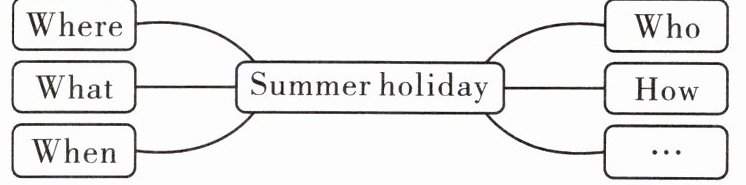
暑假就要到了,你打算如何度过暑假呢?想一想,根据思维导图的提示用英语写一篇短文向大家介绍你的暑假计划。不少于5句话。
暑假就要到了,你打算如何度过暑假呢?想一想,根据思维导图的提示用英语写一篇短文向大家介绍你的暑假计划。不少于5句话。
I'm going to Guilin with my parents and brother this summer holiday. We are going there by car. We will visit the Lijiang River. It's very famous. We are going to take some photos there. And we will go to eat Guilin Rice Noodles. We will have a great holiday.
答案
One possible version:
I'm going to Guilin with my parents and brother this summer holiday. We are going
there by car. We will visit the Lijiang River. It's very famous. We are going to take some
photos there. And we will go to eat Guilin Rice Noodles. We will have a great holiday.
I'm going to Guilin with my parents and brother this summer holiday. We are going
there by car. We will visit the Lijiang River. It's very famous. We are going to take some
photos there. And we will go to eat Guilin Rice Noodles. We will have a great holiday.
解析
【分析】
拿到这道写作题,首先先梳理思维导图给出的所有提示要素:Where(计划前往的地点)、What(假期计划做的事)、When(计划的时间,也就是暑假期间)、Who(同行的人员)、How(出行的方式),还可以自行补充合理的细节内容。解题时先开篇点明暑假即将到来,引出自己的假期安排,再按照逻辑顺序把各个要素串联起来:先说明出行的时间、同行的人、目的地,再介绍出行的交通方式,之后列举打算在目的地开展的各项活动,最后收尾表达对假期的期待,全程使用描述计划的一般将来时结构(will/be going to),保证总句数不少于5句,语句通顺无语法错误即可完成写作。
【解析】
写作可按以下步骤完成:
1. 开篇点题:第一句直接交代核心信息,同时覆盖When(this summer holiday)、Who(my family members)、Where(旅行目的地)三个要素,明确自己的暑假出行计划;
2. 补充出行细节:第二句说明前往目的地的交通方式,对应思维导图的How要素;
3. 填充活动内容:依次介绍假期里计划开展的各项活动,比如游览景点、拍照、品尝当地特色美食,对应思维导图的What要素,让内容充实自然;
4. 收尾总结:最后表达对假期的美好期待,确保全文句数不少于5句,逻辑连贯,符合写作要求。
【答案】
One possible version:
I'm going to Guilin with my parents and brother this summer holiday. We are going there by car. We will visit the Lijiang River. It's very famous. We are going to take some photos there. And we will go to eat Guilin Rice Noodles. We will have a great holiday.
【知识点】
一般将来时应用
计划类英语写作
特殊疑问词辨析
【点评】
本题借助思维导图给出了非常清晰的写作维度,把开放的作文拆解成了明确的信息提示,大幅降低了写作门槛,重点考察学生用一般将来时描述计划的能力,以及把零散信息串联成通顺短文的能力,学生只要把各个提示要素合理安排进内容里,很容易写出符合要求的短文。
【难度系数】
0.7
拿到这道写作题,首先先梳理思维导图给出的所有提示要素:Where(计划前往的地点)、What(假期计划做的事)、When(计划的时间,也就是暑假期间)、Who(同行的人员)、How(出行的方式),还可以自行补充合理的细节内容。解题时先开篇点明暑假即将到来,引出自己的假期安排,再按照逻辑顺序把各个要素串联起来:先说明出行的时间、同行的人、目的地,再介绍出行的交通方式,之后列举打算在目的地开展的各项活动,最后收尾表达对假期的期待,全程使用描述计划的一般将来时结构(will/be going to),保证总句数不少于5句,语句通顺无语法错误即可完成写作。
【解析】
写作可按以下步骤完成:
1. 开篇点题:第一句直接交代核心信息,同时覆盖When(this summer holiday)、Who(my family members)、Where(旅行目的地)三个要素,明确自己的暑假出行计划;
2. 补充出行细节:第二句说明前往目的地的交通方式,对应思维导图的How要素;
3. 填充活动内容:依次介绍假期里计划开展的各项活动,比如游览景点、拍照、品尝当地特色美食,对应思维导图的What要素,让内容充实自然;
4. 收尾总结:最后表达对假期的美好期待,确保全文句数不少于5句,逻辑连贯,符合写作要求。
【答案】
One possible version:
I'm going to Guilin with my parents and brother this summer holiday. We are going there by car. We will visit the Lijiang River. It's very famous. We are going to take some photos there. And we will go to eat Guilin Rice Noodles. We will have a great holiday.
【知识点】
一般将来时应用
计划类英语写作
特殊疑问词辨析
【点评】
本题借助思维导图给出了非常清晰的写作维度,把开放的作文拆解成了明确的信息提示,大幅降低了写作门槛,重点考察学生用一般将来时描述计划的能力,以及把零散信息串联成通顺短文的能力,学生只要把各个提示要素合理安排进内容里,很容易写出符合要求的短文。
【难度系数】
0.7
