

 登录
登录
六、阅读理解
(2025 南通通州期末)Most people have a favourite colour, but how people feel about colours depends on their culture. This can be very important to people in business that sell products(产品)all over the world. They might choose a colour because they think it is exciting or nice, but in another country that same colour could be used to give a sad meaning. Look at these examples:
If you ask someone in Britain what the right colour is for a bride to wear, the answer will be white. In China and other Eastern countries, brides often wear red because the colour red means good luck and happiness. Red is an unusual colour for a British bride to wear. In Britain, red is used as a sign of danger. Road signs and warning things are often in red. In Eastern cultures, the colour red does not mean you have to be careful.
In Egypt, yellow is the colour for death(死亡). In Britain and other Western cultures, death and funerals are usually linked to the colour black, but in many Eastern countries white is the colour people think of when it comes to death and funerals.
Many people like the colour orange because it is bright and exciting. Some advertisers(广告商)will not use orange in their advertisements because people may think the products are cheap and not very good.
In a word, colours have different meanings in different cultures. We should learn to choose the right colour in some special situations.
1. The colour red in Eastern countries means .
A. a comfortable life B. good luck
C. a new start D. a good hobby
2. Why does the writer give so many examples in the passage?
A. To choose a favourite colour for readers.
B. To introduce different colours in the world.
C. To help advertisers decide the right colours in their advertisements.
D. To tell readers different cultures have different meanings for the same colour.
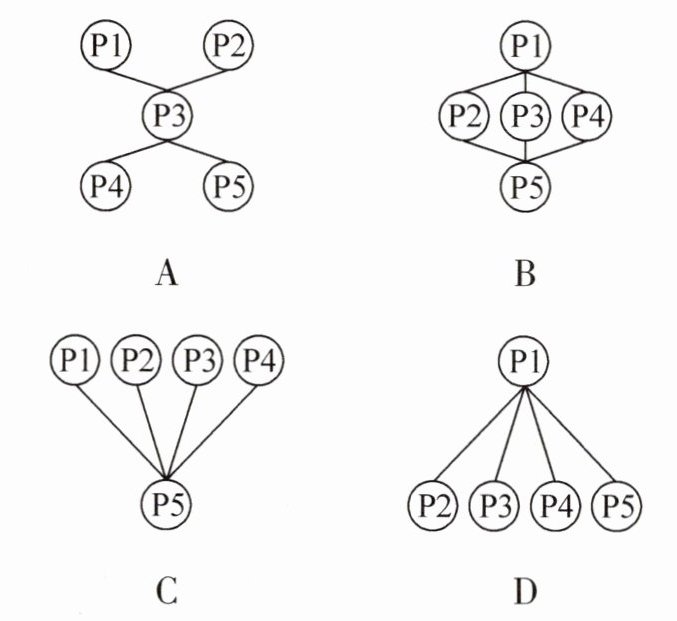
3. Which of the following is the structure of the passage?(P1=Paragraph 1...)
4. What would be the best title for the passage?
A. Colours in different jobs
B. The history of colours
C. Colours between China and Britain
D. Colours around the world
(2025 南通通州期末)Most people have a favourite colour, but how people feel about colours depends on their culture. This can be very important to people in business that sell products(产品)all over the world. They might choose a colour because they think it is exciting or nice, but in another country that same colour could be used to give a sad meaning. Look at these examples:
If you ask someone in Britain what the right colour is for a bride to wear, the answer will be white. In China and other Eastern countries, brides often wear red because the colour red means good luck and happiness. Red is an unusual colour for a British bride to wear. In Britain, red is used as a sign of danger. Road signs and warning things are often in red. In Eastern cultures, the colour red does not mean you have to be careful.
In Egypt, yellow is the colour for death(死亡). In Britain and other Western cultures, death and funerals are usually linked to the colour black, but in many Eastern countries white is the colour people think of when it comes to death and funerals.
Many people like the colour orange because it is bright and exciting. Some advertisers(广告商)will not use orange in their advertisements because people may think the products are cheap and not very good.
In a word, colours have different meanings in different cultures. We should learn to choose the right colour in some special situations.
1. The colour red in Eastern countries means .
A. a comfortable life B. good luck
C. a new start D. a good hobby
2. Why does the writer give so many examples in the passage?
A. To choose a favourite colour for readers.
B. To introduce different colours in the world.
C. To help advertisers decide the right colours in their advertisements.
D. To tell readers different cultures have different meanings for the same colour.
3. Which of the following is the structure of the passage?(P1=Paragraph 1...)
4. What would be the best title for the passage?
A. Colours in different jobs
B. The history of colours
C. Colours between China and Britain
D. Colours around the world
答案
【语篇导读】本文介绍了不同文化背景下颜色的不同含义,以及在不同场合应选择不同的颜色。
1. B 提示:细节理解题。根据第二段中"In China and other Eastern countries, brides often wear red because the colour red means good luck and happiness."可知,在东方国家,红色意味着好运和幸福。
2. D 提示:推理判断题。根据第一段中"Most people have a favourite colour, but how people feel about colours depends on their culture."以及后文所举例子可知,作者举了很多例子是为了告诉读者不同的文化对同一种颜色有不同的理解。
3. B 提示:篇章结构题。通读全文可知,文章第一段提出论点:大多数人都有自己最喜欢的颜色,但人们对颜色的感受取决于他们的文化;第二段举例说明不同国家的新娘在婚礼上穿不同颜色的衣服,第三段举例说明不同国家的人会将葬礼与不同颜色联系在一起,第四段举例说明人们在不同场合会对橙色有不同理解;第五段总结全文,告诉我们在不同的文化中,颜色有不同的含义。由此可知,文章结构为①/②③④/⑤。
4. D 提示:最佳标题题。根据第一段中"Most people have a favourite colour, but how people feel about colours depends on their culture."以及后文所举例子可知,本文主要介绍了不同文化背景下颜色的不同含义,故选项D"Colours around the world"最适合作文章标题。
1. B 提示:细节理解题。根据第二段中"In China and other Eastern countries, brides often wear red because the colour red means good luck and happiness."可知,在东方国家,红色意味着好运和幸福。
2. D 提示:推理判断题。根据第一段中"Most people have a favourite colour, but how people feel about colours depends on their culture."以及后文所举例子可知,作者举了很多例子是为了告诉读者不同的文化对同一种颜色有不同的理解。
3. B 提示:篇章结构题。通读全文可知,文章第一段提出论点:大多数人都有自己最喜欢的颜色,但人们对颜色的感受取决于他们的文化;第二段举例说明不同国家的新娘在婚礼上穿不同颜色的衣服,第三段举例说明不同国家的人会将葬礼与不同颜色联系在一起,第四段举例说明人们在不同场合会对橙色有不同理解;第五段总结全文,告诉我们在不同的文化中,颜色有不同的含义。由此可知,文章结构为①/②③④/⑤。
4. D 提示:最佳标题题。根据第一段中"Most people have a favourite colour, but how people feel about colours depends on their culture."以及后文所举例子可知,本文主要介绍了不同文化背景下颜色的不同含义,故选项D"Colours around the world"最适合作文章标题。
解析
【分析】
本题是关于不同文化中颜色含义的阅读理解题,包含细节理解、推理判断、篇章结构、主旨大意四类题型。解题时,第1题需根据题干关键词定位原文对应段落,查找红色在东方文化中的含义;第2题需结合文章首段论点,分析例子的作用;第3题需梳理文章段落逻辑,确定总-分-总结构;第4题需把握全文核心内容,提炼最贴合的标题。
【解析】
1. 细节理解题:根据题干关键词“red in Eastern countries”定位到文章第二段,原文明确提到“In China and other Eastern countries, brides often wear red because the colour red means good luck and happiness.”,由此可知红色在东方国家意味着好运,对应选项B。
2. 推理判断题:文章首段提出核心观点“how people feel about colours depends on their culture”,后续第二段、第三段、第四段分别举例说明不同文化中颜色的不同含义,因此作者举多个例子的目的是告诉读者不同文化对同一种颜色有不同理解,对应选项D。
3. 篇章结构题:通读全文,第一段为总起段,提出颜色含义与文化相关的论点;第二段至第四段为分述段,通过多个例子具体说明不同文化中颜色的差异;第五段为总结段,呼应首段并总结观点,结构为“总-分-总”,对应选项B的结构(P1总起,P2-P4分述,P5总结)。
4. 主旨大意题:全文围绕“不同文化中颜色有不同含义”展开,选项A“不同工作中的颜色”未提及;选项B“颜色的历史”未涉及;选项C“中英之间的颜色”仅为部分例子,不全面;选项D“世界各地的颜色”贴合全文核心,对应选项D。
【答案】1.B 2.D 3.B 4.D
【知识点】英语阅读理解细节理解题、推理判断题、篇章结构题、主旨大意题
【点评】本题是文化类阅读理解的典型题型,涵盖初中英语阅读核心考点,既考查原文细节定位能力,也考查文章结构、主旨的整体把握能力,需学生具备跨文化意识和阅读逻辑分析能力。
【难度系数】0.6
本题是关于不同文化中颜色含义的阅读理解题,包含细节理解、推理判断、篇章结构、主旨大意四类题型。解题时,第1题需根据题干关键词定位原文对应段落,查找红色在东方文化中的含义;第2题需结合文章首段论点,分析例子的作用;第3题需梳理文章段落逻辑,确定总-分-总结构;第4题需把握全文核心内容,提炼最贴合的标题。
【解析】
1. 细节理解题:根据题干关键词“red in Eastern countries”定位到文章第二段,原文明确提到“In China and other Eastern countries, brides often wear red because the colour red means good luck and happiness.”,由此可知红色在东方国家意味着好运,对应选项B。
2. 推理判断题:文章首段提出核心观点“how people feel about colours depends on their culture”,后续第二段、第三段、第四段分别举例说明不同文化中颜色的不同含义,因此作者举多个例子的目的是告诉读者不同文化对同一种颜色有不同理解,对应选项D。
3. 篇章结构题:通读全文,第一段为总起段,提出颜色含义与文化相关的论点;第二段至第四段为分述段,通过多个例子具体说明不同文化中颜色的差异;第五段为总结段,呼应首段并总结观点,结构为“总-分-总”,对应选项B的结构(P1总起,P2-P4分述,P5总结)。
4. 主旨大意题:全文围绕“不同文化中颜色有不同含义”展开,选项A“不同工作中的颜色”未提及;选项B“颜色的历史”未涉及;选项C“中英之间的颜色”仅为部分例子,不全面;选项D“世界各地的颜色”贴合全文核心,对应选项D。
【答案】1.B 2.D 3.B 4.D
【知识点】英语阅读理解细节理解题、推理判断题、篇章结构题、主旨大意题
【点评】本题是文化类阅读理解的典型题型,涵盖初中英语阅读核心考点,既考查原文细节定位能力,也考查文章结构、主旨的整体把握能力,需学生具备跨文化意识和阅读逻辑分析能力。
【难度系数】0.6
