

 登录
登录
拓展 4. 阅读短文,完成任务。
A Food Waste Survey
There are forty students in Lily’s class. Lily found that some of her classmates couldn’t finish their lunch. They often left uneaten food after lunch. To solve this food waste problem, she did a survey in her class. Here are the results(结果)of the survey:
The Results of Lily’s Survey
canteen staff give too much food
bring and eat too many snacks
be picky about food
rush out to play
take too much food
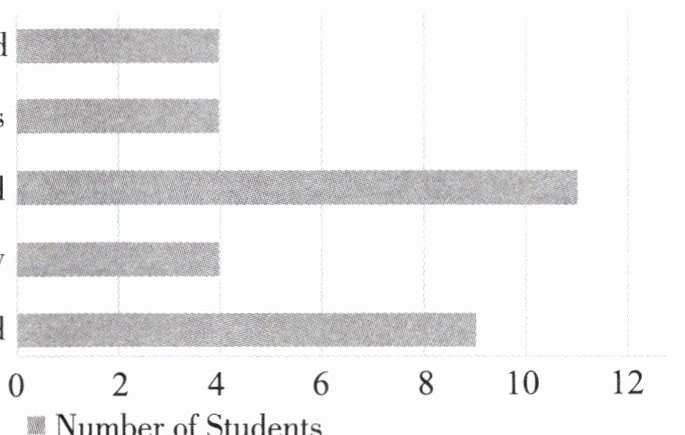
0 2 4 6 8 10 12
■ Number of Students
Based on the survey results, Lily talked to the canteen staff first. She suggested(建议)they give smaller portions to students. Next, she asked her classmates not to take too much food and finish it each time. Lastly, she planned to make a poster to remind(提醒)her classmates not to waste food.
Task 1:读短文,判断下列句子是否与短文内容相符。如相符,在括号内写“T”,否则写“F”。
(
(
(
(
(
Task 2:联系上下文,猜测画线单词的意思,将其英文大写字母编号写在括号内。
(
A. 未食用的 B. 未烹饪的 C. 已坏掉的
(
A. 尺码 B. 分量 C. 部位
Task 3:按实际情况回答问题。
(1) Can you finish your lunch during the lunch break?
(提示:请根据上述问题的实际作答情况选择下面一组问题继续作答)
☞ If YES:
(2) Do you see your classmates have leftover food at school?
(3) How often do they have leftover food?
(4) To solve the problem, what will you say to your classmates?(写1~2条合理建议)
☞ If NO:
(2) Why can’t you finish your food?
(3) How often do you have leftover food?
(4) To solve the problem, what will you do?(写1~2条具体做法)
A Food Waste Survey
There are forty students in Lily’s class. Lily found that some of her classmates couldn’t finish their lunch. They often left uneaten food after lunch. To solve this food waste problem, she did a survey in her class. Here are the results(结果)of the survey:
The Results of Lily’s Survey
canteen staff give too much food
bring and eat too many snacks
be picky about food
rush out to play
take too much food
0 2 4 6 8 10 12
■ Number of Students
Based on the survey results, Lily talked to the canteen staff first. She suggested(建议)they give smaller portions to students. Next, she asked her classmates not to take too much food and finish it each time. Lastly, she planned to make a poster to remind(提醒)her classmates not to waste food.
Task 1:读短文,判断下列句子是否与短文内容相符。如相符,在括号内写“T”,否则写“F”。
(
F
) (1) There are twenty-nine students in Lily’s class.(
T
) (2) Four students can’t finish their lunch because the canteen staff give them too much food.(
F
) (3) Only one of Lily’s classmates is picky about food.(
T
) (4) Some of Lily’s classmates leave food because they rush out to play.(
F
) (5) To solve the food waste problem, Lily only gave advice to her classmates.Task 2:联系上下文,猜测画线单词的意思,将其英文大写字母编号写在括号内。
(
A
) (1) They often left uneaten food after lunch.A. 未食用的 B. 未烹饪的 C. 已坏掉的
(
B
) (2) She suggested they give smaller portions to students.A. 尺码 B. 分量 C. 部位
Task 3:按实际情况回答问题。
(1) Can you finish your lunch during the lunch break?
(提示:请根据上述问题的实际作答情况选择下面一组问题继续作答)
☞ If YES:
(2) Do you see your classmates have leftover food at school?
(3) How often do they have leftover food?
(4) To solve the problem, what will you say to your classmates?(写1~2条合理建议)
☞ If NO:
(2) Why can’t you finish your food?
(3) How often do you have leftover food?
(4) To solve the problem, what will you do?(写1~2条具体做法)
答案
4. Task 1: (1) F (2) T (3) F (4) T (5) F
Task 2: (1) A (2) B
Task 3:
If YES 组参考答句:
(1) Can you finish your lunch during the lunch break?
Yes, I can.
(2) Do you see your classmates have leftover food at school?
Yes, I do.
(3) How often do they have leftover food?
Sometimes. / Quite often ...
(4) To solve the problem, what will you say to your classmates?
Don't take too much food. / Please finish your lunch before going out to play.
If NO 组参考答句:
(1) Can you finish your lunch during the lunch break?
No, I can't.
(2) Why can't you finish your food?
Because I don't like some of the food.
(3) How often do you have leftover food?
Sometimes. / Quite often ...
(4) To solve the problem, what will you do?
I will try all kinds of food.
(答案不唯一,合理即可)
Task 2: (1) A (2) B
Task 3:
If YES 组参考答句:
(1) Can you finish your lunch during the lunch break?
Yes, I can.
(2) Do you see your classmates have leftover food at school?
Yes, I do.
(3) How often do they have leftover food?
Sometimes. / Quite often ...
(4) To solve the problem, what will you say to your classmates?
Don't take too much food. / Please finish your lunch before going out to play.
If NO 组参考答句:
(1) Can you finish your lunch during the lunch break?
No, I can't.
(2) Why can't you finish your food?
Because I don't like some of the food.
(3) How often do you have leftover food?
Sometimes. / Quite often ...
(4) To solve the problem, what will you do?
I will try all kinds of food.
(答案不唯一,合理即可)
解析
【分析】
首先,Task1需从短文中提取关键信息并与句子逐一对比:先明确班级总人数,再对应图表中各浪费食物原因的学生数量,判断句子正误;Task2需结合上下文语境,推测画线单词的含义;Task3根据自身实际情况回答,表述合理即可。
【解析】
Task1:
(1) 短文中提到“There are forty students in Lily’s class”,题目说班级有29人,与原文不符,故判断为F;
(2) 图表中“canteen staff give too much food”对应的学生数为4,与题目描述一致,故判断为T;
(3) 图表中“be picky about food”对应的学生数远多于1,题目说只有1名同学挑食,与原文不符,故判断为F;
(4) 图表中“rush out to play”对应的学生数为4,说明有学生因冲去玩剩食物,与题目描述一致,故判断为T;
(5) 短文中Lily既给食堂员工提建议,也给同学提建议,并非只给同学建议,与题目描述不符,故判断为F。
Task2:
(1) “uneaten”修饰“food”,结合语境是“未食用的食物”,选A;
(2) “portions”对应食堂给学生的食物,意为“分量”,选B。
Task3:根据实际情况回答,合理即可,答案不唯一。
【答案】
Task1: (1) F (2) T (3) F (4) T (5) F
Task2: (1) A (2) B
Task3: (示例,合理即可)
If YES组:
(1) Yes, I can.
(2) Yes, I do.
(3) Sometimes.
(4) Don't take too much food. / Please finish your lunch before going out to play.
If NO组:
(1) No, I can't.
(2) Because I don't like some of the food.
(3) Sometimes.
(4) I will try all kinds of food.
【知识点】
阅读理解、词义猜测、语言运用
【点评】
本题结合短文与图表,考查学生信息提取、词义猜测及实际语言表达能力,贴近生活实际,难度适中。
【难度系数】
0.6
首先,Task1需从短文中提取关键信息并与句子逐一对比:先明确班级总人数,再对应图表中各浪费食物原因的学生数量,判断句子正误;Task2需结合上下文语境,推测画线单词的含义;Task3根据自身实际情况回答,表述合理即可。
【解析】
Task1:
(1) 短文中提到“There are forty students in Lily’s class”,题目说班级有29人,与原文不符,故判断为F;
(2) 图表中“canteen staff give too much food”对应的学生数为4,与题目描述一致,故判断为T;
(3) 图表中“be picky about food”对应的学生数远多于1,题目说只有1名同学挑食,与原文不符,故判断为F;
(4) 图表中“rush out to play”对应的学生数为4,说明有学生因冲去玩剩食物,与题目描述一致,故判断为T;
(5) 短文中Lily既给食堂员工提建议,也给同学提建议,并非只给同学建议,与题目描述不符,故判断为F。
Task2:
(1) “uneaten”修饰“food”,结合语境是“未食用的食物”,选A;
(2) “portions”对应食堂给学生的食物,意为“分量”,选B。
Task3:根据实际情况回答,合理即可,答案不唯一。
【答案】
Task1: (1) F (2) T (3) F (4) T (5) F
Task2: (1) A (2) B
Task3: (示例,合理即可)
If YES组:
(1) Yes, I can.
(2) Yes, I do.
(3) Sometimes.
(4) Don't take too much food. / Please finish your lunch before going out to play.
If NO组:
(1) No, I can't.
(2) Because I don't like some of the food.
(3) Sometimes.
(4) I will try all kinds of food.
【知识点】
阅读理解、词义猜测、语言运用
【点评】
本题结合短文与图表,考查学生信息提取、词义猜测及实际语言表达能力,贴近生活实际,难度适中。
【难度系数】
0.6
