

 登录
登录
七、Amy 和 Tom 正在谈论水星。从框中选择合适的句子补全对话。
A. Can humans live on Mercury in the future?
B. Do you know which planet is the nearest to the Sun?
C. No, it's the smallest planet in our sola system, even smaller than some moons.
D. Its surface is covered with holes and mountains, just like our moon.
E. I heard it's very hot there.
Amy: Hi, Tom. I'm reading a book about the solar system. 1.
Tom: Of course. It's Mercury. It's much closer to the Sun than any other planet.
Amy: 2. Is that true?
Tom: Yes. During the day, it's super hot because it's so close to the Sun.
Amy: What about the night? Is it still hot?
Tom: No, it's surprisingly cold at night. It has almost no atmosphere to hold heat.
Amy: That sounds really special. Does Mercury look like Earth?
Tom: Not at all. 3.
Amy: 4.
Tom: I don't think so. It's too hot, too cold, and there's no water or air for us.
Amy: Is Mercury a large planet?
Tom: 5.
Amy: Wow, I learned so much today. Thank you!
Tom: You're welcome. Planets are really amazing.
A. Can humans live on Mercury in the future?
B. Do you know which planet is the nearest to the Sun?
C. No, it's the smallest planet in our sola
system, even smaller than some moons.D. Its surface is covered with holes and mountains, just like our moon.
E. I heard it's very hot there.
Amy: Hi, Tom. I'm reading a book about the solar system. 1.
Tom: Of course. It's Mercury. It's much closer to the Sun than any other planet.
Amy: 2. Is that true?
Tom: Yes. During the day, it's super hot because it's so close to the Sun.
Amy: What about the night? Is it still hot?
Tom: No, it's surprisingly cold at night. It has almost no atmosphere to hold heat.
Amy: That sounds really special. Does Mercury look like Earth?
Tom: Not at all. 3.
Amy: 4.
Tom: I don't think so. It's too hot, too cold, and there's no water or air for us.
Amy: Is Mercury a large planet?
Tom: 5.
Amy: Wow, I learned so much today. Thank you!
Tom: You're welcome. Planets are really amazing.
答案
1. B
2. E
3. D
4. A
5. C
2. E
3. D
4. A
5. C
解析
【分析】
本题为补全对话题型,需结合对话上下文的语境逻辑,匹配对应的句子。第1空根据Tom的答语确定是询问离太阳最近的行星;第2空结合Tom提到的“白天很热”,对应Amy说水星很热的内容;第3空根据Tom说水星不像地球,匹配描述水星外观的句子;第4空由Tom回答不能住水星,确定是询问人类能否居住的问题;第5空针对“水星是不是大行星”的问题,匹配说明水星是最小行星的答语。
【解析】
1. 第1空:Tom回答“It's Mercury”,说明此处是询问离太阳最近的行星,对应选项B。
2. 第2空:Tom提到“白天,它超级热”,说明此处是Amy说“听说那里很热”,对应选项E。
3. 第3空:Tom说“Not at all”,说明此处是描述水星的外观特征,对应选项D。
4. 第4空:Tom回答不能住水星的原因,说明此处是询问未来人类能否住在水星,对应选项A。
5. 第5空:Amy问“水星是不是大行星”,说明此处是回答水星是最小的行星,对应选项C。
【答案】
1. B
2. E
3. D
4. A
5. C
【知识点】
补全对话、日常交际用语
【点评】
本题考查学生对日常对话逻辑的理解,结合太阳系相关知识完成补全,需理清对话上下文的关联,难度适中。
【难度系数】
0.5
本题为补全对话题型,需结合对话上下文的语境逻辑,匹配对应的句子。第1空根据Tom的答语确定是询问离太阳最近的行星;第2空结合Tom提到的“白天很热”,对应Amy说水星很热的内容;第3空根据Tom说水星不像地球,匹配描述水星外观的句子;第4空由Tom回答不能住水星,确定是询问人类能否居住的问题;第5空针对“水星是不是大行星”的问题,匹配说明水星是最小行星的答语。
【解析】
1. 第1空:Tom回答“It's Mercury”,说明此处是询问离太阳最近的行星,对应选项B。
2. 第2空:Tom提到“白天,它超级热”,说明此处是Amy说“听说那里很热”,对应选项E。
3. 第3空:Tom说“Not at all”,说明此处是描述水星的外观特征,对应选项D。
4. 第4空:Tom回答不能住水星的原因,说明此处是询问未来人类能否住在水星,对应选项A。
5. 第5空:Amy问“水星是不是大行星”,说明此处是回答水星是最小的行星,对应选项C。
【答案】
1. B
2. E
3. D
4. A
5. C
【知识点】
补全对话、日常交际用语
【点评】
本题考查学生对日常对话逻辑的理解,结合太阳系相关知识完成补全,需理清对话上下文的关联,难度适中。
【难度系数】
0.5
八、Lily 分享了她收集的图片。选出与图片内容相符的句子。
()1. A. We can see buildings, a river and hills.
B. We can see waterfalls, lakes and forests.
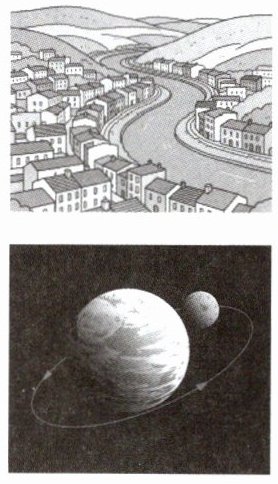
()2. A. The Earth travels around the Sun.
B. The Moon travels around the Earth.
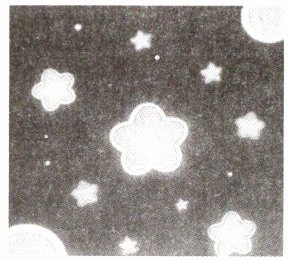
()3. A. She wants to see planes in the sky at night.
B. She wants to see bright stars in the sky at night.
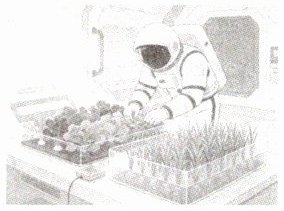
()4. A. Astronauts grow vegetables and rice in space.
B. Astronauts eat vegetables and rice in space.
()5. A. There are thousands of pieces of space junk floating around Earth.
B. There are thousands of planets around Earth.
()1. A. We can see buildings, a river and hills.
B. We can see waterfalls, lakes and forests.
()2. A. The Earth travels around the Sun.
B. The Moon travels around the Earth.
()3. A. She wants to see planes in the sky at night.
B. She wants to see bright stars in the sky at night.
()4. A. Astronauts grow vegetables and rice in space.
B. Astronauts eat vegetables and rice in space.
()5. A. There are thousands of pieces of space junk floating around Earth.
B. There are thousands of planets around Earth.
答案
1.A 2.B 3.B 4.A 5.A
解析
【分析】
本题为图文结合的英语选择题,需结合每道题对应的插图内容,对比选项差异,结合基础常识选出正确答案。具体思路:1. 观察插图1的场景,判断对应选项描述;2. 结合天体运行常识,匹配插图2的天体关系;3. 依据插图2的天空内容,区分看飞机还是星星;4. 结合插图3的太空场景,判断宇航员的行为;5. 结合插图4的太空内容,区分太空垃圾与行星。
【解析】
1. 插图1呈现建筑、河流、山丘的场景,选项A描述符合;选项B的瀑布、湖泊、森林与插图不符,故选A。
2. 天体运行常识为月亮绕地球转,结合插图2的天体位置,选项B符合,故选B。
3. 插图2的天空展示星星,选项A的飞机与插图不符,选项B的星星符合,故选B。
4. 插图3呈现宇航员在太空种植的场景,选项A的“种植”符合;选项B的“吃”与插图不符,故选A。
5. 太空常识为太空垃圾绕地球漂浮,结合插图4的太空内容,选项A符合,故选A。
【答案】
1.A 2.B 3.B 4.A 5.A
【知识点】
英语图文匹配,天体常识应用,太空常识应用
【点评】
本题为图文结合的英语基础题,需结合图片信息和基础常识解题,考查学生的图文对应能力与基础常识积累,难度适中。
【难度系数】
0.6
本题为图文结合的英语选择题,需结合每道题对应的插图内容,对比选项差异,结合基础常识选出正确答案。具体思路:1. 观察插图1的场景,判断对应选项描述;2. 结合天体运行常识,匹配插图2的天体关系;3. 依据插图2的天空内容,区分看飞机还是星星;4. 结合插图3的太空场景,判断宇航员的行为;5. 结合插图4的太空内容,区分太空垃圾与行星。
【解析】
1. 插图1呈现建筑、河流、山丘的场景,选项A描述符合;选项B的瀑布、湖泊、森林与插图不符,故选A。
2. 天体运行常识为月亮绕地球转,结合插图2的天体位置,选项B符合,故选B。
3. 插图2的天空展示星星,选项A的飞机与插图不符,选项B的星星符合,故选B。
4. 插图3呈现宇航员在太空种植的场景,选项A的“种植”符合;选项B的“吃”与插图不符,故选A。
5. 太空常识为太空垃圾绕地球漂浮,结合插图4的太空内容,选项A符合,故选A。
【答案】
1.A 2.B 3.B 4.A 5.A
【知识点】
英语图文匹配,天体常识应用,太空常识应用
【点评】
本题为图文结合的英语基础题,需结合图片信息和基础常识解题,考查学生的图文对应能力与基础常识积累,难度适中。
【难度系数】
0.6
