

 登录
登录
一、听力理解。
Mary 和 Leo 正在讨论手工艺术作品。请听下面一段对话。对话后有几个小题,从题中所给的 A、B、C 三个选项中选出最佳选项。对话读两遍。
1. Whose are the zisha teapots? (
A. Mary's parents'.
B. Leo's grandma's.
C. Mary's grandpa's.
2. What is Mary's mum good at? (
A. Tea making.
B. Paper-cutting.
C. Lantern making.
3. What can we learn from the conversation? (
A. They will go to an art museum.
B. Leo thinks lanterns are common.
C. Mary is learning to make teapots.
Mary 和 Leo 正在讨论手工艺术作品。请听下面一段对话。对话后有几个小题,从题中所给的 A、B、C 三个选项中选出最佳选项。对话读两遍。
1. Whose are the zisha teapots? (
A
)A. Mary's parents'.
B. Leo's grandma's.
C. Mary's grandpa's.
2. What is Mary's mum good at? (
B
)A. Tea making.
B. Paper-cutting.
C. Lantern making.
3. What can we learn from the conversation? (
A
)A. They will go to an art museum.
B. Leo thinks lanterns are common.
C. Mary is learning to make teapots.
答案
1. A
2. B
3. A
2. B
3. A
二、任务型阅读。
在年轻人眼中,艺术是怎样的?请阅读下面短文,完成下列任务。
Art can communicate feelings and exchange thoughts in every era. In July 2025, some young people shared their ideas about art in a program.
For Giacomo Bruni from Italy, art is something produced to turn what's in people's minds into reality. But it's never created only for making money. It's the extension(延伸) of artists themselves and a medium of self-expression.
But Sun Yuxin from China said that art can have different types. For example, popular art is what the market likes. But we also have art that is not popular enough or that not everyone agrees on. It depends on how we define(定义) art itself.
While young people share different ideas about what art is, most will have common ground on the idea that “art is not bad or good”.
“I think the beauty of art is that there is no right or wrong, and there are no limits,” said a Thai student called Jiratchaya Phinyoworakul.
To Lian Lilia from Russia, art not only helps people bring out the best in themselves but also creates equal(平等的) dialogue among different cultures and countries.
The standards of art have been changing throughout art history, but one thing has never changed—people's search for truth, goodness, and beauty.
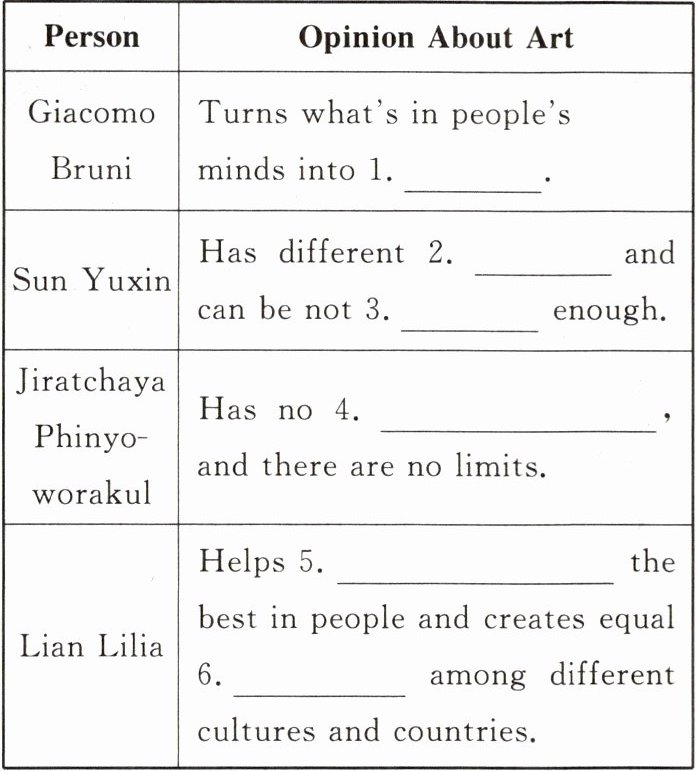
任务一:请根据短文内容完成表格,每个空格不超过3个单词。
任务二:请根据短文内容从每小题所给的A、B、C、D四个选项中选出最佳选项。
1. In which part of a magazine could we read this passage? ()
A. Sports News. B. Travel Guide. C. Cultural Ideas. D. Science Today.
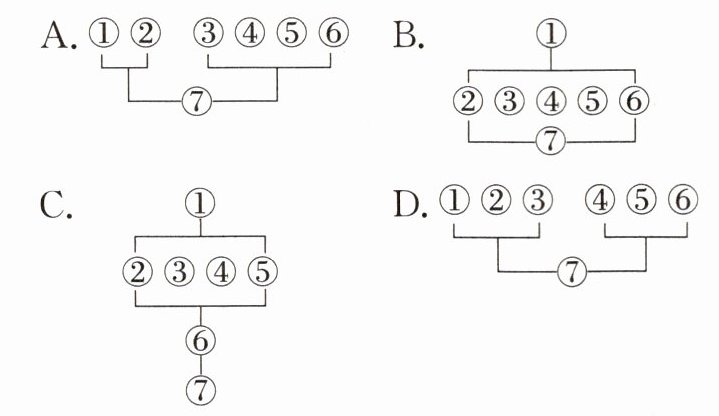
2. What would be the best structure of the passage? (①=Paragraph 1, …)
()
在年轻人眼中,艺术是怎样的?请阅读下面短文,完成下列任务。
Art can communicate feelings and exchange thoughts in every era. In July 2025, some young people shared their ideas about art in a program.
For Giacomo Bruni from Italy, art is something produced to turn what's in people's minds into reality. But it's never created only for making money. It's the extension(延伸) of artists themselves and a medium of self-expression.
But Sun Yuxin from China said that art can have different types. For example, popular art is what the market likes. But we also have art that is not popular enough or that not everyone agrees on. It depends on how we define(定义) art itself.
While young people share different ideas about what art is, most will have common ground on the idea that “art is not bad or good”.
“I think the beauty of art is that there is no right or wrong, and there are no limits,” said a Thai student called Jiratchaya Phinyoworakul.
To Lian Lilia from Russia, art not only helps people bring out the best in themselves but also creates equal(平等的) dialogue among different cultures and countries.
The standards of art have been changing throughout art history, but one thing has never changed—people's search for truth, goodness, and beauty.
任务一:请根据短文内容完成表格,每个空格不超过3个单词。
任务二:请根据短文内容从每小题所给的A、B、C、D四个选项中选出最佳选项。
1. In which part of a magazine could we read this passage? ()
A. Sports News. B. Travel Guide. C. Cultural Ideas. D. Science Today.
2. What would be the best structure of the passage? (①=Paragraph 1, …)
()
答案
任务一:
1. reality
2. types
3. popular
4. right or wrong
5. (to) bring out
6. dialogue
任务二:
1. C
2. B
1. reality
2. types
3. popular
4. right or wrong
5. (to) bring out
6. dialogue
任务二:
1. C
2. B
解析
【分析】本题为任务型阅读,分为信息提取(任务一)和选择题(任务二)两部分。解题思路:任务一需根据题干空格,定位原文对应人物或段落,提取符合要求的原词(不超3词);任务二第1题需判断文章主题所属板块,第2题需梳理文章段落结构,结合选项选出答案。
【解析】任务一:1. 定位Giacomo Bruni的表述“turn what's in people's minds into reality”,提取核心词reality;2. 定位Sun Yuxin的表述“art can have different types”,提取types;3. 对应“popular art”,提取popular;4. 定位Jiratchaya Phinyoworakul的表述“no right or wrong”,提取right or wrong;5. 定位Lian Lilia的表述“helps people bring out the best”,提取to bring out;6. 定位Lian Lilia的表述“creates equal dialogue”,提取dialogue。任务二:1. 文章围绕不同国家年轻人对艺术的看法展开,属于文化范畴,故选C;2. 文章结构为总-分-总:第1段总起(年轻人分享艺术想法),第2-6段分述不同人的观点,第7段总结,对应选项B。
【答案】任务一:1. reality 2. types 3. popular 4. right or wrong 5. to bring out 6. dialogue;任务二:1. C 2. B
【知识点】任务型阅读、阅读理解
【点评】本题考查任务型阅读的信息定位与阅读理解的主旨、结构分析能力,需学生仔细阅读原文,精准匹配内容,难度适中。
【难度系数】0.6
【解析】任务一:1. 定位Giacomo Bruni的表述“turn what's in people's minds into reality”,提取核心词reality;2. 定位Sun Yuxin的表述“art can have different types”,提取types;3. 对应“popular art”,提取popular;4. 定位Jiratchaya Phinyoworakul的表述“no right or wrong”,提取right or wrong;5. 定位Lian Lilia的表述“helps people bring out the best”,提取to bring out;6. 定位Lian Lilia的表述“creates equal dialogue”,提取dialogue。任务二:1. 文章围绕不同国家年轻人对艺术的看法展开,属于文化范畴,故选C;2. 文章结构为总-分-总:第1段总起(年轻人分享艺术想法),第2-6段分述不同人的观点,第7段总结,对应选项B。
【答案】任务一:1. reality 2. types 3. popular 4. right or wrong 5. to bring out 6. dialogue;任务二:1. C 2. B
【知识点】任务型阅读、阅读理解
【点评】本题考查任务型阅读的信息定位与阅读理解的主旨、结构分析能力,需学生仔细阅读原文,精准匹配内容,难度适中。
【难度系数】0.6
