

 登录
登录
() 5. —What if they to the airport late?
—Sorry, I don’t know.
A.will happen;go
B.happened;go
C.happens;will go
D.will happen;will go
—Sorry, I don’t know.
A.will happen;go
B.happened;go
C.happens;will go
D.will happen;will go
答案
A
解析
本题考查if引导的条件状语从句的时态规则,遵循“主将从现”原则:主句使用一般将来时,if引导的条件状语从句用一般现在时表将来。第一空作主句的谓语,应填will happen;第二空是从句的谓语,主语为they,用一般现在时go,符合该规则的是选项A。
Ⅱ. 根据句意,用括号中所给词的适当形式填空
1. If you careful in the exam, you will get good grades. (be)
2. If you (press) the button, you (turn) on the light.
3. If David time next weekend, he will go to the zoo. (have)
4. The children will go to the zoo if it this Sunday. (not rain)
5. She shopping with her parents if it snows this afternoon. (not go)
1. If you careful in the exam, you will get good grades. (be)
2. If you (press) the button, you (turn) on the light.
3. If David time next weekend, he will go to the zoo. (have)
4. The children will go to the zoo if it this Sunday. (not rain)
5. She shopping with her parents if it snows this afternoon. (not go)
答案
1. are
2. press; will turn
3. has
4. doesn't rain
5. won't go
2. press; will turn
3. has
4. doesn't rain
5. won't go
解析
本题考查if引导的条件状语从句的"主将从现"规则:当主句表示将来含义(常用一般将来时)时,if引导的条件状语从句要用一般现在时表将来。
1. 从句主语为you,对应的be动词一般现在时形式为are。
2. 第一空处在从句中,主语是you,一般现在时使用动词原形press;第二空处在主句中,用一般将来时结构will+动词原形。
3. 从句主语David是第三人称单数,一般现在时中谓语动词have要变为第三人称单数形式has。
4. 从句主语it是第三人称单数,一般现在时的否定结构为doesn't+动词原形。
5. 该空处在主句中,表达将来的否定含义,用一般将来时的否定结构won't+动词原形。
1. 从句主语为you,对应的be动词一般现在时形式为are。
2. 第一空处在从句中,主语是you,一般现在时使用动词原形press;第二空处在主句中,用一般将来时结构will+动词原形。
3. 从句主语David是第三人称单数,一般现在时中谓语动词have要变为第三人称单数形式has。
4. 从句主语it是第三人称单数,一般现在时的否定结构为doesn't+动词原形。
5. 该空处在主句中,表达将来的否定含义,用一般将来时的否定结构won't+动词原形。
探究点1 difficulty 的用法
difficulty 名词,意为“困难;难题”。have difficulty (in) doing sth 表示“做某事有困难”。
We found the house without difficulty.
我们轻而易举地找到了这栋房子。
He has difficulty(in) solving the problem.
他解决这个问题有困难。
[知识拓展]
difficult 形容词,意为“困难的”,其比较级是 more difficult,最高级是 most difficult。
Of all the subjects, maths seems to be the most difficult for me.
对我来说,数学似乎是所有学科中最难的。
情境应用
1. No matter how many we meet, we believe we can solve them. (difficult)
2. Among all the tasks, this one is . (最难的)
3. When he English, I will help him. (在……方面有困难)
探究点2 line 的用法
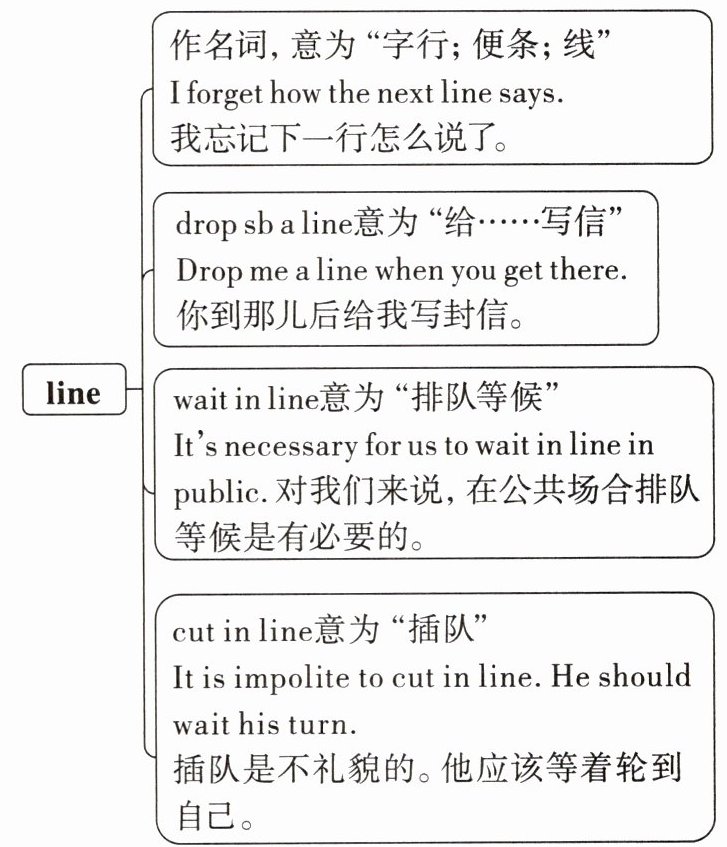
情境应用
1. Here is a for you on the table. (便条)
2. I often , sharing my happiness with him. (给他写信)
3. She is to buy tickets. (排队等候)
4. When we see someone , we may ask him to wait in line politely. (插队)
difficulty 名词,意为“困难;难题”。have difficulty (in) doing sth 表示“做某事有困难”。
We found the house without difficulty.
我们轻而易举地找到了这栋房子。
He has difficulty(in) solving the problem.
他解决这个问题有困难。
[知识拓展]
difficult 形容词,意为“困难的”,其比较级是 more difficult,最高级是 most difficult。
Of all the subjects, maths seems to be the most difficult for me.
对我来说,数学似乎是所有学科中最难的。
情境应用
1. No matter how many we meet, we believe we can solve them. (difficult)
2. Among all the tasks, this one is . (最难的)
3. When he English, I will help him. (在……方面有困难)
探究点2 line 的用法
情境应用
1. Here is a for you on the table. (便条)
2. I often , sharing my happiness with him. (给他写信)
3. She is to buy tickets. (排队等候)
4. When we see someone , we may ask him to wait in line politely. (插队)
答案
探究点1:
1. difficulties
2. the most difficult
3. has difficulty (in) learning / has difficulty with
探究点2:
1. line
2. drop him a line
3. waiting in line
4. cut in line
1. difficulties
2. the most difficult
3. has difficulty (in) learning / has difficulty with
探究点2:
1. line
2. drop him a line
3. waiting in line
4. cut in line
解析
探究点1:
1. "how many" 后需接可数名词复数,括号内给出的形容词difficult对应的名词是difficulty,复数形式为difficulties,符合后文them的指代逻辑。
2. 范围限定为"Among all the tasks"(所有任务中),需用形容词最高级,“最难的”对应difficult的最高级the most difficult。
3. 考查固定搭配have difficulty (in) doing sth/have difficulty with sth表示“在某方面有困难”,主语he是第三人称单数,时间状语从句用一般现在时表将来,谓语动词用第三人称单数形式。
探究点2:
1. 不定冠词a后接可数名词单数,“便条”对应line作名词的含义,填原形line即可。
2. 考查固定短语drop sb a line表示“给……写信”,主语为I,一般现在时谓语用原形,“给他写信”即drop him a line。
3. 句中已有be动词is,时态为现在进行时,“排队等候”对应固定短语wait in line,需变为现在分词形式waiting in line。
4. 考查固定搭配see sb do sth(看见某人做某事),“插队”对应固定短语cut in line,填短语原形即可。
1. "how many" 后需接可数名词复数,括号内给出的形容词difficult对应的名词是difficulty,复数形式为difficulties,符合后文them的指代逻辑。
2. 范围限定为"Among all the tasks"(所有任务中),需用形容词最高级,“最难的”对应difficult的最高级the most difficult。
3. 考查固定搭配have difficulty (in) doing sth/have difficulty with sth表示“在某方面有困难”,主语he是第三人称单数,时间状语从句用一般现在时表将来,谓语动词用第三人称单数形式。
探究点2:
1. 不定冠词a后接可数名词单数,“便条”对应line作名词的含义,填原形line即可。
2. 考查固定短语drop sb a line表示“给……写信”,主语为I,一般现在时谓语用原形,“给他写信”即drop him a line。
3. 句中已有be动词is,时态为现在进行时,“排队等候”对应固定短语wait in line,需变为现在分词形式waiting in line。
4. 考查固定搭配see sb do sth(看见某人做某事),“插队”对应固定短语cut in line,填短语原形即可。
