

 登录
登录
2 Complete the story about Lisa’s experience of making zongzi. You can use the expressions in the flow chart for reference. 补全莉萨做粽子的故事。流程图中的表达供参考。
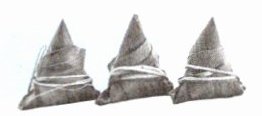
Steps for making zongzi
(1) Clean the bamboo leaves
↓
(2) Fold the leaves into a cone shape to make a pocket
↓
(3) Fill the pocket with sticky rice
↓
(4) Add delicious fillings like beans or meat
↓
(5) Fold the leaves to keep the rice inside
↓
(6) Tie the zongzi up with string
↓
(7) Boil the zongzi in water until fully cooked
Today, I went to a Dragon Boat Festival event to make zongzi with other students. Zongzi are cool rice dumplings that people eat to remember (1)
First, I took some bamboo leaves and cleaned them.
(2)
After that, (3)
Beans and meat are usually the surprise inside for me.
Wrapping the zongzi was the best part.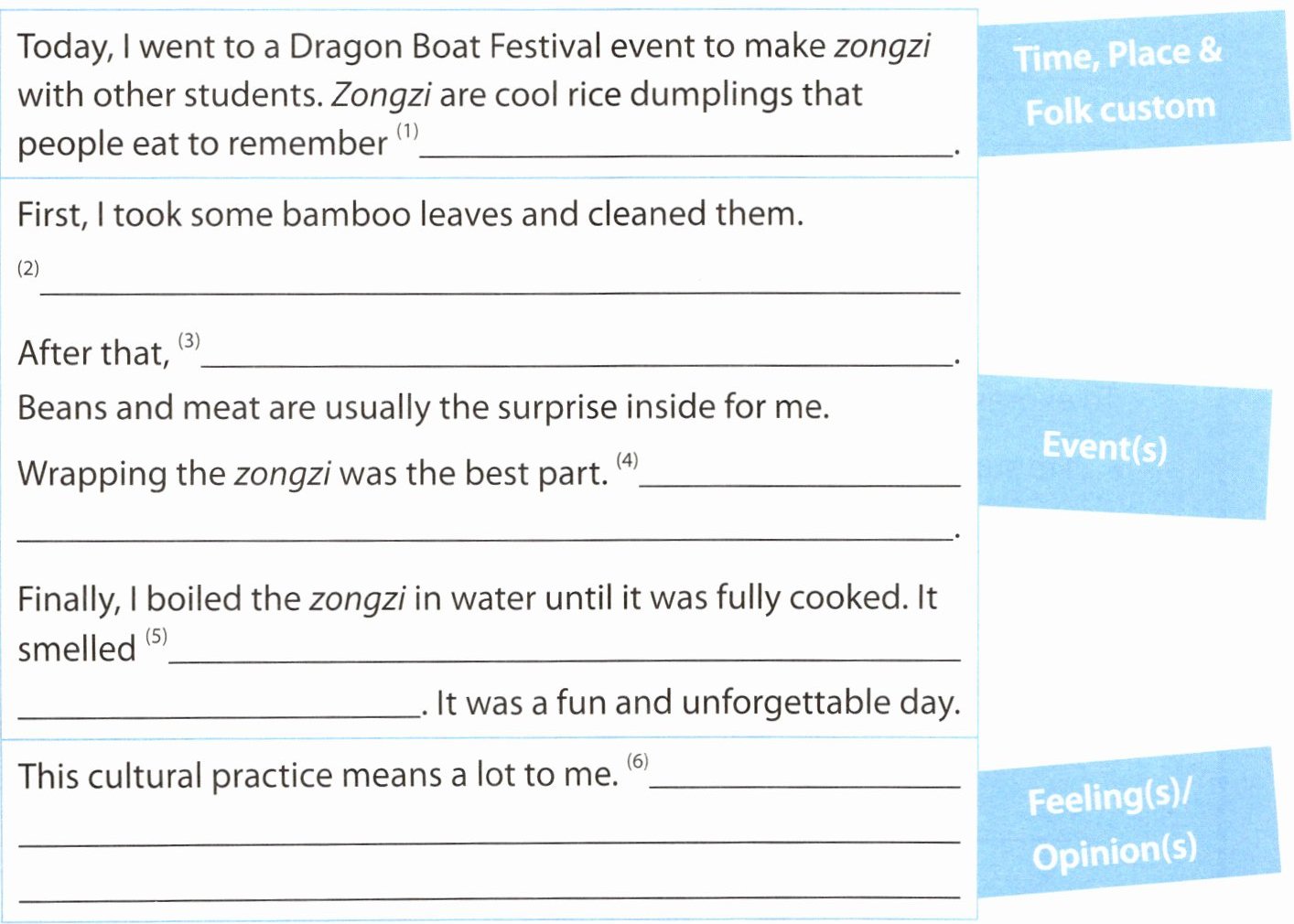
Finally, I boiled the zongzi in water until it was fully cooked. It smelled (5)
This cultural practice means a lot to me. (6)
Time, Place & Folk custom
Event(s)
Feeling(s)/Opinion(s)
Steps for making zongzi
(1) Clean the bamboo leaves
↓
(2) Fold the leaves into a cone shape to make a pocket
↓
(3) Fill the pocket with sticky rice
↓
(4) Add delicious fillings like beans or meat
↓
(5) Fold the leaves to keep the rice inside
↓
(6) Tie the zongzi up with string
↓
(7) Boil the zongzi in water until fully cooked
Today, I went to a Dragon Boat Festival event to make zongzi with other students. Zongzi are cool rice dumplings that people eat to remember (1)
the great Chinese poet Qu Yuan
.First, I took some bamboo leaves and cleaned them.
(2)
Then, I folded the leaves into a cone shape to make a pocket and filled it with sticky rice.
After that, (3)
I added delicious fillings like beans or meat
.Beans and meat are usually the surprise inside for me.
Wrapping the zongzi was the best part.
I folded the leaves to keep the rice inside and tied the zongzi up with string.
.Finally, I boiled the zongzi in water until it was fully cooked. It smelled (5)
so good that I couldn’t wait to eat it
. It was a fun and unforgettable day.This cultural practice means a lot to me. (6)
It helps me learn more about Chinese history and realise how important it is to keep traditions alive.
.Time, Place & Folk custom
Event(s)
Feeling(s)/Opinion(s)
答案
(Answers may vary.)
(1) the great Chinese poet Qu Yuan
(2) Then, I folded the leaves into a cone shape to make a pocket and filled it with sticky rice.
(3) I added delicious fillings like beans or meat
(4) I folded the leaves to keep the rice inside and tied the zongzi up with string.
(5) so good that I couldn’t wait to eat it
(6) It helps me learn more about Chinese history and realise how important it is to keep traditions alive.
(1) the great Chinese poet Qu Yuan
(2) Then, I folded the leaves into a cone shape to make a pocket and filled it with sticky rice.
(3) I added delicious fillings like beans or meat
(4) I folded the leaves to keep the rice inside and tied the zongzi up with string.
(5) so good that I couldn’t wait to eat it
(6) It helps me learn more about Chinese history and realise how important it is to keep traditions alive.
解析
【分析】
这是一道结合端午节文化常识与语篇理解的补全题,需先明确端午节吃粽子的文化意义,再对应流程图中做粽子的步骤,结合上下文语境和语法规则补全空缺,确保语句连贯、符合逻辑。
【解析】
(1) 端午节吃粽子是为纪念中国伟大诗人屈原,故填the great Chinese poet Qu Yuan;
(2) 前文提到洗粽叶,结合流程图步骤,接下来是折粽叶成圆锥做口袋并装糯米,故填Then, I folded the leaves into a cone shape to make a pocket and filled it with sticky rice;
(3) 后文提到豆子和肉是馅料,对应流程图加馅料的步骤,故填I added delicious fillings like beans or meat;
(4) 前文说包粽子是最好的部分,对应流程图折粽叶和绑绳子的步骤,故填I folded the leaves to keep the rice inside and tied the zongzi up with string;
(5) 煮好的粽子闻起来很香,结合语境填so good that I couldn’t wait to eat it;
(6) 最后表达对文化习俗的看法,结合学习历史与传承传统,故填It helps me learn more about Chinese history and realise how important it is to keep traditions alive。
【答案】
(1) the great Chinese poet Qu Yuan
(2) Then, I folded the leaves into a cone shape to make a pocket and filled it with sticky rice
(3) I added delicious fillings like beans or meat
(4) I folded the leaves to keep the rice inside and tied the zongzi up with string
(5) so good that I couldn’t wait to eat it
(6) It helps me learn more about Chinese history and realise how important it is to keep traditions alive
【知识点】
英语补全写作、端午文化常识、动词短语运用
【点评】
本题将语篇补全与传统文化、生活实践结合,既考查语篇理解能力,又渗透文化传承教育,需结合流程图步骤和语境完成,难度适中。
【难度系数】
0.6
这是一道结合端午节文化常识与语篇理解的补全题,需先明确端午节吃粽子的文化意义,再对应流程图中做粽子的步骤,结合上下文语境和语法规则补全空缺,确保语句连贯、符合逻辑。
【解析】
(1) 端午节吃粽子是为纪念中国伟大诗人屈原,故填the great Chinese poet Qu Yuan;
(2) 前文提到洗粽叶,结合流程图步骤,接下来是折粽叶成圆锥做口袋并装糯米,故填Then, I folded the leaves into a cone shape to make a pocket and filled it with sticky rice;
(3) 后文提到豆子和肉是馅料,对应流程图加馅料的步骤,故填I added delicious fillings like beans or meat;
(4) 前文说包粽子是最好的部分,对应流程图折粽叶和绑绳子的步骤,故填I folded the leaves to keep the rice inside and tied the zongzi up with string;
(5) 煮好的粽子闻起来很香,结合语境填so good that I couldn’t wait to eat it;
(6) 最后表达对文化习俗的看法,结合学习历史与传承传统,故填It helps me learn more about Chinese history and realise how important it is to keep traditions alive。
【答案】
(1) the great Chinese poet Qu Yuan
(2) Then, I folded the leaves into a cone shape to make a pocket and filled it with sticky rice
(3) I added delicious fillings like beans or meat
(4) I folded the leaves to keep the rice inside and tied the zongzi up with string
(5) so good that I couldn’t wait to eat it
(6) It helps me learn more about Chinese history and realise how important it is to keep traditions alive
【知识点】
英语补全写作、端午文化常识、动词短语运用
【点评】
本题将语篇补全与传统文化、生活实践结合,既考查语篇理解能力,又渗透文化传承教育,需结合流程图步骤和语境完成,难度适中。
【难度系数】
0.6
