

 登录
登录
Ⅰ.根据句意及首字母或汉语提示完成句子或对话
1. Can you r
2. —Do you have a bike now?
—Yes. My father has a
3. Shakespeare's plays are important
4. We should
5. Volunteering helps us understand different parts of
1. Can you r
recommend
a good book about science to me?2. —Do you have a bike now?
—Yes. My father has a
already
bought one for me.3. Shakespeare's plays are important
literary
(文学的) works.4. We should
base
(以……为根据) our opinions on facts, not feelings.5. Volunteering helps us understand different parts of
society
(社会).答案
Ⅰ. 1. recommend 2. already 3. literary
4. base 5. society
4. base 5. society
解析
【分析】
本题为根据句意及首字母或汉语提示完成单词的题型,解题思路为:先理解每句的语境,再结合给出的首字母或汉语提示,回忆对应的正确英语单词,同时注意单词的词性、形式是否符合句子语法要求,最终确定答案。
【解析】
1. 句意:你能给我推荐一本关于科学的好书吗?结合首字母r及语境,此处需填动词“推荐”,情态动词can后接动词原形,故填recommend。
2. 句意:——你现在有自行车吗?——是的,我爸爸已经给我买了。结合首字母a及语境,此处需填副词“已经”,用于现在完成时语境,故填already。
3. 句意:莎士比亚的戏剧是重要的文学作品。根据汉语提示“文学的”,此处需填形容词修饰名词works,故填literary。
4. 句意:我们应该把观点建立在事实而不是感受上。根据汉语提示“以……为根据”,此处需填动词,should后接动词原形,构成短语base on,故填base。
5. 句意:志愿活动帮助我们理解社会的不同部分。根据汉语提示“社会”,此处需填名词,故填society。
【答案】
Ⅰ. 1. recommend 2. already 3. literary 4. base 5. society
【知识点】
单词拼写、词汇运用
【点评】
本题考查基础词汇的运用,结合语境和提示填写单词,侧重考查学生对核心单词的掌握,难度适中,适合巩固英语基础词汇。
【难度系数】
0.8
本题为根据句意及首字母或汉语提示完成单词的题型,解题思路为:先理解每句的语境,再结合给出的首字母或汉语提示,回忆对应的正确英语单词,同时注意单词的词性、形式是否符合句子语法要求,最终确定答案。
【解析】
1. 句意:你能给我推荐一本关于科学的好书吗?结合首字母r及语境,此处需填动词“推荐”,情态动词can后接动词原形,故填recommend。
2. 句意:——你现在有自行车吗?——是的,我爸爸已经给我买了。结合首字母a及语境,此处需填副词“已经”,用于现在完成时语境,故填already。
3. 句意:莎士比亚的戏剧是重要的文学作品。根据汉语提示“文学的”,此处需填形容词修饰名词works,故填literary。
4. 句意:我们应该把观点建立在事实而不是感受上。根据汉语提示“以……为根据”,此处需填动词,should后接动词原形,构成短语base on,故填base。
5. 句意:志愿活动帮助我们理解社会的不同部分。根据汉语提示“社会”,此处需填名词,故填society。
【答案】
Ⅰ. 1. recommend 2. already 3. literary 4. base 5. society
【知识点】
单词拼写、词汇运用
【点评】
本题考查基础词汇的运用,结合语境和提示填写单词,侧重考查学生对核心单词的掌握,难度适中,适合巩固英语基础词汇。
【难度系数】
0.8
Ⅱ.按要求完成下列各题
1. I have already bought a book in this store.
you a book in this store ?
2. I have told my parents the news.
you your parents?
3. Have they decided to take a long journey?
, they .
4. He has already made a decision to teach in the village school.
He a decision to teach in the village school .
5. She is reading Oliver Twist.
She Oliver Twist.
1. I have already bought a book in this store.
you a book in this store ?
2. I have told my parents the news.
you your parents?
3. Have they decided to take a long journey?
, they .
4. He has already made a decision to teach in the village school.
He a decision to teach in the village school .
5. She is reading Oliver Twist.
She Oliver Twist.
答案
Ⅱ. 1. Have; bought; yet
2. What have; told 3. No; haven't
4. hasn't made; yet 5. has read
2. What have; told 3. No; haven't
4. hasn't made; yet 5. has read
解析
【分析】
本题为英语现在完成时的句型转换题,解题思路如下:
1. 第1题:将现在完成时肯定陈述句改为一般疑问句,需提前助动词have,主语I转换为you,肯定句中的already在疑问句中替换为yet放句末;
2. 第2题:对划线的事物(news)提问,用疑问词what,结合现在完成时的疑问语序(助动词have提前);
3. 第3题:现在完成时一般疑问句的否定回答,遵循固定结构;
4. 第4题:将现在完成时肯定句改为否定句,在助动词has后加not(缩写为hasn't),already替换为yet;
5. 第5题:将现在进行时转换为现在完成时,主语为第三人称单数,用助动词has,read的过去分词仍为read。
【解析】
1. 原句是现在完成时结构(have+过去分词),变一般疑问句时,助动词have提前,主语I变you,疑问句中用yet替代already,故填Have; bought; yet;
2. 划线部分是事物,用what提问,现在完成时疑问语序为What have you told,故填What have; told;
3. 现在完成时一般疑问句的否定回答为No, 主语+haven't,故填No; haven't;
4. 现在完成时肯定句变否定句,has后加not(缩写hasn't),already换为yet,故填hasn't made; yet;
5. 现在进行时转换为现在完成时,主语she是第三人称单数,助动词用has,read的过去分词不变,故填has read。
【答案】
Ⅱ. 1. Have; bought; yet
2. What have; told
3. No; haven't
4. hasn't made; yet
5. has read
【知识点】
现在完成时、句型转换
【点评】
本题考查初中英语核心时态(现在完成时)的各类句式转换,涵盖一般疑问句、特殊疑问句、否定句及时态转换,需掌握现在完成时的结构、助动词变化及标志词(already/yet)的用法,属于基础题型。
【难度系数】
0.6
本题为英语现在完成时的句型转换题,解题思路如下:
1. 第1题:将现在完成时肯定陈述句改为一般疑问句,需提前助动词have,主语I转换为you,肯定句中的already在疑问句中替换为yet放句末;
2. 第2题:对划线的事物(news)提问,用疑问词what,结合现在完成时的疑问语序(助动词have提前);
3. 第3题:现在完成时一般疑问句的否定回答,遵循固定结构;
4. 第4题:将现在完成时肯定句改为否定句,在助动词has后加not(缩写为hasn't),already替换为yet;
5. 第5题:将现在进行时转换为现在完成时,主语为第三人称单数,用助动词has,read的过去分词仍为read。
【解析】
1. 原句是现在完成时结构(have+过去分词),变一般疑问句时,助动词have提前,主语I变you,疑问句中用yet替代already,故填Have; bought; yet;
2. 划线部分是事物,用what提问,现在完成时疑问语序为What have you told,故填What have; told;
3. 现在完成时一般疑问句的否定回答为No, 主语+haven't,故填No; haven't;
4. 现在完成时肯定句变否定句,has后加not(缩写hasn't),already换为yet,故填hasn't made; yet;
5. 现在进行时转换为现在完成时,主语she是第三人称单数,助动词用has,read的过去分词不变,故填has read。
【答案】
Ⅱ. 1. Have; bought; yet
2. What have; told
3. No; haven't
4. hasn't made; yet
5. has read
【知识点】
现在完成时、句型转换
【点评】
本题考查初中英语核心时态(现在完成时)的各类句式转换,涵盖一般疑问句、特殊疑问句、否定句及时态转换,需掌握现在完成时的结构、助动词变化及标志词(already/yet)的用法,属于基础题型。
【难度系数】
0.6
Ⅲ.阅读理解
Recently, I asked a seeing friend who had just walked in the woods what she had noticed. "Nothing special," she replied.
How was it possible, I asked myself, to walk through the woods and see nothing worthy of note? I who cannot see find hundreds of things to interest me only through touch. If I can get so much pleasure from touch, how much more beauty must be found by sight?
And I have imagined what I should most like to see if I were given the use of my eyes for just three days.
On the first day, I should want to see the people who have made my life worth living and the books which have been read to me. In the afternoon, I should take a walk in the woods and admire the beauties of nature. That night, I should not be able to sleep.
On my second day, I should go to the museum to see man's progress. I should try to explore the spirit of man through art. In the evening, I should spend the night at the movies.
The following day, I should spend time in the world of common people going about the business of life. At midnight permanent night would close in on me again, and I should realize how much I had left unseen.
I who am blind can give one suggestion to those who see: Use your eyes as if tomorrow you would be blind. The same is true of other senses. Hear the songs of birds, as if you would be deaf tomorrow. Smell the flowers, as if tomorrow you could never smell again ... But of all the senses, I'm sure that sight must be the most pleasant.
(Adapted from Three Days to See by Helen Keller)
1. What makes the writer start imagining the three days?
A. Walking in the woods.
B. Asking herself questions.
C. Seeing natural beauties.
D. Touching interesting things.
2. What does the writer want to do during the three days?
A. Read books to people on the first day.
B. Go to the movies on the second day.
C. Succeed in business on the third day.
D. Have a wonderful dream every day.
3. What does the last paragraph mainly talk about?
A. A description of different senses.
B. A method of living a pleasant life.
C. Encouragement to the blind people.
D. Advice to people without disabilities.
4. Which is the best structure of the passage?
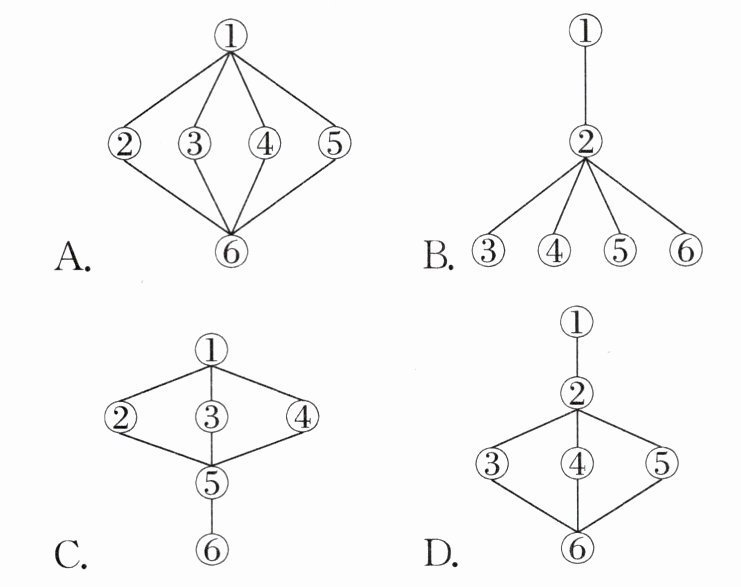
5. Which of the following sayings may the writer agree with?
A. Time is what we want most, but what we use worst.
B. Never leave until tomorrow what you can do today.
C. Live every moment and be thankful for what you have.
D. The future belongs to those who are preparing for it now.
Recently, I asked a seeing friend who had just walked in the woods what she had noticed. "Nothing special," she replied.
How was it possible, I asked myself, to walk through the woods and see nothing worthy of note? I who cannot see find hundreds of things to interest me only through touch. If I can get so much pleasure from touch, how much more beauty must be found by sight?
And I have imagined what I should most like to see if I were given the use of my eyes for just three days.
On the first day, I should want to see the people who have made my life worth living and the books which have been read to me. In the afternoon, I should take a walk in the woods and admire the beauties of nature. That night, I should not be able to sleep.
On my second day, I should go to the museum to see man's progress. I should try to explore the spirit of man through art. In the evening, I should spend the night at the movies.
The following day, I should spend time in the world of common people going about the business of life. At midnight permanent night would close in on me again, and I should realize how much I had left unseen.
I who am blind can give one suggestion to those who see: Use your eyes as if tomorrow you would be blind. The same is true of other senses. Hear the songs of birds, as if you would be deaf tomorrow. Smell the flowers, as if tomorrow you could never smell again ... But of all the senses, I'm sure that sight must be the most pleasant.
(Adapted from Three Days to See by Helen Keller)
1. What makes the writer start imagining the three days?
A. Walking in the woods.
B. Asking herself questions.
C. Seeing natural beauties.
D. Touching interesting things.
2. What does the writer want to do during the three days?
A. Read books to people on the first day.
B. Go to the movies on the second day.
C. Succeed in business on the third day.
D. Have a wonderful dream every day.
3. What does the last paragraph mainly talk about?
A. A description of different senses.
B. A method of living a pleasant life.
C. Encouragement to the blind people.
D. Advice to people without disabilities.
4. Which is the best structure of the passage?
5. Which of the following sayings may the writer agree with?
A. Time is what we want most, but what we use worst.
B. Never leave until tomorrow what you can do today.
C. Live every moment and be thankful for what you have.
D. The future belongs to those who are preparing for it now.
答案
Ⅲ.本文改编自海伦·凯勒的《假如给我三天
光明》,海伦想象自己在可以看见的三天里做
的事情,由此告诉我们应该活在当下,感激所
拥有的一切。
1. B 推理判断题。根据“How was it possible,
I asked myself, to walk through the woods
and see nothing worthy of note?”和“If I can
get so much pleasure from touch, how much
more beauty must be found by sight?”可知,
作者通过问自己问题开始想象这三天。故
选B。
2. B 细节理解题。根据“On my second day ...
In the evening, I should spend the night
at the movies.”可知,作者第二天去看电
影。故选B。
3. D 段落大意题。根据该段内容尤其是“I
who am blind can give one suggestion to
those who see: Use your eyes as if
tomorrow you would be blind.(作为一个
盲人,我可以给那些能看见的人一个建
议:使用你的眼睛,就像明天你就会失明
一样。)”可知,最后一段是给无残疾人士
的建议。故选D。
4. D 篇章结构题。文章第一段是作者问朋
友的话以及朋友的回答;第二段介绍作者
对朋友的话的疑惑及感触;第三段到第五
段介绍作者如果有三天能看见,她会做的
事情;最后一段是作者给无残疾人士的建
议。故选D。
5. C 推理判断题。文章改编自海伦·凯勒
的《假如给我三天光明》,海伦想象自己在
可以看见的三天里会做的事情,由此告诉
我们应该活在当下,感激所拥有的一切。
故选C。
光明》,海伦想象自己在可以看见的三天里做
的事情,由此告诉我们应该活在当下,感激所
拥有的一切。
1. B 推理判断题。根据“How was it possible,
I asked myself, to walk through the woods
and see nothing worthy of note?”和“If I can
get so much pleasure from touch, how much
more beauty must be found by sight?”可知,
作者通过问自己问题开始想象这三天。故
选B。
2. B 细节理解题。根据“On my second day ...
In the evening, I should spend the night
at the movies.”可知,作者第二天去看电
影。故选B。
3. D 段落大意题。根据该段内容尤其是“I
who am blind can give one suggestion to
those who see: Use your eyes as if
tomorrow you would be blind.(作为一个
盲人,我可以给那些能看见的人一个建
议:使用你的眼睛,就像明天你就会失明
一样。)”可知,最后一段是给无残疾人士
的建议。故选D。
4. D 篇章结构题。文章第一段是作者问朋
友的话以及朋友的回答;第二段介绍作者
对朋友的话的疑惑及感触;第三段到第五
段介绍作者如果有三天能看见,她会做的
事情;最后一段是作者给无残疾人士的建
议。故选D。
5. C 推理判断题。文章改编自海伦·凯勒
的《假如给我三天光明》,海伦想象自己在
可以看见的三天里会做的事情,由此告诉
我们应该活在当下,感激所拥有的一切。
故选C。
解析
【分析】
本题是改编自海伦·凯勒《假如给我三天光明》的英语阅读理解题,包含5道小题,分别考查推理判断、细节理解、段落大意、篇章结构类题型。解题时需先通读全文把握主旨,再针对每道题的题干定位原文对应内容,结合选项逐一分析排除,选出正确答案。
【解析】
1. 推理判断题:根据原文第二段作者的内心疑问“How was it possible, I asked myself, to walk through the woods and see nothing worthy of note?”及后续思考,可知作者通过问自己问题开始想象三天,对应选项B。
2. 细节理解题:根据原文第五段“On my second day... In the evening, I should spend the night at the movies.”,明确作者第二天晚上去看电影,对应选项B。
3. 段落大意题:最后一段核心是作者作为盲人给能看见的人提出“珍惜视觉”的建议,是对无残疾人士的忠告,对应选项D。
4. 篇章结构题:文章结构为:第1段(作者问朋友)→第2段(作者的疑惑与感触)→第3-5段(三天的计划)→第6段(给他人的建议),对应选项D的结构。
5. 推理判断题:全文主旨是海伦通过想象三天光明,呼吁人们珍惜当下拥有的感官、活在当下并感恩,对应选项C。
【答案】
1.B 2.B 3.D 4.D 5.C
【知识点】
英语阅读理解、推理判断、细节理解
【点评】
本题围绕经典名著《假如给我三天光明》展开,考查学生对英语文章的信息定位、主旨把握及逻辑推理能力,是常见的英语阅读理解题型,贴近学生学习内容。
【难度系数】
0.6
本题是改编自海伦·凯勒《假如给我三天光明》的英语阅读理解题,包含5道小题,分别考查推理判断、细节理解、段落大意、篇章结构类题型。解题时需先通读全文把握主旨,再针对每道题的题干定位原文对应内容,结合选项逐一分析排除,选出正确答案。
【解析】
1. 推理判断题:根据原文第二段作者的内心疑问“How was it possible, I asked myself, to walk through the woods and see nothing worthy of note?”及后续思考,可知作者通过问自己问题开始想象三天,对应选项B。
2. 细节理解题:根据原文第五段“On my second day... In the evening, I should spend the night at the movies.”,明确作者第二天晚上去看电影,对应选项B。
3. 段落大意题:最后一段核心是作者作为盲人给能看见的人提出“珍惜视觉”的建议,是对无残疾人士的忠告,对应选项D。
4. 篇章结构题:文章结构为:第1段(作者问朋友)→第2段(作者的疑惑与感触)→第3-5段(三天的计划)→第6段(给他人的建议),对应选项D的结构。
5. 推理判断题:全文主旨是海伦通过想象三天光明,呼吁人们珍惜当下拥有的感官、活在当下并感恩,对应选项C。
【答案】
1.B 2.B 3.D 4.D 5.C
【知识点】
英语阅读理解、推理判断、细节理解
【点评】
本题围绕经典名著《假如给我三天光明》展开,考查学生对英语文章的信息定位、主旨把握及逻辑推理能力,是常见的英语阅读理解题型,贴近学生学习内容。
【难度系数】
0.6
